

Last Updated on September 11, 2026 by Daniel Globe
Arnavutköy is a historic waterfront neighborhood in Istanbul’s Beşiktaş district, between Kuruçeşme and Bebek. It is known for late-Ottoman wooden houses, Bosphorus views, active churches and mosques, seafood restaurants, and steep residential lanes. A half-day visit gives you enough time to walk the waterfront, explore the backstreets, and stop for coffee or a meal.
Quick Answer
Arnavutköy is worth visiting for its wooden Bosphorus mansions, historic places of worship, waterfront promenade, cafés, and seafood restaurants. Allow two to four hours, wear comfortable shoes for the hills and stairs, and check live ferry or bus information before leaving.
Key Takeaways
- This guide covers the Bosphorus neighborhood in Beşiktaş, not the separate Arnavutköy district near Istanbul Airport.
- The main sights are the wooden waterfront houses, Taksiarhis Church, Tevfikiye Mosque, Arnavutköy Pier, and the elevated backstreets.
- The lower waterfront is easy to follow, but many side streets are steep, stepped, or uneven.
- Ferry and bus schedules change, so plan the trip with official Şehir Hatları and IETT information.
- Weekday mornings and late afternoons usually offer a more relaxed walk than busy weekend meal times.
At a Glance
| Time Required | 2–4 hours; allow half a day with a sit-down meal |
| Difficulty | Easy along the waterfront; moderate in steep or stair-filled backstreets |
| Tools Needed | Comfortable shoes, Istanbulkart, and a phone with live transit information |
| Cost | Walking is free; transport, coffee, and meal prices vary |
Note: Istanbul has two places commonly called Arnavutköy. This article is about the Bosphorus neighborhood in Beşiktaş. It is not about the much larger Arnavutköy district near Istanbul Airport.
Disclosure: As an Amazon Associate I earn from qualifying purchases. Some links on this page are affiliate links, at no extra cost to you.
Why Visit Arnavutköy?
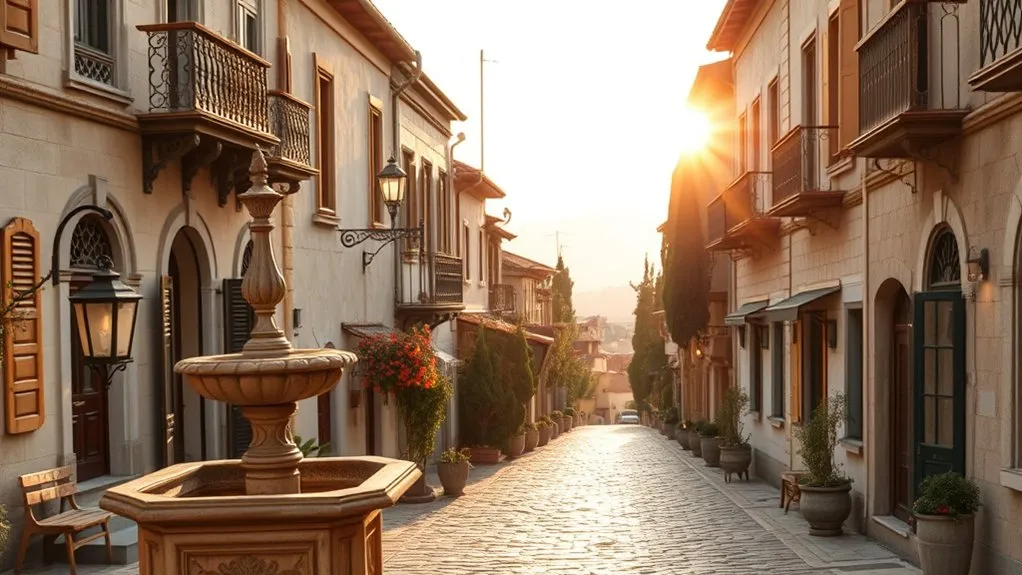
Arnavutköy combines a scenic Bosphorus setting with a compact historic core. Along the waterfront, you can see wooden houses with bay windows, carved details, and late-Ottoman design features. A few minutes uphill, the atmosphere changes to narrow residential lanes, staircases, neighborhood cafés, and quieter viewpoints.
The area’s religious landmarks also reflect its multicultural history. Taksiarhis Greek Orthodox Church and Tevfikiye Mosque stand within a short walk of each other, while the pier and waterfront remain part of everyday neighborhood life.
Arnavutköy is especially rewarding for travelers interested in architecture, photography, urban walks, seafood, and Bosphorus scenery. It is less suitable for anyone expecting a large attraction complex or a neighborhood filled with conventional museums. Its appeal comes from walking slowly and noticing the buildings, water, streets, and local activity.
Pro Tip: Visit on a weekday morning for quieter streets, or arrive in the late afternoon and stay through sunset. Waterfront restaurants can become busy on evenings and weekends, so reserve ahead when a particular venue matters to you.
Arnavutköy’s Ottoman History and Multicultural Roots
The name Arnavutköy means “Albanian village.” A commonly repeated historical account connects the name with Albanian settlers brought to the area during the reign of Mehmed II after the Ottoman conquest of Constantinople. The precise naming story is retold in different ways, so it is better understood as a widely cited local history than as a single uncontested event.
The settlement was also historically associated with the Greek name Mega Revma, or “Great Current,” referring to the strong Bosphorus current near the shore. Over the centuries, Greek Orthodox, Muslim, Jewish, Armenian, and other residents contributed to the area’s commercial, religious, and architectural character.
Much of the surviving streetscape developed during the late Ottoman period. Churches, mosques, wooden houses, waterfront residences, small businesses, and neighborhood gathering places show how several communities shaped the same stretch of the Bosphorus.
This history should not be read only through monuments. It is also visible in the scale of the streets, the relationship between houses and water, the placement of worship sites, and the mixture of restored and weathered buildings.
The Wooden Mansions That Define Arnavutköy
Arnavutköy’s wooden houses are among its most recognizable features. Many surviving examples date from the late Ottoman era, particularly the 19th and early 20th centuries. Their narrow façades, projecting bay windows, tall sash windows, decorative fretwork, and occasional Art Nouveau details create a varied waterfront scene.
The Turkish word yalı generally refers to a waterside residence. Some Arnavutköy buildings stand directly beside the Bosphorus, while others line nearby streets and slopes. Greek families and craftspeople were important contributors to the neighborhood’s architectural development, although the surviving buildings represent several owners, periods, and styles.
Restoration conditions vary. Some houses have been carefully repaired, while others show weathering, replacement materials, or later alterations. That contrast is part of the neighborhood’s present-day appearance.
GoTürkiye’s guide to Istanbul’s sea mansions provides broader context for the wooden residences along the Bosphorus.
Note: Most wooden houses are private residences. View them from public streets, avoid blocking entrances, and do not photograph residents through windows or private gates.
Best Streets and Bosphorus Views
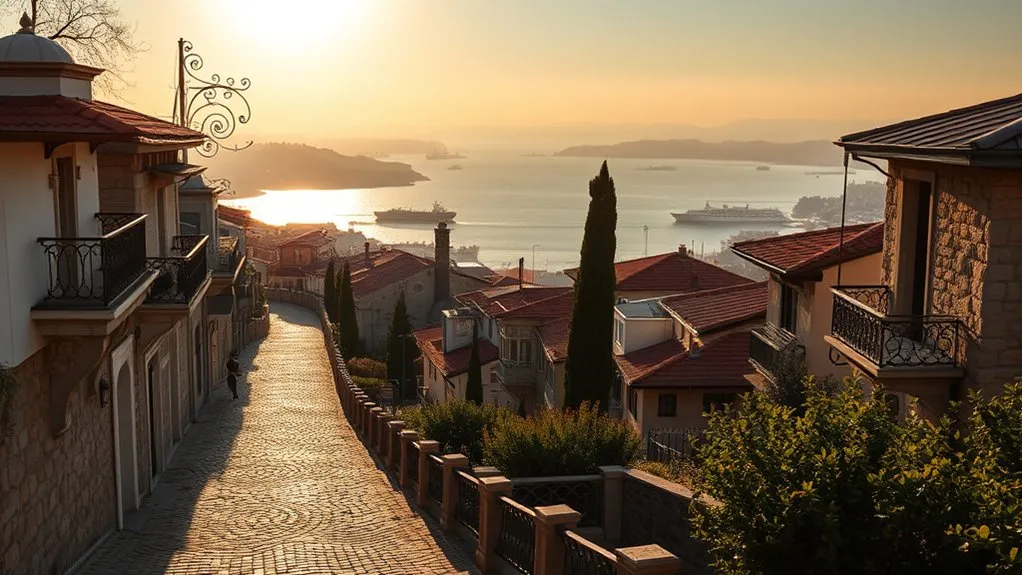
The most enjoyable walk combines the lower waterfront with at least one climb into the residential streets. Bebek Arnavutköy Caddesi follows the shore, while Dulkadıroğulları Sokak and nearby lanes reveal more of the neighborhood’s wooden architecture and sloping topography.
Scenic Streets and Stairs
Dulkadıroğulları Sokak is a useful starting point for seeing wooden houses and Turkish Art Nouveau details away from the busiest waterfront traffic. Arnavutköy Dere Sokak and the adjoining lanes contain cafés, small businesses, residences, and routes toward higher ground.
Many streets are narrow, and some become steep stairways. The climb gives you changing views of rooftops, wooden façades, and the Bosphorus, but the paving can be uneven. Wear shoes with good grip and allow extra time after rain.
The backstreets are residential rather than staged attractions. Keep voices low, leave doorways clear, and treat balconies, gardens, and entryways as private space.
Bosphorus Viewpoints and Promenades
The easiest open views are available from Arnavutköy Pier, the waterfront promenade, and the shore near Akıntıburnu. Ferries, fishing boats, passing cargo traffic, and the Bosphorus bridges create a constantly changing scene.
Higher lanes near Dulkadıroğulları Sokak offer partial panoramas between buildings. These elevated views can be especially attractive near sunset, although they are not formal observation decks and may be interrupted by construction, parked vehicles, or vegetation.
- Walk the waterfront in the late afternoon for softer light.
- Pause near the pier for open water views and ferry activity.
- Climb one or two backstreet stairways for higher angles.
- Return to the shore before dark if unfamiliar with the steep lanes.
Warning: Traffic can move quickly along the Bosphorus road, and some pavements are narrow or interrupted. Cross only at suitable points, watch for buses and motorcycles, and do not step into the road for photographs.
Suggested Two- to Three-Hour Walking Route
- Start at Arnavutköy Pier: Orient yourself beside the water and check the ferry board if you plan to leave by boat.
- Visit Tevfikiye Mosque from outside: Notice its waterfront position and simple late-Ottoman form. Enter only when access is appropriate.
- Follow the waterfront north: Look across the road toward the wooden houses and continue toward Akıntıburnu.
- Climb into the backstreets: Explore Dulkadıroğulları Sokak and nearby stairs at a comfortable pace.
- Continue toward Taksiarhis Church: View the exterior and check respectfully whether visitor access is available.
- Finish with coffee or a meal: Return toward Arnavutköy Square, Dere Sokak, or the waterfront restaurants.
Churches, Mosques, and Landmarks
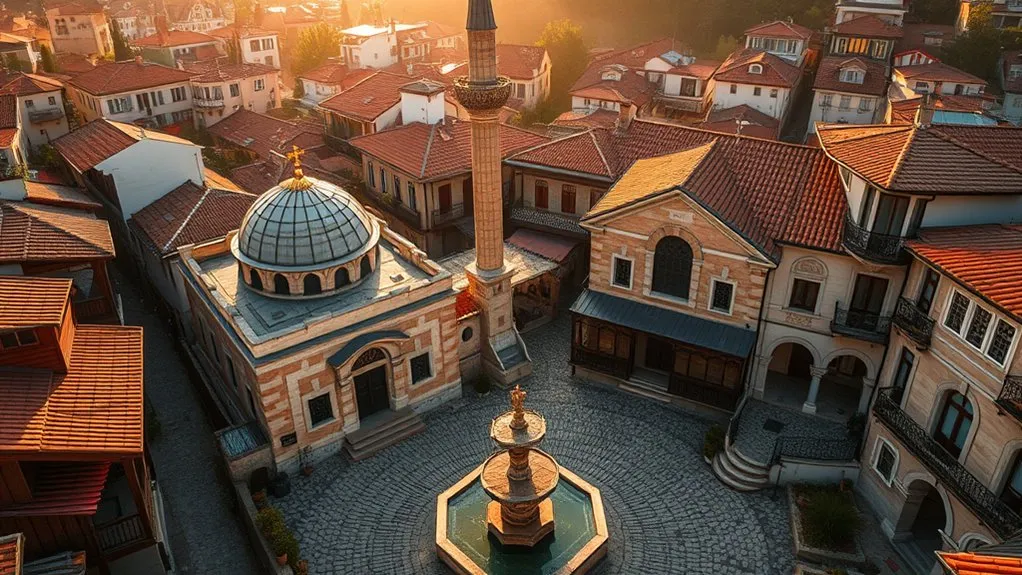
Arnavutköy’s principal landmarks are close enough to combine on foot. Taksiarhis Church represents the neighborhood’s Greek Orthodox heritage, Tevfikiye Mosque reflects its Ottoman Muslim history, and the square and pier connect those historic sites with present-day neighborhood life.
Taksiarhis Greek Orthodox Church
Taksiarhis Church, also written as Taksiarkis or Taksiarhi, is one of Arnavutköy’s most prominent religious buildings. The present church was constructed between 1896 and 1899 on a site that had held earlier churches. Its deep blue dome, balanced exterior, and richly decorated iconostasis make it an important feature of the neighborhood.
The church remains an active Greek Orthodox place of worship rather than a conventional tourist museum. Exterior viewing is generally the most predictable option. Interior access may depend on services, community activities, restoration work, or whether a caretaker is present.
- Dress modestly and keep shoulders and knees covered.
- Remain quiet when worship or preparation is taking place.
- Ask before taking interior photographs.
- Avoid flash photography around icons and religious art.
Information about the present building and its community history is available from the Foundation Representative of Turkey’s non-Muslim community foundations.
Tevfikiye Mosque
Tevfikiye Mosque is also known as Arnavutköy Mosque or Akıntı Burnu Mosque. Archival research indicates that the building was reconstructed in 1832 by Avanes Kalfa during the reign of Sultan Mahmud II. Its location near the water gives the mosque a strong visual relationship with the Bosphorus.
The building is relatively restrained compared with Istanbul’s large imperial mosques. Its scale, façade, terrace, and neighborhood setting are more important than monumental size. It remains an active mosque used for daily worship.
| Detail | What to Notice | Visitor Guidance |
|---|---|---|
| Waterfront position | Views across the Bosphorus and the relationship between the mosque and shore | Stay clear of worshippers and entrances |
| Façade | Simple late-Ottoman proportions and restrained ornament | Exterior viewing is possible without interrupting prayer |
| Interior | An active prayer space rather than a staged attraction | Remove shoes, dress modestly, and avoid prayer times |
| Historic context | The 1832 reconstruction under Mahmud II | Read the 2024 architectural study for detailed archival evidence |
Arnavutköy Square and Pier
Arnavutköy Square and the nearby pier form the neighborhood’s most useful orientation point. Bus stops, the waterfront road, restaurants, the mosque, and routes into the backstreets are all close by.
The area is lively rather than monumental. Residents meet buses and ferries, diners move between restaurants, and pedestrians pause beside the water. It is a practical place to begin or end a walk, check transport information, and decide whether to continue toward Bebek, Kuruçeşme, or Ortaköy.
Note: Taksiarhis Church and Tevfikiye Mosque are active worship sites. Public access is not guaranteed, and opening conditions may change without a tourist timetable.
Where to Eat and Drink in Arnavutköy
Arnavutköy has a varied food scene, including seafood restaurants, breakfast cafés, coffee shops, bakeries, bars, and modern dining rooms. Waterfront tables are popular for Bosphorus views, while side-street venues often feel quieter and more neighborhood-oriented.
Hide Arnavutköy offers a garden-like setting near Dere Sokak and is associated with breakfast, lunch, bakery items, and coffee. A Bit of Eggo focuses on egg-based dishes and all-day breakfast.
Weber’s Arnavutköy has been known for a casual kitchen-and-bar atmosphere, outdoor seating, beer, and contemporary sharing plates. Earlier menus and coverage have mentioned smoked-style nachos served with yogurt and paprika, but individual dishes may change. Check the venue’s current menu and status before making a special trip.
For a more traditional Bosphorus meal, Yalı Arnavutköy is a waterfront fish restaurant serving seafood in a more formal setting. Other fish restaurants in the neighborhood may price certain seafood by weight or according to the daily market, so ask about prices before ordering.
- For breakfast: Look around Dere Sokak and the interior lanes.
- For coffee: Choose a side-street café when the waterfront is crowded.
- For seafood: Reserve a Bosphorus-facing table when the view is important.
- For a casual evening: Check current menus at the neighborhood’s bars and modern restaurants.
Note: Restaurant hours, menus, prices, and reservation rules can change. Confirm them directly with the venue, especially on public holidays and during busy summer weekends.
How to Get to Arnavutköy
Arnavutköy can be reached by municipal bus, selected ferry services, taxi, or a waterfront walk from nearby neighborhoods. The best option depends on your starting point and current Bosphorus traffic.
By Bus
Several IETT routes serve stops in and around Arnavutköy, including services traveling along the Bosphorus corridor. Routes and stopping patterns can change, so use the official IETT journey planner shortly before departure.
Buses from the Beşiktaş direction can be convenient, but road congestion may add significant time. Avoid relying on a fixed 15-minute estimate, particularly during weekday rush hours, weekend evenings, or major events.
By Ferry
Some Şehir Hatları services call at Arnavutköy Pier. Availability varies by route, direction, weekday, season, and timetable period. Check the official Şehir Hatları timetables and confirm that Arnavutköy appears as a stop on the trip you intend to take.
A ferry arrival can be the most scenic option, but it should not be assumed that every Bosphorus service stops here.
Walking From Nearby Neighborhoods
Walking is practical from Bebek or Kuruçeşme if you are comfortable beside a busy road. Ortaköy is farther but can be linked with Arnavutköy as part of a longer Bosphorus day.
The waterfront route is mostly easy to follow, although pavement width and road noise vary. Allow extra time for crossings and photo stops.
For the most reliable journey, plan with live IETT and Şehir Hatları information instead of depending on a fixed bus time or an old ferry schedule.
- Load or carry an Istanbulkart for municipal public transport.
- Check the return trip before beginning an evening meal.
- Allow extra time during peak traffic periods.
- Use the pier and square as your arrival and departure reference point.
Best Time to Visit Arnavutköy
Arnavutköy can be visited throughout the year, but the experience changes with weather, daylight, and restaurant crowds.
- Weekday mornings: Best for quieter streets, architectural details, and an unhurried breakfast.
- Late afternoons: Best for waterfront light, higher-street viewpoints, and staying through sunset.
- Weekend evenings: Livelier, but restaurants and roadside areas can become crowded.
- Hot summer days: Walk earlier or later because the waterfront offers limited shade in places.
- Rainy days: Expect slippery stairs, wet wooden surfaces, and reduced comfort on steep lanes.
Spring and autumn often provide comfortable walking conditions, but short-term weather matters more than the season alone. Check the forecast before planning a long backstreet walk.
Accessibility and Practical Tips
The lower waterfront is the easiest part of Arnavutköy to explore. It offers the pier, mosque exterior, restaurants, bus stops, and water views without requiring a major climb.
The historic backstreets are more demanding. Steep gradients, stairways, narrow pavements, uneven surfaces, parked vehicles, and building works can create barriers for wheelchair users, travelers with limited mobility, and families using strollers.
- Stay close to the waterfront for the least strenuous visit.
- Use a taxi or bus to avoid a long approach on foot.
- Wear stable walking shoes rather than smooth-soled footwear.
- Carry water in warm weather.
- Do not assume that historic worship sites or small cafés have step-free entrances.
- Build rest stops into any route that climbs above the waterfront.
Where to Stay Near Arnavutköy
Arnavutköy has fewer conventional hotels than Istanbul’s major visitor districts. For the shortest journey, look first at Bebek, Ortaköy, or central Beşiktaş. These areas keep you on or near the Bosphorus corridor and reduce dependence on cross-city travel.
Beyoğlu and Şişli can still work as broader city bases, but they are not immediately beside Arnavutköy. Sultanahmet is farther away and is better suited to travelers prioritizing the Historic Peninsula.
| Stay or Base | Best For |
|---|---|
| Bebek | The closest upscale Bosphorus base and a possible waterfront walk to Arnavutköy |
| Ortaköy or central Beşiktaş | More accommodation and dining choices with direct road connections |
| Hostel Le Banc | A social budget base in the Galata and Beyoğlu area, not within walking distance of Arnavutköy |
| The 38 Hotel | A Şişli and Osmanbey base with broader city transport options |
| Hotel Empress Zoe | Historic character in Sultanahmet for travelers prioritizing the Old City |
| Ecole St. Pierre Hotel | Boutique accommodation in Galata and Beyoğlu |
Choose accommodation according to the rest of your Istanbul itinerary, not only the Arnavutköy visit. Check current prices, recent guest feedback, and travel time for your planned dates before booking.
Nearby Sights From Arnavutköy
Several Bosphorus neighborhoods and attractions can be combined with Arnavutköy, although not all are equally close on foot.
- Bebek: Continue north for cafés, a broad waterfront promenade, and relaxed Bosphorus views.
- Ortaköy: Head south for Ortaköy Mosque, the market area, restaurants, and kumpir shops.
- Yıldız Park: Add wooded paths and historic pavilions to a longer day around Beşiktaş.
- Rumeli Fortress: Continue north for one of the Bosphorus’s most important Ottoman defensive sites. Check the official museum information page before going because access can be affected by opening schedules, restoration, or events.
- Emirgan Park: Travel farther north for lawns, gardens, and seasonal tulip displays. Festival dates and peak blooming conditions vary each year.
A practical half-day combination is Arnavutköy and Bebek. Ortaköy, Yıldız Park, Rumeli Fortress, or Emirgan Park are better added when you have most of a day available.
Frequently Asked Questions
Is Arnavutköy a safe place to visit?
Arnavutköy is generally visited as an ordinary residential and dining neighborhood. Use normal urban precautions, watch belongings in crowded areas, and take particular care around fast-moving waterfront traffic. Check current official travel advice for Türkiye before your trip.
Is Arnavutköy a good place to live?
It can suit people who value Bosphorus scenery, historic streets, restaurants, and a neighborhood atmosphere. Housing can be expensive, parking is limited, hills affect accessibility, and commuting times depend heavily on road traffic because there is no metro station in the immediate neighborhood.
What should you see in Arnavutköy, Istanbul?
Prioritize the wooden waterfront houses, Arnavutköy Pier, Tevfikiye Mosque, Taksiarhis Greek Orthodox Church, Dulkadıroğulları Sokak, the elevated residential lanes, and the Bosphorus promenade. Leave time for coffee, breakfast, or a seafood meal.
Can a woman wear jeans in Istanbul?
Yes. Jeans are normal everyday clothing in Istanbul. When entering an active mosque or church, wear clothing that covers the shoulders and knees. Women may be asked to cover their hair in a mosque, and all visitors remove their shoes before entering the prayer area.
How long do you need in Arnavutköy?
Allow two to three hours for the waterfront, landmarks, and a short backstreet walk. Plan four hours or more when adding breakfast, coffee, a seafood meal, or a walk to Bebek.
Is this Arnavutköy the district near Istanbul Airport?
No. This is the smaller Bosphorus neighborhood in Beşiktaş, between Kuruçeşme and Bebek. Istanbul Airport is in the separate Arnavutköy district northwest of the central city.
Conclusion
Arnavutköy is a strong choice for travelers who want Bosphorus scenery without limiting the day to Istanbul’s largest monuments. Its wooden houses, waterfront, backstreets, church, mosque, cafés, and seafood restaurants fit comfortably into a half-day visit.
Come prepared for hills, narrow pavements, and unpredictable traffic. Check current transport and venue information, respect private homes and active worship sites, and give yourself enough time to explore both the shore and the quieter streets above it.
Sources
- GoTürkiye — The Sea Mansions — Bosphorus mansion history and architectural context.
- DergiPark — Evaluation of the Historical Arnavutköy Tevfikiye Mosque Through Archival Documents — the mosque’s construction history and 1832 reconstruction.
- Foundation Representative — Arnavutköy Aya Strati Taksiarhi Greek Orthodox Church Foundation — the current church’s construction dates and community history.
- Şehir Hatları — Official Ferry Timetables — current municipal ferry routes and departure information.
- IETT — Official Journey Planner — current bus routes, stops, and trip planning.
- GoTürkiye — Orthodox Churches in Istanbul — respectful dress, photography, and visitor etiquette.
