
Last Updated on July 28, 2026 by Daniel Globe
If you are searching for magical small towns in Tuscany, start with San Gimignano for medieval towers, Pienza for Renaissance design, Montalcino and Montepulciano for wine, and Bagno Vignoni or Montecatini Terme for spa history. Monteriggioni, San Quirico d’Orcia, Certaldo, and Cortona add fortified walls, gardens, art, and quieter streets. The best choice depends on where you are staying, whether you have a car, and how much time you can spend in each area.
Quick Answer
The best small towns in Tuscany include San Gimignano for towers, Pienza for Renaissance architecture, Montepulciano and Montalcino for wine, Bagno Vignoni and Montecatini Terme for spa culture, and Cortona for art and hilltop views. Group nearby towns together and allow at least half a day for major destinations.
Key Takeaways
- San Gimignano is the standout choice for a preserved medieval skyline.
- Pienza, San Quirico d’Orcia, Bagno Vignoni, Montalcino, and Montepulciano can be grouped into a Val d’Orcia itinerary.
- Certaldo and Montecatini Terme are among the easier choices for travelers using trains.
- Many hill towns require bus connections, advance planning, or a car.
- Do not enter a signed ZTL restricted-traffic zone unless your vehicle is authorized.
Disclosure: As an Amazon Associate I earn from qualifying purchases. Some links on this page are affiliate links, at no extra cost to you.
Compare the Best Small Towns in Tuscany
Every town on this list has a different strength. Use the table below to match your itinerary with the experience you want rather than trying to rush through all ten places.
| Town | Best For | Suggested Time | Planning Note |
|---|---|---|---|
| San Gimignano | Medieval towers and views | Half to full day | Popular and busiest around midday |
| Pienza | Renaissance architecture and pecorino | Three to five hours | Easy to pair with San Quirico or Montepulciano |
| Monteriggioni | Fortified walls and a compact village | One to three hours | Works well as a stop between Siena and San Gimignano |
| Montepulciano | Vino Nobile and Renaissance streets | Half to full day | Expect steep uphill walking |
| Montecatini Terme | Historic spa architecture | Half day or overnight | Convenient rail access from Florence and Lucca |
| Bagno Vignoni | Thermal history and quiet scenery | One to three hours, longer with a spa booking | Swimming is prohibited in the historic piazza pool |
| San Quirico d’Orcia | Gardens, churches, and a relaxed base | Two to four hours | Central for exploring the Val d’Orcia |
| Montalcino | Brunello wine and fortified views | Half to full day | Reserve winery visits in advance |
| Certaldo | Medieval streets and Boccaccio history | Three to five hours | Train access and a funicular to Certaldo Alto |
| Cortona | Etruscan history, art, and wide views | Half to full day | The rail station is below the hill town |
San Gimignano: Medieval Towers and Gelato
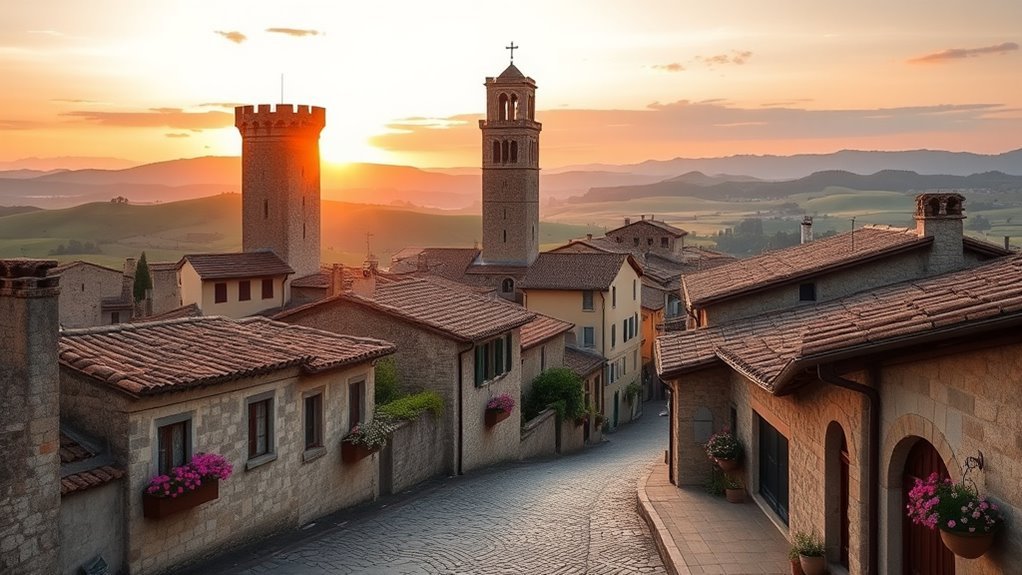
As you walk through the narrow cobblestone streets of San Gimignano, its medieval skyline immediately sets it apart from other Tuscan towns. The UNESCO-listed historic center retains 14 tower houses from the roughly 72 that once stood here. Wealthy families built the towers as symbols of status and power during the Middle Ages.
San Gimignano’s 14 surviving towers preserve one of the most recognizable medieval skylines in Tuscany.
Begin in Piazza della Cisterna, a triangular square surrounded by medieval buildings. From there, walk to Piazza del Duomo and consider climbing an open tower or visiting the civic museums for elevated views. Opening hours and tower access can vary, so check the town’s current visitor information before arrival.
Gelato shops are part of the town’s appeal, and Gelateria Dondoli is one of the best-known stops near Piazza della Cisterna. Awards and shop hours can change, so treat any individual recommendation as one option rather than the only place worth trying.
Pro Tip: Arrive early in the morning or stay into the evening. The central streets are usually calmer before day-trip groups arrive and after many buses leave.
Pienza: Renaissance Architecture and Pecorino
Pienza offers one of Tuscany’s clearest examples of Renaissance town planning. The hill town began as medieval Corsignano before Pope Pius II ordered its redesign in the 15th century. The resulting historic center is now a UNESCO World Heritage property.
The main sights are grouped around Piazza Pio II. Here you can see the cathedral, Palazzo Piccolomini, Palazzo Borgia, and the town hall without walking far. The square’s balanced proportions make the center feel more planned and orderly than the winding medieval layouts found in many neighboring towns.
Pienza is also known for pecorino cheese, made from sheep’s milk. Local shops sell versions ranging from young and mild to firm and aged. Sampling a few styles is a more useful introduction than buying only the strongest variety.
Walk along the lanes near the edge of town for views across the Val d’Orcia. Pienza works well for a half-day visit, but an overnight stay lets you experience the center after the busiest daytime period.
Monteriggioni: Fortified Walls and a Compact Medieval Center
Monteriggioni is a small fortified village between Siena and the Val d’Elsa. The Republic of Siena established the stronghold in the 13th century, and much of its roughly 570-meter wall circuit survives. Fourteen square towers rise above the walls, creating the crown-like outline that Dante referenced in the Divine Comedy.
Enter through Porta Franca to reach Piazza Roma, the village’s central square. The historic center is small and largely pedestrian, so most visitors can explore it in one to three hours. Wall-walk and museum access may require a ticket and can follow seasonal hours.
| Feature | What to Know | Experience |
|---|---|---|
| Medieval Walls | A preserved circuit with 14 square towers | See the village’s defensive design |
| Porta Franca | The main gateway into the historic center | Enter directly near Piazza Roma |
| Piazza Roma | A compact square with a church, cafes, and shops | Pause for a meal or drink |
| Pedestrian Center | Most of the walled village is explored on foot | Enjoy a short, low-stress visit |
| Medieval Events | Festival dates and access arrangements change | Check the current calendar before booking |
Monteriggioni is best treated as a focused stop rather than a full-day destination. Pair it with Siena, San Gimignano, or nearby sections of the Via Francigena.
Montepulciano: Vino Nobile and Hilltop Streets
Montepulciano stands on a limestone ridge between the Val di Chiana and the Val d’Orcia. Its streets climb toward Piazza Grande, where you will find the cathedral, Palazzo Comunale, and several Renaissance palaces. The uphill route is rewarding, but visitors with limited mobility should plan drop-off points and parking carefully.
The town is closely associated with Vino Nobile di Montepulciano DOCG. Despite the similar name, this wine is not made from the Montepulciano grape. It is a Tuscan wine based mainly on the local Sangiovese variety known as Prugnolo Gentile.
Historic wine cellars are built beneath several buildings in the center, while countryside estates surround the town. Tastings may be available, but guided cellar visits should be reserved when possible, especially during harvest season and weekends.
Traditional dishes include pici pasta, soups, cured meats, and slow-cooked meat dishes. Rather than trying to cover Montepulciano in a quick stop, allow enough time for its steep streets, viewpoints, and a relaxed meal.
Montecatini Terme: Historic Spa Architecture
Montecatini Terme developed around mineral springs and an elaborate European spa culture. It is one of the 11 towns included in UNESCO’s transnational property, The Great Spa Towns of Europe. Its appeal comes from the combination of historic spa buildings, gardens, promenades, and modern wellness services.
Spa and Wellness Treatments
Historic complexes such as Terme Tettuccio are central to Montecatini’s identity. Depending on current operations, visitors may be able to tour architectural spaces, use drinking-water facilities, or book treatments through local providers.
Do not assume that every historic spa building offers swimming or that all facilities are open throughout the year. Check the service offered at the specific property, confirm whether a reservation is required, and ask a medical professional before using thermal treatments for a health condition.
Parks and Promenades
Parco delle Terme provides a green setting for walking between major spa buildings. Mature trees, broad paths, and landscaped areas make the park a pleasant break from a driving-heavy Tuscany itinerary.
Montecatini Terme can also serve as a base for Florence, Lucca, and Pistoia because it has railway access. Travelers who want a slower schedule may prefer staying overnight rather than treating the town as a brief spa appointment.
Historical Spa Architecture
Terme Tettuccio is known for its monumental colonnades, decorative interiors, and early-20th-century appearance. The larger townscape reflects the period when European spa destinations combined mineral-water treatments with gardens, hotels, entertainment, and social life.
The town’s UNESCO recognition concerns this broader spa landscape, not only a single bathhouse. Allow time to walk between the architecture, park, and central streets rather than visiting only one building.
Bagno Vignoni: A Thermal Piazza in the Val d’Orcia
Bagno Vignoni is built around Piazza delle Sorgenti, where a large stone pool filled with thermal water occupies the center of the village. The springs emerge at approximately 49°C, and the waters have been used for bathing traditions for centuries. The village also lies close to the historic Via Francigena pilgrimage route.
Warning: Swimming and soaking are not permitted in Bagno Vignoni’s historic piazza pool. Use a local spa or accommodation with authorized thermal facilities instead.
The central pool is best viewed in the early morning, evening, or cool weather, when vapor may rise above the water. Below the village, the Parco dei Mulini preserves channels and mill structures that used the thermal water for practical work.
Bagno Vignoni is small enough to combine with nearby San Quirico d’Orcia. A short visit is sufficient for the piazza and mill area, while travelers with a booked spa treatment may spend half a day or stay overnight.
San Quirico d’Orcia: Gardens, Churches, and Cypress Views
San Quirico d’Orcia is a practical and peaceful base in the central Val d’Orcia. It sits between Pienza and Montalcino and is only a short drive from Bagno Vignoni, which makes it useful for travelers who want to reduce hotel changes.
The Horti Leonini are a formal Italian-style garden created in the 16th century. Trimmed hedges, geometric paths, and shaded upper areas provide a quiet place to pause inside the historic center.
Also visit the Collegiate Church of Saints Quirico and Giulitta, whose portals and architectural details reflect different medieval periods. Outside town, the much-photographed cypress groups and the Chapel of the Madonna di Vitaleta are popular stops, but roadside access and parking should be approached carefully.
San Quirico is less dominated by a single major attraction than Pienza or Montalcino. Its value lies in the combination of local streets, gardens, churches, and a central position within the Val d’Orcia.
Montalcino: Brunello, Local Food, and Vineyard Visits
Montalcino is a fortified hill town known around the world for Brunello di Montalcino DOCG. The historic center contains steep lanes, wine shops, churches, and a 14th-century fortress. From the walls and surrounding viewpoints, you can look across vineyards, woods, and the wider Val d’Orcia landscape.
Culinary Highlights of Montalcino
Local menus often feature pici pasta, cured meats, cheeses, olive oil, honey, and dishes made with game or slow-cooked meat. Seasonal availability varies, so the most representative meal may change with the time of year.
Wine bars can provide an introduction to several producers without requiring a countryside drive. For a full estate visit, reserve ahead and confirm the tasting language, duration, price, and transportation arrangements.
Understanding Brunello di Montalcino
Brunello di Montalcino is produced from Sangiovese grown within the Montalcino production area. Under the official rules, standard Brunello spends at least two years in oak and at least four months in bottle. It is released no earlier than January 1 of the fifth year after the harvest; Riserva requires a longer period before release.
These requirements explain why Brunello generally costs more and reaches the market later than many younger Tuscan wines. Rosso di Montalcino offers another expression of local Sangiovese with a shorter production timeline.
| Experience | What It Includes |
|---|---|
| Enoteca Tasting | Compare wines from several producers in the historic center. |
| Vineyard Tour | Visit an estate to learn about vineyards, cellars, and production methods. |
| Benvenuto Brunello | An annual presentation of new releases; dates and public access vary by edition. |
Note: Do not plan to drive after a wine tasting. Arrange a designated driver, private transfer, taxi, or organized tour before your appointment.
Choosing Local Eateries
Montalcino has trattorias, wine bars, and more formal restaurants, but individual businesses, hours, and ownership can change. Check recent opening information and reserve dinner during busy weekends or wine events.
Look for menus that pair local products with Brunello, Rosso di Montalcino, or alcohol-free options. A simple plate of regional cheese, cured meat, and bread can be more useful for tasting than a heavy multi-course meal.
Certaldo: A Medieval Center Reached by Funicular
The historic center of Certaldo Alto stands above the modern lower town. You can walk uphill or use the funicular from Piazza Boccaccio, subject to current operating hours. Certaldo’s railway station makes it one of the more practical Tuscan small towns for travelers without a car.
At the top, visit Palazzo Pretorio, whose facade displays coats of arms made from glazed terracotta, marble, and stone. The former government building contains historic rooms, a chapel, prison spaces, and artworks associated with the town’s medieval administration.
Certaldo is also linked to writer Giovanni Boccaccio. His house is now a museum, while Via Boccaccio serves as the main route through the long, narrow historic center.
Local food traditions include the Certaldo onion. The annual Boccaccesca food-and-wine event celebrates regional cooking, but dates and programming should be verified for the year of your visit.
Cortona: Etruscan History, Art, and Hilltop Views
Cortona rises above the Val di Chiana near Tuscany’s eastern side. Its steep streets, stone buildings, museums, and views make it suitable for travelers who want more than a quick photo stop.
Artistic and Historical Landmarks
The Diocesan Museum holds major works including Fra Angelico’s Annunciation and Luca Signorelli’s Deposition. The MAEC, or Museum of the Etruscan Academy and City of Cortona, focuses on the area’s Etruscan and Roman history.
Higher above town, the Basilica of Santa Margherita and the Fortezza del Girifalco provide additional historical interest. Reaching them involves a noticeable climb, so allow extra time and wear supportive shoes.
Scenic Views and Cultural Events
Cortona’s position provides broad views across the Val di Chiana toward Lake Trasimeno. Viewpoints appear throughout the upper streets, but the best light and visibility depend on weather and season.
The annual Cortona On The Move festival presents contemporary photography in venues around town. Exhibition dates and locations change each year, so consult the current program before planning a visit around the event.
| Experience | Highlight |
|---|---|
| Panoramic Walks | Elevated streets and paths overlooking the valley |
| Photography | Stone streets, valley views, and changing seasonal light |
| Art Museums | Works by Fra Angelico, Luca Signorelli, and other artists |
| Etruscan Heritage | Museum collections, walls, tombs, and archaeological sites |
| Cultural Events | The annual Cortona On The Move photography festival |
How to Plan a Small-Town Tuscany Itinerary
The ten towns are spread across a large region, so trying to visit them in list order creates unnecessary driving. A better approach is to build your trip around geographic groups.
Val d’Orcia Route
Use Pienza, San Quirico d’Orcia, Montalcino, Bagno Vignoni, and Montepulciano as one broad cluster. Two or three days provide a more comfortable pace than squeezing the towns into a single day. San Quirico and Pienza are convenient central bases, while Montepulciano and Montalcino suit travelers focused on wine.
Siena and Val d’Elsa Route
Combine Monteriggioni, San Gimignano, and Certaldo. Monteriggioni is a compact stop, while San Gimignano needs more time. Certaldo can be reached by train and may be paired with a separate rail-based day from Florence.
Eastern and Northern Tuscany
Cortona is easiest to include with Arezzo, the Val di Chiana, or Lake Trasimeno. Montecatini Terme fits more naturally with Florence, Lucca, and Pistoia. Trying to combine either town with a rushed Val d’Orcia day produces too much travel time.
Transportation and Parking
Certaldo and Montecatini Terme have railway stations. Cortona is served through the lower-town station at Camucia-Cortona, followed by local transportation uphill. San Gimignano, Monteriggioni, Pienza, Montalcino, San Quirico d’Orcia, Bagno Vignoni, and central Montepulciano rely more heavily on buses, road transfers, or cars.
Use the official Trenitalia planner for trains and the Autolinee Toscane Travel Planner for buses. Check the exact day of travel because Sunday, holiday, school-season, and evening service may differ.
Warning: Historic centers may contain ZTL restricted-traffic zones monitored by cameras. Do not follow another vehicle past a ZTL sign unless your license plate is authorized. Park in a signed visitor lot outside the restricted center.
Frequently Asked Questions
What is the best time of year to visit these towns?
April through May and mid-September through October are generally comfortable for walking. Summer offers long days and many events but can bring heat and larger crowds. Winter is quieter, although some attractions, wineries, restaurants, and bus routes may operate on reduced schedules.
Are these towns accessible by public transportation?
Some are easier than others. Certaldo and Montecatini Terme have useful rail access. Cortona requires a connection uphill from the station area. Most Val d’Orcia towns, Monteriggioni, and San Gimignano depend more on buses or road transfers. Always check Trenitalia and Autolinee Toscane for your exact date.
What local festivals or events occur in these towns?
Examples include medieval events in Monteriggioni, Benvenuto Brunello in Montalcino, Boccaccesca in Certaldo, and Cortona On The Move. Dates, ticketing, and public access change by year, so confirm details through the town or organizer before reserving accommodation.
How can I find guided tours in these areas?
Use official tourism offices, licensed local guides, winery associations, and established tour operators. Before booking, confirm what is included, the meeting point, cancellation terms, group size, language, and whether transportation or admission fees are covered.
What accommodations work best for this itinerary?
Choose accommodation based on your route. Pienza or San Quirico d’Orcia works well for the Val d’Orcia, Siena suits Monteriggioni and San Gimignano, Florence provides rail access to Certaldo and Montecatini Terme, and Cortona or Arezzo suits eastern Tuscany. Confirm parking before booking a hotel inside a historic center.
How many Tuscan small towns can I visit in one day?
Two nearby towns are usually comfortable. Three may work when one is a short stop, such as Monteriggioni or Bagno Vignoni. Visiting more often means spending much of the day parking, waiting for buses, or driving instead of exploring.
Can you swim in the thermal pool at Bagno Vignoni?
No. Swimming is prohibited in the historic pool that fills Piazza delle Sorgenti. Visitors who want to bathe in thermal water should reserve access through an authorized local spa or accommodation.
Conclusion
Tuscany’s small towns are most rewarding when you choose a few that fit the same route. San Gimignano offers the most recognizable medieval skyline, Pienza shows Renaissance planning, Montalcino and Montepulciano provide two distinct wine traditions, and Bagno Vignoni preserves an unusual thermal piazza. Monteriggioni, San Quirico d’Orcia, Certaldo, Montecatini Terme, and Cortona each add a different reason to slow down.
Plan around geography, check current opening hours and transportation, reserve wine or spa experiences in advance, and leave enough time to walk. A focused itinerary of two nearby towns will usually create a better day than a rushed checklist of five.
Sources
- UNESCO World Heritage Centre: Historic Centre of San Gimignano — surviving towers and historical significance.
- UNESCO World Heritage Centre: Historic Centre of Pienza — Renaissance redesign and World Heritage status.
- UNESCO World Heritage Centre: The Great Spa Towns of Europe — Montecatini Terme’s spa heritage.
- Visit Tuscany: Bagno Vignoni — spring temperature, historic pool, and authorized spa access.
- Consorzio del Vino Brunello di Montalcino — official Brunello production and aging rules.
- Autolinee Toscane Travel Planner — current regional bus routes and schedules.
