
Last Updated on July 24, 2026 by Daniel Globe
Italy offers an unusual range of experiences within one country. You can cross Venice by boat, study Renaissance art in Florence, walk through ancient Rome, follow vineyard roads in Tuscany, and end beside the clear water of Sardinia or Sicily. The best trip does not try to cover everything. It connects a few destinations that fit your time, interests, and preferred pace.
Quick Answer
The most magical places to visit in Italy include Venice, Rome, Florence, Tuscany, Cinque Terre, the Amalfi Coast, Lake Como, Verona, Naples, Pompeii, Alberobello, Sicily, and Sardinia. For a first trip, combine three or four nearby destinations instead of rushing across the entire country.
Disclosure: As an Amazon Associate I earn from qualifying purchases. Some links on this page are affiliate links, at no extra cost to you.
What Makes These Italy Destinations Magical
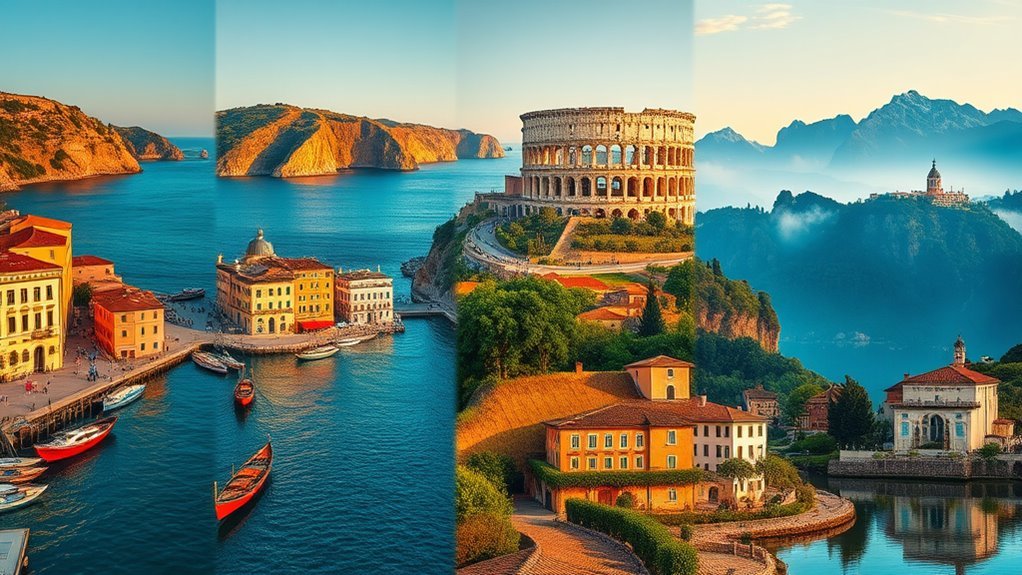
Italy feels magical because every region has a distinct character. Venice is shaped by canals and lagoon islands. Florence displays the art and ambition of the Renaissance. Rome places ancient ruins beside lively modern neighborhoods. Tuscany gives you vineyard towns and open countryside, while Sicily combines Greek temples, layered cities, volcanoes, and beaches.
The appeal also comes from how easily food, architecture, landscape, and daily life overlap. A morning museum visit may lead to a market lunch, a church square, a waterfront walk, and a neighborhood restaurant. You are not limited to famous monuments. Small streets, local trains, ferry rides, evening walks, and regional meals often become the strongest memories.
Key Takeaways
- Rome, Florence, and Venice form the easiest first-time Italy route.
- Add only one major countryside or coastal region to a 10-day trip.
- Use trains between large cities and consider a car only for rural areas.
- Book major attractions, coastal hotels, and popular trains before peak-season travel.
- Treat Sicily and Sardinia as separate trip segments rather than quick side trips.
Best Italy Destinations at a Glance
| Destination | Best For | Suggested Stay | Main Consideration |
|---|---|---|---|
| Venice and Burano | Canals, architecture, photography | 2 to 3 nights | Crowds and changing visitor rules |
| Rome | Ancient history and major landmarks | 3 to 4 nights | Large distances and timed tickets |
| Florence | Renaissance art and architecture | 2 to 3 nights | Popular museums book out |
| Cinque Terre | Coastal villages and hiking | 2 nights | Trail closures and steep paths |
| Tuscany | Wine towns and countryside | 3 to 5 nights | A car is useful outside major towns |
| Positano and the Amalfi Coast | Sea views and romantic stays | 3 to 4 nights | High prices, stairs, and traffic |
| Lake Como | Villas, ferries, and mountain views | 2 to 3 nights | Ferry schedules affect planning |
| Milan | Design, fashion, and city breaks | 1 to 2 nights | Less relaxed than smaller cities |
| Verona | Roman history and opera | 1 to 2 nights | Opera dates require planning |
| Naples and Pompeii | Food, archaeology, and street life | 3 nights | A busy urban atmosphere |
| Alberobello | Distinctive architecture and Puglia | 1 night | Best combined with a wider Puglia trip |
| Sicily | Temples, cities, food, and coastline | 7 to 10 nights | The island is too large for a short add-on |
| Sardinia | Beaches and wild landscapes | 5 to 8 nights | A car is useful in many areas |
How to Build the Perfect Italy Route
The best Italy itinerary follows a clear geographic direction. For a classic first trip, start in Venice, travel south to Florence, continue to Rome, and finish in Naples or on the Amalfi Coast. You can also reverse the route. This keeps long travel days to a minimum and works well with Italy’s high-speed rail network.
A northern route can connect Milan, Lake Como, Verona, and Venice. A central route can combine Florence, rural Tuscany, and Rome. A southern route can include Naples, Pompeii, the Amalfi Coast, and Puglia. Sicily and Sardinia deserve their own flights or ferry connections and should not be squeezed into an already crowded mainland itinerary.
Sample Itineraries by Trip Length
- 7 days: Rome and Florence, or Venice, Florence, and Rome at a fast pace.
- 10 days: Venice, Florence, Rome, and one nearby day trip or countryside stop.
- 14 days: Venice, Florence, Tuscany, Rome, Naples, Pompeii, and the Amalfi Coast.
- 3 weeks: Add Puglia, Sicily, Sardinia, or a slower northern route, but not all of them.
Pro Tip: Consider arriving in one city and flying home from another. An open-jaw flight can prevent you from spending your final day returning to the city where the trip began.
Best Time to Visit Italy
Late spring and early autumn usually offer the best balance of comfortable weather and manageable crowds. May, June, September, and early October work especially well for city sightseeing, countryside drives, and coastal walks. However, famous destinations can still be busy during these months.
July and August bring heat, higher coastal prices, and heavy demand in places such as Venice, Florence, Rome, Positano, Cinque Terre, Sicily, and Sardinia. Winter is quieter and can be rewarding for museums and major cities, but beach services, ferries, seasonal hotels, and some rural businesses may operate on reduced schedules.
Should You Travel by Train or Rental Car?
Use trains for Milan, Venice, Verona, Florence, Rome, and Naples. High-speed services connect many major cities directly and arrive close to historic centers. Regional trains are useful for destinations such as Lake Como, Pompeii, and Cinque Terre.
A rental car is more useful in rural Tuscany, parts of Puglia, Sicily, and Sardinia. It becomes a burden in historic city centers, where parking is limited and restricted-traffic zones may issue automatic fines. When renting a car, ask your accommodation about legal access and parking before entering the old town.
What to Book in Advance
- Colosseum entry and special-access tours
- Vatican Museums tickets
- Florence’s Uffizi Gallery and Accademia Gallery
- Brunelleschi’s Dome climb
- Leonardo da Vinci’s The Last Supper in Milan
- Arena di Verona performances
- Peak-season hotels in Venice, Positano, Cinque Terre, Lake Como, Sicily, and Sardinia
Venice and Burano’s Canal Charm
Venice is unlike any road-based city. Its streets, bridges, canals, churches, and lagoon views create an experience that rewards slow exploration. Major sights such as St. Mark’s Square and the Rialto Bridge are important, but quieter districts like Cannaregio, Castello, and Dorsoduro show a calmer side of the city.
Burano adds a different mood. The island is known for brightly colored houses, lace-making traditions, canals, and a small-town rhythm. It works well as part of a lagoon day that may also include Murano or Torcello.
Canal-Side Strolls
You do not need a strict route to enjoy Venice. Walk away from the busiest paths, cross smaller bridges, and leave time for unexpected squares and waterfront views. Gondolas offer a classic experience, but public vaporetto boats provide a more practical way to cross the city and reach the lagoon islands.
- Visit St. Mark’s Square early or later in the evening.
- Cross the Grand Canal by vaporetto as well as on foot.
- Explore quieter lanes beyond the main station-to-Rialto route.
- Allow extra time because navigation is part of the experience.
- Respect residential entrances, church rules, and narrow walkways.
Burano’s Colorful Houses
Burano’s vivid facades reflect a living community rather than an outdoor film set. Different explanations are given for the color tradition. One popular story connects the colors with fishermen finding their homes in fog, while official local tourism information also links the colors with visible property boundaries. It is safest to treat these accounts as traditions rather than proven facts.
Walk beyond the busiest canal, visit the main square, look for lace workshops, and consider crossing the footbridge to quieter Mazzorbo. Burano is more enjoyable when you allow time to eat or wander instead of treating it only as a quick photo stop.
Note: Venice applies a day-visitor access contribution on selected dates. In 2026, it operates on 60 nonconsecutive days from April 3 through July 26, generally between 8:30 a.m. and 4 p.m. Visitors should check the official City of Venice guidance for dates, exemptions, registration, and payment rules.
Rome’s Ancient Ruins and Grandeur
Rome brings several historical periods into the same walk. The Colosseum recalls public spectacles watched by more than 50,000 people. The Roman Forum preserves the political, religious, and commercial center of the ancient city, while Palatine Hill offers views over both the Forum and the Circus Maximus.
The Pantheon provides another kind of engineering experience. Its concrete dome and central oculus still define the interior nearly two millennia after the building was completed in its present form. Elsewhere, the Baths of Caracalla, Appian Way, and Capitoline Museums help you see beyond Rome’s most crowded landmarks.
- Give the Colosseum, Forum, and Palatine area at least half a day.
- Reserve a timed Colosseum ticket through the official archaeological park.
- Visit the Pantheon early when possible.
- Wear stable shoes for uneven stone and long walking days.
- Leave time for neighborhoods such as Trastevere or Monti.
Three full days are a practical minimum for a first visit. Four days allow time for Vatican City, central Rome, ancient sites, and one slower neighborhood day.
Florence’s Duomo and Renaissance Art
Florence concentrates major works of Renaissance art within a walkable historic center. The Cathedral of Santa Maria del Fiore, the Uffizi Gallery, Palazzo Vecchio, Ponte Vecchio, Santa Croce, and the Accademia can all fit into a short stay, although trying to visit every museum in two days can become exhausting.
Duomo Architectural Grandeur
Filippo Brunelleschi’s dome was built between 1420 and 1436 and remains the world’s largest masonry vault. Its double-shell structure solved an engineering challenge that had delayed completion of the cathedral for generations.
- The climb to the lantern has 463 steps.
- There is no elevator.
- A reserved time slot is required.
- The confined stairway may be difficult for visitors with vertigo or claustrophobia.
- Large and medium bags must be left at the designated storage facility.
Review the current rules on the official Opera del Duomo website before booking the climb.
Renaissance Art Masterpieces
The dome’s interior includes the vast Last Judgment fresco painted by Giorgio Vasari and Federico Zuccari. At the Uffizi, you can see works associated with Botticelli, Leonardo, Michelangelo, Raphael, and other artists whose careers were shaped by Florence’s political, religious, and patronage networks.
Do not schedule the Uffizi, Accademia, cathedral complex, and several churches back to back without breaks. Choose the works that matter most to you, then leave time to walk along the Arno or climb to Piazzale Michelangelo for a broad city view.
Cinque Terre’s Cliffside Villages and Sea Views
Cinque Terre consists of Monterosso al Mare, Vernazza, Corniglia, Manarola, and Riomaggiore. The villages sit within a protected coastal landscape shaped by steep slopes, terraces, small harbors, footpaths, and rail connections.
- Monterosso: Best for the largest beach area and easier luggage access.
- Vernazza: Known for its compact harbor and steep surrounding viewpoints.
- Corniglia: The only village set above the water rather than directly beside it.
- Manarola: Popular for waterfront views and sunset photography.
- Riomaggiore: A convenient southern gateway from La Spezia.
The train is usually the easiest way to move among the villages. Hiking can be rewarding, but paths may close or become one-way because of weather, maintenance, landslides, or crowd management. The Cinque Terre Card may include trail access, local transport, and regional train travel, depending on the version purchased.
Warning: Never assume a coastal trail is open because it appears on an old map or blog. Check the Cinque Terre National Park for live access and weather information before starting a hike.
Tuscany’s Rolling Hills and Vineyard Towns
Tuscany is more than Florence. Its rural appeal comes from hill towns, cultivated valleys, vineyards, olive groves, medieval streets, and roads that connect small communities. Chianti is convenient from Florence, while Val d’Orcia is ideal for travelers interested in Pienza, Montalcino, cypress-lined roads, and wider countryside views.
| Stop | Main Experience | Planning Note |
|---|---|---|
| Val d’Orcia | UNESCO-listed rural landscape | A car offers the most flexibility |
| San Gimignano | Medieval towers and lanes | Busy during midday tour hours |
| Pienza | Renaissance planning and valley views | Easy to combine with Montepulciano |
| Montalcino | Wine culture and hilltop scenery | Reserve tastings when needed |
Spend at least two or three nights outside Florence if you want a true countryside experience. A single bus tour can show you highlights, but staying overnight gives you quieter mornings and evenings after day visitors leave.
Positano’s Amalfi Coast Beauty
Positano rises steeply from the Tyrrhenian Sea, with houses, hotels, restaurants, and gardens arranged across the hillside. It is one of Italy’s most photographed coastal villages, but its beauty comes with practical challenges: many stairs, high lodging prices, crowded transport, and limited road space.
Cliffside Coastal Views
The best views often appear from upper roads, terraces, ferry approaches, and walking paths. The coast changes character when seen from the water, so a ferry ride between Positano, Amalfi, Salerno, or nearby ports can become part of the experience rather than only transportation.
- Look down toward Spiaggia Grande from the upper village.
- Walk the path between Spiaggia Grande and Fornillo Beach.
- Use ferries when weather and seasonal schedules allow.
- Consider Ravello for gardens and elevated coastal views.
- Allow extra time for stairs and transport delays.
Colorful Village Charm
Positano’s narrow lanes contain boutiques, ceramic shops, cafés, restaurants, and small galleries. Bougainvillea and lemon trees soften the stone buildings, while the church dome provides a visual center near the waterfront.
Spiaggia Grande is convenient and lively, but visitors expecting a long stretch of soft sand may be surprised. Positano and much of the Amalfi Coast have pebbly, gravelly, rocky, or mixed beaches. Water shoes can make swimming more comfortable.
Sunset Over Tyrrhenian Sea
Sunset views depend on your location, the season, and the direction of the coastline. A high terrace may provide a broader view than the beach. Reserve a table well ahead if a particular restaurant or hotel terrace is important to your evening plans.
- Arrive before sunset rather than during it.
- Confirm whether a terrace faces the setting sun.
- Carry a light layer for evening ferry rides.
- Avoid blocking narrow public paths while taking photos.
- Check the final bus or ferry departure before settling in.
Lake Como’s Elegant Villas and Alpine Backdrops
Lake Como combines mountain slopes, deep water, historic villas, gardens, and ferry-linked towns. Bellagio, Varenna, Menaggio, and Tremezzo are common bases, but they offer different experiences. Varenna has convenient rail access, Bellagio sits at the meeting point of the lake’s branches, and Tremezzo places you near major villas.
| Place | Why Go | Best For |
|---|---|---|
| Villa del Balbianello | Terraced gardens and lake views | Architecture and photography |
| Villa Carlotta | Art collection and botanical gardens | A slower cultural visit |
| Bellagio | Central lake position and steep lanes | First-time lake visitors |
| Varenna | Waterfront walks and train access | Travelers without a car |
Check ferry times before committing to a tightly scheduled day. Some routes are seasonal or less frequent, and lines can form during busy periods. Two nights are enough for a first look, while three or four nights allow time for gardens, ferries, walks, and slower meals.
Milan’s Style, Cathedral, and Modern Energy
Milan has a faster and more modern rhythm than many of Italy’s historic centers. The Duomo dominates the central square, while the Galleria Vittorio Emanuele II, Brera, Navigli, and modern Porta Nuova district show different sides of the city.
The Duomo rooftop is one of Milan’s strongest experiences because it places you among carved spires with views over the city. Leonardo da Vinci’s The Last Supper is another major attraction, but entry is limited and advance reservations are essential.
- Walk through the Galleria without treating it only as a shopping stop.
- Visit the Duomo interior and rooftop if time allows.
- Reserve The Last Supper before building the rest of your day.
- Explore Brera for galleries, streets, and evening dining.
- Use Milan as a practical gateway to Lake Como or onward rail travel.
One full day covers the central highlights. Two nights provide a more relaxed visit and make Milan more than an arrival or departure point.
Verona’s Romantic Streets and Opera Legacy
Verona combines Roman remains, medieval streets, river views, piazzas, and a major open-air opera tradition. Its historic center is a UNESCO World Heritage property, and its scale makes it easier to explore than Rome, Florence, or Milan.
Romeo and Juliet Legacy
Shakespeare set Romeo and Juliet in Verona, but Juliet’s House is a literary attraction rather than the preserved home of a verified historical Juliet. The courtyard and balcony have become symbols of the play’s cultural impact.
- Visit early if you want a quieter courtyard.
- Walk Via Cappello and nearby Piazza delle Erbe.
- Continue to Piazza dei Signori and the Scaliger Tombs.
- Cross Ponte Pietra for river and hillside views.
- Treat the Juliet attraction as literary tourism, not documented history.
Arena Opera Nights
The Roman Arena hosts large-scale opera and concert performances under the open sky. The official 2026 Arena di Verona Opera Festival runs from June 12 through September 12 and includes productions such as Aida, Nabucco, La Bohème, La Traviata, and Turandot.
Check the official festival calendar for current dates, casts, start times, ticket rules, and weather policies. Performances are long, and stone seating can be firm, so read the venue guidance before attending.
Romantic Historic Streets
Verona is best appreciated on foot. Piazza delle Erbe provides market color and historic facades, while Torre dei Lamberti offers a high viewpoint. Castelvecchio, the Adige River, and the Roman Theatre add depth beyond the city’s Shakespeare connection.
- Start around Piazza Bra and the Arena.
- Continue through Piazza delle Erbe.
- Walk toward Ponte Pietra and the river.
- Return through quieter streets at dusk.
- Stay overnight to experience the center after day visitors leave.
Naples and Pompeii’s History-Rich Heritage
Naples offers intense street life, historic churches, underground spaces, waterfront views, and one of Italy’s most influential food cultures. Its historic center is UNESCO-listed, and the National Archaeological Museum contains major objects from Pompeii and Herculaneum.
Give Naples time rather than using it only as a transport stop. Walk through Spaccanapoli, visit a church or archaeological collection, try traditional pizza, and explore the waterfront or a panoramic district. The city can feel busy and untidy in places, but that energy is part of its character.
Pompeii preserves an extensive Roman city buried during the eruption of Vesuvius in 79 CE. UNESCO reports that about 44 hectares have been excavated, including homes, streets, baths, temples, theaters, shops, and public buildings. A visit can involve several hours of walking over exposed and uneven surfaces.
- Allow at least three to four hours for Pompeii.
- Bring water, sun protection, and stable footwear.
- Use an official map or guided route to avoid wandering without context.
- Consider the National Archaeological Museum before or after the site.
- Check current access information on the official Pompeii Archaeological Park website.
Alberobello’s Fairytale Trulli Houses
Alberobello is known for trulli, traditional limestone buildings made with dry-stone construction and topped by corbelled conical, domed, or pyramidal roofs. UNESCO identifies more than 1,500 trulli in the Rione Monti and Aia Piccola areas, with examples dating from at least the mid-14th century.
Stories often claim that the buildings could be dismantled quickly to avoid taxation. This is best treated as local legend. The verified importance of the trulli comes from their construction method, concentration, continued use, and connection with the wider Itria Valley.
- Walk through Rione Monti for the largest concentration of trulli.
- Visit Aia Piccola for a quieter residential atmosphere.
- See Trullo Sovrano, a rare two-level example.
- Look for traditional roof symbols and stonework.
- Stay overnight or arrive early to avoid the busiest tour hours.
Alberobello works best as part of a wider Puglia route that may include Locorotondo, Martina Franca, Ostuni, Polignano a Mare, or Bari.
Sicily’s Ancient Temples and Coastal Beauty
Sicily combines Greek and Roman archaeology, Arab-Norman architecture, Baroque towns, markets, mountains, islands, and long coastlines. It is large enough to deserve a dedicated trip rather than two rushed nights added to a mainland itinerary.
At Agrigento, the Valley of the Temples preserves major Doric monuments from the ancient Greek city of Akragas. The Temple of Concordia is especially well preserved. Selinunte offers another vast Greek archaeological landscape, while Syracuse connects classical remains with the layered streets of Ortigia.
On the eastern side of the island, Taormina provides views toward the sea and Mount Etna, while nearby Isola Bella combines rocky scenery with clear water. Palermo, Cefalù, the Val di Noto towns, and the Aeolian Islands can anchor different regional routes.
- Western Sicily: Palermo, Monreale, Cefalù, Trapani, and western archaeological sites.
- Eastern Sicily: Catania, Mount Etna, Taormina, Syracuse, and the Val di Noto.
- Southern Sicily: Agrigento, coastal stops, and Baroque towns.
Seven to ten days is a useful minimum for one part of Sicily. Trying to circle the entire island in a week creates long driving days and little time for the places themselves.
Sardinia’s Turquoise Beaches and Wild Landscapes
Sardinia is known for clear water, pale beaches, granite formations, mountain interiors, archaeological sites, and distinctive regional traditions. Cala Brandinchi, La Pelosa, La Cinta, and the La Maddalena Archipelago are popular coastal names, but the island also rewards travelers who explore beyond its most photographed beaches.
The interior includes rugged hiking terrain, small towns, nuragic archaeological sites, and landscapes that feel far removed from the resort coast. Selvaggio Blu is a demanding multi-day route that requires serious preparation and is not a casual marked beach walk.
- Choose one part of the island instead of changing hotels every night.
- Rent a car when exploring outside major transport centers.
- Reserve vehicles and coastal lodging early in summer.
- Follow parking, access, and beach-protection rules.
- Carry enough water for remote coves and hiking routes.
Five to eight nights provide a better introduction than a short weekend. Sardinia is most rewarding when you combine beach time with a town, archaeological site, boat trip, or inland drive.
Practical Tips for Visiting Italy
Plan for Walking and Stairs
Historic centers often contain cobbles, worn stone, bridges, hills, and stairways. Venice has many bridges, Positano is steep, Cinque Terre paths can be strenuous, and Florence’s dome has 463 steps without an elevator. Supportive shoes matter more than formal travel outfits during sightseeing days.
Respect Church Dress Rules
Major churches are active places of worship. Rules vary, but visitors are commonly expected to cover shoulders and avoid very short clothing. Carrying a light scarf or layer can prevent problems during warm-weather visits.
Avoid Overloading Each Day
Two major reserved attractions in one day are usually enough. Add a neighborhood walk, market, café, park, or viewpoint rather than filling every hour with timed entries. Italy is more enjoyable when meals and unscheduled discoveries have room in the itinerary.
Check Entry and Transport Rules
Passport and visa requirements depend on nationality, residency, trip length, and purpose. Before departure, review the Italian Ministry of Foreign Affairs entry guidance and information from the appropriate embassy or consulate.
Train, ferry, trail, museum, and access rules can change. Use official operators for final schedules and tickets rather than relying only on an old itinerary or social-media post.
Frequently Asked Questions
How many days do you need for a first trip to Italy?
Ten to fourteen days is a good length for a first trip. In ten days, focus on Venice, Florence, and Rome with one nearby addition. With fourteen days, you can add Tuscany, Naples, Pompeii, or the Amalfi Coast without rushing every stop.
What is the best month to visit Italy?
May, June, September, and early October often provide a useful balance of pleasant weather and available services. These months are still busy in famous destinations, while July and August usually bring greater heat, crowds, and coastal demand.
Is it better to travel around Italy by train or car?
Trains are usually better for Milan, Venice, Verona, Florence, Rome, and Naples. A car becomes useful in rural Tuscany, Puglia, Sicily, and Sardinia. Avoid driving into historic centers unless you understand local restricted-traffic and parking rules.
Which Italian attractions should be booked in advance?
Reserve the Colosseum, Vatican Museums, Uffizi Gallery, Accademia Gallery, Brunelleschi’s Dome, Leonardo’s Last Supper, and Arena di Verona performances in advance. Peak-season coastal hotels and popular high-speed trains may also become expensive or sell out.
Can you visit the Amalfi Coast and Cinque Terre on the same trip?
You can, but the two regions are far apart and offer similar coastal themes. On a trip shorter than two weeks, choosing one usually creates a better route. Cinque Terre fits naturally with Florence and northern Italy, while the Amalfi Coast fits with Rome, Naples, and Pompeii.
Are Sicily and Sardinia easy day trips from mainland Italy?
No. Both islands require flights or ferry travel and are large enough for dedicated stays. Plan at least five nights for a focused Sardinia trip and about seven to ten nights for one part of Sicily.
Conclusion
Italy’s magic comes from variety, not from checking every famous place off one list. Venice offers canals and lagoon light. Florence brings Renaissance art close enough to explore on foot. Rome surrounds you with ancient monuments, while Tuscany, Lake Como, Cinque Terre, and the Amalfi Coast show different relationships between towns and landscape.
Farther south, Naples and Pompeii reveal everyday history, Alberobello preserves a distinctive building tradition, and Sicily and Sardinia reward travelers who give them enough time. Choose a logical route, reserve the busiest sights, and leave open space in each day. A slower trip through fewer places will usually feel richer than a rushed tour of the entire country.
Sources
- UNESCO World Heritage Centre: Italy — verifies Italy’s listed historic centers, archaeological areas, landscapes, and architectural sites.
- City of Venice: 2026 Access Contribution — provides current dates and official visitor-access information.
- Cinque Terre National Park — explains park cards, trail access, weather alerts, and possible restrictions.
- Opera di Santa Maria del Fiore: Brunelleschi’s Dome — supports the dome’s history, construction, dimensions, and stair count.
- Parco Archeologico del Colosseo — provides official Colosseum opening and ticket information.
- Italian Ministry of Foreign Affairs — provides official entry-condition and travel-document guidance.
