

Last Updated on July 25, 2026 by Ethan Caldwell
Yes, Mexican immigration can deny you entry even when you hold a valid passport, a visa, or permission to travel without a visa. The decision depends on your documents, the purpose of your trip, the accuracy of your answers, any immigration alerts, and whether your background raises a national or public security concern. Most travelers enter without trouble when their plans and documents are clear and consistent.
Quick Answer
Mexico may refuse entry if you lack valid documents, provide false or inconsistent information, cannot support the purpose of your trip, are subject to an official restriction, or your background creates a national or public security concern. A criminal record is not an automatic ban, and the immigration officer makes the final decision.
Key Takeaways
- Mexico can deny entry for missing requirements, false documents, official restrictions, or security concerns.
- An arrest, DUI, expunged case, or old conviction does not create a published automatic ban for every traveler.
- Your passport normally needs to be valid at entry, not for an extra six months, but it should cover your full stay.
- Air travelers receive a digital immigration record, while land travelers generally complete an FMM.
- Safety varies by state and route, so check current official advisories before driving.
Note: This article provides general travel information, not legal advice. Mexican immigration authorities decide admission at the port of entry. Travelers with a serious or complicated record should speak with a qualified Mexican immigration lawyer before traveling.
Disclosure: As an Amazon Associate I earn from qualifying purchases. Some links on this page are affiliate links, at no extra cost to you.
Common Reasons for Denial at the Border
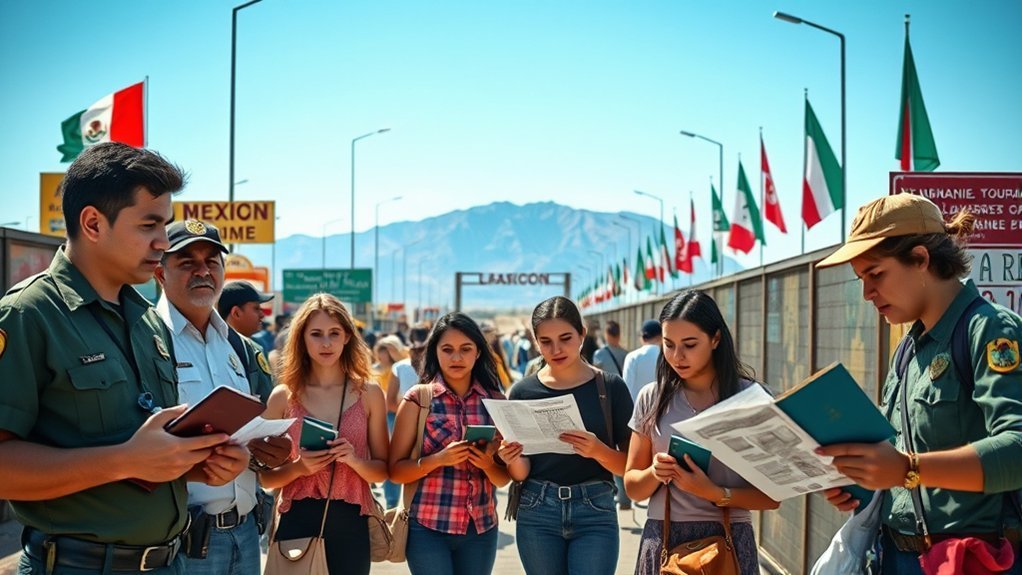
Mexico’s Migration Law gives immigration authorities power to deny a visa, regular admission, or continued stay in several situations. The current wording of Article 43 focuses on the following grounds:
- Your background in Mexico or another country creates a national or public security concern.
- You do not meet the requirements in the Migration Law, its regulations, or another applicable rule.
- The documents or information you provide are not authentic.
- A competent authority has placed an express restriction on your entry.
- Another applicable law authorizes the refusal.
Other practical reasons can include an expired or damaged travel document, a required visa that is missing or invalid, conflicting answers about your trip, or an inability to show where you will stay and how you plan to leave Mexico. Paying a fee, receiving an FMM, or holding a visa does not guarantee admission.
How Criminal History Can Affect Entry
A criminal record can matter, but the original claim that every drug, weapons, assault, or DUI offense causes denial regardless of age or outcome is too broad. Current law does not publish an automatic list that bars every person with one of those records. Instead, officials may consider whether a traveler’s background creates a security concern or triggers another legal restriction.
An arrest is not the same as a conviction. A dismissed, sealed, or expunged case may be treated differently from an active warrant or final conviction. However, an expungement in one country does not guarantee that no record exists in another database or that Mexican authorities must ignore information they lawfully receive.
Warning: Never hide a record, alter a document, or give a false answer to an immigration officer. False or unauthentic information is a separate legal reason for refusal.
Can You Get Advance Clearance?
Mexico does not offer a general online service that guarantees advance approval for travelers with criminal histories. A consulate can explain document and visa rules, but the officer at the port of entry still decides whether to admit you. For a serious offense, active criminal process, unresolved warrant, prior deportation, or past Mexican immigration problem, get case-specific legal advice before buying nonrefundable travel.
Essential Documents You Must Have for Entry
The exact requirements depend on your nationality, travel method, and purpose. A U.S. tourist usually does not need a Mexican visa for a short visit within the visitor limit, but travelers using other passports may need one. A visa also does not replace the normal immigration inspection.
Products Worth Considering

【Travel Must Haves】The passport holder is a great holder for travel essentials. With the versatile elastic band, you can carry the passport holder in your pocket, clip it in your hand or on the handle of your suitcase and know it is safe.

Sturdy Passport Holder: Exquisite reinforced stitching workmanship, this passport cover is sturdier than those standard passport covers yesteryear; AirTag is NOT included
Passport Validity Requirements
Mexico generally requires your passport to be valid when you enter. It does not normally impose a universal rule requiring six additional months of validity. Still, your passport should remain valid for your full trip, and your airline may apply its own boarding checks.
- Use a passport book for air travel.
- A U.S. passport card may be accepted for certain land or sea travel, but it cannot be used for international air travel.
- Replace a badly damaged passport before your trip.
- Check whether your nationality requires a Mexican visa or qualifies for an exemption.
FMM and Digital Immigration Records
The Forma Migratoria Múltiple, or FMM, is not handled the same way for every arrival. According to the National Migration Institute, land travelers can complete an FMM electronically and must present it with a valid passport at the port of entry. At international airports, Mexico generally creates a digital immigration record instead of requiring every traveler to carry a paper FMM.
The maximum visitor period can be up to 180 days, but 180 days is not automatic. The immigration officer decides the authorized stay. Check your passport stamp, printed receipt, QR record, or FMM before leaving the inspection area.
For 2026, the visitor fee is listed as MXN 983 when it applies. Land visitors staying seven days or less are generally exempt from that fee under the Federal Law of Rights. Fees and procedures can change, so confirm the amount through INM before travel.
Supporting Travel Documents
Immigration officers may ask for documents that support your stated purpose. Keep digital and printed copies of:
- Your hotel reservation or the full address where you will stay.
- Your return or onward ticket.
- A simple itinerary with dates and destinations.
- Proof that you can pay for the trip, such as a working bank card or reasonable financial evidence.
- An invitation, school letter, business letter, or event registration when relevant.
- Travel insurance details and emergency contacts.
Pro Tip: Make sure your answers match your documents. A hotel booking in one city, a return ticket from another region, and a vague explanation can lead to extra questions even when each item is valid.
Health Documentation Guidelines
Routine vaccination certificates are not part of the standard tourist document list for ordinary entry to Mexico. Health recommendations are separate from immigration requirements. Review current health guidance before departure, carry enough prescription medicine for your trip, and keep medicine in labeled packaging. If you carry controlled or psychotropic medicine, bring the prescription and supporting medical documents.
How Travel Warnings Differ From Travel Bans
A travel advisory is guidance from your own government about risk. It does not normally make travel illegal or automatically cause Mexico to deny entry. A legal restriction or border closure is different because it can directly prevent travel or entry.
The U.S. State Department uses four advisory levels: Level 1, exercise normal precautions; Level 2, exercise increased caution; Level 3, reconsider travel; and Level 4, do not travel. Mexico is assessed by state, so the national level does not tell the full story.
As of the advisory issued May 29, 2026, Mexico is Level 2 overall, while Michoacán and Tamaulipas are Level 4, Baja California is Level 3, and Hidalgo is Level 2. Check again immediately before travel because conditions can change.
Do not assume that a popular tourist city has the same risk level as the rest of its state. Read the state section, route restrictions, and recent security alerts on the current Mexico Travel Advisory.
How to Pick the Safest Border Crossings

No border crossing is always the safest. San Ysidro and Otay Mesa are busy, well-known ports, but heavy traffic does not remove risks on the Mexican side. Choose a crossing by looking at the state advisory, the roads after the crossing, port hours, recent security alerts, daylight remaining, fuel, and your final destination.
- Cross early enough to complete the first part of your Mexican drive in daylight.
- Use main roads and toll roads when official guidance recommends them.
- Avoid remote shortcuts suggested only because they save time.
- Confirm port operating hours before departure.
- Do not treat social media reports or one traveler’s experience as proof that a route is safe.
Do not confuse Laredo, Texas, with Nuevo Laredo, Tamaulipas. They are on opposite sides of the border, and the risk assessment for the Mexican state matters once you cross.
Products Worth Considering

Best Routes for Safe Entry to Mexico From Georgia
There is no single route from Georgia to Mexico that remains safest in every season or security situation. The original recommendations for the B&M Bridge, Highway 101, and Eagle Pass were not supported well enough to publish as safety advice. A bridge may be orderly while the road beyond it passes through a higher-risk state.
Before choosing a route, map every Mexican state you will enter, then compare each state with the current advisory. The U.S. Embassy’s driving guidance warns that navigation apps usually choose the fastest route and do not account for official road restrictions or security advice.
Warning: If your destination is Ciudad Hidalgo or another location in Michoacán, note that Michoacán was Level 4, Do Not Travel, in the advisory issued May 29, 2026. If you meant the separate state of Hidalgo, that state was Level 2. Confirm the exact destination before planning.
For a long road trip, build a conservative plan:
- Choose the destination and verify its state.
- List every Mexican state and highway on the route.
- Remove routes that conflict with official restrictions.
- Plan fuel, tolls, hotels, and border arrival during daylight.
- Share the route and check-in times with someone you trust.
- Recheck security alerts on the day you leave.
Navigating Customs and Immigration in Mexico
Immigration and customs are separate. Immigration decides whether you may enter and how long you may stay. Customs checks the goods, money, medicine, and restricted items you bring into the country.
What Happens During Immigration Inspection
The officer may ask why you are visiting, where you are staying, how long you will remain, how you will pay for the trip, and how you will leave. If your documents are irregular, your answers conflict, or an alert appears, you may be sent to a second review.
If entry is refused, Mexican law calls for a written record that explains the legal reason for inadmissibility. During a second review, you may present relevant evidence and can ask about contacting your consulate.
Customs Declarations and Prohibited Items
- Declare cash or negotiable instruments totaling USD 10,000 or more, or the equivalent in another currency.
- Do not bring firearms, ammunition, or weapons into Mexico without specific Mexican authorization. Penalties can be severe.
- Keep prescription medicine in original labeled containers and carry supporting documents for controlled medicine.
- Declare goods that exceed your personal baggage allowance or duty-free limit.
- Ask a customs officer before inspection if you are unsure whether an item must be declared.
Documents for Driving Into Mexico
If you drive, carry your driver’s license, vehicle registration, proof of ownership or permission to use the vehicle, and Mexican auto insurance. U.S. or Canadian insurance alone may not provide the liability coverage required in Mexico. A Temporary Vehicle Import Permit may also be required outside designated free zones. Cancel the permit correctly when leaving Mexico so the deposit and vehicle record are closed.
Essential Safety Tips for Traveling in Mexico

- Review the advisory for every state on your route, not only your destination.
- Drive during daylight and avoid unplanned stops in isolated areas.
- Use established toll roads when they fit current official guidance.
- Keep the fuel tank above half full on long rural stretches.
- Do not display large amounts of cash or expensive equipment.
- Use official taxis or trusted transportation arranged by your hotel or host.
- Enroll in the Smart Traveler Enrollment Program if you are a U.S. citizen or national.
- Carry emergency numbers, insurance details, a first-aid kit, water, and a charged phone.
Safety conditions can change faster than a general article can be updated. Recheck official alerts before each travel day, especially after a security incident, road closure, storm, or major public event.
Tips for Managing Traffic and Wait Times at the Border
Border demand changes by hour, weekday, holiday, port, and lane type. Avoid promising that Friday afternoons are always worst or weekday mornings are always best. Check live conditions close to departure.
- Confirm the port’s opening hours and any temporary lane closures.
- Allow extra time before flights, hotel check-in, or long drives.
- Bring water and keep enough fuel for a long queue.
- Use the U.S. Customs and Border Protection wait-time page for current U.S.-bound conditions and port information.
- Remember that CBP’s Ready Lane and SENTRI information applies to entry into the United States, not admission into Mexico.
- Verify southbound traffic through current port notices and local official alerts because it can differ from the U.S.-bound wait.
What to Do if Mexico Denies Entry
- Stay calm and follow the officer’s instructions.
- Ask for the written record that states the reason for refusal.
- Ask whether you may contact your embassy or consulate.
- Keep copies or photos of the refusal document, boarding pass, itinerary, and any receipts.
- Do not sign a document you do not understand without requesting an explanation or interpretation.
- Before attempting another trip, correct the document problem or obtain advice from a qualified Mexican immigration lawyer.
A quick second attempt with the same documents and answers may lead to the same result. If the refusal involved false information, an immigration alert, a criminal matter, or an official restriction, professional advice is more useful than trying a different airport or land crossing.
Resources for Staying Updated on Travel Advisories
- Mexico’s National Migration Institute: FMM procedures and immigration services.
- U.S. State Department: state-by-state Mexico advisories and entry information.
- U.S. Embassy and Consulates in Mexico: security alerts and driving guidance.
- U.S. Customs and Border Protection: U.S.-bound border wait times and port hours.
- Smart Traveler Enrollment Program: security messages and easier contact during an emergency.
Frequently Asked Questions
Can you be denied entry into Mexico?
Yes. Mexico may refuse entry if you do not meet legal requirements, provide unauthentic documents or information, are subject to an official restriction, or your background creates a national or public security concern. A visa or FMM does not guarantee admission.
Can an old or expunged criminal record cause denial?
It can affect a decision if authorities know about it and consider it relevant to security or another legal restriction, but current law does not create a published automatic ban for every old or expunged record. Expungement rules also differ by jurisdiction.
Will a DUI automatically stop you from entering Mexico?
There is no published rule saying every DUI automatically causes refusal. The facts of the case, any active restrictions, your full background, and the officer’s legal assessment can matter. Seek legal advice if the case was serious or recent.
Does your passport need six months of validity?
Mexico generally requires a passport that is valid at entry rather than six extra months. Your passport should still cover your full stay, and your airline may perform its own document checks.
Do all tourists need a paper FMM?
No. Land travelers generally use an FMM, while international airports normally create a digital immigration record. Always check the authorized stay shown on your stamp, receipt, QR record, or FMM.
Can a one-way ticket cause problems?
A one-way ticket is not an automatic refusal, but an officer may ask how and when you will leave. Carry clear onward plans and enough evidence to support the length and purpose of your visit.
How strict are Mexico customs inspections?
Customs can inspect baggage and ask you to declare cash, goods, medicine, food, and restricted items. Declare anything you are unsure about before inspection. Weapons and ammunition can lead to severe criminal penalties.
Should you avoid traveling to Mexico right now?
That depends on the exact state, city, road, and current conditions. Mexico has different advisory levels by state. Review the latest official advisory and postpone travel that conflicts with a Level 4 warning or specific road restriction.
Conclusion
You can reduce the risk of being denied entry to Mexico by carrying valid documents, giving clear and truthful answers, supporting your travel purpose, and checking current immigration and safety rules. Do not assume that an old record creates an automatic ban, and do not assume that a visa guarantees entry. For a serious criminal or immigration issue, get qualified legal advice before you travel.
Sources
- Mexico Migration Law – legal grounds for refusal, second review, and written inadmissibility records.
- Mexico Federal Law of Rights – current visitor fee and land-entry fee exemption rules.
- National Migration Institute FMM Portal – official land-entry FMM conditions and maximum validity.
- U.S. State Department Mexico Travel Advisory – current state-level risks, passport guidance, and entry information.
- U.S. Embassy Driving to Mexico Guide – route planning, vehicle permits, insurance, and road safety.
- U.S. Customs and Border Protection Border Wait Times – current U.S.-bound wait times and port operating information.
