
Last Updated on September 11, 2026 by Daniel Globe
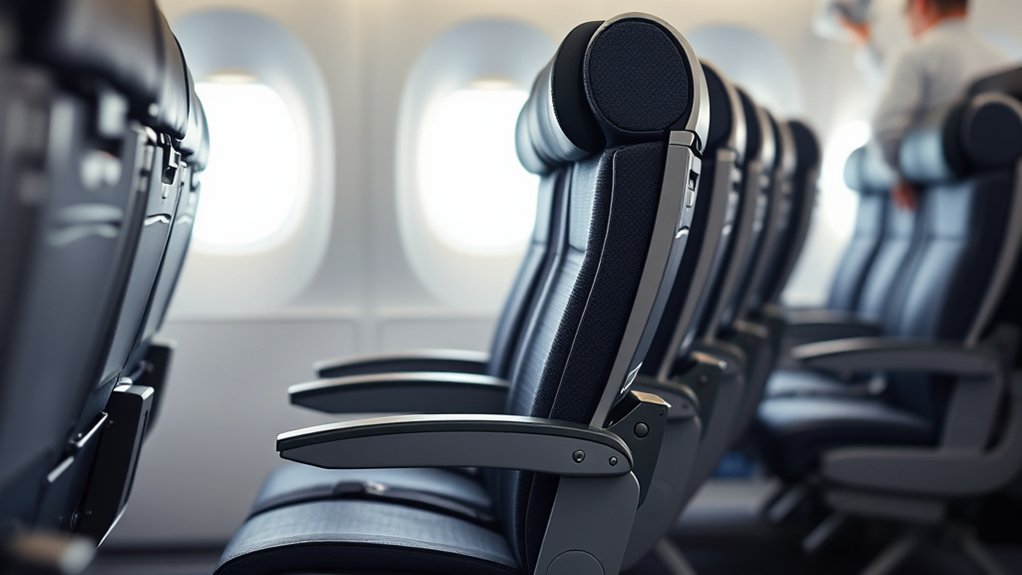
Airplane seat width is not one universal number. Many economy seats measure about 17 to 18 inches between the inside surfaces of the armrests, but current airline specifications can range from the low 16s to more than 19 inches. Seat pitch, fixed armrests, cabin shape, and recline can matter just as much as the published width.
Quick Answer
A typical economy airplane seat is around 17 to 18 inches wide, measured between the inside surfaces of its armrests. However, actual widths vary by airline, aircraft, cabin, and seat location. Compare width and pitch together, because a wide seat can still feel cramped when legroom is limited or the seat ahead reclines.
Key Takeaways
- Many economy seats are about 17 to 18 inches wide, but published dimensions vary more than that range suggests.
- Seat width is measured between the inside surfaces of the armrests, while seat pitch measures the distance between rows.
- Bulkhead and exit-row seats may provide more room, but each has restrictions and possible drawbacks.
- Recline feels most intrusive when pitch is tight, tray tables are in use, or the passenger behind has little knee clearance.
- Check the airline’s official aircraft page and exact seat map before booking, then recheck before departure in case the aircraft changes.
Disclosure: As an Amazon Associate I earn from qualifying purchases. Some links on this page are affiliate links, at no extra cost to you.
What Is Standard Airplane Seat Width?
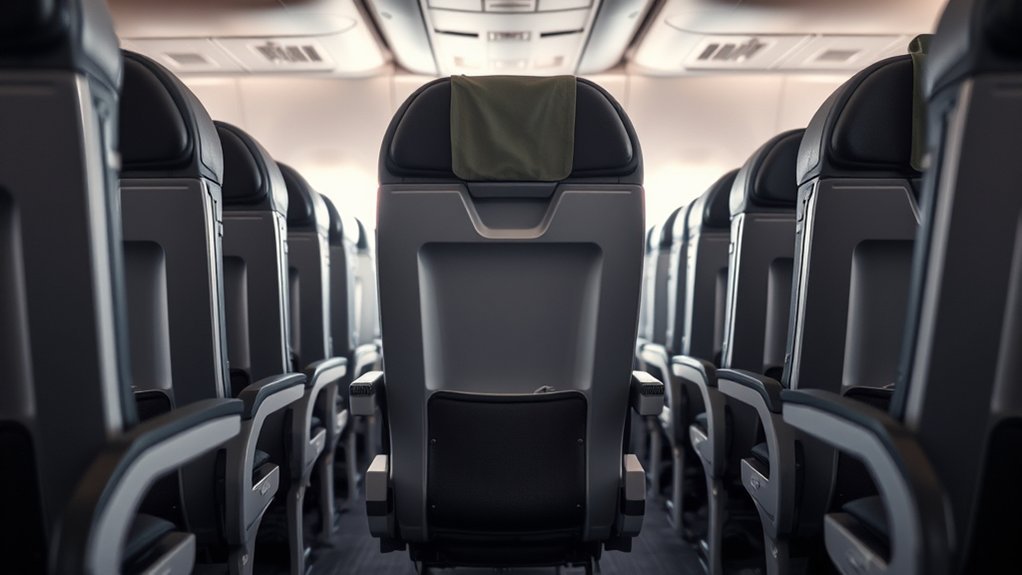
There is no single width used for every economy seat. A practical rule of thumb is that many main-cabin seats are close to 17 to 18 inches wide. Some are narrower, while seats on certain regional jets, wide-body aircraft, or premium products can be wider.
Current American Airlines aircraft specifications, for example, list Main Cabin widths ranging from about 16.2 inches on some aircraft and seat locations to more than 19 inches on some regional jets. Airbus describes an 18-inch economy seat as standard for its A320 family. These examples show why the aircraft and cabin layout matter more than a single industry average.
How Airplane Seat Width Is Measured
Under the current U.S. regulatory definition, passenger-seat width is the distance between the inside surfaces of the armrests. This measurement is more useful than measuring the cushion alone because fixed armrests limit the space available to your hips and upper legs.
The number still does not tell the full story. A curved window wall, a wide center console, a tray table stored in the armrest, or a rigid seat shell can reduce usable space even when the published width looks acceptable.
Note: Under 14 CFR 121.311(k), covered U.S. airlines with websites must publish the narrowest and widest seat widths in each class for every aircraft make, model, and series they operate.
Typical Economy Seat Dimensions
| Measurement | What It Means | What You May See |
| Seat width | Space between the inside surfaces of the armrests | Often around 17–18 inches, with narrower and wider exceptions |
| Seat pitch | Distance from one point on a seat to the same point on the seat ahead or behind | About 30–32 inches in many standard cabins; more in extra-legroom products |
| Recline | How far the seatback moves from its upright position | Fixed, limited, or several inches depending on the seat |
| Usable legroom | The space your knees, shins, and feet can actually use | Affected by seat thickness, supports, equipment boxes, and recline |
How Airplane Seat Width Has Changed
Economy cabins have generally become denser on many routes, but seat width has not followed one universal timeline. Airlines choose different layouts for the same aircraft, and manufacturers often allow several seat types and cabin configurations.
Seat pitch has also changed on many aircraft. A denser layout may use more rows, thinner seats, smaller tray tables, or reduced recline. Those changes can make a cabin feel tighter even when the published width remains similar.
Seat Width Over Time
It is common to see claims that every economy seat once measured 19 inches and has now fallen to 17 inches. That is too simple. Historical widths differed by aircraft type, cabin layout, and airline just as they do today.
The FAA’s airplane cabin and egress study used 16- and 18-inch experimental widths because they represented relevant single-aisle economy measurements when the study was designed. It did not establish a universal historical average for passenger comfort.
Narrower Economy Configurations
Airlines can increase seating capacity by adding rows, changing seat models, reducing galley or storage space, or selecting a tighter arrangement across the cabin. Aircraft body width also places a physical limit on the combination of seat width, armrests, and aisle width.
A published seat-width range may also include several positions within one aircraft. Seats with tray tables inside the armrests, seats near curved cabin walls, and certain bulkhead or exit-row seats may differ from the standard row.
Comfort in Tight Cabins
Comfort depends on more than the number printed beside “seat width.” Shoulder room, hip room, cushion shape, armrest movement, pitch, recline, seat supports, and the position of neighboring passengers all affect how open or confined the row feels.
A wider seat can still feel cramped when the pitch is tight, the armrests are fixed, or the seat ahead reclines into your usable space.
Why Narrow Seats Feel Cramped
A narrow seat restricts side-to-side movement. Your shoulders may extend beyond the seatback, your elbows may compete for the armrests, and your hips may press against fixed structures. The effect becomes stronger when every seat in the row is occupied.
These design features often make a seat feel smaller than its listed width:
- Fixed armrests: They reduce your ability to shift position and may contain a tray table or entertainment controls.
- Curved cabin walls: Window seats near the front or rear of some cabins may have reduced shoulder or foot space.
- Seat supports and equipment boxes: Hardware under the seat ahead can limit where you place your feet.
- Thick or angled cushions: The shape of the seat can reduce the usable portion of its published width.
- A reclined seat ahead: Recline reduces visual space and may bring the seatback, screen, or tray closer to you.
Seat Width vs. Seat Pitch and Legroom
Seat width controls lateral space. Seat pitch describes row spacing. They measure different parts of comfort and should always be compared together.
Pitch is not the same as clear knee room. A slim seat at 30 inches of pitch may provide more usable space than a thick older seat at the same pitch. Recline mechanisms, literature pockets, power boxes, and seat supports can also change the amount of room your legs receive.
Note: A seat advertised as “extra legroom” may have more pitch without being any wider than a regular economy seat. Check both measurements before paying an upgrade fee.
When Reclining Makes Flights Less Comfortable
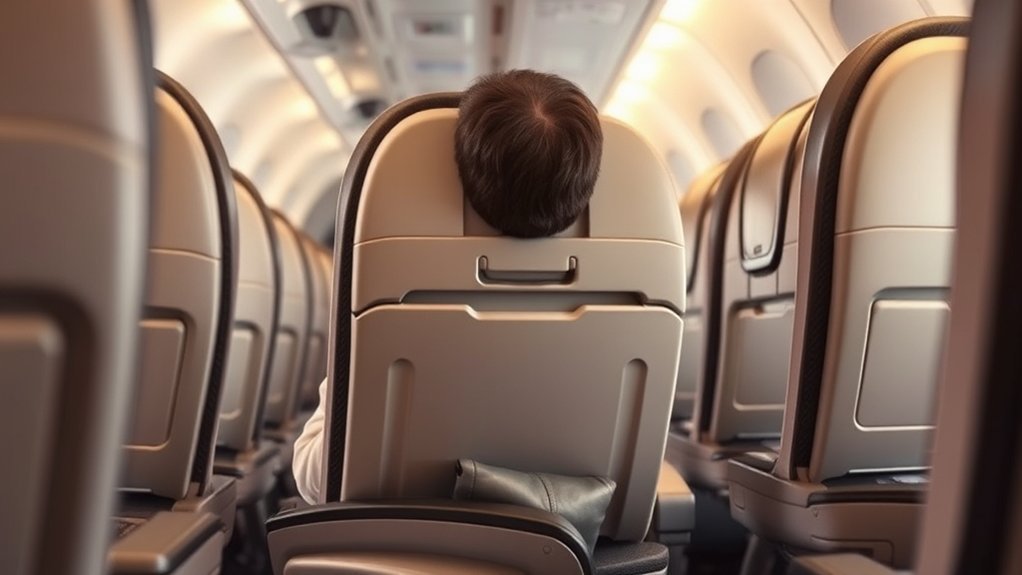
Reclining moves the upper part of the seatback into the space of the passenger behind you. The amount varies by seat model. Some economy seats have limited movement, some use a sliding cradle design, and others are fixed in place.
The impact is greatest when the row has tight pitch, the passenger behind is tall, a laptop or meal is on the tray table, or a child-restraint system limits available space.
Tight Seat Pitch
Many standard economy configurations publish pitch near 30 to 32 inches. That number includes the seat structure itself, so it does not represent an empty 30-inch gap in front of your knees.
When the seat ahead reclines, you may lose tray-table clearance and visual space. Your knees do not necessarily move, but the seatback comes closer to your face, chest, laptop, or drink.
Recline Conflict Risks
Most recline disputes happen when the movement is sudden or when the passenger behind is using the tray table. A fast recline can spill a drink, push a screen, or trap a laptop lid against the seatback.
During takeoff and landing, passengers must follow crew instructions to place seatbacks upright. This requirement appears in 14 CFR 121.311(e).
Warning: Do not push, kick, hold, or damage another passenger’s seat. Follow all crew instructions and ask a flight attendant for help if a disagreement cannot be resolved calmly.
How to Avoid Recline Conflicts
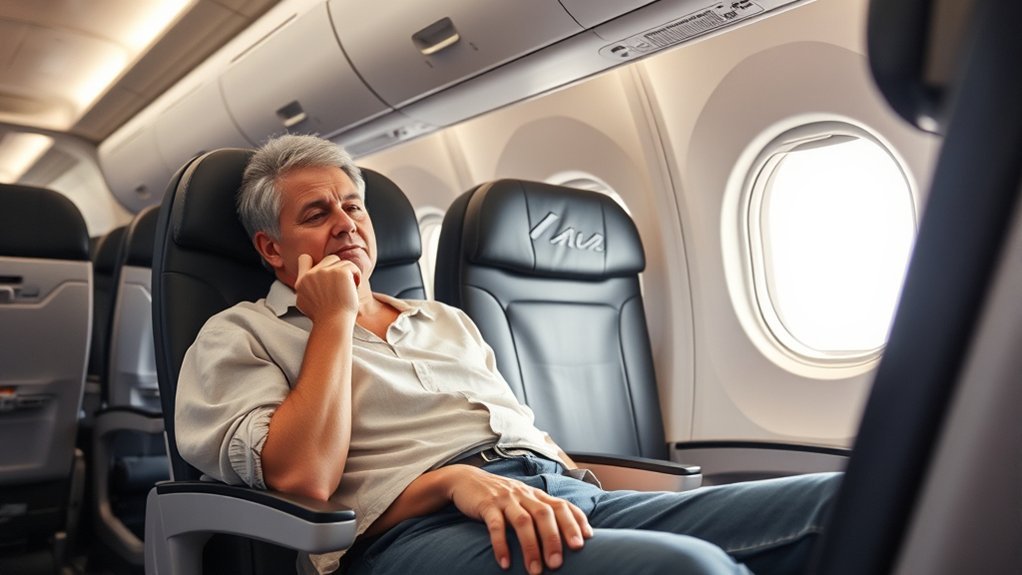
You do not need a long conversation before reclining, but a brief warning can prevent surprises. Use these steps:
- Look behind you. Check whether the passenger is eating, drinking, or using a laptop.
- Give a short warning. A simple “I’m going to recline a little” gives the other person time to move items.
- Move the seat slowly. Avoid dropping the seatback to its limit in one motion.
- Use only the space you need. A partial recline may provide enough support without taking the full available range.
- Return upright when needed. Keep the seat upright when the crew requires it and consider doing so during meal service.
- Ask the crew to mediate. Flight attendants can clarify seat functions or help when a passenger cannot use the available space safely.
Pro Tip: On an overnight or long-haul flight, discuss reclining early rather than waiting until the passenger behind has arranged a laptop, meal, or sleeping position.
Best Seats for More Personal Space
The roomiest choice depends on whether you need more width, more legroom, fewer seatmates, or protection from recline. Review the exact aircraft rather than relying only on a seat label.
Bulkhead Seats
A bulkhead row has a wall or divider instead of another passenger seat directly ahead. It may provide better knee clearance and removes the risk of someone reclining into you.
However, the wall can prevent you from extending your feet beneath the row ahead. Tray tables are often stored in fixed armrests, which can reduce usable width. Personal items may also need to remain in an overhead bin during taxi, takeoff, and landing.
Exit-Row Seats
Exit rows often provide additional pitch, but the amount varies. Some exit-row seats have limited recline so they do not block another exit row.
Passengers assigned to an exit seat must be willing and able to perform emergency functions. Under 14 CFR 121.585, airlines must assess eligibility, and passengers younger than 15 cannot occupy these seats.
Premium Economy and Extra-Legroom Seats
True premium economy usually provides greater pitch and a wider seat in a separate cabin. An extra-legroom economy product may use the same seat width as standard economy but add several inches of pitch.
Compare the listed dimensions and benefits before paying more. The cabin name alone does not prove that the seat is wider.
Window, Aisle, and Middle Seats
- Window: Provides a wall to lean against but may lose shoulder or foot room where the fuselage curves.
- Aisle: Makes it easier to stand and stretch but exposes your shoulder and arm to passing passengers and carts.
- Middle: Usually offers the least personal boundary because passengers sit on both sides.
- Last row: May be close to a galley or restroom and may have limited recline.
How to Check Seat Width Before Booking
- Find the aircraft type. Look at the flight details for a model such as an Airbus A321, Boeing 737-800, or Embraer 175.
- Open the airline’s official fleet page. Use the airline’s measurements rather than assuming that every aircraft of the same model has the same cabin.
- Compare width and pitch. Check both numbers and note whether the airline publishes a range.
- Study the exact seat map. Look for bulkheads, exits, lavatories, galleys, missing windows, and rows with limited recline.
- Check the seat details. Fixed armrests and tray tables stored in the armrest can reduce usable width.
- Recheck before departure. An aircraft substitution can change the cabin layout and your assigned seat.
Note: A seat map is a planning tool, not a guarantee. Airlines may substitute another aircraft or cabin version for operational reasons.
Seating Accommodations and Extra Space
Travelers who need a specific seat because of a disability should contact the airline as early as possible. U.S. seating-accommodation rules may cover movable aisle armrests, adjoining seats for certain assistants, and bulkhead or greater-legroom seating for specific needs when that type of seat exists on the aircraft.
The requirements are described in 14 CFR Part 382, Subpart F. Exit-row safety restrictions still apply.
If you need more width for comfort rather than a disability accommodation, review the airline’s extra-seat policy before purchasing. Policies, refund conditions, armrest requirements, and seat-assignment procedures differ by carrier.
Frequently Asked Questions
What is a standard recliner seat on a plane?
A standard economy recliner is a seat whose backrest moves a limited distance from the upright position. There is no universal recline amount or width. Some last-row, exit-adjacent, and short-haul seats have restricted recline or do not recline at all.
Why avoid seat 11A on a plane?
There is no universal reason to avoid seat 11A. Seat numbers mean different things on different aircraft. It may be a normal window seat, an exit-row seat, a bulkhead seat, or a seat with a missing window. Check the airline’s exact seat map and aircraft version.
What drinks should you not order on a plane?
There is no universal list of drinks that every passenger must avoid. Choose beverages that suit your health needs and personal tolerance. Alcohol or caffeine may affect sleep or make some travelers feel unwell, but coffee, tea, soda, dairy, and citrus drinks are not automatically unsafe.
What is a good airline seat width?
A width of about 18 inches or more often feels roomier in economy, but comfort depends on body shape, armrest design, cushion shape, and neighboring passengers. Compare the airline’s published width with pitch and seat-location details.
Is airplane seat width measured between the armrests?
Yes. The current U.S. regulatory definition measures passenger-seat width between the inside surfaces of the armrests. This may be less than the total outside width of the seat structure.
Are exit-row seats always wider?
No. Exit-row seats often provide more pitch or knee room, but they may be the same width as standard economy. Fixed armrests, tray-table storage, and limited recline can also reduce comfort.
Conclusion
Standard economy seat width is commonly near 17 to 18 inches, but the exact measurement can fall outside that range. Width alone also does not determine comfort. Check seat pitch, armrest design, recline, cabin location, and the exact aircraft before booking. A few minutes on the airline’s official fleet page can prevent an uncomfortable surprise.
Sources
- 14 CFR 121.311 — Seats, safety belts, and shoulder harnesses — seat-width disclosure and measurement rules and the upright-seatback requirement.
- FAA: Effects of Airplane Cabin Interiors on Egress I — FAA research on seat width, pitch, anthropometrics, and evacuation.
- American Airlines Aircraft Specifications — current examples of aircraft-specific seat width and pitch.
- Airbus Passenger Aircraft — manufacturer information about A320-family economy-seat width.
- 14 CFR 121.585 — Exit seating — exit-row eligibility and passenger responsibilities.
- 14 CFR Part 382, Subpart F — Seating accommodations — seating accommodations for passengers with disabilities.

