

Last Updated on September 10, 2026 by Daniel Globe
Angels Landing is a 5.4-mile round-trip hike in Zion National Park with 1,488 feet of elevation gain and an exposed, chain-assisted final section. The route is famous for its views, but a mistake near the cliff edge can be fatal. Understanding the documented deaths, current permit rules, and official safety guidance can help you decide whether this hike is right for you.
Quick Answer
At least 18 hiker deaths had been reported in connection with Angels Landing by July 2026. That minimum combines a 2025 study’s count of at least 17 deaths through 2024 with an NPS-confirmed fatal fall on April 17, 2026. Falls are the main danger, but medical conditions, heat, ice, storms, and unsafe decisions also matter.
Key Takeaways
- Public death totals vary because sources do not always count the same area, cause, or time period.
- The strongest current evidence supports a minimum of 18 reported hiker deaths by July 2026, not 13.
- You need a permit to go beyond Scout Lookout onto the Angels Landing chains, but you do not need one to hike to Scout Lookout.
- Do not attempt the chain section during rain, thunderstorms, darkness, snow, or ice.
- Stay on the marked route, keep children and group members together, and turn around before fear, fatigue, or weather affects your judgment.
At a Glance
| Time Required | About 4 hours for many hikers, but allow longer for crowds, rests, weather, and shuttle timing. |
| Difficulty | Strenuous, with steep switchbacks and an exposed final half-mile where parts of the route are less than 3 feet wide. |
| Tools Needed | Downloaded or printed permit, broken-in hiking boots, water, food, layers, a park map, and a working headlamp. |
| Cost | As of 2026, the lottery application costs $6 for a group of up to six, plus $3 per person if selected. The park entrance fee is separate. |
What’s in This Article
- How Many People Have Died on Angels Landing?
- Safety Warnings Every Hiker Must Know
- What Actually Causes Deaths on Angels Landing?
- How Park Authorities Have Responded to the Deaths
- What Verified Fatality Reports Teach Hikers
- How to Hike Angels Landing as Safely as Possible
- Should You Hike Angels Landing?
- Frequently Asked Questions
Disclosure: As an Amazon Associate I earn from qualifying purchases. Some links on this page are affiliate links, at no extra cost to you.
How Many People Have Died on Angels Landing?
There is no simple live National Park Service counter for Angels Landing deaths, so totals depend on what a source includes. Some lists count only fatal falls from Angels Landing or the approach trail. Others count all hiking deaths on the route, including medical emergencies.
A 2025 peer-reviewed case study reported that local and national media had identified at least 17 hiker deaths on Angels Landing through 2024. The National Park Service then confirmed that a 68-year-old hiker died after a reported fall from the chained section on April 17, 2026.
Taken together, the available evidence supports a minimum of 18 reported hiker deaths connected with Angels Landing by July 2026. This is a researched minimum, not an official real-time NPS total.
The older figure of 13 came from a 2021 investigation that counted hikers who had fallen and died from Angels Landing or the trail to it since 2000. It did not represent every type of death over the trail’s full history. That is why articles using “13 total deaths” are now outdated.
Why Angels Landing death totals differ
- Different boundaries: Some reports include Scout Lookout, the West Rim Trail approach, or nearby fall locations. Others count only the summit ridge.
- Different causes: A fall-only tally will be lower than a tally that also includes sudden cardiac death or other medical emergencies.
- Different end dates: A list published in 2021 will miss later incidents, including the confirmed 2026 death.
- Incomplete public records: News reports and older incident files do not always use the same labels or provide a complete running total.
Note: A death count describes past incidents. It does not calculate your personal odds of dying. Researchers have noted that reliable denominator data, such as total hikers and exposure hours, is not available for a precise fatality rate.
Safety Warnings Every Hiker Must Know
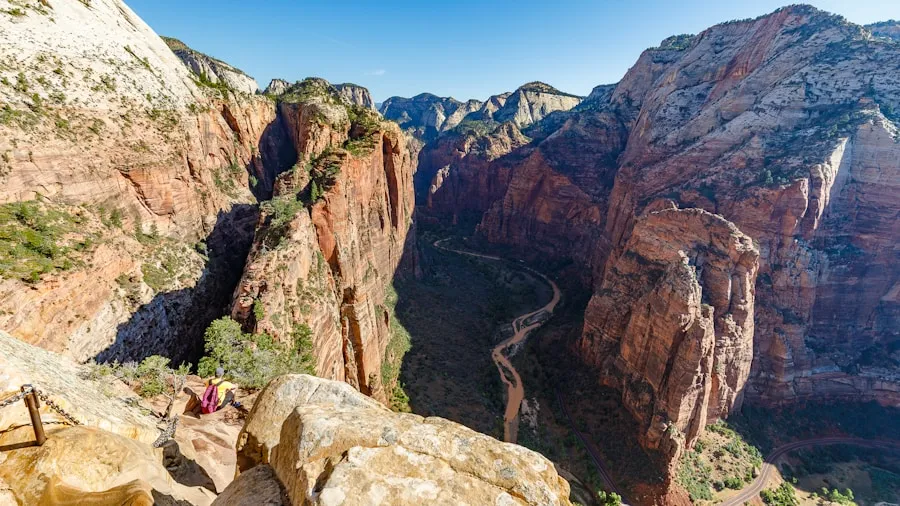
The official NPS Angels Landing guide describes the hike as strenuous and places responsibility for safety on each hiker. The final half-mile uses a single chain along a narrow ridge. In some places, only one person can pass safely at a time.
Do not climb in rain, thunder, darkness, snow, or ice
Warning: Do not start the chain section if storm clouds are nearby, the rock is wet or icy, or you may still be on the exposed ridge after dark. If conditions worsen while you are climbing, stop going up and descend when you can do so safely.
Thunderstorms can happen at any time and are more common in the afternoon. The NPS lightning guidance says to leave peaks and ridges and seek a fully enclosed building or metal-topped vehicle when thunder is heard. A rock permit is not a reason to continue in unsafe weather.
Stay on the trail and away from cliff edges
Loose sand and pebbles can act like marbles on sandstone. Do not step off the marked route for a shortcut, photo, private resting place, or better view. Put your phone away while moving through exposed terrain. Stop in a wider, secure location before taking a photo.
Keep your group together
Do not allow children, nervous hikers, or slower group members to become separated. Agree on a turnaround point and a regrouping plan before you leave the Grotto. No summit is worth continuing when someone is frightened, exhausted, ill, or unable to move confidently.
Prepare for heat and dehydration
Summer daytime temperatures in Zion Canyon regularly exceed 100°F. The NPS suggests that each person in Zion drink about one gallon, or 4 liters, of water per day. You can fill bottles at the Grotto, but there is no drinkable water on the Angels Landing trail.
Watch for nausea, headache, fatigue, cramps, pale skin, or cool clammy skin, which can indicate heat exhaustion. Stop hiking, move to a cooler place, rest, drink, and eat. Confusion, disorientation, behavior changes, or seizures can indicate heat stroke and require immediate cooling and emergency medical help.
What Actually Causes Deaths on Angels Landing?
The original article’s exact cause table could not be supported by a complete official dataset. A safer summary is to separate the fatal mechanism from the contributing factors documented in incident reports and official safety guidance.
| Hazard or Factor | How It Can Become Fatal |
|---|---|
| High-elevation falls | A slip, trip, loss of balance, or off-trail move near an exposed edge can lead to an unsurvivable fall. |
| Unsafe behavior | Leaving the route, sitting at an edge, jumping between rocks, rushing, distraction, and overestimating ability reduce the margin for error. |
| Weather and trail conditions | Rain, ice, wind, loose sand, darkness, and thunderstorms can affect traction, balance, visibility, and decision-making. |
| Medical emergencies | The steep climb can stress hikers with heart disease or other conditions, especially when symptoms or medical advice are ignored. |
| Heat and dehydration | Heat illness can impair coordination and judgment before progressing to a life-threatening emergency. |
| Group and crowd pressure | Crowding, separation, dares, rushing, and reluctance to turn back can push a hiker into a situation beyond their ability. |
In the 2025 case study, unsafe hiking behavior contributed to five of seven closely reviewed deaths, pre-existing health conditions contributed to two, and the physical or social environment contributed to every case. Six of those seven deaths ultimately involved a fall from height.
How Park Authorities Have Responded to the Deaths
Zion has changed the route and its management over time. The 2025 study reports that the trail was partly reconstructed and guard rails were added during the 1950s and 1960s. In 2010, the park installed 60 new posts and 55 meters of chains and repaired some stone steps.
The largest recent change was the Angels Landing Pilot Permit Program, which began in April 2022. The permit system meters use on the narrow section between Scout Lookout and Angels Landing. NPS says it reduces congestion, improves trail conditions, and supports hiker safety.
Current permit rules
- A permit is required: Everyone going beyond Scout Lookout onto the chains needs one.
- Scout Lookout remains permit-free: You may hike about 2.25 miles from the Grotto to Scout Lookout without an Angels Landing permit.
- Two lottery options exist: You can apply through the seasonal lottery or the day-before lottery on Recreation.gov.
- Bring the permit offline: Download, screenshot, or print the confirmation before reaching the trail because mobile service is unreliable.
- Rangers may check it: Checks can occur at the Grotto, Scout Lookout, or elsewhere along the route.
Note: Permit dates, fees, closures, and shuttle schedules can change. Check the official NPS permit page and current conditions page shortly before your visit.
What Verified Fatality Reports Teach Hikers
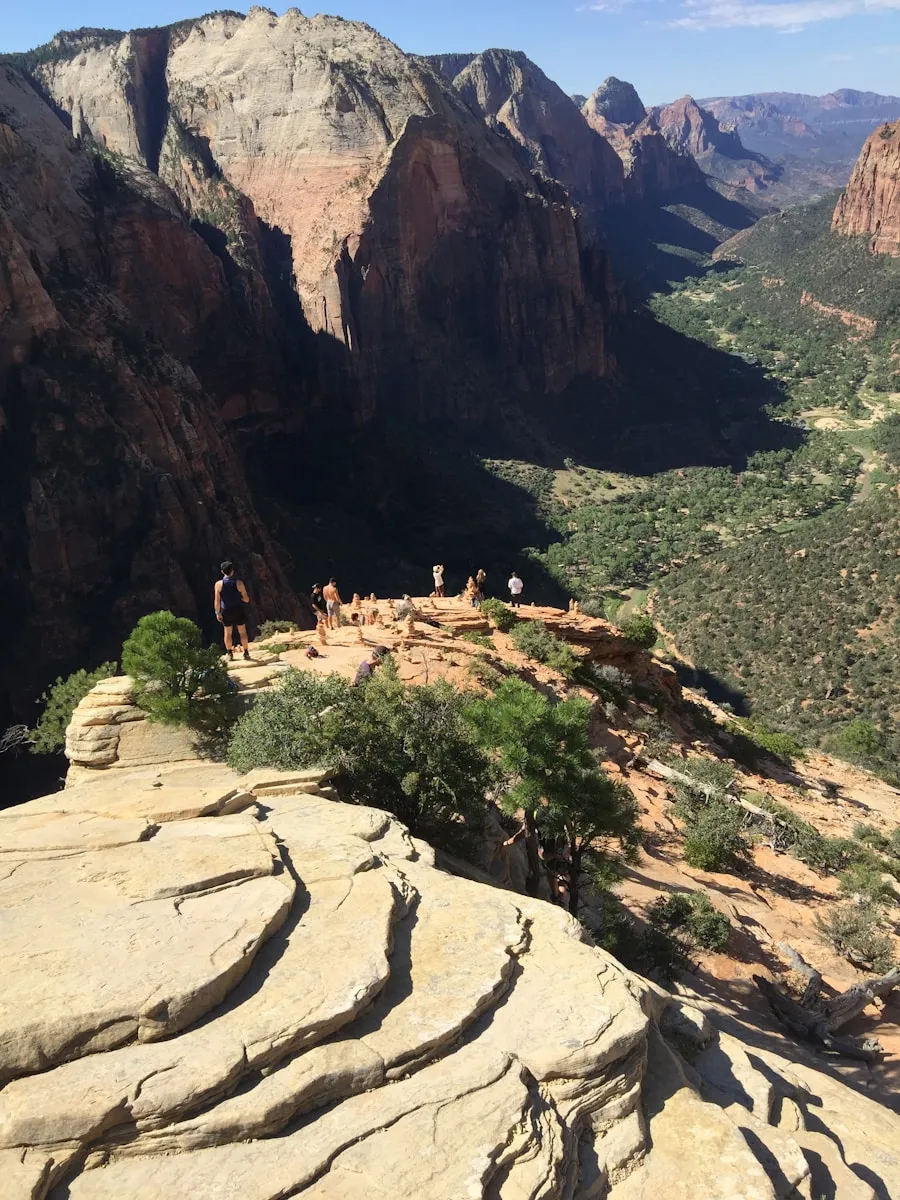
Fatality reports should be handled with care. They involve real people and grieving families. The most useful lesson is not to retell dramatic details, but to identify decisions and conditions that future hikers can avoid.
Warning: Do not leave the marked path, sit with your legs over an edge, jump between rocks, or keep walking while focused on a phone or camera.
The 2025 study reviewed seven fatal incidents using NPS reports obtained through a Freedom of Information Act request. In one case, a 14-year-old left the route after a dare and tried to reach a lower ledge. In another, a 13-year-old became separated from her family, wandered off the trail, and tried to find an alternate route. Other reports described hikers sitting at an edge, jumping between rocks, hiking alone in icy conditions, or walking off-trail while distracted.
The same study also documented a sudden cardiac death in a hiker with serious heart history who had stopped taking prescribed medication. These cases show that Angels Landing risk is not limited to the chain itself. Health, supervision, pace, footwear, weather, and judgment all matter from the lower switchbacks to the summit.
The April 17, 2026 incident is the most recent publicly confirmed fatal fall located during this review. NPS reported that the hiker fell from the chained section. The investigation notice did not establish a public cause beyond the reported fall, so it would be wrong to speculate about distraction, footwear, weather, or intent.
How to Hike Angels Landing as Safely as Possible
1. Decide whether the chain section fits your ability
Do not attempt it if you have a strong fear of heights, poor balance, limited mobility, uncontrolled medical symptoms, or no confidence on exposed terrain. Reaching Scout Lookout is already a strenuous hike with major canyon views. Turning around there is a sound decision, not a failure.
2. Get the correct permit and check conditions
Apply through the official seasonal or day-before lottery. Before leaving, confirm the trail is open, review the weather, check the shuttle schedule, and download your permit. Your permit time is tied to when you should be at the Grotto, not when you expect to reach the chains.
3. Wear broken-in footwear with traction
The NPS recommends broken-in boots with ankle support and good grip. New shoes may cause blisters or affect your footing. Sandals, smooth soles, and loose footwear are poor choices for steep sandstone and uneven steps.
4. Carry water, food, layers, and a headlamp
Fill bottles at the Grotto because there is no potable water on the trail. Bring more food and time than the best-case schedule requires. Carry a working headlamp even on a daytime hike in case delays keep you out later than planned.
5. Use the chains and communicate
Stay within reach of the chains where they are available. Move patiently, give slower hikers time, and allow faster hikers to pass only at a safe location. Many places support one-way movement even though the trail carries traffic in both directions, so communicate and take turns.
6. Stay focused and remain on the route
Keep three points of contact when helpful. Stop before adjusting gear, eating, taking a photo, or checking your phone. A hiking staff may help balance on lower sections, but it does not replace the fixed chains or careful foot placement on the exposed ridge.
7. Turn around early
Turn back when storm clouds build, the rock becomes wet, daylight is running out, or anyone in the group becomes shaky, dizzy, overheated, frightened, or unusually tired. Waiting until a problem becomes severe may leave you in the most exposed part of the route with fewer safe options.
Pro Tip: Start with enough time to finish before afternoon heat or thunderstorms, but do not rely on an arbitrary hour. Your permit time, shuttle access, daylight, season, forecast, and hiking pace should determine your schedule.
8. Know what to do in an emergency
Call 911 if you have service. Mobile coverage is unreliable in Zion Canyon, so another group member may need to find a ranger or reach the trailhead. Keep the injured person away from edges, do not create a second victim, and follow ranger instructions. Rescue can take time in steep terrain.
Should You Hike Angels Landing?
Safety Disclaimer: This article provides general information and does not replace current National Park Service guidance, medical advice, or your own judgment. Angels Landing carries a risk of serious injury or death. Conditions, permits, access, and closures can change without notice.
Angels Landing may be appropriate for a fit, prepared hiker who is comfortable with exposure and willing to turn around. It is not suitable for everyone. The final ridge has steep drop-offs, uneven steps, and places where hikers must share a narrow route while holding a chain.
Choose Scout Lookout instead if you are uncertain about heights, weather, footwear, fitness, balance, or the behavior of your group. You do not need a permit to reach Scout Lookout, and you will complete most of the distance and elevation gain while still seeing wide views of Zion Canyon.
Before you go, read the official permit guide, check current trail conditions, review the forecast, and confirm shuttle access. The best safety decision may be to hike, to stop at Scout Lookout, or to choose another trail entirely.
Frequently Asked Questions
How many people have died hiking Angels Landing?
At least 18 hiker deaths had been reported by July 2026. A 2025 study counted at least 17 through 2024, and NPS confirmed another fatal fall from the chained section on April 17, 2026. The total is a researched minimum because NPS does not publish a live cumulative counter.
What is the most common fatal danger on Angels Landing?
High-elevation falls are the main fatal mechanism in available reports. Contributing factors can include leaving the trail, distraction, loose or icy footing, rushing, group separation, poor judgment, fatigue, and health problems.
Do you need a permit to hike Angels Landing?
Yes, you need a permit to go beyond Scout Lookout onto the Angels Landing chains. You can apply through a seasonal lottery or a day-before lottery. Download, screenshot, or print the confirmation because mobile service may not work at the checkpoint.
Can you hike to Scout Lookout without a permit?
Yes. You may hike the West Rim Trail from the Grotto to Scout Lookout without an Angels Landing permit. The permit is required only when you continue past Scout Lookout onto the chain-assisted route.
Is Angels Landing suitable for beginners or children?
The lower approach may be manageable for some fit beginners, but the chain section is exposed and unforgiving. It is not a good choice for anyone with a fear of heights, poor balance, limited mobility, or difficulty following safety instructions. Children must remain closely supervised and with their group.
When should you turn around?
Turn around if the rock is wet or icy, thunder or storm clouds are nearby, darkness may arrive before you finish, or anyone becomes frightened, dizzy, overheated, weak, or unsteady. A permit does not guarantee safe conditions.
Sources
- National Park Service: Angels Landing Permits & Hiking – trail facts, permit rules, fees, equipment, water, weather, chain safety, Scout Lookout, and emergencies.
- National Park Service: April 2026 Visitor Fatality – confirms the April 17, 2026 fatal fall from the chained section.
- Heggie, Hawkes, and Küpper: Hiking Fatalities on Angels Landing Trail – 2025 case study covering the reported death total and contributing factors.
- National Park Service: Zion Safety – cliff, heat, lightning, water, and general hiking safety guidance.
- National Park Service: Current Conditions – current closures, weather, shuttle access, and trail alerts.
