
Last Updated on July 24, 2026 by Daniel Globe
A rattlesnake on the trail can stop you in your tracks, but the safest response is simple: stop, locate the snake, and create distance without sudden movement. Most rattlesnakes want space, not a confrontation. This guide explains where hikers commonly encounter them, how to pass or turn around safely, and the current first-aid steps to follow after a bite.
Quick Answer
If you see a rattlesnake while hiking, stop, make sure you know where it is, and slowly back away. Keep at least 6 feet away, and more when possible. Do not touch, move, photograph closely, or kill it. If bitten, call 911, limit movement, and get emergency medical care immediately.
Key Takeaways
- Stop and locate the snake before moving, especially if you hear a rattle but cannot see it.
- Back away slowly and keep at least 6 feet of space, with more distance whenever the trail allows.
- Stay on clear trails, watch where you place your hands and feet, and keep children and pets close.
- Never handle, move, harass, or kill a rattlesnake, even if it appears dead.
- Treat every bite as an emergency. Call for help, limit movement, remove tight items, and keep the limb loosely immobilized at heart level.
At a Glance
| Time Required | Usually 30 to 60 seconds to stop, locate the snake, and create safe distance; bite response begins immediately |
| Difficulty | Simple actions, but they can feel difficult under stress |
| Tools Needed | Phone or satellite messenger, basic first-aid kit, and a flashlight after dark |
| Cost | No special cost for encounter response; emergency medical costs vary |
What’s in This Article
- Understanding Rattlesnake Behavior
- Where Rattlesnakes Live and Hide
- How to Prepare Before Hiking in Rattlesnake Country
- What to Do When You See a Rattlesnake
- First Aid for Rattlesnake Bites
- When and How to Get Medical Help
- Reporting Rattlesnake Sightings
- Rattlesnake Safety Tips
- Frequently Asked Questions
Disclosure: As an Amazon Associate I earn from qualifying purchases. Some links on this page are affiliate links, at no extra cost to you.
Understanding Rattlesnake Behavior
Rattlesnakes are pit vipers in the family Viperidae. Their activity changes with the species, season, temperature, and location. They are often active around dawn and dusk in warm weather, but they may move during the day in cooler conditions or become more active after dark during very hot periods. Do not assume a trail is safe just because it is midday.
Rattlesnakes use forked tongues to collect chemical cues, heat-sensing pits to detect warm-blooded prey, and ground vibrations to notice nearby movement. Many hunt by ambush, remaining still near logs, rocks, brush, or rodent routes until prey comes close.
Males may engage in combat displays during breeding periods, but hikers are more likely to notice defensive behavior. A rattle is a warning that the snake feels threatened, not an invitation to move closer. Some rattlesnakes remain silent, and young snakes or snakes with damaged rattles may make little or no sound. The CDC advises never relying on a warning rattle.
Where Rattlesnakes Live and Hide
Habitat Preferences
Different rattlesnake species occupy deserts, scrublands, grasslands, forests, mountains, and some coastal areas. Western species are often associated with dry, rocky terrain, while timber rattlesnakes favor wooded and mountainous areas in the eastern United States. Local park or wildlife-agency pages are the best source for the species found on a specific trail.
Recognizing Rattlesnake Hiding Places
Rattlesnakes may shelter in rock crevices, under logs, beside boulders, in leaf litter, inside dense vegetation, or in animal burrows. They may also bask on warm trails, rocks, and open ground. Their camouflage makes them easy to miss, so look before stepping over a log or placing a hand on a rock ledge.
Avoiding Surprise Encounters
Stay on established trails when possible and avoid stepping into tall grass, brush, leaf piles, or rock gaps you cannot inspect. Never reach into a hole, under a log, or behind a rock where you cannot see. These habits reduce the chance of surprising a resting snake at close range.
How to Prepare Before Hiking in Rattlesnake Country
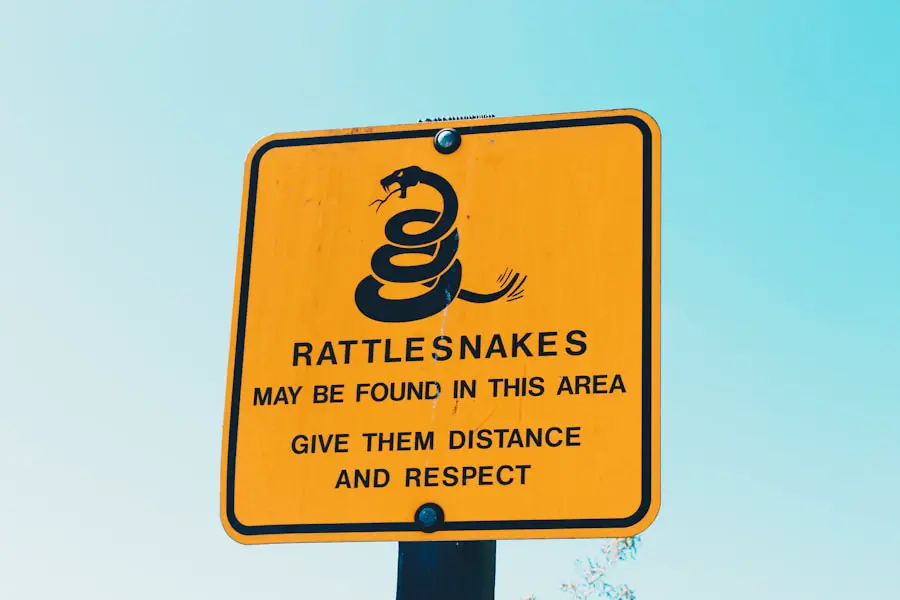
A few gear and planning choices can lower your risk. Start with proper footwear. Sturdy, closed-toe, ankle-covering hiking boots and long pants add a layer of protection, although no clothing can make a bite impossible.
Carry a flashlight or headlamp if you may be outside near dusk or after dark. Learn which venomous snakes live in the area, check recent park alerts, download the trail map, and know the nearest trailhead or road access. In remote country, a satellite messenger can be more useful than a phone with no service.
Pro Tip: Use a trekking pole for balance and to keep your hands away from rocks and logs. Do not poke into holes, sweep blindly through brush, or use the pole to move a snake.
Hiking with another person adds an emergency safety margin because a companion can call for help, share your location, and assist with evacuation. Keep children close and teach them never to approach a snake. Keep dogs on a short leash and away from brush, rock gaps, and the trail edge.
What to Do When You See a Rattlesnake
| Action | What to Do |
|---|---|
| Stop and Locate | Stop moving until you know where the snake is and which direction is safe. |
| Back Away Slowly | Use slow, deliberate steps. Do not jump, run, or step backward without looking. |
| Keep Distance | Stay at least 6 feet away, and give the snake more room when possible. |
| Do Not Interact | Do not touch, capture, kill, poke, move, or photograph the snake at close range. |
| Wait or Detour | If it blocks the trail, wait from a safe distance, take a wide detour only when terrain allows, or turn around. |
| Get Help After a Bite | Call emergency services immediately and begin safe evacuation. |
Seeing a rattlesnake can be startling, but sudden movement increases your chance of stepping closer, falling, or making the snake feel trapped. Stop, breathe, warn your companions, and make sure everyone moves in the same safe direction.
If You Hear a Rattle but Cannot See the Snake
Freeze and scan the ground, trail edge, rocks, and brush. Do not step backward blindly because the snake may be behind or beside you. Once you locate it, turn and move away in the direction that creates the most distance. This approach follows National Park Service rattlesnake guidance.
Do not push a snake off the trail or throw rocks at it. A photo is optional and should only be taken with zoom from a safe distance. If the snake does not move, wait, detour safely, or turn back. Rattlesnakes help control rodent populations, so leaving them alone protects both you and the ecosystem.
First Aid for Rattlesnake Bites
A rattlesnake bite is a medical emergency even when pain or swelling seems mild. Move away from the snake, call 911 or local emergency services, and begin evacuation without waiting for symptoms. In the United States, Poison Control at 1-800-222-1222 can provide expert guidance while help is on the way.
- Keep the person calm and as still as possible. Do not let the person walk unless movement is necessary to reach safety or emergency help.
- Keep the bitten limb loosely immobilized at heart level. The 2026 Wilderness Medical Society guideline recommends heart-level positioning during evacuation for North American pit-viper bites.
- Remove tight items early. Take off rings, watches, bracelets, tight clothing, and constricting footwear before swelling increases.
- Clean and cover the bite if it will not delay evacuation. Gently wash with soap and water, then use a clean, dry dressing.
- Track swelling. Mark the leading edge of swelling or tenderness and write the time beside the mark.
- Watch breathing and responsiveness. Tell emergency dispatchers immediately if the person becomes weak, confused, short of breath, faint, or unresponsive.
Warning: Do not apply a tourniquet or pressure bandage to a rattlesnake bite. Do not cut the wound, suck out venom, apply ice, immerse the limb, use electric shock, or try a folk remedy. Do not use alcohol as a painkiller, and do not take aspirin, ibuprofen, or naproxen unless a medical professional directs you.
Note: Some rattlesnake bites inject little or no venom, but you cannot confirm a dry bite on the trail. Symptoms may progress after the bite, so every suspected rattlesnake bite needs prompt emergency evaluation.
If You Are Alone or Far From Help
Use your phone, satellite messenger, or personal locator beacon immediately and send your exact location. Do not drive yourself because venom effects can cause dizziness, weakness, or fainting. If you have no communication and nobody can reach you, move only as much as necessary, at a controlled pace, to reach a place where you can call for help. Follow instructions from emergency dispatchers or Poison Control.
When and How to Get Medical Help
Get to a hospital as quickly and safely as possible after a suspected rattlesnake bite. Do not wait to see whether fang marks, pain, or swelling appear. A safe photo may help, but identifying the exact species is not essential and treatment should never be delayed while someone searches for the snake.
Symptoms to Watch For
- Increasing pain, swelling, redness, bruising, bleeding, or blistering near the bite
- Nausea, vomiting, sweating, weakness, dizziness, or fainting
- Numbness, tingling, muscle twitching, vision changes, or unusual taste sensations
- Trouble breathing, confusion, low blood pressure, severe bleeding, or reduced responsiveness
Any of these symptoms can worsen quickly. Emergency teams may monitor the airway, circulation, swelling, blood clotting, and neurologic function.
What the Hospital May Do
Hospital care may include repeated examinations, blood tests, wound care, tetanus review, pain control, and antivenom when symptoms are progressive or medically significant. Antivenom can slow or stop venom effects, but it may not reverse tissue damage that has already occurred. Prompt treatment lowers the risk of long-term injury.
Reporting Rattlesnake Sightings
Not every backcountry sighting needs a formal report. Report the location when a rattlesnake is in a campground, visitor area, building, trailhead, or busy section of trail, or when park rules ask visitors to report sightings. In a national park, notify a ranger. Near a home or public building, contact local animal control or a qualified wildlife service if the snake creates an immediate public-safety concern.
Share the trail name, nearest landmark, time, and the snake’s direction of travel. Keep your distance and leave the area after reporting. Do not remain nearby to watch, and do not attempt relocation yourself. Wildlife laws vary by location, while wildlife in national parks is protected from harassment or harm.
Rattlesnake Safety Tips
- Stay on marked trails and watch several steps ahead.
- Look before stepping over logs, rocks, or trail edges.
- Never place a hand or foot where you cannot see.
- Use a flashlight or headlamp after dark.
- Wear sturdy closed-toe footwear and long pants.
- Keep children close and dogs on a short leash.
- Keep campsites clean because food scraps can attract rodents, which may attract snakes.
- Stay alert in warm weather, around dawn and dusk, and after dark, but remember that snakes can appear at other times.
- Do not handle a rattlesnake, even if it appears dead.
Learn about local species through a park service, state wildlife agency, or university extension office before your trip. Local guidance is more useful than trying to apply one species’ behavior to every rattlesnake habitat.
Each year, about 7,000 to 8,000 people in the United States are bitten by venomous snakes, while about five die. Prompt medical care is a major reason deaths remain uncommon.
Frequently Asked Questions
What should I do if I see a rattlesnake while hiking?
Stop, locate the snake, warn your group, and slowly back away. Keep at least 6 feet of distance and more when possible. Do not approach, touch, move, or provoke it.
How far away should I stay from a rattlesnake?
Stay at least 6 feet away and create more distance whenever the trail allows. Do not use the minimum distance as a reason to pass close to a large or agitated snake.
What if I hear a rattle but cannot see the snake?
Freeze and scan the ground, brush, and rocks around you. Do not step backward blindly. Once you locate the snake, move slowly in the direction that gives it the most space.
Should I try to kill or move a rattlesnake?
No. Handling, moving, harassing, or killing the snake brings you closer and raises the chance of a bite. Wait, detour safely, turn around, or notify a ranger when the snake is in a busy park area.
What should I do after a rattlesnake bite?
Call 911 immediately, keep the person still, remove tight items, loosely immobilize the limb at heart level, and begin safe evacuation. Do not use a tourniquet, pressure bandage, ice, cutting, or suction.
Do I need to identify or photograph the snake?
No. A zoomed photo from a safe distance may help, but it is not essential. Never approach, capture, kill, or bring the snake to the hospital, and never delay medical care for identification.
How can I reduce the chance of a rattlesnake encounter?
Stay on clear trails, wear sturdy footwear, look before placing hands or feet, use a light after dark, and avoid stepping into brush, leaf piles, or rock gaps you cannot inspect.
How should I protect children and dogs on the trail?
Keep children within reach, teach them never to approach snakes, and keep dogs on a short leash. Do not let pets put their faces into brush, logs, holes, or rock crevices.
Can a rattlesnake bite without rattling first?
Yes. A rattlesnake may remain silent, and its rattle may be small, damaged, or missing. Watch where you step and never depend on hearing a warning.
Safety Disclaimer: This article is for informational purposes only and does not replace professional medical advice. If you or someone with you suffers a suspected rattlesnake bite, call emergency services immediately and follow instructions from qualified medical professionals or Poison Control.
Rattlesnakes command respect, but they do not have to derail a hike. Learn their habits, stay alert in their habitat, and know your emergency steps before you leave the trailhead. Keep your distance, resist the urge to interact, and treat every suspected bite as a medical emergency.
If you come across a rattlesnake while hiking, stay calm, locate it, and slowly move away. Give it room to retreat and do not provoke it. Before hiking in rattlesnake country, review the local park or wildlife agency’s guidance so you know the species, reporting rules, and emergency options for that area.
Sources
- CDC/NIOSH: Venomous Snakes at Work: U.S. bite statistics, symptoms, prevention, and first-aid guidance
- Wilderness Medical Society: 2026 Pit Viper Envenomation Guideline: field positioning, immobilization, evacuation, and clinical treatment
- American Red Cross: Venomous Snake Bites: emergency response and harmful remedies to avoid
- Poison Control: Rattlesnake Bites: symptoms, dry bites, antivenom, and expert phone support
- National Park Service: Snake Safety: safe distance, unseen rattles, trail encounters, and reporting to rangers
- CDC: Wildlife Safety: trail awareness and protecting pets around snakes
