
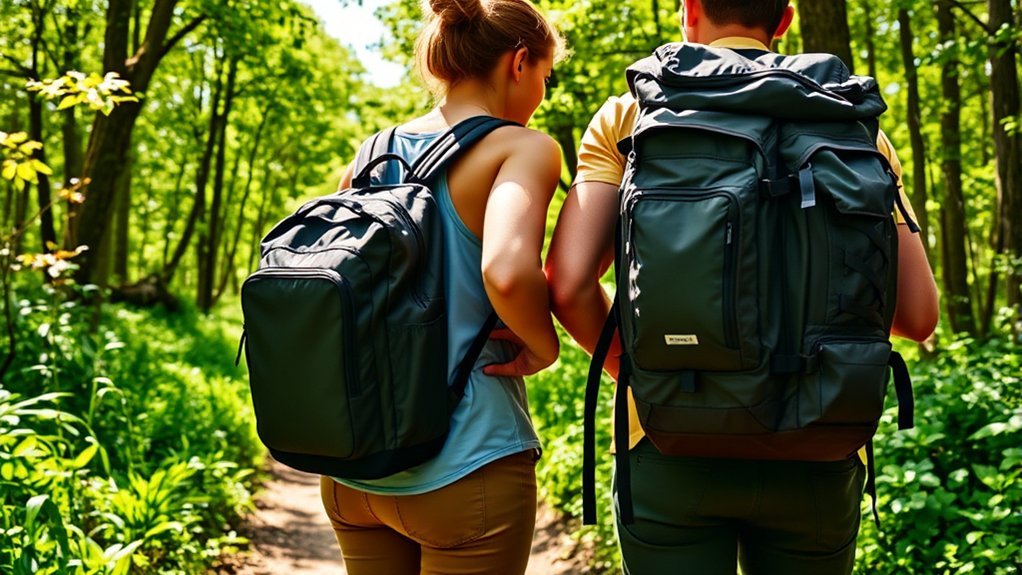
When deciding between a daypack and a backpack, consider your trip length and gear needs. Daypacks, lightweight and compact, are perfect for short outings like day hikes. They typically hold 15L to 35L and weigh 1 to 2 pounds. On the other hand, backpacks, built for multi-day journeys, can carry 35L to 80+L and often exceed 3 pounds. Understanding these key differences can help you choose the right option for your adventures. Explore further for more insights!
Understanding Daypacks and Backpacks

When choosing between a daypack and a backpack, understanding their distinct features can greatly enhance your outdoor experience. Daypacks, with a capacity ranging from 15L to 35L, excel in short hikes and daily use, allowing you to travel light and move freely. Their lightweight design promotes minimalism, making them perfect for casual outings or commutes. In contrast, backpacks range from 35L to 80L, offering ample space for longer trips and heavier gear. They typically include padded shoulder straps and internal frames, providing the support you need on extended journeys. Daypacks prioritize quick access with top-loading designs, ideal for grabbing essentials swiftly. Meanwhile, backpacks offer versatile access points for better organization. When selecting your pack, consider your specific needs: if you’re seeking freedom and agility for short excursions, a daypack is your best bet. For extensive travel and heavy loads, opt for a backpack that supports your adventurous spirit.
Key Differences Between Daypacks and Backpacks
When choosing between a daypack and a backpack, consider their size and capacity as well as comfort and features. Daypacks are lighter and designed for short outings, while backpacks offer more space and support for longer adventures. Understanding these differences will help you select the right option for your needs.
Size and Capacity
Understanding the size and capacity differences between daypacks and backpacks is essential for selecting the right gear for your adventures. Daypacks, with a capacity of 15L to 35L, excel for short trips, while backpacks offer 35L to 80+L for longer journeys. Here are key distinctions to take into account:
- Daypacks: Lightweight, quick access, ideal for essentials like water and snacks.
- Backpacks: Heavier, robust, suitable for extensive gear, including sleeping and cooking supplies.
- Access: Daypacks usually feature top-loading, while backpacks have multiple access points for organized storage.
- Intended Use: Daypacks are perfect for day hikes and urban outings; backpacks cater to camping and multi-day trips.
Choosing the right size guarantees you’ll be prepared for any adventure, liberating your experience.
Comfort and Features
While both daypacks and backpacks serve the purpose of transporting gear, their comfort and features cater to different needs based on the duration and intensity of your adventures. Daypacks are lightweight, offering minimal padding and support, perfect for short outings. In contrast, backpacks have robust padding, structured frames, and fit adjustments, making them ideal for longer journeys with heavier loads.
| Feature | Daypacks | Backpacks |
|---|---|---|
| Padding | Light | Strong |
| Frame | None | Internal frame |
| Strap Fit | Less critical | Essential for comfort |
| Design | Compact and minimalist | Multiple access points |
| Intended Use | Short outings | Long adventures |
Choose wisely based on your adventure’s demands!
When to Choose a Daypack
Choosing a daypack makes perfect sense for short hikes, daily commutes, or sightseeing adventures, as they provide just the right amount of space and convenience. If you’re planning an outing that doesn’t require heavy gear, opt for a daypack. Here are some ideal scenarios:
- Quick hikes: Perfect for carrying essentials like water, snacks, and a first-aid kit.
- Daily commutes: Lightweight design facilitates easy movement, making your journey hassle-free.
- Sightseeing trips: Top-loading features allow quick access to your items while exploring.
- Casual outings: A cost-effective option for beginners seeking versatility without the bulk.
With a capacity of 15-35 liters, daypacks are designed for lighter loads and short durations, ensuring you enjoy your activities without unnecessary strain. Choose a daypack to enhance your freedom and experience!
When to Choose a Backpack
For those commencing multi-day adventures or extended travels, a backpack is the ideal choice. With capacities ranging from 35 to 80 liters, a backpack provides ample space for sleeping gear, cookware, and food. When you’re planning an overnight hike or an extensive trip, the increased support and comfort are vital. Padded shoulder straps, hip belts, and breathable back panels make it easier to carry heavier loads over long distances. Furthermore, backpacks typically feature multiple compartments, allowing you to organize your gear efficiently and access items easily. If your activities involve hiking, camping, or traveling for several days, a backpack’s larger capacity and structural support are essential. It’s the practical choice that empowers you to carry everything you need without limitation. Embrace the freedom of exploration; choose a backpack for your next adventure and experience the difference it makes in your journey.
Comfort and Fit Considerations
Selecting the right gear isn’t just about capacity; comfort and fit play a crucial role in your outdoor experience. When you’re choosing between a daypack and a backpack, consider the following:
- Padding: Daypacks have lighter padding, while backpacks offer stronger support for heavy loads.
- Straps: Proper fit of shoulder and chest straps is critical to maintain balance and reduce strain.
- Movement: A well-fitted daypack should allow easy movement, while a backpack should evenly distribute weight to minimize pressure points.
- Adjustability: Backpacks typically feature adjustable hip belts and torso lengths for a custom fit, which is essential for longer excursions.
Your choice can greatly affect your performance and enjoyment during outdoor activities or commutes. Prioritize comfort and fit to enhance your experience, ensuring that your gear liberates rather than constrains you on your adventures.
Materials and Durability
When choosing between a daypack and a backpack, understanding the materials and durability is essential. Daypacks often use lightweight nylon or polyester, making them ideal for short trips but less suited for heavy loads. In contrast, backpacks employ more robust materials like heavy-duty nylon, ensuring they withstand wear and tear during extended adventures.
Material Types Explained
Understanding the materials used in daypacks and backpacks is essential for choosing the right one for your needs. Different materials cater to various activities and preferences. Here are some common options:
- Nylon and Polyester: Lightweight, water-resistant, perfect for casual use and travel.
- Ripstop Fabric: Reinforced against tears and abrasions, ideal for rugged outdoor activities.
- Canvas: Stylish and durable, though heavier than synthetics.
- Leather Accents: Offer a premium look, but increase weight and require maintenance.
When selecting a pack, consider these material types to guarantee it aligns with your lifestyle and adventures. Choosing wisely can liberate you from the burden of an ill-suited bag, enhancing your experience on the go.
Durability Considerations
Durability is a key factor when comparing daypacks and backpacks, as it directly influences their performance and longevity in various environments. Daypacks typically use lighter materials like nylon and polyester, prioritizing water resistance and portability. In contrast, backpacks are often crafted from heavier-duty fabrics, such as ripstop, which resist tears and withstand rugged outdoor conditions. While canvas packs offer a stylish option, they can be cumbersome for long hikes. Quality stitching and durable zippers are essential for both types, impacting their lifespan considerably. However, daypacks usually lack the reinforced structures found in backpacks, making them less suitable for extended travels. If you’re planning serious adventures, investing in a sturdy backpack will guarantee you’re prepared for the long haul.
Weight vs. Strength
While you may be tempted to choose a daypack for its lightweight design, it’s crucial to reflect on the trade-off between weight and strength when selecting the right gear for your needs. Daypacks are perfect for short outings, but their lightweight materials can compromise durability. Here’s what to think about:
- Daypacks usually weigh 1 to 2 pounds; backpacks often exceed 3 pounds.
- Daypacks use lighter fabrics like nylon; backpacks utilize heavy-duty materials like ripstop.
- Basic water resistance in daypacks pales compared to backpacks’ advanced waterproof features.
- Simpler stitching and zippers on daypacks can’t endure heavy loads like those on backpacks.
Choosing wisely guarantees your gear supports your adventures without weighing you down. Balance weight with strength for best freedom.
Frequently Asked Questions
Can Daypacks Fit a Hydration Reservoir?
Yes, many daypacks fit hydration reservoirs, offering you convenient access to water during your adventures. Look for models with dedicated compartments or sleeves designed specifically for reservoirs to stay hydrated effortlessly while you explore.
Are Daypacks Suitable for Overnight Trips?
While a daypack can carry essentials, it’s generally not suitable for overnight trips. Think of it as a sprinter, quick and light; you’ll want a full-sized backpack for longer adventures to accommodate extra gear and comfort.
Do Backpacks Come With a Hip Belt?
Yes, many backpacks come with hip belts to enhance comfort and weight distribution. They’re designed to help you carry heavier loads more efficiently, reducing strain on your shoulders and allowing for greater freedom during your adventures.
How to Clean and Maintain a Daypack?
To clean and maintain your daypack, remove all items, spot-clean with mild detergent, rinse thoroughly, and air dry. Regularly check for wear and tear, ensuring zippers and straps function smoothly for peak performance.
What Colors and Styles Are Available for Daypacks?
You’ll find daypacks in vibrant hues like electric blue and earthy greens, alongside sleek, minimalist styles. Whether you prefer bold patterns or subtle tones, there’s a perfect match waiting to express your adventurous spirit.
Conclusion
In the epic showdown of daypacks versus backpacks, your decision might just determine the fate of your next adventure—no pressure! If you’re planning a simple jaunt to the coffee shop, a daypack’s your trusty sidekick. But if you’re channeling your inner Sherpa for a week-long trek, grab that backpack and prepare for glory. Remember, whether you choose to carry light or go full expedition mode, the only true tragedy would be not having snacks on hand. Priorities, right?