
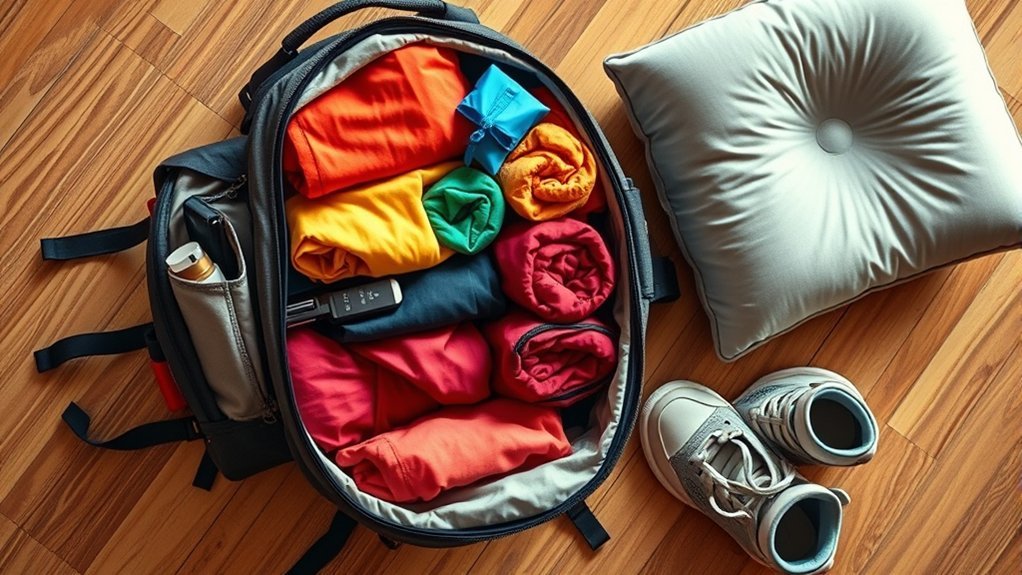
Last Updated on August 26, 2026 by Caleb Warren
Packing for a week in a backpack is mostly an editing exercise: plan around the weather and your activities, build a small mix-and-match wardrobe, and bring only items you expect to use. If you are flying, check your airline’s bag dimensions and weight limits before choosing a backpack. Then organize clothing, shoes, toiletries, electronics, documents, and laundry so everything has a clear place.
Quick Answer
To pack for a week in a backpack, use a small mix-and-match wardrobe, wear your bulkiest comfortable layer and shoes in transit, limit extra footwear, and keep toiletries and electronics compact. If you are flying, check your airline’s size and weight limits first because backpack capacity in liters alone does not determine carry-on eligibility.
Key Takeaways
- Check the forecast, planned activities, laundry access, and airline baggage rules before deciding what to pack.
- Build a capsule wardrobe from colors and layers that work together instead of packing seven completely different outfits.
- One worn pair of shoes plus one packed pair is enough for many trips, but your activities should decide the final number.
- For standard U.S. airport screening, carry-on liquids generally must follow TSA’s 3-1-1 rule.
- Keep power banks and spare lithium batteries in your carry-on and check your airline for any additional restrictions.
At a Glance
| Time Required | About 30–60 minutes for final planning and packing once your clothing is clean and ready |
| Difficulty | Easy |
| Tools Needed | Backpack, toiletry bag, small organizing pouches or packing cubes if desired, and a compliant liquids bag when required |
| Cost | Potentially $0 if you already own the bag and travel-size containers; optional organizers may add cost |
Disclosure: As an Amazon Associate I earn from qualifying purchases. Some links on this page are affiliate links, at no extra cost to you.
Essential Packing Strategies

Start with your trip rather than your backpack. Check the forecast, the activities you expect to do, whether you need dressier clothing, and whether you will have access to laundry. Those details determine what belongs in your bag far better than a generic packing list.
If you are flying, check the baggage rules for every operating airline on your itinerary before packing. The International Air Transport Association’s baggage guidance notes that maximum cabin-bag size and weight are established by the operating carrier and can vary between airlines and classes of service. A backpack’s liter rating therefore does not guarantee that it qualifies as a carry-on.
Carry-on compliance depends on your airline’s size and weight limits, not simply the backpack’s capacity in liters.
Once the bag is chosen, focus on essentials. Use a coordinated clothing palette so tops, bottoms, shoes, and layers can be combined in several ways. Instead of packing a separate outfit for every day, choose pieces that can be reworn or washed when practical.
Wear your bulkiest comfortable shoes, jacket, sweater, or other layer during transit if doing so makes sense for the climate. Keep the packed pair of shoes contained in a shoe bag or separate pouch, and use empty space inside clean shoes for socks or other soft, non-fragile items.
Plan Before You Pack
- Check the weather for your destination and travel days.
- List planned activities such as hiking, swimming, business meetings, dinners, or religious-site visits.
- Confirm whether your accommodation has laundry facilities or whether hand-washing is practical.
- Check airline bag dimensions and weight limits if flying.
- Lay everything out before putting it into the backpack, then remove duplicate or “just in case” items that do not solve a realistic need.
Clothing Packing Techniques
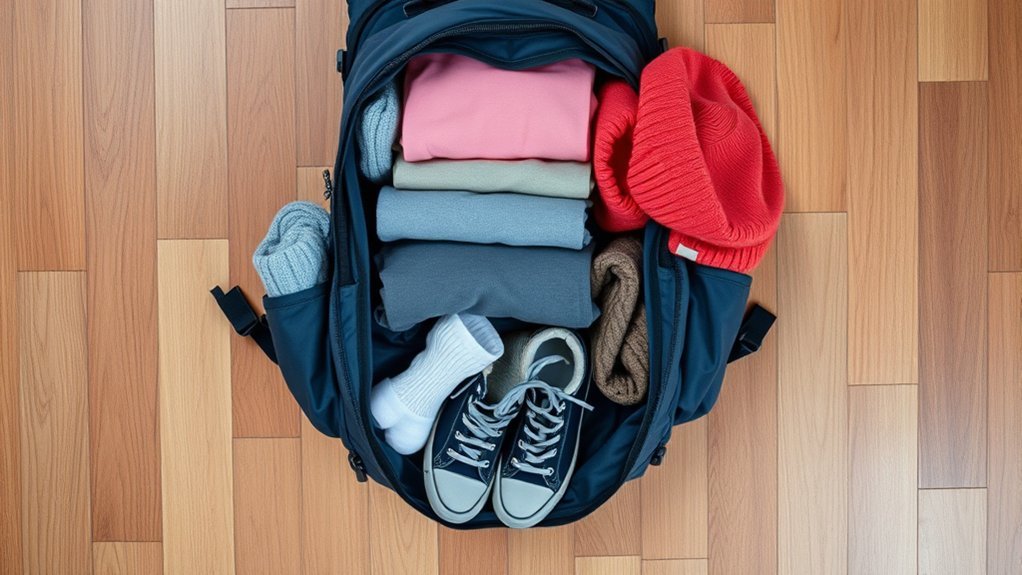
A compact travel wardrobe should be versatile, comfortable, suitable for the forecast, and easy to combine. Color coordination helps because the same bottoms, outer layer, and shoes can work with several tops. Rolling can save space for some soft garments, while folding is often better for structured or wrinkle-prone pieces.
Products Worth Considering

Ultra-Soft Ribbed Fabric | Breathable All-Day Comfort. Crafted with stretchy ribbed knit, this tank wicks sweat during hot yoga yet stays smooth under blazers. Perfect for gym-to-office transitions.

This asymmetrical placket flowy poet button down shirt is a Euro summer essential curated by Styled by Betsy, ultra-flattering belly hiding boho top for fashionably mom late-day outfits, delicate and elegant senior picture outfits for women.
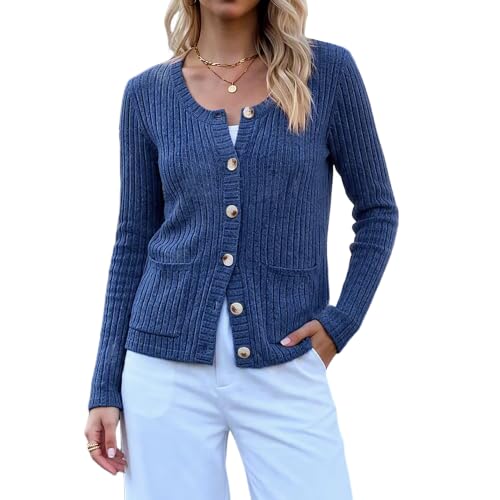
PREMIUM REINFORCED SEAMS: Features tightly woven, durable buttonholes and premium secure buttons that won't loosen or pull after multiple uses, delivering a high-quality boutique finish that lasts through frequent wears.
Color Coordination Strategy
Choose a neutral base or a small color family so your clothing works together. Instead of automatically taking seven tops and four or five bottoms, begin with a smaller capsule and adjust it for your activities and access to laundry.
For many week-long trips, a practical starting point is four or five tops, two or three bottoms, underwear, socks, sleepwear, and one versatile outer layer. Add activity-specific clothing only when the itinerary requires it. If you can wash clothing midway through the trip, you may need even less.
Pro Tip: Before packing an item, ask whether it works with at least two other pieces in your bag. If it only works with one outfit and is not required for a specific event, it is a strong candidate to leave home.
Rolling vs. Folding
There is no need to divide packing techniques by men’s and women’s clothing. Choose the method based on the garment. Soft T-shirts, underwear, leggings, lightweight sleepwear, and similar items are often easy to roll. Button-up shirts, trousers, structured garments, and wrinkle-prone fabrics may travel better when folded.
Rolling can make small items easier to arrange in gaps, while folding may create flatter layers. Packing cubes are useful for separating categories and preventing the contents of your bag from shifting. Compression organizers can reduce the volume of bulky clothing, but they do not reduce its weight.
Outfit Versatility Tips
The garments below are examples to choose from, not a requirement to pack every item. Select the pieces that match your destination, weather, and activities.
| Top Options | Bottom Options |
|---|---|
| Lightweight Tee | Comfortable Jeans |
| Long-Sleeve Shirt | Versatile Skirt |
| Casual Tank | Chinos |
| Sweater | Shorts |
| Button-Up | Leggings |
| Blouse | Choose only if needed |
| Graphic Tee | Choose only if needed |
Pack enough underwear and socks for your needs, accounting for whether you plan to do laundry. Include sleepwear, a weather-appropriate layer, and any genuinely necessary workout, swim, business, or event clothing.
Shoe Packing Tips
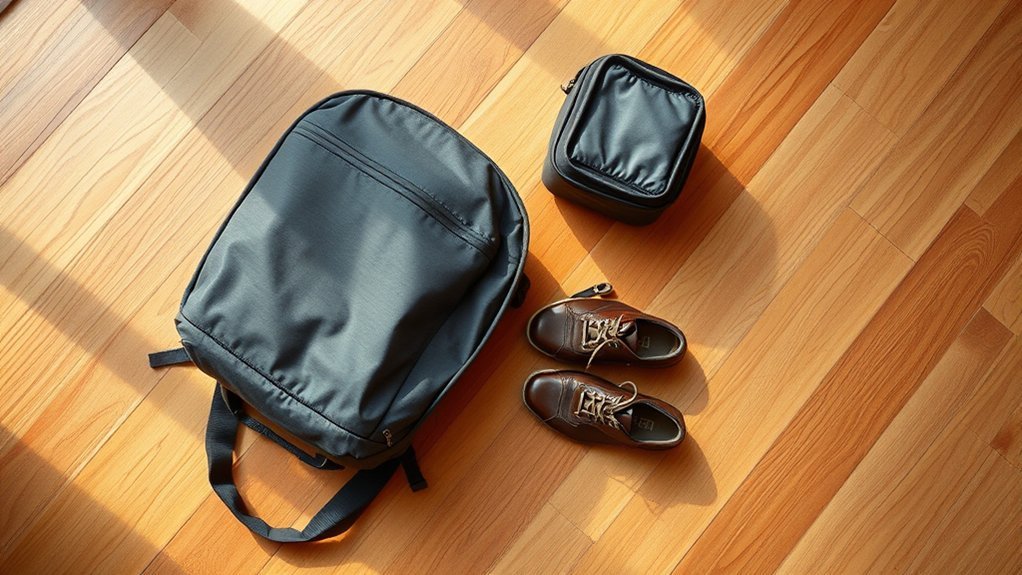
Shoes take up a large amount of backpack space, so choose them according to your itinerary. For many trips, one comfortable pair worn in transit plus one packed pair is enough. The second pair might be sandals, dress shoes, trail shoes, or another activity-specific option.
Choose footwear that works with several outfits instead of packing a different pair for each look. If your heaviest or bulkiest shoes are comfortable for the journey, wear them while traveling and pack the lighter pair.
Keep packed footwear separate from clean clothing with a shoe bag, reusable bag, or similar barrier. You can place clean socks or other soft, non-fragile items inside the shoes to use otherwise empty space. Exact shoe placement depends on the design of your backpack; concentrate on keeping the load stable and comfortable rather than following a universal “shoes always go on the bottom” rule.
Toiletries and Makeup Essentials
Keep personal-care items together in a compact toiletry kit. Take the products you actually use rather than packing full-size containers or backup items for every possibility. A compact toothbrush, face cream, sunscreen, deodorant, basic grooming items, hair ties, retainers when needed, and a limited makeup routine are usually easier to manage than a large collection of products.
Products Worth Considering

【TSA Approved】The 7.7 x 5.9 x 2.5 inch clear toiletry bag strictly follow 3-1-1 liquids rule for carry-on bag of all airlines, so you can easily and quickly pass through airport security.
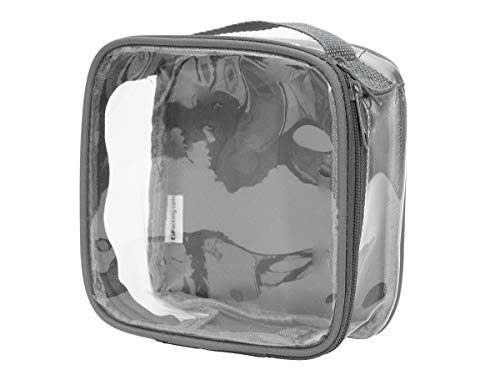
EASY COMPAR ENTALIZATION: Use the bags to create a completely customizable organization system; Buy multiple bags and color coordinate to easily compartmentalize and organize a hand bag, tote bag, purse, diaper bag or gym bag

Travel Accessories and travel must have: Our 18 pack reusable travel bottles set with 1 toiletry bag , 2 pcs silicone bottles (3 oz/90 ml), 2 pcs silicone bottles (2 oz/60 ml), 2 pcs spray bottles , 4 pcs cream jars, 1 pcs funnels, labels, brush and 4 pcs spatula! Different accessories for your different needs.
Essential Toiletries Checklist
- Toothbrush and toothpaste
- Deodorant
- Face wash or basic skin-care products you regularly use
- Sunscreen appropriate for your destination and activities
- Hairbrush or comb and hair ties if needed
- Shampoo, conditioner, or other hair products if they will not be supplied
- Minimal makeup or grooming products you expect to use
- Retainers, contact-lens supplies, or other personal items when applicable
- Prescription medication and necessary health supplies
- Vitamins or supplements if you normally take them
Warning: For standard U.S. TSA screening, liquids, aerosols, gels, creams, and pastes in a carry-on generally must be in containers of 3.4 ounces (100 mL) or less, with the containers fitting in one quart-size clear zip-top bag, one bag per passenger. Medically necessary liquids can have different procedures. Review the current TSA 3-1-1 guidance before flying. Other countries may have different security rules.
Travel-Sized Product Tips
Decant products into appropriately sized containers when suitable, or choose small versions of products you already use. Multi-use products can reduce clutter when they genuinely replace two separate items in your normal routine.
Do not sacrifice something medically necessary simply to make the bag smaller. Prescription medicines, necessary personal-care products, and destination-specific items should take priority over optional cosmetics or duplicate grooming products. Also check medication rules for your destination, especially when traveling internationally.
Efficient Packing Techniques
Separate liquid toiletries from dry items so leaks are easier to contain. Keep frequently needed items accessible instead of burying them under your clothing. A small pill organizer can be convenient for vitamins or permitted medication, but travelers should check destination-specific medication and labeling requirements when applicable.
Once the toiletry kit is complete, avoid adding duplicates “just in case.” For common nonessential products that are readily available at your destination, buying a replacement can sometimes be easier than carrying a large backup supply.
Electronics and Accessories
Electronics can add weight quickly, so pack only what the trip requires. Your phone and charger may cover communication, navigation, photography, entertainment, and boarding passes. Add a laptop or tablet only when you expect to use it enough to justify the space and weight.
| Item | Purpose | Packing Tip |
|---|---|---|
| Laptop & Charger | Work or entertainment | Use a protective sleeve and keep accessible for screening when required |
| Phone & Charger | Communication, navigation, tickets | Keep easy to reach |
| Headphones | Entertainment during transit | Use a small case or pouch |
| Power Bank | Portable charging | Keep in carry-on baggage and check battery capacity and airline rules |
| Reusable Water Bottle | Hydration | For U.S. TSA screening, take it through the checkpoint empty and fill it afterward |
| Book or E-reader | Leisure reading | Choose one if space is limited |
Note: Under current U.S. FAA rules, spare lithium batteries and power banks must be carried in the cabin rather than checked baggage. Rechargeable lithium batteries up to 100 Wh are generally permitted on passenger aircraft; 101–160 Wh batteries require airline approval, and batteries above 160 Wh are prohibited. Airlines may impose stricter limits. See the FAA passenger battery guidance before traveling.
A Practical 7-Day Backpack Packing List
Use this as a starting point rather than a rigid formula. Climate, activities, laundry access, personal needs, and cultural expectations can change the quantities.
Products Worth Considering

Versatile Size: Each packing cubes for travel measures approximately 11.8 x 7.9 inches (30x20 cm). This optimized size provides ample room for clothes, undergarments, toiletries, or kids' essentials while maintaining a slim profile. Clear packing cubes function like compression packing cubes, helping you maximize every inch of your carry-on or backpack

Includes one small and one medium Thule Compression Packing Cube

Organized and Space Saving: U+U compression packing cubes not only optimize the limited space in your suitcase but also enable efficient categorization of your items. Find exactly what you're looking for quickly and effortlessly, making them an essential addition to your travel gear
Clothing
- 4–5 versatile tops
- 2–3 bottoms
- Enough underwear for your laundry plan
- 4–7 pairs of socks depending on footwear and laundry access
- 1 set of sleepwear
- 1 sweater, fleece, cardigan, or other versatile layer
- 1 weather-appropriate outer layer when needed
- Optional swimwear, workout wear, dress clothing, or activity-specific clothing
Footwear
- 1 comfortable, versatile pair worn while traveling
- Up to 1 additional pair when your activities require it
Toiletries and Personal Items
- Toothbrush and toothpaste
- Deodorant
- Small skin-care and hair-care products
- Sunscreen
- Essential grooming or makeup items
- Prescription medication and necessary health supplies
Electronics
- Phone and charger
- Headphones or earbuds
- Power bank if useful
- Laptop, tablet, e-reader, camera, or adapters only when needed
Documents and Everyday Essentials
- Passport or required ID
- Wallet and payment cards
- Boarding passes or reservation information when needed
- Travel insurance details if applicable
- Reusable water bottle
- Small laundry bag or other way to separate dirty clothing
- Destination-specific items such as sunglasses, hat, umbrella, or insect repellent when appropriate
Travel Tips for a Smooth Experience
Minimal packing works best when each item has a purpose. A backpack or carry-on can reduce baggage handling, but only if it complies with your airline’s rules and remains comfortable enough for you to carry.
Check Your Bag Before You Fly
Measure the loaded backpack rather than relying only on its advertised capacity. Include filled outer pockets and anything attached to the exterior. Weigh the bag if your airline publishes a cabin-baggage weight limit.
Keep important travel documents, medication, valuables, and anything you may need during transit accessible. If your carry-on is unexpectedly gate-checked, remove power banks and spare lithium batteries and keep them with you in the cabin as required by applicable battery rules.
Organize for Transit
Use pouches or packing cubes to separate categories such as clothing, underwear, electronics, and toiletries. Packing cubes mainly improve organization; compression versions may reduce volume, but neither type makes your belongings lighter.
For standard U.S. airport screening, an empty reusable water bottle is permitted through the checkpoint and can be filled afterward. TSA also recommends organizing carry-on bags so items are easier to screen. Review the TSA What Can I Bring? database if you are unsure about a particular item.
Food and Snacks
Lightweight snacks such as nuts, granola bars, crackers, and dried fruit can be convenient during transit. Under U.S. TSA rules, solid foods are generally permitted in carry-on baggage, while liquid or gel foods may be subject to the 3-1-1 liquids rule.
Airport security and border customs are different issues. International destinations can restrict meat, fruit, vegetables, seeds, and other agricultural products. Travelers entering the United States must declare agricultural and wildlife products to customs officials. Check the destination’s rules before carrying food across a border.
Laundry and Keeping Clothes Fresh
Separate worn clothing from clean clothing with a lightweight laundry bag, dry bag, or spare packing cube. Do not seal damp garments away for long periods; let them dry when possible. If you have reliable laundry access, washing a few basics halfway through the trip can reduce how many shirts, socks, and undergarments you need to carry.
Final Five-Minute Check
- Passport or required ID
- Wallet and payment methods
- Phone and charger
- Prescription medication
- Keys
- Tickets and reservations when needed
- Airline baggage dimensions and weight checked
- Liquids packed according to applicable security rules
- Power banks and spare lithium batteries in carry-on baggage
- Weather and activity-specific essentials packed
Frequently Asked Questions
How Do I Choose the Right Backpack Size for a Week?
Choose the smallest backpack that comfortably holds your realistic packing list. If you are flying, start with your airline’s permitted dimensions and weight rather than a fixed liter recommendation. Capacity in liters is useful for comparing bags, but exterior dimensions and loaded weight determine whether a particular airline accepts the bag as cabin baggage.
What Should I Do if I Forget Something Important?
First decide whether the item is essential. Common toiletries or inexpensive basics can often be purchased at your destination. For critical medication, identification, travel documents, or specialized equipment, contact the appropriate airline, accommodation, pharmacy, insurer, embassy, or other relevant provider rather than relying on an improvised substitute.
Can I Pack Food or Snacks in My Backpack?
Yes, but rules depend on the food and where you are traveling. TSA generally allows solid food in carry-on baggage in the United States, while liquid or gel foods may be subject to the 3-1-1 rule. International customs and agricultural restrictions are separate, so check your destination’s import requirements before crossing a border with food.
How Can I Keep My Clothes Smelling Fresh During Travel?
Keep worn clothing separate from clean items, allow damp clothes to dry before storing them, and use laundry facilities or hand-wash appropriate garments when practical. A dedicated laundry pouch or packing cube makes it easier to prevent clean and dirty clothing from mixing.
What Are Some Tips for Staying Organized While Traveling?
Give each category a consistent place. Keep clothing in one or two cubes if you use them, electronics in a small pouch, toiletries together, documents in a secure easy-access location, and dirty laundry separate. Avoid unpacking everything every time you need one item.
Do I Need Packing Cubes for a One-Week Trip?
No. Packing cubes are optional organizers, not a requirement. They can help separate clothing categories and make frequent unpacking easier. Compression cubes may reduce clothing volume, but they do not reduce the weight of your backpack.
Can I Put a Power Bank in My Backpack When Flying?
Yes, when the backpack remains in the cabin and the battery meets applicable limits. Under U.S. FAA rules, power banks and spare lithium batteries must not be placed in checked baggage. Batteries up to 100 Wh are generally permitted, while 101–160 Wh batteries require airline approval. Always check your airline because additional restrictions can apply.
How Should I Pack Liquids for a Carry-On Backpack?
For standard U.S. TSA screening, liquids, aerosols, gels, creams, and pastes generally must be in containers of 3.4 ounces or 100 mL or less, with the containers fitting inside one quart-size clear zip-top bag, one bag per passenger. Exceptions can apply to medically necessary liquids and certain other items. Check the security rules for your departure country as well.
Sources
- International Air Transport Association — Guidance Document on Baggage Standards for Interline — supports airline-specific cabin-baggage size and weight guidance.
- Transportation Security Administration — TSA Travel Tips — supports the U.S. 3-1-1 liquids rule and security-screening guidance.
- Transportation Security Administration — What Can I Bring? — supports guidance on empty bottles, food, electronics, and other carry-on items.
- Federal Aviation Administration — Airline Passengers and Batteries — supports lithium-battery and power-bank limits and carry-on requirements.
- USDA APHIS — Traveling With Food or Agricultural Products — supports U.S. customs and agricultural declaration guidance for international travelers.
Conclusion
Packing for a week in a backpack is easier when you plan around the actual trip instead of trying to prepare for every possibility. Check your weather, activities, laundry options, and airline limits; build a versatile wardrobe; minimize shoes and duplicate toiletries; and keep documents, medication, and electronics organized. A smaller, intentional packing list gives you the essentials you need without turning your backpack into unnecessary weight.
