
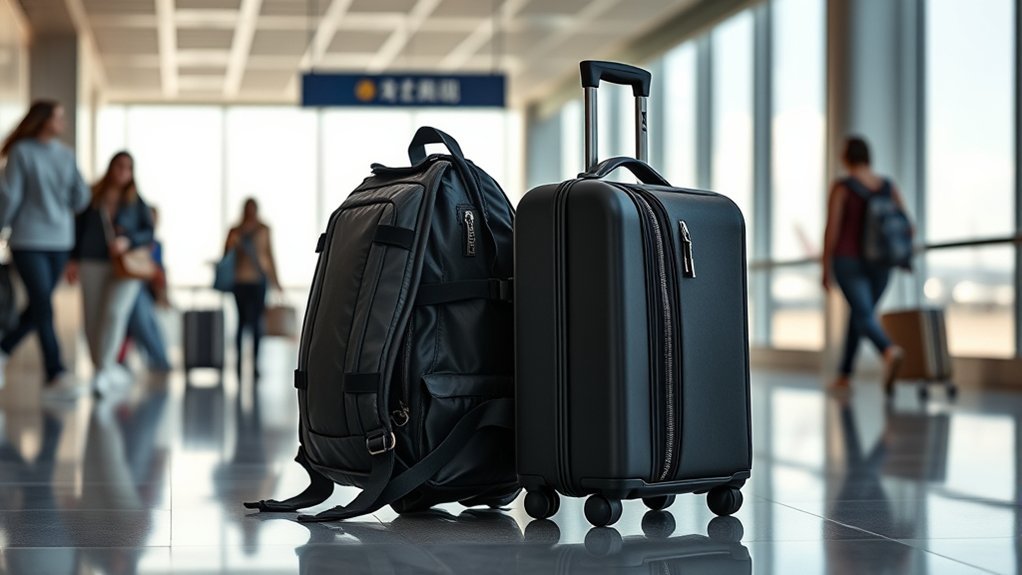
Carry-on backpack vs. Cabin Bag: Which is Better for Your Trip?
When deciding between a carry-on backpack and a cabin bag, consider your travel style. Backpacks are lighter and easier to move with, which is perfect for crowded areas. However, they can be harder to organize. Cabin bags have wheels and handles that offer stability and structured storage, but they can be bulkier. Both usually meet airline size limits, but your packing preferences will influence your choice. If you want to know more about how to pack efficiently and choose the right luggage, keep reading.
Quick Answer: Which should you choose?
- Choose a Carry-on Backpack if: You are traveling through uneven streets, using public transit frequently, or want to keep your hands free.
- Choose a Cabin Bag if: You are carrying heavy items, have a bad back, or need to keep formal clothes neatly packed and wrinkle-free.
- The Verdict: Backpacks win for mobility and “adventure” trips. Wheeled cabin bags win for business travel and smooth airport-to-hotel transitions.
Understanding Carry-On Backpacks

When you think about travel convenience, carry-on backpacks are a versatile option for modern explorers. These bags are lightweight and compact. They fit snugly within standard airline size restrictions, which are typically around 22 x 14 x 9 inches.
Most travel backpacks include multiple compartments. You will usually find designated sections for laptops and tech accessories. This helps you stay organized and reach your essentials quickly.
The flexibility of carry-on backpacks allows you to move through crowded spaces and over uneven ground. This makes them a top choice for active travelers. They offer plenty of space, though their soft sides can make it harder to find small items quickly. They are also very easy to store. You can easily fold and tuck them away when you are not traveling.
Exploring Cabin Bags
When choosing a cabin bag, size and dimensions are the most important factors. You need to ensure the bag fits within airline regulations. You will likely enjoy the organizational features like expandable sections and pockets. These help keep your belongings neat. Mastering a few packing strategies can also help you maximize your space and convenience.
Products Worth Considering
Fit Under Seat & Personal Item Size: With dimensions of 17 x 11 x 7.5 inches, you can bring frontier airlines personal item bag on the plane for free and reduce the risk of lost or delayed baggage. Personal item backpack meets the carry-on requirements of frontier, spirit, allegiant, delta airlines ect. Suitable for placing overhead luggage racks or under seats. Using underseat travel backpack, you no longer have to wait in long lines at baggage claim—traveling becomes easy & efficient
🧳【40L LARGE CAPACITY】Our travel backpacks enable you to pack all your travel essentials for a 3-5 day travel, which can hold 3-5 days' clothing, a pair of shoes, your wallets, toiletries, a 17.3'' laptop, a 12.9'' iPad and so on. The side straps can also help you compress the pack when it is too full.
✈【Large Capacity & Multiple Pockets】: The travel backpack has a 40L large capacity and 4 main compartments, which can meet daily and travel needs. The travel backpack for women's main compartment can store a lot of things, including 5-8 pieces of clothing, shoes, books, and many other items. The separate laptop compartment is padded with EVA foam to provide the best protection for your 17" laptop and 12.9" iPad. The front compartment has many pockets to keep your belongings organized.
Size and Dimensions
Choosing the right cabin bag does not have to be stressful. Typically, cabin bags must stay within a maximum size limit of 22 x 14 x 9 inches (56 x 36 x 23 cm). This allows them to slide into overhead compartments easily.
Weight limits often range from 15 to 22 pounds (7 to 10 kg). However, many US domestic airlines do not enforce a specific weight limit for carry-ons. You can choose between hard shell and soft shell designs based on your needs. Remember that airlines include wheels and handles when they measure your bag. Checking your airline’s specific baggage policy helps you avoid surprises at the gate.
Organizational Features
Finding the right cabin bag is about more than just size. It is also about how well you can organize your belongings. Soft shell suitcases often have expandable sections and extra pockets. This gives you the freedom to pack more when needed.
A rigid frame helps keep your items compact. This minimizes the mess during your trip. While most cabin bags fit the standard 22 x 14 x 9 inch limit, you should look for lightweight options. This helps you stay under weight limits. Keep in mind that the wheels and handles that make the bag easy to move can take up some of your internal packing space.
Packing Strategies
Cabin bags offer a unique advantage because they have structured organization. You will find it easier to pack because of the designated compartments. Many bags even include expandable sections for items you buy during your trip.
Be mindful of the weight. The rigid frame of a suitcase is heavier than a backpack, which can limit how much you can put inside. To maximize your space, try using packing cubes. They help you organize your gear and find what you need without making a mess of your whole bag.
The “Personal Item” Factor
There is a big difference between a carry-on and a personal item. Most backpacks, if they are not overstuffed, can fit under the seat in front of you. This allows you to bring them on the plane for free, even on “Basic Economy” tickets that do not include an overhead bin allowance.
Cabin bags with wheels almost never fit under the seat. If you are flying on a budget airline, using a backpack as a personal item can save you significant money in baggage fees. Just make sure the backpack is smaller than the airline’s specific personal item dimensions, which are usually around 18 x 14 x 8 inches.
Products Worth Considering
SPACE-SAVING DESIGN FOR TRAVEL & HOME: Compact and efficient at 11"L x 6"W x 3"H (each), these packing cubes fit perfectly in suitcases, duffel bags, backpacks, and totes, making them ideal for business trips, vacations, camping, and cruises. You can also use them at home to maximize closet space and keep items organized and easy to find.
How to Compress:The cube is compressed by the middle zipper; Using steps: 1)Fold and flatten clothes 2)Pack clothes in the cube and zip the front zipper 3) Put a finger on the back of the middle zipper when compressing to avoid zipper get stuck in fabric
【Selected High Quality Materials】The compression packing cube set is made of 210D Nylon three-part fabric with PU waterproof coating, soft and lightweight, tear-resistant and extensible. With plated smooth zipper. High-end zipper head, easy to stretch and very durable.
Size and Weight Considerations
When choosing between a carry-on backpack and a cabin bag, size and weight are vital. You want to pack as much as possible while following the rules. Here are three key points to remember:
- Dimensions: Carry-on backpacks usually measure around 22 x 14 x 9 inches. This matches the standard size for cabin bags in overhead bins.
- Weight Limits: Many international airlines allow between 15 and 22 lbs. A lighter backpack helps you pack more clothes without going over the limit.
- Design Differences: Backpacks are usually lighter than cabin bags. Suitcases have added weight from wheels and handles, which cuts into your total allowance.
Always check your airline’s specific rules. Choosing the right bag makes your travels much easier.
Packing Strategies for Backpacks
Packing your backpack correctly can change how you travel. It makes it easier to move through airports. Start by using packing cubes. They maximize your space and let you reach your things easily. Instead of folding clothes, roll them up. This saves space and helps prevent wrinkles.
Choose lightweight, versatile clothing. You want items that you can mix and match. Put heavier items, like shoes or toiletries, at the bottom of the bag. This keeps the weight balanced and protects your back.
Finally, keep your documents, snacks, and electronics in accessible pockets. This stops you from fumbling with your gear during the flight. You can focus on the adventure instead.
Products Worth Considering
Unleash the Power of Storage: With multiple compartments and pockets, this travel backpack (16.14"x12.7"x7.87") features an independent laptop compartment designed to fit laptops up to 15.6 inches. Say goodbye to clutter and hello to effortlessly organized adventures!
Extra Shoe Bag & Wet Pocket: Large carry on backpack for men women includes a bonus shoe bag to keep shoes separate from clothes and prevent dirt from spreading in your bag. The wet pocket of suitcase backpack for travel is ideal for storing swimsuits, toiletries, helping keep the rest of your items dry. The thoughtful design makes the travel bag laptop backpack for men women perfect for travel, everyday use
【Travel Backpack for women】This backpack is made of waterproof durable polyester, good air permeability and heat dissipation with two padded shoulder straps, offers lightweight carrying and of force reinforcement,keeping cool when you carry it for a long time. And it is tough, firm and does not fade.
Packing Strategies for Cabin Bags
When packing a cabin bag, compression packing cubes can help you save a lot of space. Focus on essential items. Pick clothing that works for several different outfits. Weigh your bag before you leave for the airport to avoid extra fees.
Products Worth Considering
Flexible Size & Set Options for Every Trip: Choose the 22” expandable carry-on alone, the 3-piece travel set (22” carry-on + 15” boarding tote + 10” travel kit), or the complete 5-piece set including 30”, 26”, and 22” suitcases with matching travel accessories
Flexible Size & Set Options for Every Trip: Choose the 22” expandable carry-on alone, the 3-piece travel set (22” carry-on + 15” boarding tote + 10” travel kit), or the complete 5-piece set including 30”, 26”, and 22” suitcases with matching travel accessories
20" 4 Wheel Spinner Carryon Luggage. Body (without wheel) Dimensions: 19½ in. H x 13½ in. L x 8½ in. W. Product Weight: 6 lbs.
Optimize Space Efficiently
To get the most out of your cabin bag, use smart packing strategies. Here are three ways to save space:
- Use Packing Cubes: These help you organize your clothes and make them easier to find.
- Roll Your Clothes: Rolling garments saves space and reduces deep wrinkles.
- Choose Multipurpose Items: Wear your bulkiest shoes on the plane to save space in the bag.
Use external pockets for items you need quickly, like travel documents. This keeps the main part of your bag organized and clean.
Prioritize Essential Items
Knowing what to prioritize makes a big difference. Keep your travel documents, medications, and electronics in easy-to-reach spots. This makes security checks faster. Choose versatile clothing that you can layer. This reduces bulk. Check your airline’s size and weight limits before you pack. This ensures you won’t have to pay unexpected fees at the airport.
Use Packing Cubes
Packing cubes can make your cabin bag much more efficient. These tools let you group your clothes and accessories. You can find what you need without taking everything out. Here is how they help:
- Maximize Space: Compression cubes squeeze the air out of your clothes so you can fit more.
- Streamline Packing: It is much faster to pack and unpack with cubes.
- Separate Items: You can use one cube for clean clothes and another for dirty laundry.
With different sizes, you can balance the weight of your bag. This makes it easier to handle during your trip.
Pros and Cons of Carry-On Backpacks
Carry-on backpacks offer a good mix of convenience and flexibility. They are usually lighter than cabin suitcases. This lets you pack more without hitting weight limits. Their flexible shape makes it easy to move through busy airports or walk on dirt paths.
Many have multiple compartments for your tech and documents. However, they do not have wheels. This can make them tiring to carry for a long time if they are very heavy. They also lack the hard structure of a suitcase. On the plus side, they are easier to store at home because they can fold flat.
Products Worth Considering
Extra Shoe Bag & Wet Pocket: Large carry on backpack for women includes a bonus shoe bag to keep shoes separate from clothes and prevent dirt from spreading in your bag. The wet pocket of suitcase school backpack for travel purse is ideal for storing swimsuits, toiletries, helping keep the rest of your items dry. The thoughtful design makes the travel laptop backpack for shcool women perfect for travel, everyday use. The travel backpack with water bottle pocket fits a Stanley 30 oz (900ml) cup
【Versatile & Airline-Approved】Sized at 18 × 14 × 8 inches, this carry-on backpack fits perfectly under the seat or in the overhead bin. Approved by Spirit, Frontier, JetBlue, and other budget airlines, it's the ideal personal item for hassle-free air travel.
Extra Shoe Bag & Wet Pocket: Travel laptop backpack includes a bonus shoe bag to keep shoes separate from clothes and prevent dirt from spreading in your bag. The wet pocket of personal item travel bag is ideal for storing swimsuits, toiletries, helping keep the rest of your items dry. The thoughtful design makes the womens travel backpack perfect for travel, everyday use
Pros and Cons of Cabin Bags
Cabin bags, especially rolling suitcases, are popular because they are easy to pack. They provide a sturdy frame that keeps your things tidy. Here are some pros and cons:
- Ease of Movement: With wheels and handles, these bags glide over flat floors. This puts less strain on your body.
- Variety of Sizes: Many cabin bags have expandable sections for longer trips.
- Protection: Hard shell bags protect fragile items better than soft backpacks.
However, cabin bags take up more room in overhead bins. They can also be harder to use if you have to walk up many stairs or over cobblestone streets.
Choosing the Right Luggage for Your Trip
How do you choose? Start by checking your airline’s size and weight limits. These are usually 22 x 14 x 9 inches and 15–22 lbs. If you will be walking through crowded spaces or on rough ground, a carry-on backpack is the better choice. It lets you move quickly.
If you are packing fragile items or heavy gear, a cabin suitcase with wheels is better. It offers more stability on flat surfaces. Think about how you like to organize. Backpacks usually need packing cubes to stay neat. Suitcases have built-in sections. Backpacks are great for active adventures, while cabin suitcases are better for leisure travel. Choose the bag that fits your specific journey.
Frequently Asked Questions
Are Carry-On Backpacks Suitable for Business Travel?
Yes, carry-on backpacks work well for business travel. They are versatile and help you move through airports quickly. Many have special spots for laptops and files, so you can stay organized and look professional.
Can Cabin Bags Fit Under Airplane Seats?
Most standard cabin bags are too big to fit under the seat. They are designed for the overhead bin. If you need a bag for under the seat, look for a “personal item” sized bag or a small backpack.
What Materials Are Best for Carry-On Backpacks?
Look for lightweight and strong materials like nylon or polyester. Waterproof fabrics help keep your gear dry. Make sure the bag has high-quality zippers and strong seams so it lasts a long time.
How Do I Clean and Maintain My Cabin Bag?
To clean your bag, use a damp cloth and mild soap. Check for wear and tear after every trip. Using a fabric protector can help keep it looking new for longer.
Are There Specific Airline Restrictions for Backpacks?
Yes, airlines have size and weight rules for backpacks. These are usually the same as the rules for wheeled carry-ons. Always check your airline’s website before you pack to make sure your bag fits.
Final Thoughts
Choosing between a carry-on backpack and a cabin bag depends on your travel style. Data shows that many travelers prefer backpacks because they are easy to move with. Think about walking through a busy airport with a light pack on your back and your hands free. Whether you choose a sleek cabin bag or a functional backpack, the right luggage will make your trip better.