
Last Updated on September 11, 2026 by Daniel Globe
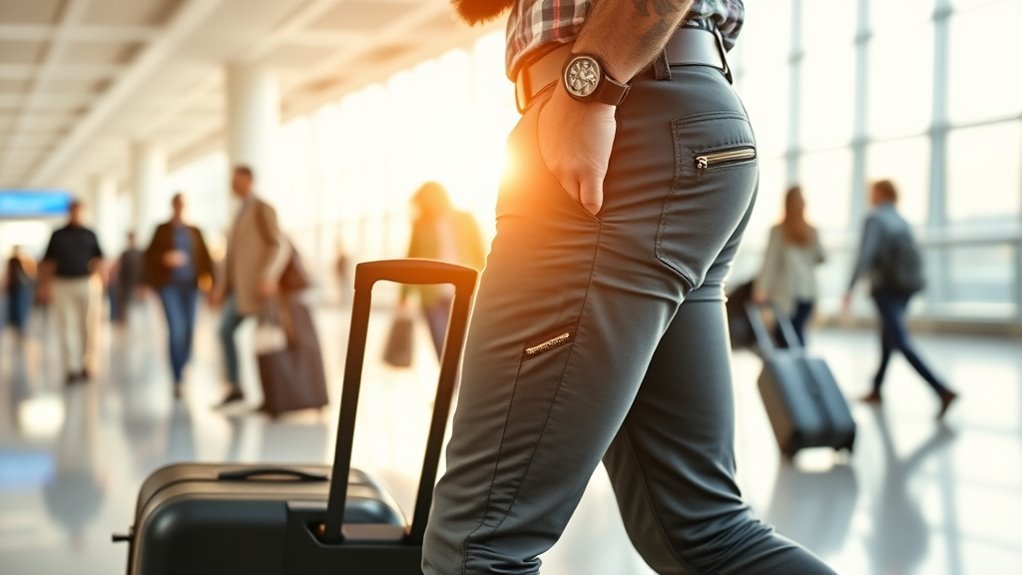
Men’s travel pants with hidden pockets can make it easier to carry a phone, wallet, passport, and cards without using bulky cargo pockets or a visible money belt. The best pair depends on your trip: choose secure closures for crowded cities, light and breathable fabric for hot weather, stretch for long flights, and a fit that stays comfortable when the pockets are loaded.
Quick Answer
The best men’s travel pants with hidden pockets combine discreet zippered or layered pockets, a comfortable fit, and fabric suited to your climate. Hidden pockets can make quick-access theft harder, but they are not theft-proof. Test the pants with your real passport, phone, and wallet before traveling.
Key Takeaways
- Prioritize pocket closure and placement over the total number of pockets.
- Nylon and polyester blends usually handle moisture better than heavy cotton denim, but actual drying time depends on fabric weight, airflow, humidity, and pocket construction.
- A secure pocket reduces easy access; it does not replace awareness, document backups, or a separate storage plan.
- Load the pockets and sit, walk, bend, and climb stairs before deciding the fit is right.
- Follow the exact care label because wash and drying instructions differ by fabric and brand.
Disclosure: As an Amazon Associate I earn from qualifying purchases. Some links on this page are affiliate links, at no extra cost to you.
What Makes Men’s Travel Pants With Hidden Pockets Worth Buying?
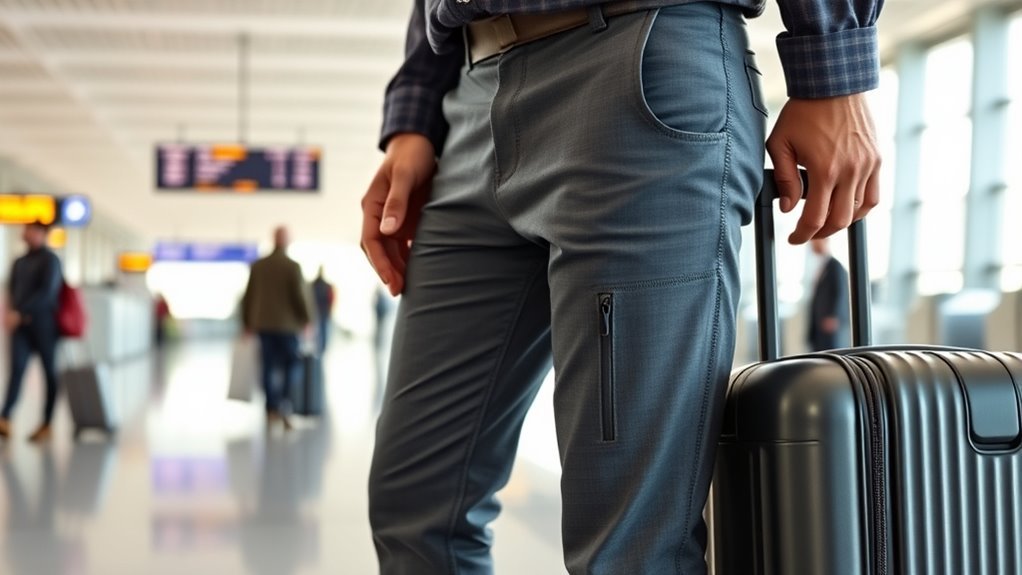
Men’s travel pants with hidden pockets are useful when they combine security, comfort, and everyday style. A discreet zippered pocket can keep a passport or wallet closer to your body, while a layered closure can make a quick grab more difficult than an open back pocket.
The strongest designs do more than add storage. They keep loaded pockets flat, place zippers where you can reach them, and avoid pressure points when you sit. They may also use stretch panels, gusseted crotches, adjustable waistbands, wrinkle-resistant fabrics, or water-repellent finishes.
Some models focus heavily on security. For example, Clothing Arts Pick-Pocket Proof® Adventure Travel Pants are currently listed with 11 multi-secure pockets, including five triple-secure and six double-secure pockets. The company also lists 100% Nature-Like™ Nylon, a PFC-free DWR finish, a diamond gusset, an adjustable waist, quick-dry performance, and UPF 50+.
Other pants look more like normal chinos or jeans. This can be a better choice when you want one pair for flights, sightseeing, restaurants, and casual work. The important question is not whether the pants have the most features. It is whether the features match your itinerary without adding heat, bulk, or awkward access.
Note: “Hidden,” “anti-theft,” and “pickpocket-proof” are product-marketing terms. Secure closures may reduce opportunity, but no pocket can guarantee that valuables will not be lost or stolen.
Why Travel Pants Dry Faster Than Jeans
Many technical travel pants dry faster than traditional heavy denim because they use thinner nylon or polyester blends that hold less water and expose more surface area to moving air. They may also have a water-repellent finish that helps light rain bead on the surface instead of soaking in immediately.
That does not mean every travel pant dries quickly or every jean dries slowly. Drying time changes with the fabric blend, garment weight, weave, pocket layers, humidity, temperature, and airflow. A cotton-rich performance jean may dry faster than 100% cotton denim but still take longer than a thin synthetic travel pant.
Quick-Dry Fabric
Quick-dry travel pants are most useful when you wash clothing in a hotel sink, get caught in light rain, or need to wear the same pair again soon. Nylon and polyester fibers do not behave like absorbent cotton, so moisture often leaves the garment more easily. Stretch fibers such as spandex can improve movement, although they do not automatically make a garment cooler or faster-drying.
Clothing Arts describes its Adventure Travel Pants as 100% Nature-Like™ Nylon with moisture-wicking, breathable, water-resistant, and quick-dry properties. These are manufacturer specifications for that model, not universal features of all travel pants.
Warning: Water-resistant travel pants are not waterproof rain pants. A DWR finish can help with splashes and light rain, but steady rain can still wet the fabric, seams, and pocket contents.
Travel-Friendly Weave
Fabric construction matters as much as fiber type. A light, open weave may feel cooler and dry faster, while a dense weave can block more wind and resist abrasion. Extra pocket bags, reinforced knees, and thick waistbands can slow drying even when the outer fabric is synthetic.
| Fabric Type | Moisture and Drying | Best For | Main Trade-Off |
|---|---|---|---|
| Light nylon or polyester blend | Usually sheds water and dries relatively quickly | Hot weather, one-bag travel, sink washing | May feel technical and can hold odor |
| Synthetic stretch chino | Often quick-drying with good mobility | Flights, city travel, business-casual use | Fit and breathability vary widely |
| Cotton-rich performance denim | Usually slower than thin synthetics but may outperform heavy all-cotton denim | Travelers who prefer a familiar jeans look | Heavier and bulkier when wet |
| Traditional heavy cotton denim | Absorbs more water and generally dries slowly | Cool, dry trips and short travel days | High packed weight and long drying time |
Also check the stated garment weight. Clothing Arts lists its Adventure Travel Pants at 22 oz. That can still be practical for carry-on travel, but it should not be described as ultralight without comparing it with lighter alternatives.
Which Hidden Pockets Actually Protect Valuables?
The most useful hidden pocket is one that stays discreet, closes securely, fits the intended item, and remains comfortable when you sit. A pocket buried under another closure generally adds more delay than a normal open pocket. A simple zipper can also work well when it is positioned where you can feel it and where a stranger cannot reach it easily.
Clothing Arts uses layered pocket systems on its Adventure Travel Pants. The current product page lists 11 total pockets, five triple-secure and six double-secure, including a hidden passport pocket and hidden smartphone or credit-card pockets. Bluffworks and Aviator take a less cargo-focused approach, using discreet zippered pockets in chinos and jeans.
A good security pocket adds time, concealment, or both. It lowers easy access, but it does not make the contents impossible to steal.
Use this order when judging pocket security:
- Closure: A zipper, buttoned flap, or layered closure is harder to enter unnoticed than an open pocket.
- Placement: Front, waistband, or inner-thigh locations are usually easier for you to monitor than exposed rear pockets.
- Depth: The item should sit fully inside without showing its outline or pushing the zipper open.
- Access: You should be able to retrieve the item without exposing everything else.
- Comfort: A passport or phone should not dig into your hip, thigh, or lower back when seated.
How to Carry Valuables Without Putting Everything in One Place
Hidden-pocket pants work best as one layer of a broader security plan. Keep the item you need during the day in the most secure accessible pocket, but do not store your passport, all payment cards, all cash, and your only backup in the same place.
- Carry one primary payment card and limited cash in a secure pocket.
- Keep a backup card and emergency cash in a separate secure location.
- Carry your original passport only when local rules or your itinerary require it.
- Keep document copies separate from the originals. The U.S. Department of State International Travel Checklist recommends making multiple copies of important travel documents and storing copies separately.
- Avoid opening a passport or cash pocket in a crowded area where others can see what it contains.
Pro Tip: Put a flat paper card or old passport-sized booklet in the pocket during a home test. Wear the pants for at least 30 minutes, sit in a hard chair, climb stairs, and check whether the item bends, prints through the fabric, or presses against your body.
Best Men’s Travel Pants With Hidden Pockets by Use Case
There is no single best pair for every traveler. The strongest choice depends on how much security, storage, polish, stretch, and weather performance you need.
| Use Case | Current Example | Why It Fits | Consider Before Buying |
|---|---|---|---|
| Layered pocket security | Clothing Arts Adventure Travel Pants | 11 multi-secure pockets, including five triple-secure and six double-secure pockets | Cargo-style storage and a listed 22 oz garment weight may be more than minimalist travelers need |
| Polished city and flight wear | Bluffworks Envoy Lightweight Travel Pants | Nine total pockets, including five zippered pockets, with four-way stretch and a chino-style appearance | Confirm the fit and pocket placement because a slim cut may not suit larger thighs |
| Maximum organization | SCOTTeVEST Action Adventure Pants | 17 pockets and a 90% polyester, 10% spandex four-way-stretch fabric | More pockets can add weight, heat, and time spent searching for items |
| Traditional jeans look | Aviator Travel Jeans | Three hidden zipper pockets, including two rear pockets and one front pocket | Fabric blends, fits, and availability differ by color and model |
| Cotton-rich performance denim | Bluffworks Departure Jeans 3.0 | Cotton-rich COOLMAX blend with two zippered hidden security pockets | Heavier than lightweight synthetic pants and not as fast-drying as the thinnest technical fabrics |
Choose the Clothing Arts style when layered security is the priority, the Envoy when you want a cleaner chino look, the SCOTTeVEST option when storage capacity matters most, and Aviator or Departure jeans when you prefer denim. Product specifications and availability can change, so check the current manufacturer page before ordering.
How to Choose the Right Travel Pants Fit
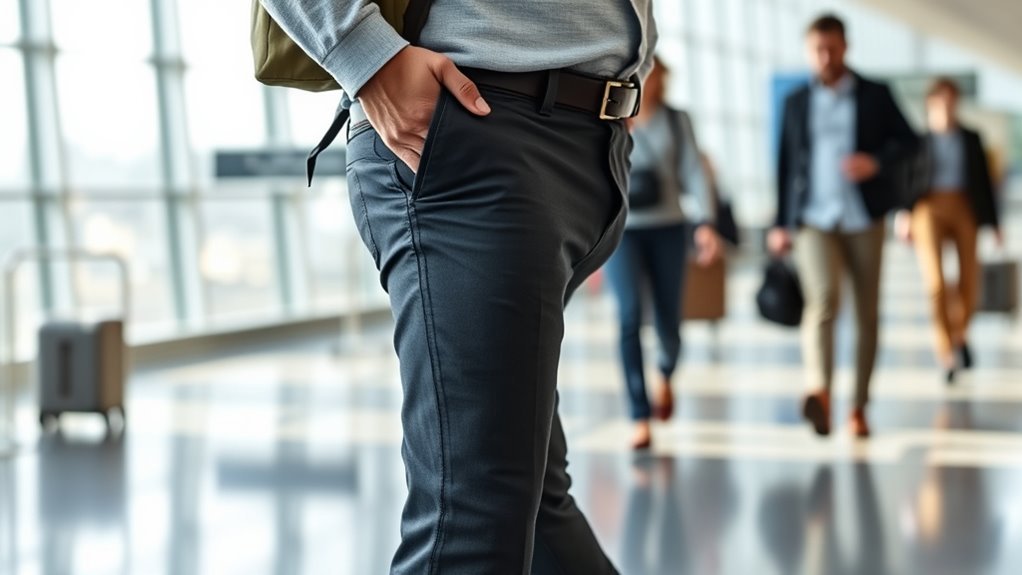
Start with your actual waist, hip, thigh, rise, and inseam measurements instead of relying only on the size printed inside your current jeans. Brand sizing can differ, and a secure pocket changes the way pants feel when it is loaded.
A good travel fit should look clean while allowing you to sit for a long flight, step onto a train, climb stairs, and bend without the waistband cutting in. Features such as a gusseted crotch, articulated knees, stretch fabric, and an adjustable waistband can help, but the cut still needs to suit your body.
Finding Your Ideal Size
Use the manufacturer’s current size chart and compare it with measurements taken from a pair of pants that already fits you well. Check whether the product uses vanity sizing, whether the waistband stretches during wear, and whether the rise is high enough to keep a loaded rear pocket comfortable.
Before removing tags, load the pockets with the exact items you plan to carry. Then complete this fit test:
- Sit for at least 10 minutes with your phone and wallet in place.
- Walk, squat, lunge, and climb stairs.
- Check whether the waistband rolls, gaps, or pinches.
- Make sure the passport pocket closes without bending the passport.
- Confirm that pocket contents do not pull the pants to one side.
- Check the silhouette in a mirror to see whether loaded pockets create obvious bulges.
Balancing Fit and Mobility
For travel pants that move with you, look for enough room through the seat and thighs, plus stretch where you bend. A slim fit can work well when it skims the body without gripping the knees or thighs. An athletic fit usually provides more room in the seat and upper leg, while a straight fit offers a more consistent width from thigh to hem.
| Feature | Benefit | What to Check |
|---|---|---|
| Diamond or gusseted crotch | Adds room for stepping, squatting, and climbing | The seam should not bunch or rub |
| Adjustable or stretch waistband | Improves comfort during long sitting periods | It should recover its shape and stay up when pockets are loaded |
| Four-way stretch | Allows movement in several directions | Fabric should not become shiny or overly tight at the knees |
| Tailored leg | Creates a polished look for city and business-casual use | Leave enough room for your calves and travel footwear |
Travel Pants That Stay Comfortable All Day
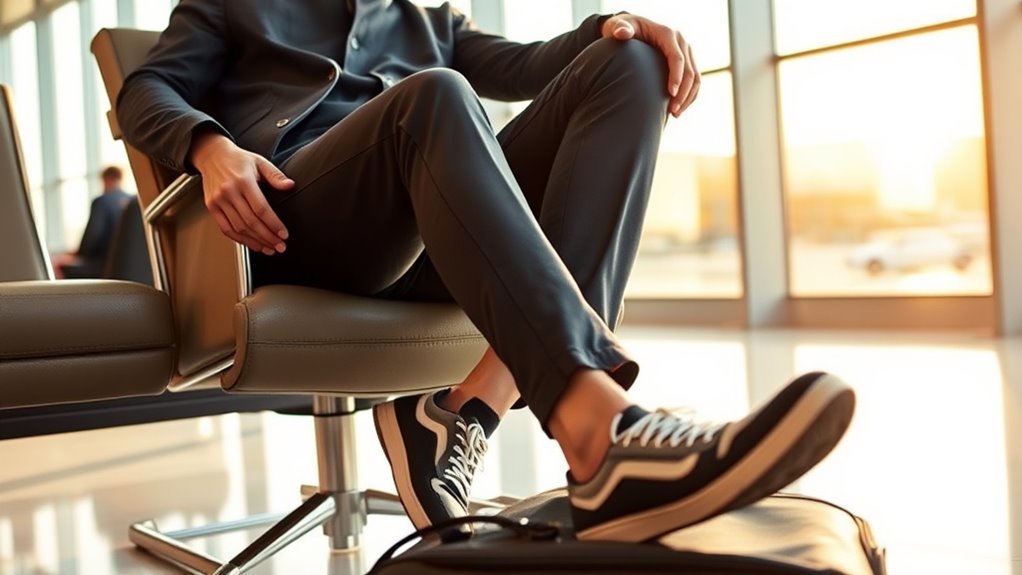
Comfort matters as much as hidden storage. The best travel pants should remain comfortable when you are seated, walking for hours, moving through warm stations, and carrying your normal daily items.
Look for:
- Moisture management: Fabric that moves or releases moisture can feel better during active travel.
- A comfortable waistband: Stretch or adjustability can reduce pinching during long flights and meals.
- A gusseted crotch or shaped knees: These features can improve stride length and climbing comfort.
- A clean inner finish: Zippers, seams, and pocket bags should not rub your skin.
- Balanced pocket placement: Heavy items should not swing, bounce, or pull one side down.
- Appropriate climate weight: A highly pocketed pant may be useful in cool weather but too warm in humid conditions.
Clothing Arts lists its Adventure Travel Pants at 22 oz, while Bluffworks describes the Envoy fabric as lightweight at 6.2 oz per yard. Those numbers are not directly comparable because one is a garment weight and the other is a fabric weight. Use them only as clues, then consider the cut, pocket count, lining, and total packed size.
How to Test Hidden-Pocket Travel Pants Before a Trip
A short home test can reveal problems that a product page cannot show. Wear the pants for a normal day before using them on an important trip.
- Load each pocket with the item you plan to carry.
- Zip and unzip the security pocket with one hand.
- Sit in a firm chair and a soft seat to find pressure points.
- Walk briskly and climb stairs to check movement and pocket bounce.
- Wear a backpack or crossbody bag to see whether straps block pocket access.
- Sprinkle a small amount of water on an inconspicuous area only if the care instructions allow it.
- Wash the pants once according to the label and confirm that the fit, zipper action, and water repellency remain acceptable.
Note: Do not test a passport pocket with your active passport if the pocket is tight, rough, or likely to bend it. Use a similarly sized booklet first.
How to Wash and Care for Travel Pants
Care instructions vary by fabric and finish, so the sewn-in label and the manufacturer’s current guidance should come first. One universal routine does not fit nylon pants, polyester-spandex chinos, and cotton-rich travel jeans equally well.
Use these general habits unless the label says otherwise:
- Empty every hidden pocket and close zippers before washing.
- Wash similar colors together with a mild detergent.
- Turn dark or indigo-dyed jeans inside out to reduce visible fading and color transfer.
- Use the recommended water temperature; many technical pants call for cold or cool water.
- Avoid bleach unless the label specifically allows it.
- Skip fabric softener when the manufacturer warns that residue may affect moisture management or water repellency.
- Air-dry when practical, or use only the heat level listed on the care label.
Clothing Arts states that its Adventure Travel Pants can be machine washed or hang-dried while traveling. Bluffworks currently recommends machine washing the Envoy in cold water at 86°F (30°C) and allows medium-heat drying. Aviator instructions vary by jean model but generally call for cool-water washing and medium-heat or air drying. These examples show why checking the exact product page matters.
Do not automatically add a DWR treatment after every wash. Refresh a water-repellent finish only when the manufacturer recommends a compatible product and the fabric no longer beads light moisture as expected.
Sources
- Clothing Arts: Pick-Pocket Proof® Adventure Travel Pants — pocket count, security layers, fabric, weight, gusset, DWR, care, and UPF claims.
- Bluffworks: Envoy Lightweight Travel Pants — fabric blend, pocket count, stretch, weight, and care instructions.
- SCOTTeVEST: Action Adventure Pants — 17-pocket design, fabric blend, stretch, and care specifications.
- Aviator: Men’s Travel Jeans — hidden zipper-pocket configuration and travel-jean features.
- Transportation Security Administration: TSA Travel Tips — airport screening and the possibility of additional screening when an item triggers an alarm or concern.
- U.S. Department of State: International Travel Checklist — document-copy and travel-preparation guidance.
Frequently Asked Questions
Are hidden pockets detectable by airport security scanners?
The pocket construction itself is not usually the main issue. Items left in a hidden pocket, unusual bulk, or an alarm can lead to additional screening. Empty every pocket before entering the checkpoint and follow the officer’s instructions. TSA notes that even permitted items may receive extra screening if they trigger an alarm or raise a security concern.
Do hidden pockets add noticeable bulk to travel pants?
They can. Flat, well-placed pockets may stay discreet when lightly loaded, but layered closures, thick pocket bags, passports, phones, and large wallets can create visible outlines. Test the pants with your real travel load and check them while sitting and walking.
Can travel pants with hidden pockets fit a passport securely?
Many models include a passport-sized pocket, but dimensions and placement vary. The passport should lie flat, remain fully below the closure, and avoid sharp folds or pressure when you sit. Check the manufacturer’s pocket dimensions or test with a passport-sized booklet first.
Are hidden pockets useful in hot and humid climates?
Yes, but choose light fabric and avoid carrying unnecessary items. Multiple pocket layers can trap heat, especially around the thighs and hips. A lightweight nylon or polyester blend with only the security pockets you need is usually more comfortable than a heavy, highly pocketed cargo design.
How many hidden pockets are too many for practical travel?
There is no universal number. Two to four well-placed security pockets are enough for many travelers, while photographers, parents, or gear-heavy travelers may value more. Extra pockets become a problem when they add heat, cause bulges, slow access, or make you forget where an item is stored.
Are hidden-pocket travel pants theft-proof?
No. Zippers, buttons, and layered pockets can reduce easy access and may discourage opportunistic theft, but they cannot prevent every loss or robbery. Stay aware in crowds, limit what you carry, separate backups, and avoid displaying cash or documents.
Are water-resistant travel pants waterproof?
Usually not. Water-resistant fabric or a DWR finish can handle splashes and short light rain, but water may enter through the fabric, seams, zippers, or pocket openings during prolonged rain. Use a waterproof shell when staying dry is essential.
Should you carry your passport in your pants all day?
Carry the original only when local law, transportation, hotel check-in, or your planned activity requires it. Otherwise, follow destination-specific guidance and use a secure storage plan. Keep copies separate so you have identifying information if the original is lost or stolen.
Conclusion
The right men’s travel pants with hidden pockets can make a trip more comfortable and organized while reducing easy access to your valuables. Focus on secure closures, sensible pocket placement, climate-appropriate fabric, and a fit that remains comfortable when loaded. Choose the pair that matches your itinerary, test it before departure, and treat hidden pockets as one useful layer of travel security rather than a guarantee.
