
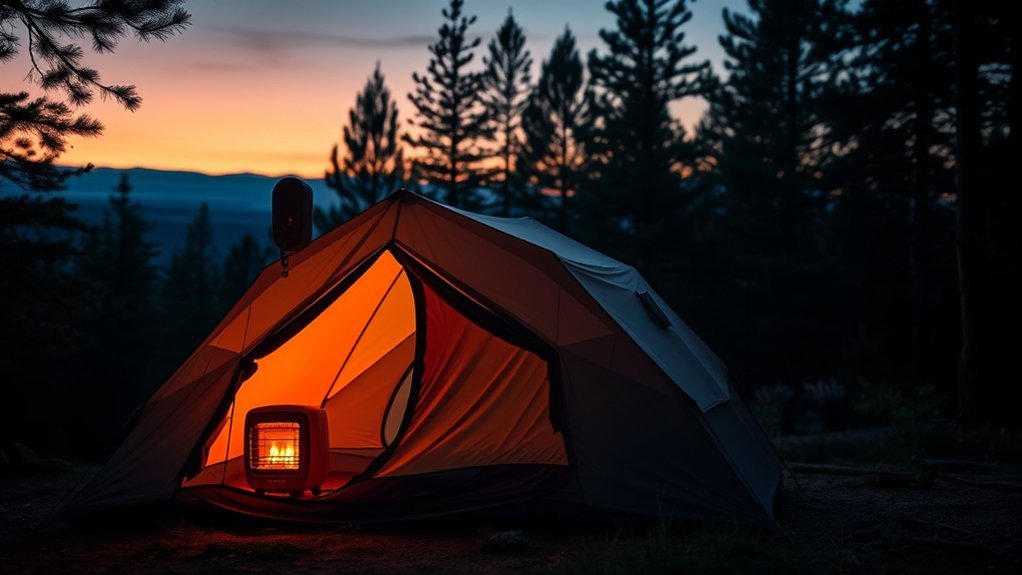
When camping in tents, you must be aware of the carbon monoxide risk from fuel-burning equipment like stoves. Always use designated camping stoves and guarantee proper ventilation by keeping tent flaps open. Never sleep with a lit stove inside the tent, and install a carbon monoxide alarm at head height. Watch for symptoms of poisoning, such as headaches or dizziness. For more details on how to protect yourself from these dangers, check out the following guidelines.
Understanding Carbon Monoxide and Its Dangers

When you’re camping in a tent, it’s easy to overlook the dangers lurking in the shadows, especially when it comes to carbon monoxide (CO). This highly toxic, colorless, and odorless gas is produced by the incomplete combustion of fuels, making it a hidden threat. CO binds with hemoglobin in your blood, hindering oxygen transport and causing symptoms like headaches, dizziness, and fatigue that can feel like the flu. Each year, approximately 200 people in the UK are hospitalized due to CO poisoning, often because they’ve used combustion sources like barbecues indoors. The risk intensifies without proper ventilation, so it’s essential to maintain airflow when cooking or heating inside your tent. Awareness is your first defense; many remain unaware of CO’s dangers. Stay vigilant, educate yourself and others, and always prioritize safety to enjoy your camping experience without the shadow of carbon monoxide lurking nearby.
Safe Stove Usage Practices in Tents
Understanding the risks posed by carbon monoxide is just the beginning; safe stove usage practices are vital for campfire cooking and heating in tents. Always opt for stoves designed specifically for tent use, like Frontier and Traveller Stoves, which feature flue systems that vent harmful fumes outside. Proper ventilation is imperative—keep tent flaps open to guarantee airflow and reduce CO buildup. Use well-seasoned wood for better combustion, which minimizes flue build-up and CO emissions. Never sleep with a stove lit inside your tent; this greatly heightens the risk of CO poisoning. Make it a habit to regularly check your stove maintenance to verify it operates effectively. Finally, install a carbon monoxide alarm at head-height, about one meter from the stove, to alert you to dangerous CO levels. Prioritizing these practices empowers you to enjoy your camping experience safely while embracing the freedom of the outdoors.
Products Worth Considering
Practical Design: Campers can then use scissors to cut out cooker holes that match the different diameters of the cooker jacks. Paired with silicone stove tubes, it can effectively protect your tent In addition, the rain flap design aviods rain from entering the tent through the cooker jack.
【Level 3 Basalt Fiber Material】 The Industrial grade safe material has excellent high temperature resistance. But it may have slight smoke and smell when it is burned for the first time. Please don't worry. This is a small amount of wax.
Safe & Versatile Tent Stove Jack: High-temp silicone, adjustable base, fits most tents & stove pipes.
Symptoms of Carbon Monoxide Poisoning
Recognizing the symptoms of carbon monoxide poisoning is essential for your safety, especially in enclosed spaces like tents. Common symptoms include headaches, dizziness, nausea, fatigue, disorientation, and shortness of breath. These can easily mimic other illnesses, like food poisoning or the flu, making symptom recognition critical for early detection.
Symptoms may develop gradually or suddenly, depending on the concentration of carbon monoxide and exposure time. It’s important to stay alert, as you might not immediately connect these signs to carbon monoxide poisoning, leading to potentially dangerous delays in response. If you or someone with you experiences these symptoms, act quickly: remove yourself from the tent and seek medical help. Timely intervention can greatly improve outcomes and safeguard your well-being. Don’t underestimate the importance of being aware—your life may depend on it.
Preventive Measures and Awareness
You need to understand the serious risks of carbon monoxide exposure when camping, especially with barbecues in enclosed spaces. Installing a carbon monoxide alarm at head-height can save lives by alerting you to dangerous levels of this invisible gas. By promoting safe camping practices and educating others, you play an essential role in preventing tragedies associated with carbon monoxide poisoning.
Products Worth Considering
【3-in-1 Smart Detection – CO, Temperature & Humidity】Say goodbye to single-function devices! This upgraded portable carbon monoxide detector accurately tracks carbon monoxide (0–1000 PPM), temperature (-10°C~50°C / 14°F~122°F), and humidity (5–95% RH) in real time. Carbon monoxide detectors with a large HD display, you can easily check air safety status at a glance. Perfect for home, RV essentials, or travel use.
Carbon Monoxide Detector: The AGT-2309 is a portable carbon monoxide detector designed for long-term monitoring of carbon monoxide concentrations in the air. It can detect CO levels from 0 to 1000 PPM and is equipped with a high-precision sensor that responds in just 0.3S, providing timely protection for your safety
Carbon Monoxide Detector: The AGT-3000 is a portable carbon monoxide detector equipped with a high-precision DDS sensor made in the UK, ensuring rapid and accurate detection of CO levels ranging from 0 to 1000 PPM. Built to deliver reliable performance, it helps identify even low-level carbon monoxide presence, allowing timely action to protect your safety in any environment
Educate on CO Dangers
While enjoying the great outdoors, it’s crucial to be aware of the hidden dangers of carbon monoxide (CO), especially when camping in tents. Sadly, about 200 people in the UK are hospitalized each year due to CO poisoning, with tragic incidents highlighting the risks of bringing barbecues indoors. To protect yourself, embrace CO awareness campaigns and educate yourself on safe camping practices. Prioritize tent ventilation tips: keep vents open to guarantee fresh air circulation, and never use fuel-burning appliances inside. Teach children about CO dangers, and encourage campsites to display warning signs. Knowledge is your best defense against this invisible threat, allowing you to enjoy your adventures without fear. Stay informed and stay safe!
Install Carbon Monoxide Alarms
A well-placed carbon monoxide alarm can be a lifesaver when camping, guaranteeing you’re alerted to any dangerous CO buildup before it becomes a serious threat. To maximize its effectiveness, consider these tips:
- Alarm Placement: Install your alarm at head-height, about 1 meter from the stove, where it can detect CO early.
- Alarm Testing: Regularly test your alarm to verify it functions properly. Follow the manufacturer’s instructions for the best results.
- Choose Wisely: Opt for camping-appropriate alarms designed for outdoor use, assuring durability and reliability.
Promote Safe Camping Practices
Ensuring safety while camping requires a proactive approach to prevent carbon monoxide (CO) hazards. Many campers still underestimate the risks of using barbecues inside tents, with about 1 in 5 unaware of CO dangers. Always keep your tent well-ventilated and never sleep with a stove lit; CO can cause serious health issues like headaches and disorientation. Equip your camping gear with a carbon monoxide alarm, placing it at head-height, about 1 meter from the stove for ideal detection. Educate both children and adults about CO poisoning risks and safe camping practices to foster greater awareness. Campsites should also clearly display warnings against using fuel-burning appliances in enclosed spaces to enhance outdoor safety and protect all campers.
Actions to Take in Case of CO Poisoning
If you suspect carbon monoxide poisoning, act quickly by removing the person from the tent to fresh air to stop further exposure. Don’t hesitate to seek medical help, as symptoms can worsen rapidly, and calling for an ambulance is essential if they show severe signs. While waiting for assistance, keep a close eye on their symptoms and provide calm reassurance until help arrives.
Immediate Evacuation Steps
When you suspect carbon monoxide poisoning, it’s essential to act swiftly to prevent further harm. Follow these immediate evacuation steps as part of your emergency procedures:
- Remove the affected person: Get them out of the tent and into fresh air to stop further exposure.
- Monitor their condition: Keep an eye on their symptoms, such as confusion or loss of consciousness, while waiting for help.
- Notify medical professionals: Inform them about the potential carbon monoxide exposure, which aids in their assessment and treatment.
Your evacuation plans should prioritize quick action, as symptoms like headaches, dizziness, and nausea can mimic other illnesses. Remember, prompt action can be lifesaving.
Seek Medical Assistance
After ensuring the affected person is in fresh air, seeking medical assistance is vital to address the potential dangers of carbon monoxide poisoning. Don’t hesitate; call for emergency response right away, especially if the individual shows severe symptoms like confusion or loss of consciousness. Time is essential, and the risks can escalate quickly. While waiting for medical professionals, continue providing fresh air to help alleviate symptoms. When medical help arrives, inform them about the potential carbon monoxide exposure and any symptoms experienced. A thorough medical evaluation is important to determine the extent of poisoning and necessary treatment. Your prompt action can greatly impact the affected person’s recovery and safety, so stay vigilant and proactive.
Monitor Symptoms Closely
While you wait for medical assistance, it’s crucial to monitor the affected person’s symptoms closely, as they can deteriorate rapidly. Pay attention to symptom progression and use these monitoring techniques:
- Check for common symptoms: Look for headaches, nausea, or shortness of breath.
- Assess severity: Note any changes in consciousness or coordination; dizziness or confusion are red flags.
- Communicate clearly: Inform medical professionals about the potential CO exposure, ensuring they provide appropriate treatment.
Importance of Carbon Monoxide Alarms
Carbon monoxide alarms are an essential safety measure for anyone camping in tents, as they detect the presence of this dangerous, colorless, and odorless gas that can accumulate rapidly. Installing a portable carbon monoxide detector at head-height, about 1 meter from your stove, optimizes detection. Regular testing and maintenance of your chosen alarm type is important; a malfunctioning alarm greatly heightens the risk of undetected carbon monoxide exposure. Fuel-burning equipment can produce harmful CO levels, especially in enclosed spaces like tents, so having an alarm is non-negotiable. Stay informed and educate your camping companions about the importance of these devices. Awareness can save lives and prevent the tragic consequences of carbon monoxide poisoning. Don’t underestimate the power of a simple alarm; it’s your first line of defense against this silent threat, allowing you to enjoy your outdoor adventures with peace of mind.
Products Worth Considering
3-IN-1 MULTIFUNCTIONAL: This 3-in-1 portable carbon monoxide detector offers more integrated features and continuous upgrades, with a newly upgraded 43-hole design that not only accurately detects airborne carbon monoxide concentrations (0-500 PPM), but also detects humidity (0 to 90% RH) and temperature (32°F to 122°F), CO Detector's three-segment display system makes safety visible, making it the perfect tool for monitoring air safety in any environment
All-in-One CO & CO2 Detector: DS-100PRO detects carbon monoxide (0–1000 ppm), carbon dioxide (400–5000 ppm), temperature, and humidity. It triggers alarms at 50 ppm CO or 1500 ppm CO2, ensuring early warnings and all-round air quality protection
Electrochemical sensor technology detects CO gas
Frequently Asked Questions
Can I Use Propane Stoves Inside My Tent?
You shouldn’t use propane stoves inside your tent due to safety risks. Guarantee proper tent ventilation if you must, but it’s best to cook outside. Prioritize your safety and enjoy the freedom of camping responsibly.
Are There Specific Tents Designed to Reduce CO Risk?
Some tents feature advanced ventilation systems designed to minimize CO risk. With proper airflow, these models can notably reduce health hazards. Confirm you check for safety features before your adventure, prioritizing your well-being and freedom.
What Are Safe Distances to Place Stoves From the Tent?
Place your stove at least 10 to 15 feet away from your tent, following safety guidelines. This distance reduces the risk of carbon monoxide buildup and fire hazards, ensuring your camping experience remains enjoyable and safe.
How Often Should I Check My CO Monitor?
You should check your CO monitor daily, ensuring it’s functioning properly. Regular monitor maintenance is essential; replace batteries as needed and test detection frequency to guarantee your safety. Don’t take chances—stay vigilant and empowered.
Can CO Poisoning Happen During the Day?
Can carbon monoxide poisoning only occur at night? Absolutely not! Daytime exposure can also lead to dangerous situations. Always guarantee proper ventilation and monitor carbon monoxide levels, regardless of the time. Your safety matters!
Conclusion
Staying safe from carbon monoxide risks in tents is essential for your well-being. By following safe stove usage practices and being aware of the symptoms of poisoning, you can protect yourself and your loved ones. Remember, an ounce of prevention is worth a pound of cure. Always maintain proper ventilation and invest in carbon monoxide alarms to guarantee a worry-free camping experience. Don’t let negligence ruin your adventure; prioritize safety and enjoy the great outdoors responsibly.