
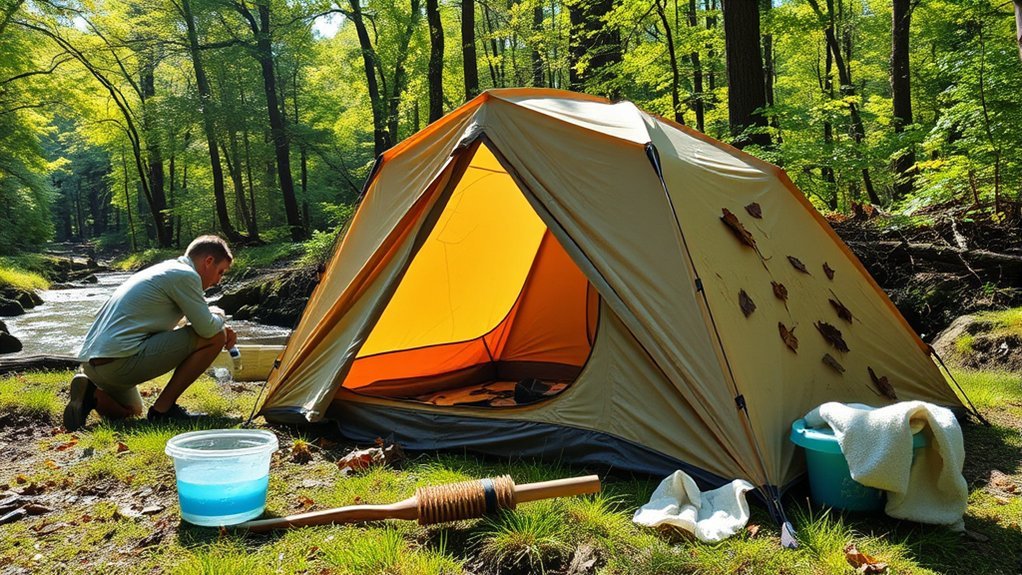
You shouldn’t machine wash your tent, as it can damage the fabric, compromise waterproof coatings, and weaken seams. Instead, opt for hand washing using lukewarm water and a tent-safe detergent. You can use the bathtub or hose method for effective cleaning. Make sure you have gentle brushes, sponges, and drying towels on hand. Proper drying and storage are essential for maintaining your tent’s longevity. Stick around to learn more about the best practices for tent care.
Why Machine Washing a Tent Is Not Recommended

Although it might seem convenient, machine washing a tent is generally not a good idea due to the potential damage it can cause. The agitation in a washing machine can harm the delicate fabric, compromising waterproof coatings and seam taping essential for tent maintenance. When you toss your tent into a machine, it risks losing its water resistance, making it ineffective during wet conditions.
Moreover, the harsh environment of a washing machine can create tears or abrasions that may not be immediately visible, leading to long-term structural issues. Tents are crafted from materials designed for gentle care, and hand washing is a far better option. Alternatives like using a hose or gently washing in a bathtub maintain the integrity of the fabric while ensuring your tent stays ready for your next adventure. Prioritizing proper fabric care will keep your tent functional and extend its lifespan.
Safe Hand Washing Methods for Your Tent
To keep your tent in top shape, hand washing is the safest method. Machine washing can damage its waterproof coatings and seam taping. For effective tent maintenance, consider the bathtub method: fill a tub with lukewarm water and add a light detergent designed for tents. Submerge the tent, scrub it gently with a sponge, and rinse thoroughly with non-soapy water. Alternatively, the hose method works well outdoors; rinse the tent, focusing on dirty spots with a sponge and detergent, then rinse again before drying.
Inspect your tent regularly for dirt buildup, washing it only when severe dirt accumulates. You can maintain general cleanliness more frequently without a full wash. After cleaning, verify the tent is completely dry before storage to prevent mold and mildew; store it indoors in breathable containers to avoid fabric compression. Following these practices will keep your tent ready for your next adventure.
Products Worth Considering
Safe and Natural Material:When opening the product, you may notice some powder on the surface. This is simply natural cornstarch from the inside, which can seep out during shipping due to shaking or compression. It is completely non-toxic, safe, and harmless.
Release stuck zippers on wetsuits tents jackets sleeping bags and luggage with this multipurpose 2-in-1 formula
TWO-SIDED DESIGN: Scrubbing side for tough messes and soft side for delicate surfaces
Essential Materials for Tent Cleaning
When you’re ready to clean your tent, having the right materials on hand makes all the difference. Start by gathering essential items to guarantee a thorough clean without damaging your gear. Here’s a quick reference table to guide you:
| Material | Purpose | Notes |
|---|---|---|
| Drop Cloth | Protects the underside | Keeps dirt away during cleaning |
| Gentle Cleaning Solution | Cleans without damage | Avoid bleach or harsh soaps |
| Non-Abrasive Brushes | Safely scrubs fabric | Prevents fabric wear and tear |
| Sponges/Rags | Wiping and drying | Use clean, soft materials |
| Drying Towels | Prevents mold and mildew growth | Guarantee tent is completely dry |
| Protective Gear | Safeguards your hands | Gloves can protect from harsh solutions |
With these essentials, you’ll be well on your way to keeping your tent in top shape!
Products Worth Considering
Tech Wash 300ml & TX.Direct Wash-In 300ml packaged together to safely clean and waterproof technical outwear, rainwear, ski and snow gear
Premium Material: Our Dust pan and Brush set are made of high quality PP and nylon. The brush features long-lasting durable bristles that can capture and move dirt effectively.
The only cleaner designed to protect against UV damage and revitalize water repllency of all weatherproof textiles
Steps for Thoroughly Cleaning Your Tent
To keep your tent in top shape, start by gathering the necessary materials, like a soft sponge and a tent-specific detergent. Next, use hand washing techniques to gently clean the fabric without damaging its waterproof qualities. Finally, focus on proper drying and storage to prevent mold and mildew, ensuring your tent lasts for many adventures to come.
Products Worth Considering
Tent & Gear SolarWash and Tent & Gear SolarProof packaged together to safely clean & waterproof your tents, packs and outdoor covers.
Safe and Natural Material:When opening the product, you may notice some powder on the surface. This is simply natural cornstarch from the inside, which can seep out during shipping due to shaking or compression. It is completely non-toxic, safe, and harmless.
WATER REPELLENT SPRAY: One Scotchgard Outdoor Water Shield Spray, 13 oz can, that protects fabrics against the elements
Gather Necessary Materials
Before diving into the cleaning process, it’s crucial to gather the right materials to guarantee your tent stays in great shape. For effective tent cleaning, start with a drop cloth to protect the underside during the process. You’ll need a water source, like a hose, and a gentle, non-abrasive cleaning solution to avoid damaging the fabric. Don’t forget essential tools such as non-abrasive brushes, sponges, and rags that won’t harm the tent. Keep drying towels handy to thoroughly dry your tent afterward, preventing mold and mildew. Finally, inspect your tent for any holes or tears as you clean; repairing these promptly will extend its lifespan, ensuring your outdoor adventures are worry-free.
Hand Washing Techniques
Although machine washing a tent is a definite no-go, hand washing can effectively restore its cleanliness without compromising its integrity. Start by filling a bathtub with lukewarm water and a gentle, tent-safe detergent. Submerge your tent, gently scrubbing it with a sponge to remove dirt and grime. Alternatively, you can use the hose method: rinse the tent outside and focus on stubborn spots with a sponge and detergent before rinsing thoroughly with clean water. Remember, tent maintenance doesn’t stop at washing—regularly inspect your gear for dirt build-up and give it a quick broom sweep when needed. Make certain your tent is completely dry before storage to prevent mold and mildew, preserving its longevity for your next adventure.
Drying and Storage Tips
Once you’ve cleaned your tent, drying it properly is vital to prevent mold and mildew. Hang your tent in a well-ventilated area, making sure it’s completely dry before folding it for storage. This step is critical for effective tent maintenance and preserving fabric care. Avoid using a dryer, as heat can damage the materials and structure.
For storage, choose a cool, dry spot away from direct sunlight and moisture. Use breathable containers to prevent fabric compression, allowing the tent to retain its shape over time. Regularly inspect your tent for dirt buildup, and remember that gentle hand washing is key to protecting its waterproofing features. With these tips, you’ll guarantee your tent remains in excellent condition for future adventures.
Proper Drying Techniques for Tents
After cleaning your tent, you need to guarantee it’s completely dry before storing it to prevent mold growth. Hang your tent in a well-ventilated area, out of direct sunlight, for ideal drying. This simple step protects the fabric and maintains the tent’s integrity for your next adventure.
Products Worth Considering
Clothes drying laundry rack for energy savings and gentle air drying so clothes last longer; for indoor use
A mesh netting rack designed to preserve plant material by promoting even drying and curing.
Efficient Herb Drying: You will get 4 pcs herbal drying racks, each equipped with 30 stainless steel detachable clips, allowing you to dry and preserve a variety of herbs simultaneously, saving you time and effort
Importance of Complete Drying
Ensuring your tent is completely dry before storage is essential to prevent mold and mildew from taking hold. Proper tent care and moisture management are vital for maintaining your gear’s integrity. Here are three tips for effective drying:
- Hang or Lay Flat: After cleaning, place your tent in a well-ventilated area, avoiding direct sunlight to protect the materials.
- Use Drying Towels: Absorb excess moisture with drying towels before folding to reduce odors and prevent dampness.
- Regularly Inspect: Before storing, check that your tent is entirely dry. This simple step can extend its lifespan considerably and keep it ready for your next adventure.
Ideal Drying Locations
When it comes to drying your tent, selecting the right environment can make all the difference in preventing mold and mildew. Aim for a cool, dry location that allows for good air circulation during the tent drying process. Hanging your tent in a shaded area limits sun exposure, protecting the fabric from degradation over time. Before you hang it, use drying towels to absorb excess moisture, which speeds up your drying techniques. This not only helps with evaporation but can also prevent dampness. Remember, avoid using a dryer; the heat can damage essential waterproof coatings and seam taping. By following these guidelines, you can guarantee your tent stays in peak condition for your next adventure.
Preventing Mold Growth
To prevent mold growth on your tent, it’s crucial to dry it thoroughly before storage. Even small amounts of moisture can lead to serious issues, so prioritize proper drying techniques for effective mold prevention. Here are three key steps for moisture control:
- Use Drying Towels: Blot excess moisture with drying towels after washing to speed up the drying process.
- Hang in a Well-Ventilated Area: Avoid confined spaces; hang your tent where air can circulate freely to eliminate dampness.
- Store Properly: Once dry, store your tent in a cool, dry space away from direct sunlight to prolong its lifespan.
Regularly inspect your tent for any signs of mold and address any issues promptly to maintain its integrity.
Storing Your Tent to Prevent Damage
Properly storing your tent is essential for preserving its longevity and performance. To guarantee effective tent maintenance, follow these smart storage solutions:
| Step | Action | Purpose |
|---|---|---|
| 1. Dry Your Tent | Make sure it’s completely dry before storing. | Prevents mold and mildew growth. |
| 2. Choose Location | Store in a cool, dry place like a shed or garage. | Shields from moisture and weather. |
| 3. Use Breathable Bags | Utilize breathable containers for storage. | Maintains fabric integrity and airflow. |
| 4. Inspect Regularly | Check for damage or moisture before use. | Catches issues early, protecting your tent. |
Products Worth Considering
Pack your tent in our ALPS Mountaineering Tent Bag and you're ready for you next campout
Pack your tent in our ALPS Mountaineering Tent Bag and you're ready for you next campout
Appreciable Storage Capacity: exceptional sizing characterizes this extra large duffle bag with dimensions of 83 x 16 x 12 inches offering a large storage capacity of 260L; It can accommodate various gear, including a tent and sleeping bags, umbrella-style strollers, sport equipment and household items such as quilts, clothes and disassembled Christmas trees, showcasing its multi-purpose functionality
Tips for Extending Your Tent’s Lifespan
While enjoying the great outdoors, taking steps to extend your tent’s lifespan is essential. Proper tent maintenance not only enhances your camping experience but also guarantees outdoor longevity. Here are three practical tips to keep your tent in top shape:
Taking care of your tent ensures a better camping experience and extends its lifespan in the great outdoors.
- Inspect Regularly: After each use, check for any signs of damage. Early detection helps prevent more serious issues down the line.
- Dry Before Storage: Always verify your tent is completely dry before packing it away. This prevents mold and mildew, which can greatly reduce durability.
- Store Properly: Keep your tent in a cool, dry place, away from humidity and direct sunlight. This protects the material from premature breakdown.
Frequently Asked Questions
Can I Use Bleach to Clean My Tent?
You shouldn’t use bleach to clean your tent. It can damage various tent materials. Instead, opt for mild cleaning solutions specifically designed for outdoor gear, ensuring a thorough yet gentle clean without compromising your tent’s integrity.
How Often Should I Clean My Tent?
You should clean your tent after every few uses or at least once a season. Regular tent maintenance helps prolong its life, ensuring you’re ready for your next adventure without worrying about grime or mildew.
Is It Safe to Dry My Tent in Direct Sunlight?
It’s not safe to dry your tent in direct sunlight. The intense UV rays can cause fading and weaken the fabric, leading to eventual UV damage. Instead, opt for a shaded, well-ventilated area for drying.
Can I Use Fabric Softener on My Tent?
You shouldn’t use fabric softener on your tent. It can damage waterproof coatings. For proper fabric care, stick to gentle cleaning tips like using mild soap and water, ensuring your tent stays in great condition.
What Should I Do if My Tent Has Mold?
If your tent has mold, act quickly. Clean it with a mixture of water and vinegar for effective mold prevention. After cleaning, let it dry completely to avoid future growth and guarantee your gear’s longevity.
Conclusion
To wrap up, while it might be tempting to toss your tent in the washing machine, it’s best to avoid that to preserve its integrity. Did you know that properly maintaining your tent can extend its lifespan by up to 50%? By hand washing, drying it correctly, and storing it properly, you’ll guarantee your tent stays ready for your next adventure. Follow these tips, and you’ll enjoy many more nights under the stars without worry.