

Last Updated on August 23, 2026 by Mason Reed
Before starting a campfire, always check current local fire restrictions, campground rules, and burn bans. Safe camping fires require more than a flame and firewood—you need the right location, proper equipment, and a plan for putting the fire out completely. Following these campfire rules helps protect your campsite, nearby forests, wildlife, and other visitors.
Quick Answer
Campfire rules vary by location, but most areas require fires to stay in approved fire rings or pits, follow current burn restrictions, use safe cooking equipment, and be fully extinguished before leaving. Always check official local fire notices before your trip.
Key Takeaways
- Check local fire restrictions before lighting any campfire.
- Use only approved fire rings, pits, or cooking areas.
- Keep water and extinguishing tools nearby.
- Never leave a fire unattended and always put it out completely.
At a Glance
| Time Required | Planning takes a few minutes before your trip. |
| Difficulty | Easy when proper safety steps are followed. |
| Tools Needed | Water, shovel, approved fire container, and safe cooking equipment. |
| Cost | Usually free, but permits or approved firewood may add costs. |
Disclosure: As an Amazon Associate I earn from qualifying purchases. Some links on this page are affiliate links, at no extra cost to you.
Key Restrictions on Campfires and Cooking Equipment Every Camper Should Know About
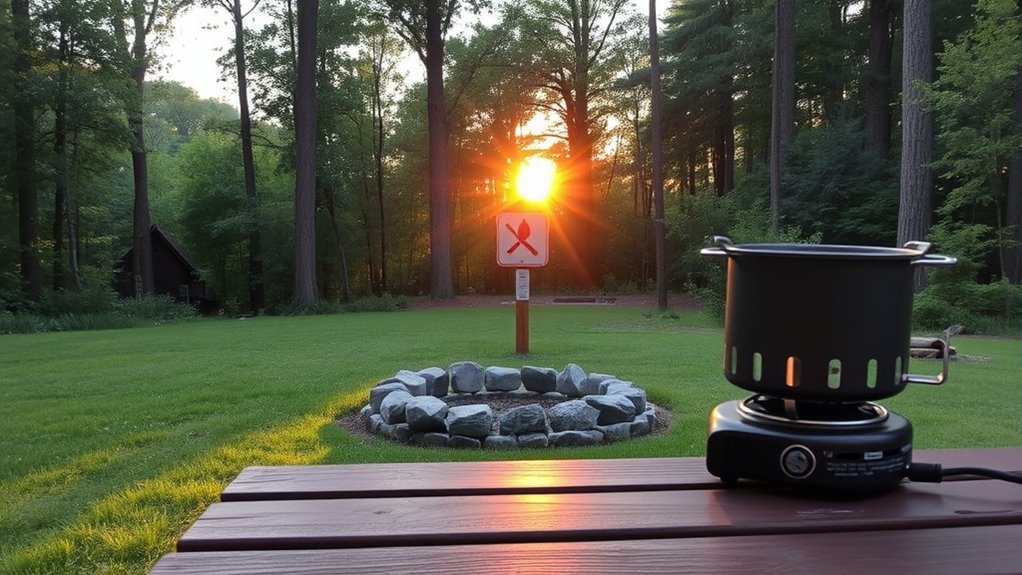
Campfire regulations are designed to prevent accidental fires and protect natural areas. Many campgrounds require campers to use designated fire rings or contained pits instead of creating fires directly on the ground.
During periods of high fire danger, authorities may issue burn bans that restrict wood fires or other flame sources. Rules can differ between national parks, state lands, private campgrounds, and local communities, so always confirm the current requirements before camping.
Warning: Never assume a previous campsite’s rules still apply. Fire restrictions can change quickly because of weather, drought, and wildfire conditions.
What Are the Campfire Rules at Walnut Hills Family Campground?
At Walnut Hills Family Campground, campers should follow posted campground instructions and use only approved fire areas. General safety practices include:
- Use designated fire rings or contained pits.
- Follow posted hours or restrictions for campfires.
- Use approved cooking equipment during fire restrictions.
- Purchase firewood locally when required to reduce invasive pest spread.
How Can Campers Follow Fire Safety Guidelines for a Safe Stay?
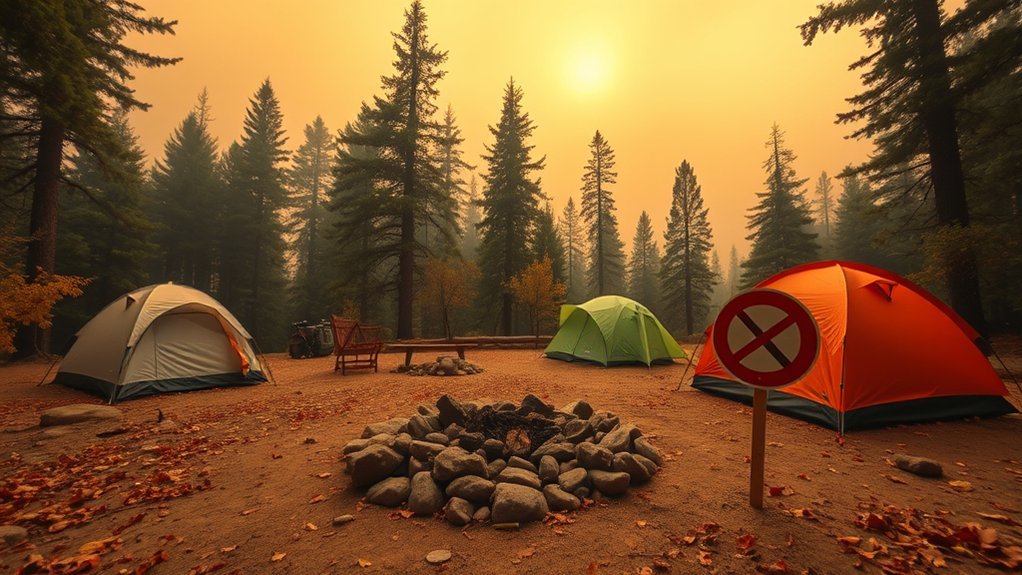
Safe campfire practices begin before the first match is lit. Choose a safe location, keep flammable materials away from flames, and monitor weather conditions throughout your stay.
- Keep tents, vegetation, and gear away from flames.
- Keep water, sand, or a shovel available.
- Supervise children around fires.
- Never leave a burning fire unattended.
When putting out a fire, pour water over the ashes, stir the remains, and repeat until everything is cool to the touch.
How Do Fire Danger Levels and Burn Bans Affect Campfire and Cooking Rules?
Fire danger levels help land managers decide when extra restrictions are needed. During dry conditions, officials may limit campfires, prohibit open flames, or require specific cooking equipment.
- Check official fire notices before traveling.
- Follow all temporary restrictions.
- Use approved alternatives when wood fires are prohibited.
- Report unsafe fires or hazards when you see them.
What Food Storage and Preparation Safety Tips Should Campers Follow?
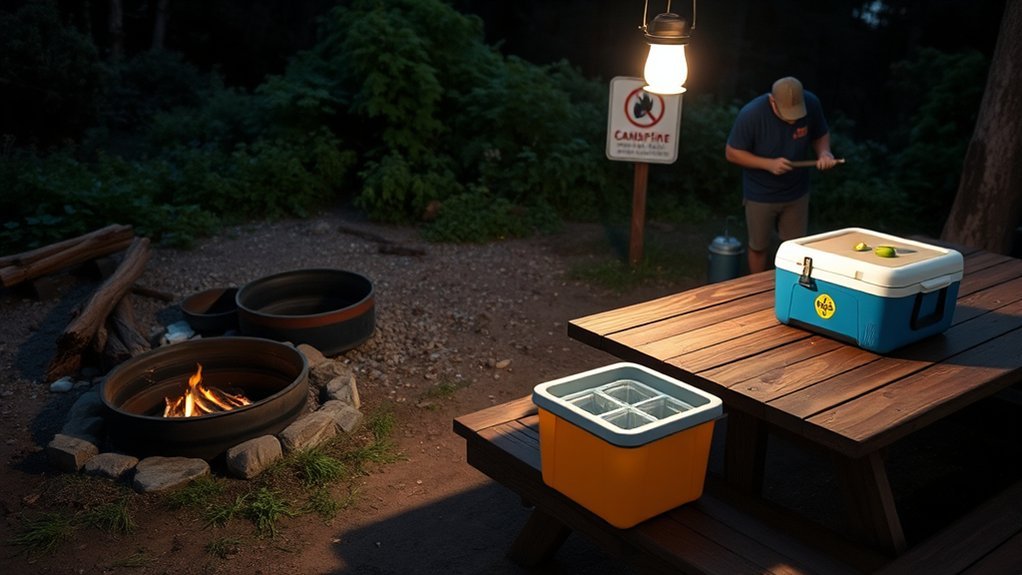
Food safety is an important part of responsible camping. Store food in sealed containers, keep raw and cooked foods separate, and prevent wildlife from accessing meals or scraps.
Use proper cooking temperatures, clean preparation areas, and dispose of waste correctly. Good food storage protects both campers and animals.
Pro Tip: Prepare a fire-safety kit before leaving home with water, a small shovel, gloves, and a flashlight.
Tips For Campfire Safety
- Build fires only in approved areas.
- Keep a clear area around the fire.
- Watch weather conditions and wind changes.
- Keep children and pets at a safe distance.
- Completely extinguish fires before leaving.
Remember Only You Can Prevent Forest Fires
Responsible campers play an important role in preventing wildfires. Following restrictions, using safe practices, and respecting the environment helps protect forests and communities.
Frequently Asked Questions
How can I find out about local burn bans?
Check official state, park, campground, or fire department websites before your trip because restrictions can change quickly.
Can I use portable cooking equipment during a burn ban?
Sometimes, but rules vary by location. Always confirm which devices are permitted before cooking.
Conclusion
Campfires create memorable outdoor experiences, but they require careful planning and responsibility. By checking restrictions, using approved fire areas, storing food safely, and fully extinguishing flames, you help protect yourself and the wilderness around you.
Sources
- National Park Service Fire Safety — wildfire prevention and park fire guidance.
- USDA Forest Service Fire Management — fire restrictions and wildfire information.
- National Interagency Fire Center — national fire information resources.
