
Last Updated on July 27, 2026 by Daniel Globe
If you want to taste Italy through its bread, start with focaccia, ciabatta, pane toscano, piadina, pane di segale, torta al testo, and grissini. Then look deeper into regional specialties such as fresella, pane cafone, Pane di Altamura, coppia ferrarese, pane carasau, and michetta. Each one reflects a different mix of local grain, fermentation, shaping, baking, and eating traditions.
Quick Answer
Italy has more than 200 types of bread tied to regional traditions. Among the best known are olive-oil-rich focaccia, airy ciabatta, unsalted Pane Toscano PDO, Piadina Romagnola PGI, and durum-wheat Pane di Altamura PDO. The best bread depends on whether you want a sandwich loaf, flatbread, soup companion, crisp snack, or bread for cured meats and cheese.
Key Takeaways
- Focaccia and ciabatta are among the most widely recognized Italian breads, but Italy’s bread culture is highly regional.
- Several breads carry EU PDO or PGI protection, including Pane Toscano, Pane di Altamura, Piadina Romagnola, and Coppia Ferrarese.
- There is no single Italian bread-making method: bakers use soft wheat, durum wheat, rye, sourdough, brewer’s yeast, griddles, conventional ovens, and traditional wood-fired ovens depending on the bread.
- Match the bread to the meal: open-crumb loaves work well for sandwiches, unsalted Tuscan bread balances salty foods, and twice-baked breads excel with juicy toppings or as crisp snacks.
Disclosure: As an Amazon Associate I earn from qualifying purchases. Some links on this page are affiliate links, at no extra cost to you.
What Makes Italian Bread Special
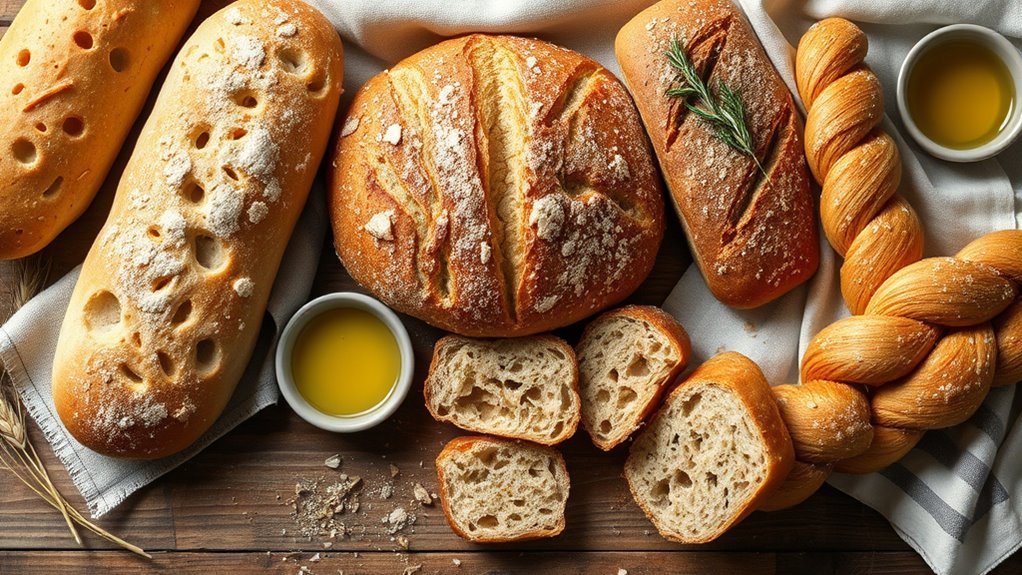
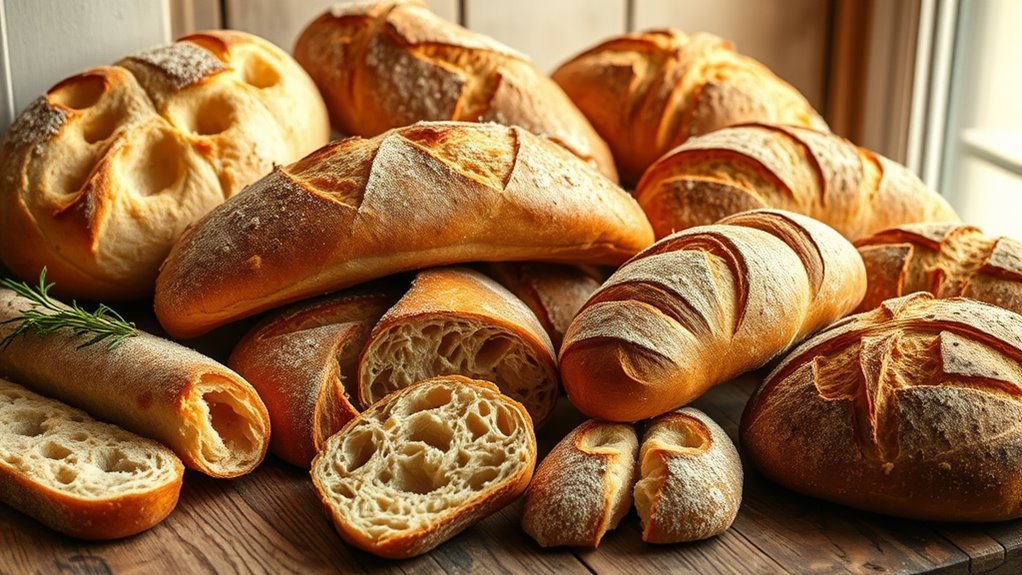
Italian bread stands out because it is deeply regional, highly varied, and closely tied to local food traditions. An Italian Ministry of Culture site notes that Italy has more than 200 types of bread. The differences can be substantial: durum wheat gives southern loaves a golden color and firm wheat flavor, rye suits cooler Alpine areas, olive oil defines many focaccia styles, and Tuscany is famous for bread made without salt.
There is no single technique that defines Italian bread. Ciabatta depends on a wet dough and open crumb, Piadina Romagnola cooks on a flat surface, pane carasau is baked twice, and some traditional southern breads use wood-fired ovens. Bread also has a practical role at the table: it may carry sandwich fillings, soak up soup, balance salty cured meats, hold tomato juices, or simply accompany olive oil and cheese.
Italian Bread Comparison by Region
| Bread | Region | Texture / Feature | Best For |
|---|---|---|---|
| Focaccia | Especially Liguria | Tender, olive-oil-rich flatbread | Snacks, sandwiches, appetizers |
| Ciabatta | Veneto | Crisp crust, irregular open crumb | Panini and sandwiches |
| Pane Toscano | Tuscany | Unsalted, naturally leavened | Soups, salumi, cheese |
| Piadina | Romagna | Thin, tender griddle bread | Filled street-food meals |
| Pane di Altamura | Puglia | Durum-wheat loaf, thick crust | Olive oil, tomatoes, soups |
| Pizza bianca | Rome / Lazio | Olive-oil flatbread | Snacking and filled sandwiches |
| Coppia Ferrarese | Ferrara | Twisted, crisp, four-ended loaf | Salumi and cheese |
| Fresella / frisa | Puglia and southern Italy | Hard, twice-baked ring | Tomatoes, olive oil, salads |
| Pane Cafone | Campania | Rustic crust and substantial crumb | Soups and sauces |
| Pane Altopascio | Tuscany | Unsalted, crisp crust, soft crumb | Tuscan cured meats and soups |
| Pane Pugliese | Puglia | Rustic southern loaf; recipes vary | Bruschetta and olive oil |
| Pane di segale | Northern mountain regions | Earthy rye flavor, denser crumb | Cheese, cured meat, soup |
| Torta al testo | Umbria | Round griddle bread | Stuffing with meats, greens, cheese |
| Grissini | Piedmont | Thin, crisp breadsticks | Antipasti and snacking |
| Pane carasau | Sardinia | Very thin, crisp, twice-baked sheets | Snacks, pane frattau, cheese |
| Michetta | Milan / Lombardy | Crisp, light, hollow roll | Filled sandwiches |
PDO vs. PGI: What the Labels Mean
Some regional bread names are protected under the European Union’s geographical-indication system. A PDO (Protected Designation of Origin) has especially close ties to a defined place, with production requirements linked to that geographical area. A PGI (Protected Geographical Indication) also protects a regional name, but its legal relationship with the area is structured differently.
For bread shoppers, the important point is simple: a protected name is not just a style description. Products sold under names such as Pane Toscano PDO, Pane di Altamura PDO, Piadina Romagnola PGI, and Coppia Ferrarese PGI must follow registered specifications. Generic “Tuscan-style” or “Altamura-style” bread made elsewhere is not the same thing as the protected product.
Focaccia: Italy’s Famous Olive-Oil Flatbread
When you tear into focaccia, the first thing you notice is the olive oil across its golden surface and tender crumb. Herbs, olives, onions, tomatoes, or other toppings can turn the basic dough in different directions. Liguria is especially famous for focaccia, although regional versions appear elsewhere in Italy.
Olive Oil Richness
Brushed and dimpled with olive oil, focaccia can develop a lightly crisp surface over a soft, chewy center. Flatbreads have ancient Mediterranean precedents, including breads associated with Rome, but today’s regional focaccia traditions have their own histories rather than being one unchanged ancient recipe.
In Liguria, focaccia genovese is known for its olive oil and characteristic dimples. Focaccia di Recco is quite different: it uses very thin sheets of dough around fresh cheese rather than the thick, airy structure many people picture when they hear “focaccia.” In Puglia, focaccia barese commonly includes durum-wheat semolina and may include potato in the dough, with tomatoes and olives among the familiar toppings.
The Slow Food Foundation also works to document and support traditional food biodiversity and regional production practices.
Pro Tip: Do not judge focaccia by rise time alone. Dough temperature, yeast quantity, hydration, and fermentation method all affect how quickly it develops. A properly fermented dough should feel aerated and relaxed before baking; longer fermentation can also build more flavor.
Tasty Toppings
Focaccia works especially well with simple toppings that do not bury its olive-oil flavor.
| Topping | Flavor |
|---|---|
| Rosemary | Piney and aromatic |
| Olives | Salty and briny |
| Cherry tomatoes | Juicy and sweet-tart |
| Cheese | Creamy and savory |
| Fresh herbs | Bright and fragrant |
Choose toppings to suit the regional style. Focaccia di Recco is valued for its melted cheese filling, while focaccia genovese is often at its best with a restrained topping and plenty of good olive oil.
Serving Ideas
Serve focaccia alongside soups and salads, tear off a warm piece as a snack, or offer it with cheese and vegetables as an easy appetizer. A thick sheet-pan focaccia can also be split for sandwiches. Focaccia barese, often topped with tomatoes and olives, offers a more distinctly southern variation.
Ciabatta: The Classic Sandwich Bread
Ciabatta has a rustic crust and an open, irregular crumb created by a relatively wet dough. Those large internal pockets make it especially useful for panini and other sandwiches, where the crust provides structure while the interior catches oil, dressing, and juices.
Rustic Crust, Airy Crumb
Ciabatta is much newer than many people assume. The Veneto regional government dates ciabatta polesana to 1982 in Adria and credits Arnaldo Cavallari and Francesco Favaron. The wet dough helped create its characteristic large holes and flattened, elongated shape.
| Trait | What you taste | Why it matters |
|---|---|---|
| Crust | Crisp, rustic | Adds contrast and structure |
| Crumb | Open, airy | Catches oil, juices, and sauces |
| Shape | Flat and elongated | Easy to split for sandwiches |
Classic ciabatta dough centers on flour, water, yeast, and salt. Exact formulas vary, and some modern recipes add olive oil, but oil is not what defines the bread. The high hydration and open crumb matter far more.
Perfect For Sandwiches
For sandwich lovers, this rustic Italian loaf offers a useful balance: a crust with enough strength to hold a filling and an airy interior that can absorb flavorful juices. It works well for panini, cured meats, roasted vegetables, cheeses, and olive-oil dressings.
- A crust with enough structure for hearty fillings
- An open crumb that catches sauces and oil
- A flat shape that is easy to split and fill
Pane Toscano: The Unsalted Tuscan Staple
Pane Toscano is Tuscany‘s famous unsalted bread, but the protected version has a more precise identity than the original article suggested. Pane Toscano PDO is made according to a registered Tuscan method using natural sourdough, water, and qualifying type 0, type 1, or type 2 soft-wheat flour containing wheat germ, with no salt added to the dough.
The result is deliberately mild compared with salty commercial breads. That makes it an excellent partner for flavorful Tuscan foods such as cured meats, aged cheeses, olive oil, bean dishes, pappa al pomodoro, and ribollita. Rather than competing with those foods, its restrained flavor gives them room to stand out.
Piadina: Emilia-Romagna’s Street Food Bread
Piadina is a beloved flatbread from Romagna, the eastern part of Emilia-Romagna. It developed as an inexpensive, practical bread for quick meals and today remains closely associated with kiosks, casual restaurants, and street food.
The protected Piadina Romagnola PGI is a flat, disc-shaped bakery product. Traditional dough centers on flour, water, salt, and a fat such as lard or extra-virgin olive oil; bicarbonate can also appear in permitted recipes. It does not depend on a long bread-style fermentation.
- Simple ingredients and a tender bite
- Fast cooking on a hot flat surface
- An ideal shape for folding around fillings
Fill piadina with squacquerone or another soft cheese, prosciutto, cooked vegetables, leafy greens, or other savory ingredients for an easy handheld meal.
Pane di Altamura: Puglia’s PDO Durum-Wheat Loaf
Pane di Altamura PDO, from the Altamura area of Puglia, is one of Italy’s best-defined protected breads. Its specification requires re-milled durum-wheat semolina from approved wheat grown in the defined production area, along with natural sourdough, sea salt, and water.
The protected loaf has a thick crust and straw-yellow to golden crumb. Traditional production is also unusually specific about baking: ovens are preferably wood- or gas-fired with indirect heat, while directly heated ovens used for the PDO bread must be fired with oak. That is more precise than simply saying all Pane di Altamura must come from a wood-fired oven.
The durable crust and substantial crumb suited the farming traditions of the Murgia area. Thick slices are excellent with olive oil, tomatoes, vegetables, legumes, or hearty soup.
Pizza Bianca: Rome’s Olive-Oil Flatbread
Pizza bianca is better understood as a Roman-style white pizza or flatbread than as Italy’s generic “white bread.” It is baked without tomato sauce and is commonly seasoned with olive oil and salt. Depending on the bakery and style, it can range from thin and crisp to thicker and airier.
White Bread Basics
- A golden surface without tomato sauce
- An olive-oil-rich bread base
- A texture that may range from crisp to airy depending on the bakery
The word “white” refers to the absence of the familiar red tomato topping, not to one standardized Italian white-bread recipe.
Toppings And Pairings
Pizza bianca can be eaten plain or paired with mozzarella, vegetables, herbs, mortadella, cured meats, or cheese. In Rome, it also works as a simple bakery snack or as bread for a filled sandwich.
Snack Or Starter
- A crisp or lightly chewy first bite
- A savory olive-oil flavor
- An easy bread to cut, fill, and share
Serve it warm as a snack, add a restrained topping, or split a thicker piece for a sandwich. Its simplicity is part of the appeal.
Coppia Ferrarese: Ferrara’s Twisted Loaf
Coppia Ferrarese is one of Ferrara’s most distinctive breads. Instead of a simple round or rectangular loaf, it is formed from two pieces of dough joined in the center and twisted outward to produce four characteristic ends, or crostini.
Coppia Ferrarese PGI follows a registered specification. Its ingredients include type 0 soft-wheat flour, water, pure pork lard, extra-virgin olive oil, natural mother yeast, brewer’s yeast, salt, and malt or malt extract. That makes it more accurate to describe the bread as traditionally leavened rather than simply calling it a sourdough loaf.
The drier twisted ends offer a pronounced crunch, while the central section has more crumb. Pair it with cured meats and cheeses or use the crisp ends for dipping and snacking.
Fresella: The Crunchy Twice-Baked Bread
Fresella, also widely called frisa, is a hard, twice-baked bread strongly associated with Puglia and other parts of southern Italy. Its dry structure is intentional: the bread is meant to keep well and then soften when moistened before serving.
Twice-Baked Texture
The second baking dries the bread and creates its characteristic firm crunch. Rather than eating a very hard fresella exactly as it comes from the package, people often wet it briefly before adding toppings.
- A dry, durable texture created by double baking
- A sturdy base for tomatoes, olive oil, garlic, and herbs
- A texture that softens once moistened while still retaining some bite
Puglia Origins
Fresella reflects the practical side of southern Italian bread-making: drying bread extended its usefulness before modern refrigeration and made it easier to transport and store. Recipes vary by locality and may use different wheat combinations rather than one universal flour formula.
| Detail | Typical Character |
|---|---|
| Shape | Round or ring-like |
| Texture | Dry, crisp, sturdy |
| Method | Baked, split or shaped, then dried by a second bake |
| Serving style | Moistened and topped |
Best Ways To Serve
Moisten fresella just enough to make it pleasant to bite, then crown it with ripe tomatoes, olive oil, garlic, herbs, or vegetables.
- Top it with tomatoes, vegetables, fresh cheese, or cured meats.
- Let tomato juices and olive oil soak into the surface before eating.
- Finish with herbs, pepper, or a restrained pinch of salt according to the toppings.
The goal is not to turn it mushy. Good fresella keeps enough structure to contrast with the juicy ingredients on top.
Pane Cafone: Campania’s Rustic Country Bread
Pane Cafone brings the rustic character of Campania to the table. The name is associated with traditional country-style bread from the Naples and Campania area rather than one EU-protected formula, so recipes and production methods can vary.
Expect a substantial loaf built from familiar bread ingredients such as wheat flour, water, salt, and leavening. Traditional bakery versions may use natural fermentation and robust ovens to develop a thick crust and full aroma. Tear it beside pasta e fagioli, use it to collect broth or sauce, or pair it with olive oil, ripe tomatoes, or strong cheese.
Pane Altopascio: Tuscany’s Historic Saltless Loaf
Along the Via Francigena, Pane Altopascio carries a long history of bread and hospitality. The historical attribution in the original version needs one important correction: according to Visit Tuscany, the local tradition is connected with the Knights of the Tau, also associated with the Order of Saint James of Altopascio, who offered bread to pilgrims and travelers.
Like other Tuscan breads, Pane Altopascio is traditionally made without salt. Modern descriptions emphasize a crisp crust and soft crumb, with loaf shapes that may be square or elongated.
- A crisp crust with a mild interior
- An unsalted flavor suited to rich accompaniments
- A centuries-old connection with hospitality along the Via Francigena
Pair it with olive oil, cured meats, cheese, ribollita, or other strongly seasoned Tuscan foods.
Pane Pugliese: Puglia’s Rustic Bread Style
Pane pugliese refers broadly to rustic bread associated with Puglia rather than one tightly controlled recipe. Depending on the baker, it may use durum-wheat semolina, soft wheat, sourdough, commercial yeast, or a combination of methods. Fermentation may be extended for flavor, but “long-fermented” should not be treated as the legal definition of the bread.
A well-made loaf typically aims for a sturdy crust and flavorful crumb that can stand up to olive oil, tomato, vegetables, soup, or bruschetta toppings.
Note: Pane pugliese and Pane di Altamura are not interchangeable names. Pane di Altamura PDO is a legally protected product with defined ingredients, grain origins, production territory, and methods; “pane pugliese” is a broader regional description.
Pane Di Segale: Italy’s Rye Bread
Moving from wheat-rich southern regions to Italy’s northern mountains, you will find pane di segale, or rye bread. The term covers more than one regional recipe rather than a single standardized Italian loaf. Rye performs well in cooler mountain climates and gives bread a darker color, earthy flavor, and generally denser crumb than airy white-wheat bread.
In Italy’s northern mountain regions, rye adds an earthy flavor and sturdy texture that pairs naturally with cured meats, aged cheeses, and hearty soups.
Some local northern breads use rye in distinctive shapes, including rings, but that shape should not be generalized to all Italian pane di segale.
- An earthy grain flavor suited to mountain cooking
- A natural match for strong cheeses and cured meats
- A sturdy companion for hearty soups and stews
Torta Al Testo: Umbria’s Griddle Bread
Torta al testo is one of Umbria’s signature flatbreads. Its name comes from the testo, the heated surface on which the round of dough is cooked. Umbria’s official tourism site describes the traditional testo as developing from a flat heated stone into later clay, refractory, or metal cooking surfaces.
Recipes vary. Flour, water, and salt form the base, while bicarbonate, brewer’s yeast, or olive oil may appear depending on the version. This is why it is better to think of torta al testo as a regional cooking tradition rather than one immutable formula.
Split the cooked round and fill it with prosciutto, sausage, cheese, sautéed greens, or vegetables. Served warm, it is both simple and substantial.
Grissini: The Thin Breadsticks You’ll Love
Grissini bring Piedmont’s signature breadstick crunch to the table. Made from a lean bread dough, they are baked until dry and crisp and often appear before a meal in restaurants across Italy.
- Grissini rubatà: rustic, hand-rolled breadsticks with a more irregular shape
- Grissini stirati: long breadsticks stretched by hand for a thin, delicate form
- Wrapped in prosciutto: a common appetizer pairing that combines crisp bread with salty cured meat
Serve grissini with antipasti, cheese, dips, or cured meats, or simply eat them on their own as a crisp snack.
Pane Carasau: Sardinia’s Crisp Twice-Baked Bread
Pane carasau is one of Sardinia’s most recognizable breads. Italy’s official tourism portal connects its long shelf life with double baking, a useful quality for shepherds who spent long periods away from home.
The bread is rolled extremely thin and baked into large crisp sheets. Its brittle texture has earned it an association with the nickname “music paper” in English-language food writing because of the sound and thinness of the sheets.
Eat it crisp with cheese or olive oil, or use it in pane frattau, where sheets are softened and layered with broth, tomato sauce, pecorino, and traditionally an egg.
Michetta: Milan’s Hollow, Crisp Roll
Michetta is a traditional Milanese roll with a crisp shell, a light interior, and a flower- or star-like shape. YesMilano, Milan’s official destination organization, describes it as a characteristic puffy roll that is largely hollow inside.
That hollow structure makes michetta especially useful for sandwiches: it provides plenty of crisp crust without an overly heavy mass of crumb. Fill it with salumi, cheese, vegetables, or other simple ingredients for a classic portable meal.
Note: Most breads in this guide are made with wheat, rye, or other gluten-containing grains. They are not gluten-free unless a bakery specifically makes them with gluten-free ingredients and controls cross-contact. People with celiac disease should use products clearly identified as gluten-free rather than assuming a traditional Italian bread is safe.
How to Choose the Best Italian Bread
Start with the region and intended use. Focaccia is a good choice when you want olive-oil richness, while ciabatta’s open crumb makes it useful for sandwiches. Unsalted Pane Toscano works with salty cured meats, cheese, soups, and strongly seasoned dishes. For a handheld filled meal, choose piadina. For a crisp snack, consider grissini or pane carasau.
When buying a protected bread, look for the complete registered name and its PDO or PGI designation. For example, authentic Pane di Altamura PDO and Pane Toscano PDO are more specific products than generic “Altamura-style” or “Tuscan-style” loaves.
Texture is another useful guide. A fresh ciabatta should have a crisp exterior and irregular open crumb. Focaccia should be tender rather than dry. Twice-baked fresella and pane carasau are intentionally hard or crisp, so do not judge them by the standards of a fresh sandwich loaf.
How to Serve and Store Italian Bread
Crusty bread is usually at its best close to the day it was baked. Keep a loaf you plan to eat soon in a paper bread bag or another container that limits excessive moisture without sealing the crust in humid plastic. For longer storage, freezing portions or slices generally preserves quality better than keeping a loaf in the refrigerator, where bread can stale quickly.
Different breads also need different serving treatment. Warm focaccia briefly to revive its aroma, toast day-old ciabatta for crostini or sandwiches, moisten fresella before topping it, and keep grissini and pane carasau dry so they remain crisp. Stale rustic bread can also be useful in traditional dishes built around leftover bread rather than being automatically discarded.
Warning: The health-related FAQ answers below are general nutrition information, not a diagnosis or treatment plan. Histamine-related reactions are difficult to assess and low-histamine food lists vary substantially. Anyone managing persistent food reactions, celiac disease, allergies, or a medically prescribed diet should get individualized advice from an appropriate clinician or registered dietitian.
Frequently Asked Questions
What Is the Most Popular Italian Bread?
There is no authoritative national ranking of Italy’s “most popular” bread. Internationally, focaccia and ciabatta are among the best-known Italian breads, while everyday preferences inside Italy vary strongly by region. Tuscany, Puglia, Sardinia, Piedmont, Lombardy, and other regions all have local breads with long-standing identities.
What Bread Is Low in Histamine?
There is no universally accepted list of breads that can reliably be labeled low histamine for every person. Published low-histamine diets differ substantially, and fermented foods are commonly restricted even though individual tolerance varies. If bread seems to trigger symptoms, avoid choosing a specific grain or fermentation method solely from an online list; discuss the pattern with a clinician or registered dietitian who can also rule out conditions such as allergy or celiac disease.
What Bread Is Good for Inflammation?
No bread should be presented as a treatment for inflammation. Whole-grain breads can contribute fiber and nutrients as part of an overall balanced dietary pattern, but clinical research on whole grains and inflammatory biomarkers has produced mixed results. Choose bread based on your overall diet, nutritional needs, allergies, and medical guidance rather than expecting one loaf to reduce inflammation.
What Kind of Bread Do You Usually Eat in Italy?
There is no single bread that represents everyday eating throughout Italy. Bread choices are regional: Liguria is famous for focaccia, Tuscany for unsalted loaves, Puglia for durum-wheat breads, Sardinia for pane carasau, Piedmont for grissini, and Milan for michetta. Local bakeries may also sell ordinary regional loaves that are less internationally famous than ciabatta or focaccia.
What Is the Difference Between Focaccia and Ciabatta?
Focaccia is usually a flatter, olive-oil-rich bread baked in a pan or on a tray, often with dimples and toppings. Ciabatta is a relatively modern Veneto loaf known for a wet dough, crisp crust, and large irregular holes. Focaccia works especially well as a snack or topped bread, while ciabatta is particularly useful for sandwiches.
Which Italian Breads Have PDO or PGI Protection?
Protected Italian bakery names include Pane Toscano PDO, Pane di Altamura PDO, Piadina Romagnola PGI, and Coppia Ferrarese PGI, among others. PDO and PGI labels protect geographical names and require producers using those names to follow registered specifications rather than simply making a similar style of bread anywhere.
Conclusion
Italian bread is less about one national loaf than a collection of regional traditions. Focaccia brings olive-oil richness, ciabatta delivers an open crumb built for sandwiches, Pane Toscano offers an intentionally unsalted partner for bold Tuscan foods, and Pane di Altamura showcases Puglia’s durum-wheat tradition. Crisp breads such as grissini and pane carasau add yet another side of Italian baking.
The best choice depends on what you plan to eat with it. Look at the region, grain, texture, protected designation, and intended use, then choose the loaf that fits the meal rather than assuming every Italian bread should taste or behave the same way.
Sources
- Italian Ministry of Culture — Parco Archeologico di Ercolano — Italy’s regional bread diversity and the presence of more than 200 bread types.
- Regione del Veneto — Ciabatta Polesana — ciabatta’s 1982 origin in Adria, creators, high-water dough, and open crumb.
- EUR-Lex — Pane Toscano PDO specification; EUR-Lex — Pane di Altamura PDO specification; EUR-Lex — Piadina Romagnola PGI; EUR-Lex — Coppia Ferrarese PGI — official protected-designation records and production requirements.
- Italia.it — Traditional Food of Liguria; Italia.it — Sardinian Bread — regional focaccia and pane carasau traditions.
- PubMed — Guideline on management of suspected adverse reactions to ingested histamine — limitations of histamine-intolerance diagnosis and overly restrictive elimination diets.
- Nutrients — Whole Grain Consumption and Inflammatory Markers — systematic review of randomized trials evaluating whole grains and inflammation biomarkers.
