
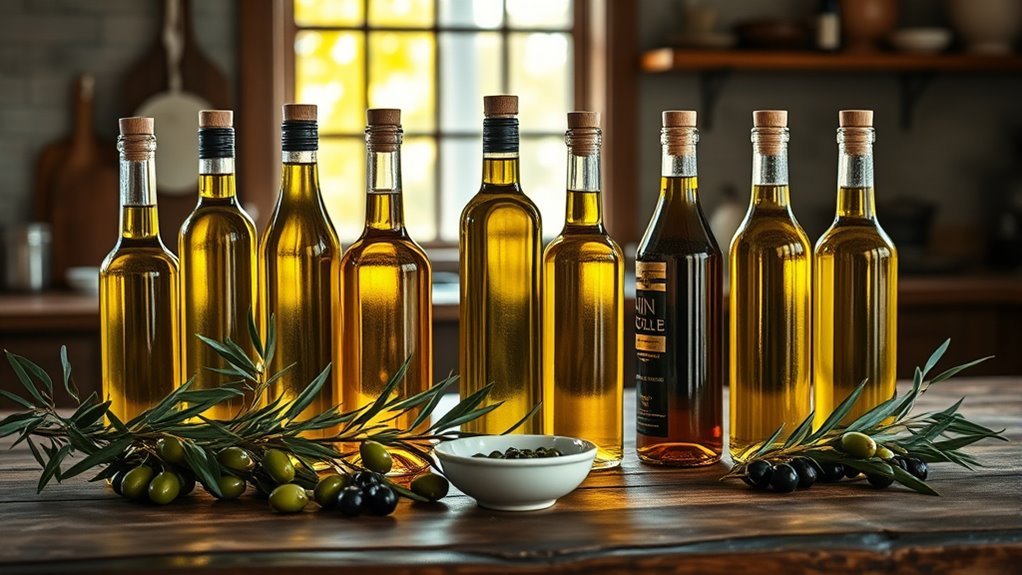
Last Updated on July 28, 2026 by Daniel Globe
Choosing among the best Italian olive oil brands takes more than recognizing an Italian name. The exact bottle matters: its grade, olive origin, harvest date, packaging, certification, and flavor intensity can all vary within the same brand. Bertolli and Filippo Berio are practical everyday choices, Monini offers balanced flavor, Farchioni has organic and traceable options, Carapelli and De Cecco sell clearly labeled 100% Italian oils, and Kirkland Signature can be a good value for households that use olive oil quickly.
Quick Answer
The best Italian olive oil brand depends on the bottle, not just the logo. Monini and Bertolli are practical everyday choices; Carapelli Oro Verde and De Cecco 100% Italian suit finishing; Farchioni offers organic options; Filippo Berio is versatile; and Kirkland delivers value when you can use the large bottle quickly.
Key Takeaways
- An Italian brand name does not guarantee that every bottle contains only Italian-grown olives.
- Choose extra virgin olive oil with a recent harvest date, a clear origin statement, and dark or opaque packaging.
- Organic, DOP/PDO, IGP/PGI, and “100% Italian” describe different qualities; one claim does not automatically include the others.
- Fresh extra virgin olive oil works for dressings and finishing, but it is also suitable for sautéing, roasting, and normal stovetop cooking.
- Buy a bottle size you can finish within about one to three months after opening and store it away from light, heat, and air.
Disclosure: As an Amazon Associate I earn from qualifying purchases. Some links on this page are affiliate links, at no extra cost to you.
What Makes a Great Italian Olive Oil Brand?
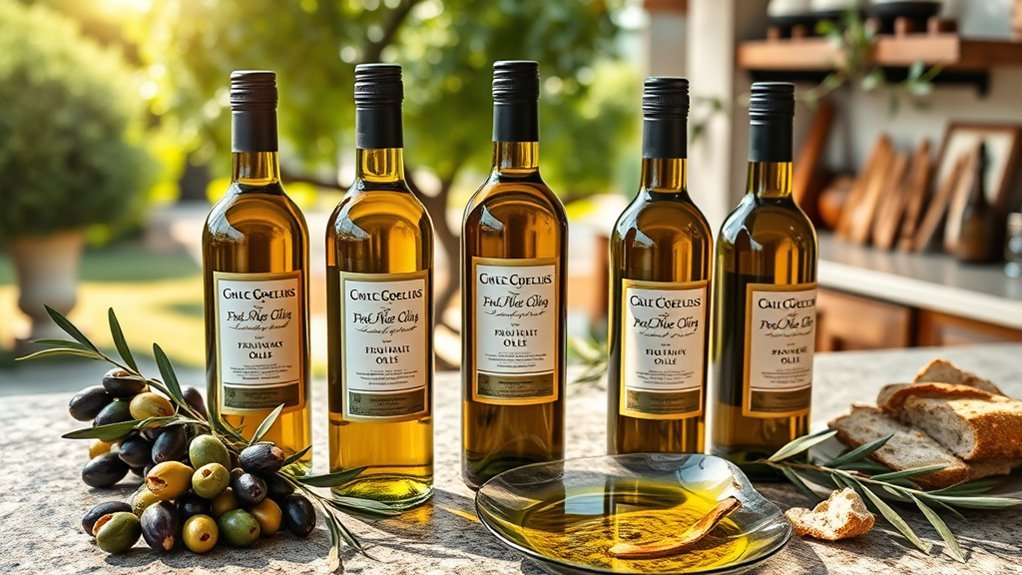
A strong Italian olive oil brand gives shoppers enough information to judge the specific bottle. Useful details include the oil grade, country or region of origin, olive varieties, harvest date, lot number, extraction method, and any independent certification. Some producers draw olives from regions such as Tuscany or Umbria, while larger brands may blend oils from several Mediterranean countries to maintain a consistent flavor.
The International Olive Council defines extra virgin olive oil as virgin olive oil that meets chemical and sensory standards, including free acidity of no more than 0.8 grams per 100 grams. It must also be free from the sensory defects that would place it in a lower grade. Fruitiness, bitterness, and pungency are positive characteristics when they are clean and balanced.
A recent harvest often matters more than a famous logo. Olive oil slowly oxidizes after production, so even an excellent brand can taste flat or stale when the bottle is old, exposed to light, or left open too long.
Note: An Italian brand and a 100% Italian olive oil are not the same thing. Some companies headquartered in Italy sell both Italian-origin oils and multi-country blends. The same distinction between brand heritage and ingredient origin appears across other Italian brands. Check the exact bottle for “100% Italian olives,” a regulated origin statement, or a DOP/PDO or IGP/PGI seal.
How to Read an Italian Olive Oil Label
Use the following checklist instead of choosing by front-label design alone:
- Check the grade. Choose “extra virgin olive oil” when you want the fullest fresh-olive flavor and the least-refined category. Products labeled “olive oil,” “pure,” or “light tasting” usually include refined olive oil and have a milder flavor.
- Read the origin statement. Look beyond “imported from Italy” or an Italian company address. Confirm where the olives were grown and where the oil was extracted. The European Commission’s olive-oil rules regulate category, composition, origin, and production claims on EU-market labels.
- Look for a harvest date. A harvest date tells you when the fruit was picked. A best-by date is still useful, but it does not reveal the oil’s exact age as clearly.
- Understand the seals. DOP/PDO links production to a protected region and specification. IGP/PGI also protects a geographical connection but can cover a broader production relationship. Organic certification concerns farming and processing rules; it does not by itself prove Italian origin.
- Choose protective packaging. Dark glass, opaque containers, metal tins, and bag-in-box packaging help limit light exposure. Clear packaging should be kept inside a dark cupboard.
- Match the size to your usage. A large bottle is only a bargain when your household can finish it before oxidation dulls the flavor.
Warning: Do not use color or the refrigerator test to decide whether an oil is authentic. Good olive oil can be green or gold, and many genuine oils and other fats can cloud or solidify when chilled. Authenticity requires proper labeling, traceability, and laboratory and sensory testing.
Best Italian Olive Oil Brands at a Glance
These seven names suit different shoppers. Bertolli and Filippo Berio are easy to find and offer several flavor and origin options. Monini brings Umbrian heritage and a balanced everyday style. Farchioni stands out for its organic, DOP, unfiltered, and 100% Italian ranges. Carapelli Oro Verde and De Cecco 100% Italian are clear choices for shoppers seeking specifically Italian-grown olives. Kirkland Signature offers a large-format Italian oil for high-use kitchens.
At a Glance
| Bertolli | Best for broad availability and everyday cooking; check the back label because standard products may be multi-origin. |
| Monini | Best for a balanced everyday oil with noticeable fruitiness and a gentle peppery finish. |
| Farchioni | Best for shoppers comparing organic, unfiltered, DOP, traceable, and 100% Italian product lines. |
| Carapelli | Oro Verde is a 100% Italian option suited to shoppers who enjoy a stronger, peppery finishing oil. |
| De Cecco | Best for a balanced 100% Italian option that can move between cooking, bread, vegetables, and pasta. |
| Filippo Berio | Best for everyday versatility; choose the named 100% Italiano bottle when Italian-grown olives are a priority. |
| Kirkland Signature | Best value for high-use households; the current 2-liter Italian EVOO has a traceable Italian chain from growing to bottling. |
Products Worth Considering

100% ITALIAN ORGANIC EXTRA VIRGIN OLIVE OIL – Crafted from organically grown Italian olives, BONO Organic Unfiltered EVOO combines Biancolilla, Cerasuola, Carolea, and Coratina varieties for an authentic expression of Italian olive oil.

Naturally Unfiltered and Cold-Pressed Organic Extra Virgin Olive Oil. This olive oil transports you to the very essence of the earth and simplifies all processes. Strength, character and nature describe this unparalleled flavor.

AUTHENTIC PDO SICILIAN EXTRA VIRGIN OLIVE OIL – Produced exclusively in the renowned Val di Mazara region of Western Sicily, BONO Organic EVOO is a true expression of Sicily’s centuries-old olive-growing heritage and craftsmanship.
How This Comparison Was Evaluated
This is an editorial buying guide, not a laboratory analysis or blind taste test. The brands were compared using current official product and history pages, clarity of origin options, certification and traceability information, product range, practical availability, container size, and likely kitchen use. No claim is made that every current harvest or lot was independently tasted or chemically tested.
Flavor and sourcing can change between a brand’s delicate, robust, organic, 100% Italian, and standard extra virgin products. Availability also varies by country. Treat the brand as a starting point, then inspect the exact bottle before buying.
The freshest, clearest-labeled bottle is often a better buy than an older bottle from a more famous brand.
Bertolli for Everyday Cooking
Bertolli suits cooks who want a widely available oil for regular kitchen use. The brand began in Lucca in 1865 and now sells extra virgin, organic, light-tasting, and other olive-oil products in several markets.
Products Worth Considering


Flavorful & Balanced Organic Extra Virgin Olive Oil – Enjoy smooth flavor with our organic extra virgin olive oil—perfect for drizzling, sautéing, and everyday cooking without overpowering your dishes.

Mild, Versatile Flavor
Bertolli’s standard extra virgin oils are generally positioned as approachable everyday products rather than limited-production estate oils. A milder bottle can work in vinaigrettes, marinades, sautéed vegetables, soups, and sauces without becoming the main flavor. Actual fruitiness, bitterness, and pungency can vary by product and harvest, so use the label and your own taste rather than assuming every Bertolli bottle is identical.
Easy Kitchen Staple
Broad grocery-store availability makes Bertolli convenient when you need one bottle for several jobs. Use extra virgin oil when you want olive flavor in dressings, vegetables, pasta, or bread. Choose a refined or light-tasting version when you specifically want less aroma and a more neutral result.
Reliable Everyday Use
Bertolli also sells an organic extra virgin olive oil. Organic certification addresses agricultural and processing requirements, but it does not guarantee that the olives came from Italy. Bertolli explains that some of its products are multi-origin blends, so origin-focused shoppers should always read the current back label.
Monini for a Smooth Finish
Monini traces its history to Spoleto, Umbria, in 1920. Its widely sold extra virgin oils are practical for shoppers who want more noticeable olive character than a neutral cooking oil without moving into an intensely bitter specialty bottle.
A balanced Monini EVOO can work over tomatoes, leafy salads, beans, warm grains, grilled bread, or finished soup. It can also be used for sautéing and roasting. Because Monini sells several products and operates in multiple countries, check the exact product name, origin statement, harvest information, and packaging rather than treating the entire range as one oil.
Products Worth Considering


Product is manufactured Italy

Product of Italy | Highest quality ingredients sourced from the pure soils of Italy to provide the finest tastes to your cooking and delicacy needs. Enjoy this product knowing that you are bringing a true, rich taste directly from Italy
Farchioni for Organic Extra Virgin Olive Oil
The Farchioni family history dates to 1780, and the company now sells a broad range of oils that includes organic, unfiltered, DOP, PGI, classic, and 100% Italian products. That range makes Farchioni useful for shoppers who want to compare certifications rather than buy on brand name alone.
Farchioni’s organic extra virgin olive oil is a valid organic choice, but shoppers should still read its origin statement. Organic products can use olives from more than one country. Farchioni separately offers 100% Italian extra virgin olive oil made from olives grown, harvested, and milled in Italy, as well as region-specific protected-origin products.
Pro Tip: Look for the most recent harvest date rather than relying only on a best-by date. UC Davis recommends choosing oil within roughly 15 to 18 months of harvest. After opening, buy a size you can use within a few months so oxygen does not flatten the flavor.
Carapelli for a Peppery Kick
Carapelli is a practical choice for shoppers who want a clearly named Italian-origin product with a more assertive finishing profile. The company dates to 1893, but the bottle-specific claim matters more than the history.
Peppery, Earthy Finish
Carapelli Oro Verde is identified by the producer as a 100% Italian extra virgin olive oil. Its stronger fruitiness and pungency make it a good match for beans, grilled vegetables, steak, bitter greens, bruschetta, and pasta dishes that can stand up to a noticeable olive flavor.
Best For Finishing
Oro Verde earns its place as a finishing recommendation because drizzling it after cooking preserves more of its aroma and peppery sensation. That does not mean it cannot be heated. Fresh extra virgin olive oil is suitable for normal sautéing and roasting, although using a premium bottle for finishing may give you more flavor for the money.
De Cecco for a Balanced Taste
De Cecco is best known for pasta and traces its modern food-production history to 1886. Its official company history places the establishment of its olive-oil business in 1986, so the article should not imply that De Cecco has produced oil continuously since the pasta company began.
The brand’s 100% Italian Extra Virgin Olive Oil is the clearest De Cecco choice when Italian-grown olives are the priority. Its balanced style can work in salad dressing, over bread, with grains and vegetables, or as an everyday cooking oil. As with every brand, verify the exact bottle because De Cecco sells more than one oil.
Filippo Berio for Everyday Versatility
Filippo Berio began in Lucca in 1867 and remains one of the most widely distributed Italian olive oil names. Its range includes standard extra virgin, delicate, robust, organic, refined, and specifically 100% Italian products.
Everyday Cooking Versatility
The standard Extra Virgin Olive Oil can move between sautéed vegetables, grain bowls, marinades, dressings, roasting, and finishing. The choice within the range matters: a delicate bottle will stay quieter, while a robust bottle will bring more bitterness and throat-catching pungency.
Balanced Flavor Profile
For salads, bread, and pasta, use a bottle whose intensity matches the dish. Mild oil suits tender greens, fish, eggs, and mayonnaise. A stronger EVOO is better with tomatoes, beans, grilled meat, garlic, aged cheese, and bitter vegetables.
Reliable Pantry Staple
Filippo Berio is easy to find, but shoppers should not assume every bottle contains only Italian olives. Choose the named 100% Italiano Extra Virgin Olive Oil when Italian origin is the deciding factor. For general cooking, the standard extra virgin line may be the more economical pantry option.
Kirkland Signature for Best Value
Kirkland Signature can offer good value for a household that cooks with olive oil often. Costco’s current 2-liter Extra Virgin Italian Olive Oil is described as cold extracted, made from Italian-grown olives, and supported by a traceable Italian chain from growing through pressing and bottling.
The large bottle is not automatically the best choice for a small household. Once opened, the air space inside the container increases as the oil is used, which speeds oxidation. Buy the 2-liter format when you can finish it promptly, or divide a larger container into smaller, clean, food-safe, dark containers with tight seals.
Costco also sells organic olive oils, but product size, origin, supplier, and inventory can change. Check the current item page and physical label instead of assuming every Kirkland olive oil has the same Italian origin as the specific product described here.
Which Brand Is Best for Each Use?
- One affordable everyday bottle: Bertolli Extra Virgin or Filippo Berio Extra Virgin, after checking the current origin and date.
- Balanced oil for cooking and finishing: Monini or De Cecco 100% Italian.
- Organic certification: Farchioni Organic or Bertolli Organic, with a separate check for olive origin.
- 100% Italian origin: Carapelli Oro Verde, De Cecco 100% Italian, Filippo Berio 100% Italiano, Farchioni 100% Italian, or the specifically labeled Kirkland Italian EVOO.
- Bold finishing flavor: Carapelli Oro Verde or a robust Filippo Berio product.
- High-volume household value: Kirkland Signature’s large Italian EVOO, provided it will be used quickly.
Can You Cook With Extra Virgin Olive Oil?
Yes. Extra virgin olive oil is suitable for sautéing, roasting, baking, braising, and many shallow-frying tasks. The UC Davis Olive Center notes that olive oil can have cooking performance comparable with several other common oils, with the exact smoke point depending on grade, freshness, and quality.
Use a delicate EVOO when you do not want the oil to dominate. Use a robust oil with tomatoes, beans, garlic, meat, or bitter greens. For prolonged deep frying or recipes where no olive flavor is wanted, refined olive oil can be a more economical choice. Never continue heating any oil once it is smoking heavily.
Note: “Light” olive oil is not lower in calories. The word usually describes a refined oil with lighter color, aroma, and flavor.
How to Taste Olive Oil and Spot Rancidity
You do not need professional equipment to notice obvious quality differences:
- Pour a small amount into a clean cup. Warm the cup briefly in your hand to release aroma.
- Smell before tasting. Fresh oils may suggest grass, herbs, green tomato, apple, artichoke, nuts, or ripe fruit, depending on the olives and harvest.
- Take a small sip. Let it coat your mouth, then draw in a little air.
- Notice bitterness and pungency. A clean bitter taste or peppery throat sensation can be a positive feature, not a defect.
- Watch for stale flavors. Crayons, putty, old nuts, cardboard, wax, mustiness, vinegar, or a flat greasy smell can indicate oxidation or other defects.
Do not judge quality by color. Professional olive-oil tasting glasses are often colored so tasters cannot be influenced by whether the oil looks green or gold.
How to Store Olive Oil the Right Way
Heat, light, and oxygen are the main household threats to olive-oil quality. Store the bottle in a cool, dark cupboard away from the stove, oven, dishwasher, radiator, and sunny windows.
| What to do | Why it matters |
|---|---|
| Use dark or opaque packaging | Reduces light exposure and slows flavor loss |
| Keep it in a cool cupboard | Limits heat-driven oxidation |
| Cap it tightly after every pour | Reduces contact with oxygen |
| Buy a size you can finish quickly | Limits the time an opened bottle sits with increasing headspace |
| Refrigerate only when useful | Cold can slow oxidation but may temporarily cloud or solidify the oil |
The International Olive Council’s consumer storage guidance recommends buying only as much oil as you can reasonably use, protecting it from light, sealing it carefully, and choosing opened containers that match roughly one to three months of consumption.
Refrigeration is not normally necessary for a bottle used every day, but it is not inherently harmful. Chilled oil may become cloudy or form crystals. That change is generally reversible when the oil returns to room temperature. Unfiltered oil requires more care because cold can affect its suspended particles.
Warning: Do not keep a large open bottle beside the stove for convenience. The combination of heat, light, oxygen, and a growing air space can erase the savings from buying in bulk.
Frequently Asked Questions
What is the best brand of olive oil from Italy?
There is no universal winner. Monini is a balanced everyday choice, Carapelli Oro Verde suits shoppers who want a bold 100% Italian finishing oil, Farchioni offers strong certification choices, and De Cecco and Filippo Berio have clearly labeled 100% Italian products. Freshness and the exact bottle matter more than the logo alone.
How can I tell whether olive oil is really 100% Italian?
Read the country-of-origin statement and look for wording such as “100% Italian olives” or “obtained in Italy from olives harvested in Italy.” A DOP/PDO or IGP/PGI seal can provide additional geographical traceability. An Italian brand name or Italian bottling address alone is not enough.
Can extra virgin olive oil be used for cooking?
Yes. Fresh extra virgin olive oil is suitable for sautéing, roasting, baking, braising, and many shallow-frying tasks. Choose a mild oil for delicate food and a robust oil for stronger ingredients. Stop heating any oil if it begins smoking heavily.
What is the best olive oil for osteoarthritis?
No olive oil brand is an established treatment for osteoarthritis. Extra virgin olive oil can be part of a Mediterranean-style eating pattern and contains compounds studied for anti-inflammatory activity, but it should not replace medical care, exercise, medication, or other treatment recommended by a clinician. The Arthritis Foundation provides broader dietary guidance.
Which type of olive oil is best for heart patients?
Extra virgin olive oil can be a flavorful source of unsaturated fat, but no single brand is a treatment for heart disease. The American Heart Association recommends replacing saturated fats with unsaturated fats such as olive oil. Anyone with a heart condition should follow individualized medical and dietary advice.
What are the top five Italian olive oil brands?
Five practical choices are Monini for balance, Carapelli Oro Verde for bold 100% Italian flavor, Farchioni for organic and traceable options, Filippo Berio for versatility, and Kirkland Signature for high-volume value. Bertolli and De Cecco are also worthwhile depending on the exact product and origin label.
How long does olive oil last after opening?
For the best flavor, buy a bottle size you can finish within about one to three months after opening. Keep it tightly sealed in a cool, dark place. A longer-open bottle is not automatically unsafe, but its aroma, peppery character, and antioxidant content decline as it oxidizes.
Conclusion
Choosing the right Italian olive oil is about matching the exact bottle to how you cook. Bertolli and Filippo Berio offer broad everyday ranges, Monini brings a balanced Umbrian style, Farchioni gives shoppers several organic and traceable choices, Carapelli and De Cecco offer clearly named 100% Italian products, and Kirkland Signature can deliver value for high-use kitchens.
Whatever brand you choose, read the origin statement, look for a recent harvest, buy a manageable size, and protect the oil from light, heat, and air. A fresh, well-stored bottle with clear sourcing will usually serve you better than an older bottle chosen only for its famous label.
Sources
- International Olive Council — Olive Oil Categories — extra virgin olive oil definition, acidity limit, and quality categories
- International Olive Council — Consumer Storage Guidelines — light, heat, oxygen, container size, refrigeration, and after-opening guidance
- European Commission — Olive Oil — EU quality controls, origin rules, labeling, and sensory assessment
- UC Davis Olive Center — Olive Oil Myths and Facts — cooking performance, packaging, freshness, color, and bottle-size guidance
- American Heart Association — Fats in Foods — replacing saturated fats with unsaturated plant oils
- Arthritis Foundation — Olive Oil and Arthritis — dietary context and limits of health-related olive-oil claims
