
Last Updated on July 28, 2026 by Daniel Globe
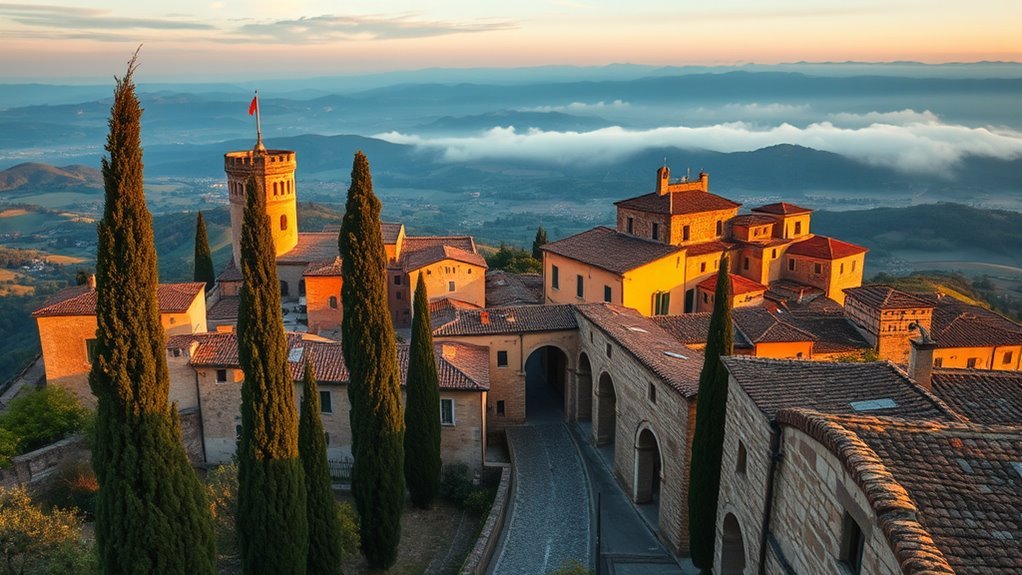
Italy’s best medieval cities and towns combine preserved walls, towered skylines, castles, churches, and streets that still follow centuries-old plans. This guide starts with dramatic destinations such as Civita di Bagnoregio and San Gimignano, then crosses Umbria, Tuscany, the Marche, Sicily, and Sardinia. It also explains which places are genuinely medieval, which blend several historical periods, and how to plan around steep terrain, transport, crowds, and changing attraction hours.
Quick Answer
San Gimignano, Siena, Monteriggioni, Gubbio, Gradara, Orvieto, Volterra, Cortona, Civita di Bagnoregio, Assisi, Erice, and Castelsardo are among Italy’s strongest medieval destinations. Choose San Gimignano for towers, Siena for a complete Gothic city, Gradara for a fortress, Orvieto for cathedral-and-cave history, and Castelsardo for a medieval coastal setting.
Key Takeaways
- San Gimignano, Siena, and Monteriggioni are leading choices for well-preserved medieval urban form.
- Civita di Bagnoregio currently lists a €5 entry ticket, but visitors should verify the price before traveling.
- Orvieto combines Etruscan and medieval underground spaces with a Renaissance well built centuries later.
- Ragusa Ibla is worth visiting, but its defining churches and palaces are late Baroque rather than medieval.
- Spring and early fall usually offer more comfortable walking weather than the hottest part of summer.
At a Glance
| San Gimignano | Best for a towered medieval skyline |
| Siena | Best complete medieval city |
| Civita di Bagnoregio | Best dramatic approach and valley views |
| Orvieto | Best cathedral and underground history |
| Gubbio | Best living medieval festival tradition |
| Gradara | Best romantic fortress setting |
| Volterra | Best Etruscan-to-medieval layers |
| Castelsardo | Best medieval coastal atmosphere |
| Ragusa Ibla | Best Baroque detour on a broader historic-town trip |
Disclosure: As an Amazon Associate I earn from qualifying purchases. Some links on this page are affiliate links, at no extra cost to you.
What Makes Italy’s Medieval Towns Special
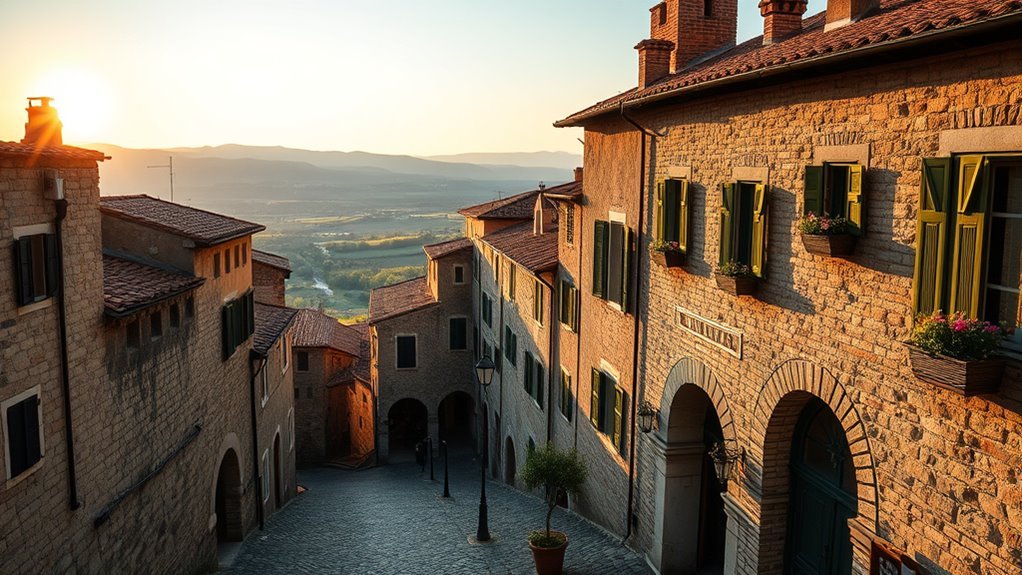
Italy’s medieval towns feel special because their history is not limited to a museum. Residents still cross old squares, shop inside former tower houses, attend services in Gothic churches, and celebrate festivals rooted in local tradition. Roman foundations, Etruscan walls, medieval defenses, Renaissance additions, and later restorations often stand beside one another.
The strongest examples preserve more than an isolated castle. They retain a recognizable street plan, walls, gates, civic buildings, religious monuments, and a setting that helps explain why the settlement developed there. UNESCO-listed San Gimignano, for example, preserves its medieval layout and 14 of the approximately 72 tower houses that once marked its skyline.
Living traditions add another layer. You may find artisan workshops in Volterra, religious celebrations in Gubbio, local wine in San Gimignano, or basket weaving in Castelsardo. Food, crafts, and festivals should not replace the history, but they help show how each place has continued to change without losing its identity.
Note: “Medieval town” does not always mean every visible building dates from the Middle Ages. Many Italian historic centers combine ancient foundations, medieval street plans, Renaissance alterations, Baroque rebuilding, and modern restoration.
How to Choose a Medieval City in Italy
Choose according to the experience you value most. San Gimignano is the obvious choice for towers, while Siena gives you a larger and more complete Gothic city. Gradara and Monteriggioni focus attention on defensive architecture. Orvieto mixes a cathedral, underground spaces, and a dramatic volcanic plateau. Volterra and Cortona suit travelers interested in Etruscan history as well as medieval streets.
- For towers: San Gimignano
- For a complete Gothic city: Siena
- For fortifications: Gradara or Monteriggioni
- For religious art: Assisi or Orvieto
- For Etruscan and medieval layers: Volterra or Cortona
- For a major festival: Gubbio on May 15
- For coastal scenery: Castelsardo
- For a near-car-free arrival: Orvieto or Assisi
Also consider scale. Civita di Bagnoregio and Monteriggioni can be explored in a few hours, although transport may take longer. Siena, Orvieto, Gubbio, and Assisi deserve most of a day or an overnight stay. Castelsardo and Ragusa Ibla make more sense as part of wider Sardinian or Sicilian trips.
Products Worth Considering


Civita di Bagnoregio’s Cliffside Views
Civita di Bagnoregio rises above the Valle dei Calanchi, reached by crossing a roughly 300-meter pedestrian bridge. The approach makes the village appear separated from the surrounding landscape, while erosion around the tuff ridge explains its famous nickname, “the dying town.” Inside, narrow lanes pass stone houses, small squares, arches, and viewpoints over the valley.
A cliffside village reached on foot, where medieval lanes stand above a landscape continually reshaped by erosion.
- Cliffside views open across the valley and eroded clay formations.
- The elevated bridge turns the arrival into part of the experience.
- Morning and late-afternoon light bring out the colors of the stone and surrounding ridges.
The official ticket page listed admission at €5 when checked in July 2026. The ticket arrangement, opening hours, and sales point can change, so confirm them shortly before traveling. Allow extra time for the walk from the parking and visitor area to the bridge.
Warning: The approach is exposed, uphill, and entirely pedestrian. Summer heat, limited shade, uneven paving, and the long bridge can make the visit difficult for travelers with reduced mobility.
Products Worth Considering

San Gimignano’s Towered Skyline
San Gimignano’s towers rise above the Tuscan hills as reminders of the wealth and rivalry of its medieval families. UNESCO reports that noble families built around 72 tower houses and that 14 survive. The town still feels coherent because its walls, squares, churches, palaces, and lanes retain much of their medieval relationship to one another.
Torre Grossa, completed in 1311, is the town’s highest tower at 54 meters. Visitors can climb it with the appropriate civic-museum ticket for views across the rooftops, vineyards, and surrounding countryside. Other surviving towers remain striking landmarks even when they are viewed only from the street.
| Tower | Verified detail | Visitor note |
|---|---|---|
| Torre Grossa | 54 m; completed in 1311 | Main public tower climb |
| Torre Rognosa | One of the oldest surviving towers | Best appreciated from Piazza del Duomo |
| Torre del Diavolo | Named landmark on Piazza della Cisterna | Exterior viewing |
| Torre Chigi | Slender medieval tower house | Exterior viewing near the central squares |
| Torre dei Pettini | One of the surviving private tower houses | Viewed from surrounding streets |
Beyond the skyline, visit Piazza della Cisterna, the Collegiata, and the Palazzo Comunale. A glass of Vernaccia di San Gimignano, the town’s local white wine, makes a fitting break between sights.
Pro Tip: Arrive early or stay into the evening. Midday tour groups can crowd the main squares, while the side streets are often calmer before and after the busiest hours.
Orvieto’s Cathedral and Underground Caves
Orvieto stands on a volcanic plateau above the Umbrian countryside. Its Duomo provides the city’s most dazzling landmark, while the rock below holds wells, quarries, cellars, workshops, and passages created over about 2,500 years. Together, they show how religion, geology, engineering, and daily survival shaped the city.
Duomo di Orvieto
The Duomo di Orvieto commands the main square with a Gothic façade covered in mosaics, sculpture, and bands of colored stone. Its construction began in the late 13th century and continued through several artistic periods.
Inside, the San Brizio Chapel contains the celebrated fresco cycle begun by Fra Angelico and completed by Luca Signorelli between 1499 and 1504. Its scenes of the last days, resurrection, heaven, and damnation rank among the cathedral’s most important works.
- Study the façade when the mosaics catch direct sunlight.
- Visit the San Brizio Chapel for Signorelli’s frescoes.
- Walk along the edge of the plateau for wide Umbrian views.
Underground Cave Network
Beneath Orvieto is a network commonly described as roughly 1,200 underground spaces. Residents excavated the soft volcanic tuff for quarries, cisterns, storage rooms, wells, workshops, pigeon houses, and escape or service passages. The official Orvieto Underground tour visits selected areas rather than the entire network.
The underground route reveals evidence from different periods, including Etruscan hydraulic works, medieval activity, an old olive-oil mill, and spaces adapted for food production and storage. The result is not one continuous secret tunnel but a layered group of human-made cavities beneath private and public property.
Etruscan Wells and the Renaissance Pozzo di San Patrizio
Orvieto’s Etruscan residents dug wells and cisterns to secure water on the plateau. These ancient works should be distinguished from the Pozzo di San Patrizio, which is a Renaissance engineering project.
Pope Clement VII commissioned Antonio da Sangallo the Younger to design the well in 1527 after the Sack of Rome. Its two independent spiral stairways allowed people and pack animals to descend and climb without blocking one another.
- Etruscan wells and cisterns supported the ancient settlement.
- Medieval residents expanded and reused many underground spaces.
- Pozzo di San Patrizio belongs to the Renaissance, not the Etruscan period.
Note: Orvieto Underground and Pozzo di San Patrizio are separate attractions with different entrances, tickets, terrain, and accessibility conditions.
Gubbio’s Medieval Streets and Traditions
Gubbio’s narrow medieval streets climb between stone buildings toward Piazza Grande and the Palazzo dei Consoli. The hill creates broad views over Umbria, while the Roman theater below the center reminds visitors that the town’s history began long before the Middle Ages.
Gubbio is sometimes playfully called the “town of fools,” a nickname tied to local folklore. Its more important living tradition is the Festa dei Ceri, held every May 15 on the eve of the feast of Sant’Ubaldo.
During the celebration, teams carry three towering wooden structures known as ceri through the city and up toward the Basilica of Sant’Ubaldo. Although “ceri” is often translated as “candles,” these are large ceremonial structures rather than ordinary wax candles. The event fills the streets and changes transport, access, and crowd conditions throughout the center.
Gubbio works well for travelers who want a medieval town that still expresses its identity through public ritual, rather than architecture alone.
Gradara Castle and Its Romantic History
Gradara’s defensive walls and towers rise above the countryside of the Marche near the Adriatic coast. The Rocca di Gradara developed under the Malatesta family over earlier fortifications and was later altered by other powerful families.
The castle is traditionally associated with Paolo and Francesca, the lovers described in Dante’s Inferno. Gradara is one proposed setting for the tragedy, but the precise historical location is not certain. The association nevertheless became an important part of the castle’s cultural identity and later presentation.
- Walk beneath defensive walls and towers.
- Visit furnished rooms inside the fortress.
- Look across the surrounding hills from elevated viewpoints.
- Check the calendar for evening openings and seasonal events.
When evening light softens the stone, Gradara remains one of Italy’s most atmospheric fortress towns. Its combination of defenses, domestic rooms, literary tradition, and countryside views makes it especially appealing to travelers interested in medieval romance and courtly history.
Volterra’s Etruscan Roots and Artisan Craft
Volterra stands high above the Tuscan countryside with a history that reaches well beyond the Middle Ages. Major surviving sections of its Etruscan walls date from around the 4th century BC, while medieval walls, gates, palaces, and streets reshaped the town in later centuries.
The Guarnacci Etruscan Museum displays funerary urns, jewelry, pottery, and bronzes, including the elongated figure known as the Ombra della Sera. Porta all’Arco provides another visible link to the Etruscan city.
Volterra is also known for alabaster craftsmanship. Workshops and stores continue a long local relationship with the pale, workable stone. Watching an artisan shape alabaster gives the visit a living dimension that complements the archaeological collections.
Seasonal reenactments, archaeology programs, and craft events vary by year, so check Volterra’s official events calendar rather than assuming that a generic “Etruscan Festival” occurs on a fixed date.
Cortona’s Hilltop Views and Old Town Charm
Cortona feels like a balcony over Tuscany, with views stretching across the Val di Chiana toward Lake Trasimeno. Etruscan remains, medieval walls, Renaissance art, stone lanes, and later buildings create a historic center with more layers than a single architectural label suggests.
Start around Piazza della Repubblica and Piazza Signorelli, then explore uphill streets, artisan shops, churches, and viewpoints. The town rewards an unhurried pace because many of its most appealing scenes appear between major sights.
- Watch the light change over terracotta roofs and the valley.
- Browse ceramics, textiles, and other local crafts.
- Visit the MAEC museum for Etruscan and Roman history.
- Allow for steep streets and repeated climbs.
Cortona can be reached from Florence or Rome by rail, but the historic center does not sit beside the tracks. Trains use Camucia-Cortona station below the hill, followed by a bus, taxi, or other transfer into the old town. Confirm the current connection before departure.
Ragusa Ibla: A Baroque Exception with Older Roots
Ragusa Ibla is one of Sicily’s most beautiful historic centers, but it should not be classified as a purely medieval city. The devastating 1693 earthquake led to extensive rebuilding, and the churches and palaces that define today’s streets are primarily late Baroque. The district forms part of the UNESCO-listed Late Baroque Towns of the Val di Noto.
Older lanes, fragments, and the lower town’s dramatic setting still contribute to its layered character. The dominant landmark is the Duomo di San Giorgio. Ragusa’s cathedral, however, is the Cathedral of San Giovanni Battista in Ragusa Superiore.
| Stop | What you see | Why it matters |
|---|---|---|
| Piazza | Sunlit stone and cafés | A place to pause within the steep old town |
| Church | Ornate late-Baroque façades | Evidence of reconstruction after 1693 |
| Market | Produce, sweets, and local foods | A taste of contemporary Sicilian life |
| Lane | Winding streets and stairways | Shows how the town follows its steep terrain |
Let the town’s culinary heritage guide part of the visit. Sample Sicilian pastries and regional dishes, then continue through the lanes toward the Giardino Ibleo. Ragusa Ibla belongs in a broader guide to Italy’s historic towns, but travelers seeking strictly medieval architecture should prioritize Erice, Siena, San Gimignano, or Monteriggioni.
Castelsardo’s Seaside Fortress and Old Town
Castelsardo rises above the Gulf of Asinara, where a medieval fortress overlooks winding lanes, colorful houses, artisan workshops, and the northern Sardinian coast. Its setting combines stone defenses with open sea views, while nearby beaches make it easy to pair history with time by the water.
The town’s official museum explains that the traditional 1102 foundation date is not historically secure. The Doria fortress was first documented in 1272, and surviving archaeological evidence points to the 13th century. This makes Castelsardo firmly medieval while avoiding a false exact foundation year.
Seaside Fortress Views
Perched on Sardinia’s northern coast, Castelsardo’s fortress commands a wide view over the Mediterranean and Gulf of Asinara. The stronghold belonged to the Genoese Doria family and gave the settlement its medieval name, Castelgenovese.
- Weathered stone glows in the coastal light.
- The Doria fortress anchors the skyline.
- Sea views open beyond the ramparts and rooftops.
The castle now houses the Museum of Mediterranean Weaving, connecting the fortress to Sardinia’s basket-making traditions. Castelsardo is easiest to reach by road, although regional bus services may be available depending on the season and point of departure.
Winding Old Town Streets
Stone lanes and sunlit turns guide you through Castelsardo’s old town, past colorful houses, ancient walls, arches, and artisan shops. Gothic and Baroque details show how the settlement continued to develop after the Middle Ages.
Pause at the Cathedral of Sant’Antonio Abate, then continue through streets where baskets and other woven goods appear in doorways and workshops. The steep lanes are rewarding but can be tiring in hot weather.
Beachside Heritage Charm
With the Mediterranean glittering below, Castelsardo’s medieval fortress watches over narrow cobblestone streets and sun-washed houses. After exploring the old town, head toward the shore for a change from stone walls to salt air and open horizons.
- Browse artisan markets for woven baskets and local crafts.
- Follow lanes lined with medieval and later architecture.
- Visit nearby beaches for a coastal break.
Here, medieval heritage meets the sea without feeling like a staged historical display. The fortress, cathedral, working town, and craft traditions remain part of the same compact landscape.
More Medieval Cities and Towns Worth Adding
Siena
Siena is one of the most complete medieval cities in Italy. UNESCO describes its historic center as the embodiment of a medieval city, with a Gothic appearance shaped between the 12th and 15th centuries. Piazza del Campo, the Palazzo Pubblico, Torre del Mangia, the cathedral complex, and the surrounding contrade justify at least a full day.
Monteriggioni
Monteriggioni is a small fortified settlement founded by Siena in the 13th century. Its wall circuit extends for about 570 meters and is marked by 14 towers. The compact interior can be explored quickly, making it a useful stop between Siena and San Gimignano.
Assisi
Assisi combines a medieval hill city with one of Europe’s most important religious and artistic complexes. The Basilica of San Francesco contains works associated with Cimabue, Giotto, Simone Martini, and Pietro Lorenzetti. Assisi is also one of the easier hill cities to reach by public transport, although the railway station is below the historic center.
Erice
Erice occupies a high ridge above western Sicily. Its stone lanes, churches, walls, and Norman-era Castle of Venus give it a stronger medieval identity than Ragusa Ibla. A cable car normally connects the town with Trapani, but operating schedules can change because of weather or maintenance.
Planning a Medieval Towns Itinerary
Italy’s medieval destinations are spread across the mainland and two large islands, so they should not be forced into one short itinerary. Grouping towns by region saves travel time and gives you more time on foot.
- Tuscany: Siena, San Gimignano, Monteriggioni, Volterra, and Cortona
- Umbria and northern Lazio: Orvieto, Civita di Bagnoregio, Gubbio, and Assisi
- Marche: Gradara, paired with Urbino or the Adriatic coast
- Sicily: Erice and Ragusa Ibla on separate western and southeastern routes
- Sardinia: Castelsardo as part of a northern-island itinerary
Allow two to four hours for very small settlements such as Monteriggioni, not including transport. San Gimignano, Cortona, Civita, Gradara, and Castelsardo usually need at least half a day. Siena, Orvieto, Gubbio, Assisi, and Ragusa can fill a full day, especially when museums, churches, or underground tours are included.
A car gives the most flexibility for Civita, Gradara, Volterra, and Castelsardo. Orvieto, Siena, and Assisi work well by train plus local transport. Cortona requires an onward trip from Camucia-Cortona station. Historic centers often restrict traffic through a Zona a Traffico Limitato, or ZTL, so drivers should park outside the controlled area unless their lodging provides clear instructions.
Pro Tip: Build each day around one main town and one nearby small settlement. Trying to combine several distant hill towns usually leads to more time in transit than on their streets.
Warning: Cobbles, steep lanes, bridge approaches, narrow stairs, and tower climbs are common. Wear supportive shoes, carry water in warm weather, and check official accessibility details before buying timed tickets.
April, May, September, and October usually provide comfortable walking conditions, although rain remains possible. June through August brings longer daylight but also stronger heat and heavier demand. Around Ferragosto on August 15, some family-run businesses close while popular destinations can become crowded, so verify restaurant, museum, and transport schedules.
Some churches request modest clothing. Carry a light layer that covers shoulders and avoid relying on beachwear when visiting religious interiors. Photography, service schedules, and entry rules vary by site.
Frequently Asked Questions
What is the best-preserved medieval town in Italy?
There is no single official winner. San Gimignano is exceptional for its medieval layout and 14 surviving towers, while Monteriggioni preserves a compact 13th-century wall circuit. Siena is the strongest choice for travelers who want a larger, remarkably complete Gothic city.
What were the most important cities in medieval Italy?
Venice, Florence, Genoa, Milan, Bologna, Siena, Pisa, and several other city-states shaped medieval trade, banking, politics, law, learning, and art. Their importance changed over time, so no short list represents every century or region equally.
When should you avoid visiting Italy in 2026?
Avoid late July and much of August if you dislike strong heat and peak-season demand. Ferragosto falls on August 15 and may bring both closures and heavy domestic travel. There is no universal bad month, however, and smaller towns can still be enjoyable with early starts and verified reservations.
What do Italians value most?
Values differ between individuals, families, generations, and regions. Visitors often notice strong attachments to family, local identity, food traditions, festivals, craftsmanship, and shared public spaces, but these should not be treated as universal traits of every Italian person.
Which medieval towns in Italy can you visit without a car?
Siena, Orvieto, Assisi, and Gubbio are among the more practical choices using trains and buses. San Gimignano is normally reached by bus from nearby rail hubs. Cortona requires a connection from Camucia-Cortona station, while Civita, Volterra, Gradara, and Castelsardo are generally easier with a car.
Are Italy’s medieval hill towns accessible?
Accessibility varies widely. Many historic centers have cobbles, steep grades, stairs, narrow passages, and restricted vehicle access. Orvieto offers a funicular connection, but underground routes and towers may still involve steps. Check each attraction’s official accessibility information before traveling.
Conclusion
Italy’s medieval cities and towns offer far more than attractive stone streets. San Gimignano preserves its towered skyline, Siena presents a complete Gothic city, Orvieto layers a cathedral over an ancient underground world, and Gradara turns defensive architecture into a powerful sense of place.
Smaller destinations bring different rewards. Civita di Bagnoregio offers a dramatic approach, Volterra joins Etruscan history with medieval streets and artisan work, and Castelsardo places a fortress above the sea. Even Ragusa Ibla, the article’s Baroque exception, shows why Italy’s historic centers must be understood as layered places rather than frozen examples of one era.
Choose a region, allow time for steep streets and unplanned discoveries, and verify current tickets and transport before leaving. Whether you follow towers, walls, festivals, religious art, or coastal views, these historic places make the past easier to see—and far more rewarding to explore slowly.
Sources
- UNESCO World Heritage Centre — Historic Centre of San Gimignano — supports the medieval urban character and the survival of 14 towers from approximately 72.
- Civita di Bagnoregio Official Ticket Information — supports the currently published €5 admission price.
- Umbria Tourism — Orvieto — supports the city’s underground history, Etruscan hydraulic works, and the Renaissance origin of Pozzo di San Patrizio.
- Comune di Gubbio — Festa dei Ceri — confirms the annual May 15 celebration.
- Musei Nazionali delle Marche — Rocca di Gradara — supports the castle’s development and qualified association with Paolo and Francesca.
- Volterra Official Tourism Portal — Etruscan Walls — supports the dating of major surviving wall sections to around the 4th century BC.
