
Last Updated on July 24, 2026 by Daniel Globe
Italy’s most famous museums cover far more than Renaissance paintings. You can explore papal collections in Vatican City, sculpture in Florence and Rome, Venetian masterpieces, Pompeian archaeology, Egyptian antiquities, and regional traditions such as Fabriano paper and Alberobello’s trulli. The best choices depend on your route, interests, and the amount of time you can spend in each city.
Quick Answer
The most famous museums in Italy include the Vatican Museums, Uffizi Gallery, Galleria dell’Accademia in Florence, Gallerie dell’Accademia in Venice, Galleria Borghese, Museo Egizio, and the National Archaeological Museum of Naples. Book major museums early and check official sites because opening hours, room closures, and displays can change.
Key Takeaways
- Choose the Vatican Museums and Uffizi for major Renaissance collections.
- Visit Florence’s Accademia for Michelangelo’s David and Venice’s Accademia for Venetian painting.
- Choose Museo Egizio for ancient Egypt and MANN in Naples for Pompeii, Herculaneum, and Roman sculpture.
- Smaller museums in Fabriano, Altamura, Urbino, and Alberobello reveal regional history and craftsmanship.
- Use official ticket websites and verify current displays before traveling.
Disclosure: As an Amazon Associate I earn from qualifying purchases. Some links on this page are affiliate links, at no extra cost to you.
Why Italy’s Museums Stand Out
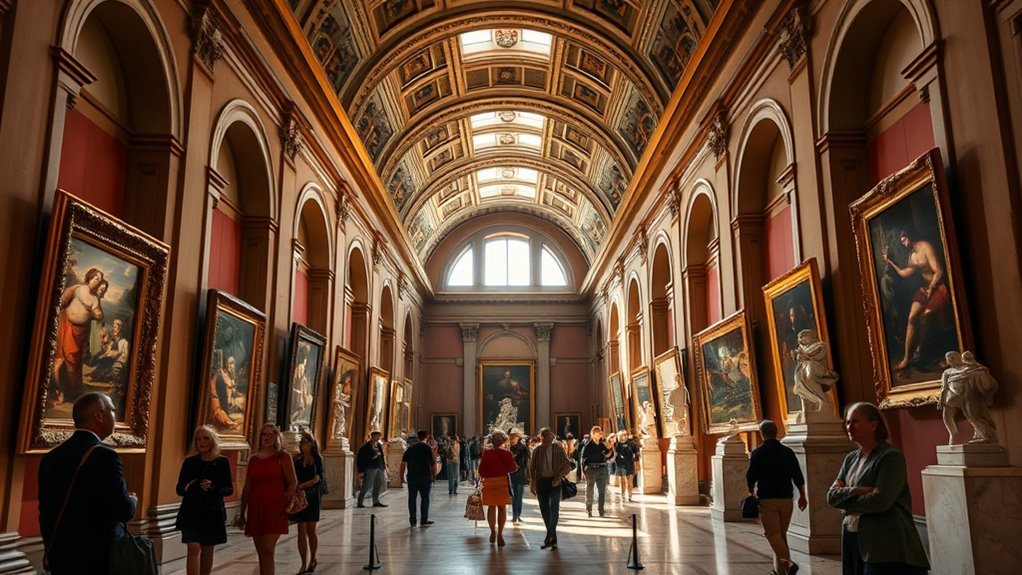
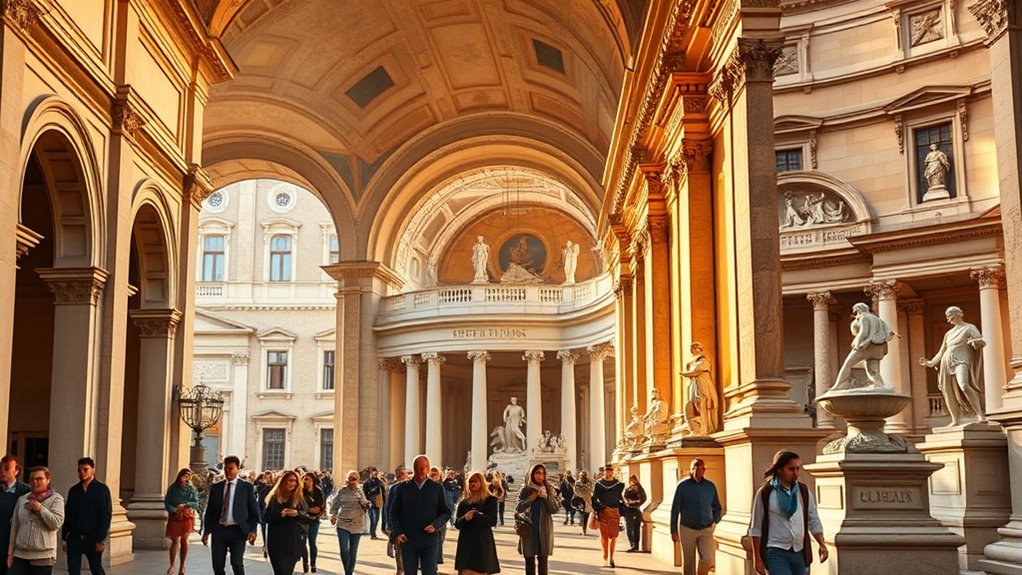
Italy’s museums bring together art, archaeology, architecture, religion, science, and local craft traditions. Many collections remain closely connected to the cities and buildings that produced them. A Florentine palace helps explain Medici patronage, while objects excavated near Pompeii reveal how people furnished their homes, worshipped, ate, and entertained guests.
The range is equally important. In one trip, you can compare Botticelli’s Renaissance paintings, Bernini’s Baroque sculpture, ancient Egyptian funerary objects, Roman mosaics, medieval paper-making equipment, and the dry-stone building traditions of Puglia.
Best Museums in Italy at a Glance
| Museum | Best For | Main Highlights | Suggested Time |
|---|---|---|---|
| Vatican Museums | Renaissance art and papal collections | Sistine Chapel, Raphael Rooms, classical sculpture | 3–4 hours |
| Uffizi Gallery | Italian Renaissance painting | The Birth of Venus, Primavera, Leonardo, Raphael | 2–3 hours |
| Florence Accademia | Michelangelo sculpture | David, the Prisoners, musical instruments | 1–2 hours |
| Venice Accademia | Venetian painting | Giorgione, Titian, Tintoretto, Veronese, Bellini | 2 hours |
| Galleria Borghese | Baroque sculpture and painting | Bernini, Caravaggio, Raphael, Titian | 2 hours |
| Museo Egizio | Ancient Egyptian history | Tomb of Kha and Merit, papyri, statues, funerary objects | 2–3 hours |
| MANN, Naples | Pompeii and Greco-Roman archaeology | Farnese Bull, mosaics, frescoes, Vesuvian objects | 2–3 hours |
Note: Italy has two major museums commonly called the Accademia. The Galleria dell’Accademia in Florence is known for Michelangelo’s David. The Gallerie dell’Accademia in Venice specializes in Venetian painting.
Vatican Museums, Vatican City
Beside St. Peter’s Basilica, the Vatican Museums preserve collections assembled by popes over several centuries. Although travelers usually include them in a Rome itinerary, the museums are inside Vatican City, an independent state.
| Key Stop | Why It Matters |
|---|---|
| Sistine Chapel | Contains Michelangelo’s ceiling frescoes and The Last Judgment, along with works by other Renaissance artists. |
| Raphael Rooms | Four rooms decorated by Raphael and his workshop for papal apartments. |
| Pio Clementino Museum | Displays major examples of Greek and Roman sculpture collected by the papacy. |
| Gallery of Maps | A long decorated gallery containing detailed 16th-century maps of Italy. |
The museums are extensive, so trying to see every room in one visit can become exhausting. First-time visitors usually get more value by prioritizing two or three collections before continuing to the Raphael Rooms and Sistine Chapel.
Pro Tip: Buy through the official Vatican Museums ticket portal. The museum warns visitors to verify that they are using its official sales channel.
Uffizi Gallery, Florence
The Uffizi Gallery is one of the strongest choices for understanding the development of Italian Renaissance painting. Its building was designed by Giorgio Vasari and constructed between 1560 and 1580 for administrative offices associated with the Medici government.
Major highlights include:
- Botticelli’s The Birth of Venus.
- Botticelli’s Primavera.
- Leonardo da Vinci’s Annunciation and Adoration of the Magi.
- Michelangelo’s circular Doni Tondo.
- Works by Raphael, Titian, Caravaggio, Piero della Francesca, and other major artists.
The galleries follow a broad historical sequence, making it possible to see changes in perspective, portraiture, religious painting, landscape, and the treatment of the human body. The building also offers views across central Florence and the Arno.
Advance booking is sensible during busy travel periods. Check the official website before visiting because rooms and individual works may close temporarily for conservation, loans, or installation changes.
Gallerie dell’Accademia, Venice
Venice’s Gallerie dell’Accademia traces Venetian art from the medieval period through later centuries. Its collection is especially useful for understanding how Venetian painters used color, light, landscape, architecture, and large narrative scenes.
Verified collection highlights include Giorgione’s The Tempest, Titian’s Pietà, Carpaccio’s cycle of Saint Ursula, and Veronese’s Feast in the House of Levi. Works by Bellini, Tintoretto, Lorenzo Lotto, and other Venetian artists add further depth.
The museum also owns Leonardo da Vinci’s Vitruvian Man. However, the drawing is highly sensitive to light and is not normally part of the permanent display. It appears only on limited occasions under controlled conservation conditions. Do not plan a visit around seeing the original unless the museum confirms that it is currently exhibited.
What to See at the Accademia Gallery in Florence
At the Galleria dell’Accademia di Firenze, Michelangelo’s David is the main attraction. Michelangelo received the commission in 1501, and the completed sculpture became one of the defining works of the Florentine Renaissance.
- Michelangelo’s David: Walk around the sculpture to study its scale, posture, hands, expression, and changing profile.
- The Prisoners: These unfinished figures reveal visible tool marks and offer insight into Michelangelo’s working process.
- Florentine painting: Galleries contain religious works by artists including Botticelli, Ghirlandaio, and their contemporaries.
- Musical instruments: The museum’s instrument collection offers a useful change of pace after the sculpture galleries.
The Florence Accademia is smaller than the Uffizi, but demand for David makes advance booking valuable. Allow additional time for entrance checks and crowds around the sculpture.
Galleria Borghese, Rome
Set inside Villa Borghese, the Galleria Borghese displays ancient sculpture and paintings and sculptures dating from the 15th through the 19th centuries. Its relatively compact rooms create a more intimate experience than Rome’s largest museum complexes.
| Highlight | What to Look For |
|---|---|
| Bernini | Apollo and Daphne and The Rape of Proserpina show his treatment of motion, skin, hair, and fabric in marble. |
| Caravaggio | David with the Head of Goliath and other paintings demonstrate his dramatic use of light. |
| Raphael | Lady with a Unicorn is one of the collection’s best-known portraits. |
| Titian and Canova | Their works broaden the visit beyond Bernini and Caravaggio. |
Reservations are mandatory for regular admission, and visits operate in controlled time slots. Confirm the current entry procedure on the official site before arrival.
Bargello Museum, Florence
The Museo Nazionale del Bargello occupies a medieval civic building in Florence’s historic centre. It is one of the city’s essential museums for sculpture, decorative arts, ceramics, bronzes, medals, ivory, and metalwork.
- Donatello Hall: Look for Donatello’s bronze and marble versions of David, Saint George, and other works.
- Michelangelo Hall: Highlights include Bacchus, Brutus, and the sculpture known as Apollo/David.
- Renaissance competition panels: Compare the reliefs created by Ghiberti and Brunelleschi for the Florence Baptistery door competition.
- Decorative arts: Rooms devoted to ceramics, ivory, textiles, arms, and small bronzes show that the Bargello is not limited to monumental sculpture.
The museum is within the UNESCO-listed Historic Centre of Florence, but the Bargello is not a separately designated World Heritage property. It generally suits visitors who want a quieter, sculpture-focused alternative to the Uffizi and Accademia.
Museo Egizio, Turin
Turin’s Museo Egizio was established in 1824 and preserves approximately 40,000 objects connected to ancient Egyptian civilization. Its official collection information describes it as the largest collection of Egyptian antiquities outside Egypt.
Important areas and objects include:
- The Tomb of Kha and Merit: An unusually rich group of objects from the intact tomb of an architect and his wife at Deir el-Medina.
- The Book of the Dead of Kha: A long illustrated funerary papyrus containing spells intended to guide and protect the deceased.
- The Turin Royal Canon: A fragmentary list of Egyptian kings that is important to the study of Egyptian chronology.
- The Turin Strike Papyrus: A document associated with one of the earliest recorded labor strikes.
- The Turin Goldmine Papyrus: An important ancient map connected to quarrying and mining routes.
- Statues, coffins, mummies, and everyday objects: These help explain both elite funerary customs and daily life.
The museum’s collection is too large for a rushed visit. Choose a few themes, such as funerary beliefs, writing, royal power, or material culture, and follow the related rooms.
Museo Archeologico Nazionale, Naples
The Museo Archeologico Nazionale di Napoli, commonly called MANN, is one of Italy’s most important archaeological museums. Its building began as royal cavalry barracks, later became the home of the University of Naples, and was eventually adapted to hold the Farnese collection and finds from the Vesuvian cities.
- Farnese collection: Monumental Roman sculptures include the Farnese Bull and Farnese Hercules.
- Pompeian mosaics: The collection includes mosaics transferred from villas and houses at Pompeii and nearby sites.
- Frescoes: Wall paintings preserve mythological, architectural, garden, and domestic scenes from Vesuvian buildings.
- Everyday objects: Furniture, vessels, lamps, tools, and household objects make Roman daily life easier to understand.
- Secret Cabinet: This section presents ancient erotic art and objects within their archaeological and cultural context.
The famous Veiled Christ is not at MANN. It is displayed at the Sansevero Chapel Museum elsewhere in Naples.
Room availability can change during conservation and energy-efficiency work. Check the museum’s official schedule of open rooms before visiting.
Pinacoteca di Brera, Milan
The Pinacoteca di Brera occupies Palazzo Brera in central Milan. Established as a public gallery in the Napoleonic period, it contains a concentrated collection of Italian painting from several regions and periods.
Major works include Raphael’s The Marriage of the Virgin, Caravaggio’s Supper at Emmaus, Mantegna’s Lamentation over the Dead Christ, Piero della Francesca’s Montefeltro Altarpiece, and Francesco Hayez’s The Kiss.
Brera is a strong choice for travelers who want a high-quality painting collection without the scale of the Vatican Museums or Uffizi. Its location also makes it easy to combine with the surrounding Brera district.
Palazzo Ducale, Urbino
Urbino’s Palazzo Ducale houses the Galleria Nazionale delle Marche. The palace was developed for Federico da Montefeltro and became an important expression of Renaissance court culture.
- Federico’s Studiolo: An intimate study famous for its detailed wood-inlay decoration.
- Piero della Francesca: Works include the Flagellation of Christ and Madonna of Senigallia.
- Raphael: The gallery includes works connected to the Urbino-born artist.
- Palace architecture: Courtyards, halls, windows, and circulation routes are as important as many individual paintings.
The palace stands within the UNESCO-listed Historic Centre of Urbino. The designation covers the historic urban centre and its exceptional Renaissance character, not only the museum.
Museo della Carta e della Filigrana, Fabriano
At the Museo della Carta e della Filigrana in Fabriano, visitors can explore the development of handmade paper, watermarks, tools, production techniques, and the city’s long relationship with paper manufacturing.
The museum is especially valuable because it focuses on working knowledge rather than only finished artworks. Reconstructed equipment and demonstrations explain how fibers were prepared, beaten, lifted in moulds, pressed, dried, and marked.
Paper-Making Heritage
Fabriano became an important paper-production centre during the Middle Ages. Its artisans refined techniques that helped improve the strength, consistency, and identification of paper.
- Historic tools show how rags and fibers were processed.
- Paper moulds explain how sheets were formed by hand.
- Documents and finished sheets trace the commercial and artistic uses of Fabriano paper.
- Watermark collections show how makers identified workshops, products, and quality.
Live Watermark and Paper-Making Demonstrations
In Italian paper-making, filigrana usually refers to a watermark rather than decorative metal filigree. During demonstrations, visitors may see how a design attached to a paper mould changes the thickness of the sheet and becomes visible when the finished paper is held to the light.
Demonstration schedules and workshops may vary, so check the museum’s current program before planning a visit around a specific activity.
Fabriano’s UNESCO Creative City Legacy
Fabriano is not a UNESCO World Heritage site. It has been a UNESCO Creative City of Crafts and Folk Art since 2013. The designation recognizes the city’s broader tradition of craftsmanship, including its historic community of master paper makers.
The Paper and Watermark Museum is one of the cultural institutions that helps preserve and explain that living craft tradition.
Museo Nazionale Archeologico di Altamura, Puglia
The Museo Nazionale Archeologico di Altamura covers the archaeology of the Alta Murgia from prehistory through the Middle Ages. Its collections and interpretation include prehistoric environments, Peucetian settlements, ancient burials, pottery, tools, and later regional cultures.
Altamura’s Prehistoric Treasures
The museum’s prehistoric displays place the region within the wider story of human occupation in Puglia and Europe. They use archaeological finds, animal remains, reconstructions, panels, and multimedia presentations to explain changing climates and ways of life.
- Stone tools demonstrate different methods of cutting and shaping material.
- Animal remains help reconstruct prehistoric environments.
- Pottery, burials, and settlement finds trace later communities in the Alta Murgia.
- Multimedia interpretation connects the museum to Lamalunga Cave and the nearby dinosaur-track site at Cava Pontrelli.
Man of Altamura Exhibit
The Man of Altamura is a remarkably complete Neanderthal skeleton discovered in Lamalunga Cave in 1993. Scientific research dates it to approximately 130,000–172,000 years ago.
The original skeleton is not displayed in the museum. It remains deep inside the cave, where much of it is embedded in and covered by mineral formations. The museum instead presents interpretation and a detailed reconstruction created from digital measurements and scientific data.
This distinction matters because visitors should not expect to see the original bones. The reconstruction and multimedia material explain the find while allowing the fragile cave context to remain protected.
Museo del Territorio, Alberobello
The Museo del Territorio ex Casa Pezzolla occupies a connected group of 15 trulli. Its rooms explain Alberobello’s domestic life, rural economy, tools, traditions, building methods, and local history.
- Architectural details show how communicating trulli formed a larger home.
- Household and agricultural objects illustrate daily life in the region.
- Displays explain the use of local limestone and dry-stone construction.
- The museum connects individual buildings to the wider history of the Itria Valley.
The Trulli of Alberobello are a UNESCO World Heritage property because they preserve an exceptional concentration of corbelled dry-stone dwellings. The World Heritage property includes two main trulli districts and several individual locations, including the historic museum complex.
Note: You may hear that trulli were designed to be dismantled quickly to avoid taxes. This is a popular explanation, but the buildings also reflect local materials, dry-stone skills, land use, and a much longer Mediterranean construction tradition.
How to Choose the Right Italian Museum
You do not need to visit every famous museum to have a rewarding trip. Choose according to your strongest interest:
- Renaissance painting: Uffizi Gallery and the Vatican Museums.
- Michelangelo: Florence Accademia, followed by the Bargello and Vatican Museums.
- Baroque sculpture: Galleria Borghese.
- Venetian painting: Gallerie dell’Accademia in Venice.
- Ancient Egypt: Museo Egizio in Turin.
- Pompeii and Roman life: MANN in Naples.
- Decorative arts and sculpture: Bargello Museum.
- Regional craft traditions: Fabriano Paper and Watermark Museum.
- Prehistory and human evolution: National Archaeological Museum of Altamura.
- Traditional architecture: Museo del Territorio in Alberobello.
For a short city break, one major museum and one smaller specialist museum often produce a better experience than racing through several large collections in a single day.
Products Worth Considering


Suggested Italy Museum Itineraries
Rome: Two-Museum Plan
Pair the Vatican Museums with the Galleria Borghese on separate days. The Vatican provides scale and historical range, while the Borghese offers a shorter, more concentrated visit.
Florence: Three-Museum Plan
Visit the Uffizi for painting, the Florence Accademia for Michelangelo’s David, and the Bargello for sculpture and decorative arts. Avoid scheduling all three back-to-back without rest.
Northern Italy Plan
Combine Brera in Milan, Museo Egizio in Turin, and the Gallerie dell’Accademia in Venice. Each museum has a different focus, so the route avoids repeating the same type of collection.
Southern and Regional Plan
Use MANN as preparation for Pompeii or Herculaneum, then continue into Puglia for Altamura and Alberobello. Fabriano and Urbino can form a separate Marche itinerary focused on Renaissance culture and traditional craftsmanship.
Tips for Visiting Italy’s Best Museums
- Book high-demand museums early: The Vatican Museums, Uffizi, Florence Accademia, and Galleria Borghese can fill popular time slots.
- Use official websites: Third-party sites may charge higher fees or use descriptions that make ordinary tickets sound exclusive.
- Check current displays: Drawings, fragile works, and loaned objects may not be visible during your visit.
- Review room closures: Conservation, construction, special exhibitions, or staffing can affect access.
- Allow realistic time: Large museums usually need two to four hours, while smaller museums may need one to two.
- Do not overpack the day: Museum fatigue makes it harder to remember what you saw.
- Check bag policies: Some institutions require backpacks and large bags to be stored.
- Confirm photography rules: Flash, tripods, selfie sticks, and photography in specific rooms may be restricted.
- Review accessibility information: Historic buildings may use special entrances, lifts, or alternative routes.
- Download useful material: Official maps, apps, audio guides, and collection pages can help you set priorities before arrival.
Warning: Do not assume that a search result is the museum’s official ticket office. Confirm the domain and compare it with the official museum website before entering payment information.
Products Worth Considering


Frequently Asked Questions
What are the most famous museums in Italy?
The best-known choices include the Vatican Museums, Uffizi Gallery, Florence Accademia, Venice Accademia, Galleria Borghese, Museo Egizio, National Archaeological Museum of Naples, and Pinacoteca di Brera. The best museum for you depends on whether you prefer painting, sculpture, archaeology, or regional culture.
What is the most visited museum in Italy?
The answer depends on how rankings define a museum. The Vatican Museums attract millions of visitors but are in Vatican City, a separate state. Italian government rankings often combine museums with archaeological parks, monuments, gardens, and museum circuits. Check the latest official statistics before quoting a single institution as the winner.
Which five Italian museums are best for a first trip?
A balanced first-trip list is the Vatican Museums, Uffizi Gallery, Florence Accademia, Galleria Borghese, and the National Archaeological Museum of Naples. Together, they cover Renaissance painting, Michelangelo, Baroque sculpture, ancient Rome, and the Vesuvian cities.
Which Italian museum is best for ancient history?
Choose Museo Egizio for ancient Egypt and MANN in Naples for Greco-Roman sculpture, Pompeian mosaics, frescoes, and household objects. Altamura is a strong specialist choice for prehistory and the interpretation of the Man of Altamura.
Do you need to book Italian museums in advance?
Advance booking is strongly recommended for the Vatican Museums, Uffizi, Florence Accademia, and Galleria Borghese. Smaller museums may allow walk-in entry, but opening schedules can vary. Always check the institution’s official website shortly before your visit.
Conclusion
Italy’s museums reward careful selection more than rushed sightseeing. Choose the Vatican Museums and Uffizi for broad Renaissance collections, Florence’s Accademia for Michelangelo, Venice’s Accademia for Venetian painting, Museo Egizio for ancient Egypt, and MANN for Pompeii and Roman life.
Regional museums add another layer to the trip. Fabriano explains a living paper-making tradition, Altamura connects museum interpretation with an extraordinary Neanderthal discovery, Urbino preserves the culture of a Renaissance court, and Alberobello shows how architecture grew from local stone and skilled dry-stone construction.
Check official information, reserve high-demand museums early, and leave enough time to look closely. A smaller number of well-planned visits will usually be more memorable than trying to cover every famous collection in one trip.
Sources
- Vatican Museums: Collections — official information on the museums, Sistine Chapel, and Raphael Rooms.
- Uffizi Galleries — official museum history, building dates, and collection information.
- Gallerie dell’Accademia, Venice — verified Venetian collection highlights and museum information.
- Museo Egizio — official museum history and current collection figures.
- National Archaeological Museum of Naples — official building history and core collections.
- UNESCO: Fabriano Creative City, Trulli of Alberobello, and Historic Centre of Urbino — verified UNESCO designations.
