
Last Updated on July 28, 2026 by Daniel Globe
Florence brings Renaissance art, monumental architecture, neighborhood markets, Tuscan food, and panoramic viewpoints into a compact historic center. First-time visitors can see major sights such as the Duomo, Michelangelo’s David, the Uffizi Gallery, Ponte Vecchio, and Piazza della Signoria in two or three days, although advance reservations are essential for the busiest attractions.
Quick Answer
The best things to do in Florence include climbing Brunelleschi’s Dome, seeing Michelangelo’s David, touring the Uffizi, crossing Ponte Vecchio, exploring the Oltrarno, eating at Mercato Centrale, and watching sunset from Piazzale Michelangelo. Reserve the dome, Accademia, and Uffizi before your trip.
Key Takeaways
- Allow at least two full days for the main Florence attractions and three days for a more relaxed visit.
- Book Brunelleschi’s Dome, the Galleria dell’Accademia, and the Uffizi Gallery before arrival.
- The Cathedral is free, but the dome, bell tower, Baptistery, museum, and Santa Reparata require a Duomo pass.
- Many of Florence’s best experiences—including Piazza della Signoria, Ponte Vecchio, the Oltrarno streets, and Piazzale Michelangelo—are free.
- Check official attraction notices shortly before visiting because prices, opening hours, and restoration access can change.
Disclosure: As an Amazon Associate I earn from qualifying purchases. Some links on this page are affiliate links, at no extra cost to you.
Discover Florence’s Must-See Attractions
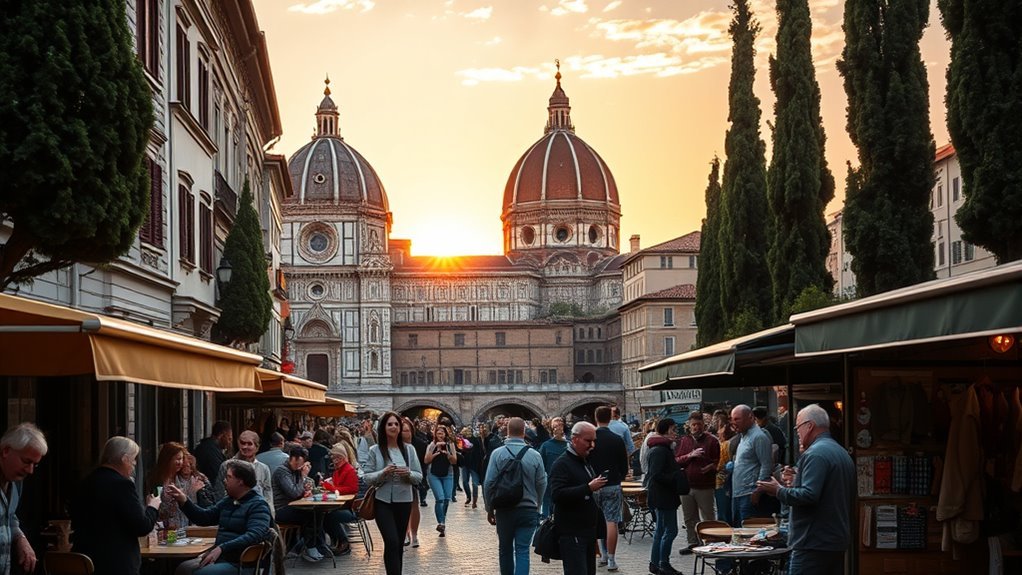
Florence’s historic center is a UNESCO World Heritage Site filled with buildings and artworks by Brunelleschi, Giotto, Botticelli, Michelangelo, and other masters. Most major attractions are close enough to reach on foot, but museum visits and tower climbs require more planning than the compact map may suggest.
Begin around Piazza del Duomo, where the Cathedral of Santa Maria del Fiore, Brunelleschi’s Dome, Giotto’s Bell Tower, the Baptistery, and the Opera del Duomo Museum form one monumental complex. Continue to the Galleria dell’Accademia for Michelangelo’s David, then visit the Uffizi Gallery, Piazza della Signoria, and Ponte Vecchio.
Across the Arno River, the Oltrarno offers artisan workshops, Pitti Palace, the Boboli Gardens, Santo Spirito, and a more residential side of Florence. Mercato Centrale, Santa Croce, a Tuscan cooking class, and sunset from Piazzale Michelangelo round out a strong first visit.
Plan Your Florence Visit
At a Glance
| Ideal Visit | Two to three full days |
| Walking Difficulty | Moderate; expect cobblestones, stairs, museum standing, and steep climbs |
| Book First | Brunelleschi’s Dome, Accademia, and Uffizi timed entry |
| Typical Sightseeing Cost | Free outdoor sights plus roughly €10–€30 for each major paid attraction before optional reservation fees |
Book the Busiest Florence Tickets First
As of July 28, 2026, the official regular prices for several headline attractions are:
- Brunelleschi Pass: €30, including the dome and the other Duomo monuments covered by the pass.
- Galleria dell’Accademia: €20 regular admission, plus a €4 reservation fee for timed booking.
- Uffizi Gallery: €25 for a standard same-day ticket and €29 when purchased before the day of entry. Reduced late-afternoon pricing may be available.
- Boboli Gardens: €10 when purchased on the day or €13 in advance.
- Firenzecard: €85 for 72 hours, with reservations included for participating museums.
Use the official Duomo ticket office, Accademia visitor page, and Uffizi ticket page. Third-party tours may add useful guided interpretation, but they usually cost more than direct museum admission.
Pro Tip: Reserve the dome first because its entry time is fixed and cannot normally be changed. Build your Accademia and Uffizi bookings around that appointment rather than trying to fit the dome into an already crowded schedule.
Decide Whether the Firenzecard Is Worth It
The Firenzecard is Florence’s official 72-hour museum pass. It includes participating museum admission, exhibitions, and required reservation charges, but it does not include public transportation.
The card offers the most value when you plan to visit several included paid museums within three consecutive days. It may cost more than separate tickets if you only want the Accademia, Uffizi, and one additional attraction. Compare your exact itinerary before purchasing.
Consider Accessibility and Walking Conditions
Florence’s center is compact, but historic paving, narrow sidewalks, crowds, and stair-only monuments can make travel tiring. Brunelleschi’s Dome and Giotto’s Bell Tower have no elevators. The Boboli Gardens include slopes and uneven surfaces, while Piazzale Michelangelo sits above the river and requires an uphill walk unless you use transportation.
Travelers with mobility needs should review each attraction’s accessibility information before booking. The Opera del Duomo Museum has elevators, and Florence’s official tourism site, FeelFlorence, provides current visitor and accessibility resources.
Experience the Majestic Duomo Complex
The Cathedral of Santa Maria del Fiore dominates central Florence with its marble exterior and terracotta-tiled dome engineered by Filippo Brunelleschi. Entry to the Cathedral itself is free, although security lines can be long and religious services may affect visitor access.
A paid pass is required for Brunelleschi’s Dome, Giotto’s Bell Tower, the Baptistery of St. John, the Opera del Duomo Museum, and the archaeological remains of Santa Reparata. The Brunelleschi Pass provides access to the entire group and is valid for three days beginning with the reserved dome visit.
The dome climb involves 463 steps with no elevator. Visitors pass between the dome’s shells and get a closer view of the interior frescoes before reaching the outdoor terrace. The booked time is fixed, an identity document is required, and medium or large bags must be deposited at the complex’s free luggage storage before entry.
Warning: The dome and bell-tower climbs are not recommended for visitors with cardiovascular or respiratory conditions, vertigo, claustrophobia, or pregnancy. Both routes use narrow stairways, and neither has an elevator.
At the Baptistery, the bronze doors facing the square are reproductions. The original doors—including Lorenzo Ghiberti’s celebrated Gates of Paradise—are preserved in the Opera del Duomo Museum, where they can be studied at close range.
Note: As of July 2026, restoration work prevents normal viewing of the Baptistery’s vault mosaics. Check the official Duomo visitor page for updated access, closures, and restoration notices.
Marvel at Michelangelo’s David at the Galleria dell’Accademia
Michelangelo carved David from white marble between 1501 and 1504. The statue stands 517 centimeters, or nearly 17 feet, tall and shows the biblical hero before his confrontation with Goliath.
The sculpture was originally intended for Florence Cathedral but was placed outside Palazzo Vecchio in Piazza della Signoria. It was later moved to the Galleria dell’Accademia for protection, while a replica now occupies its former outdoor position.
The Accademia also displays Michelangelo’s unfinished Prisoners, whose partially carved figures appear to emerge from blocks of marble. Other galleries cover Florentine painting, historic musical instruments, and plaster models.
Regular admission is €20 as of July 2026, with a €4 timed-reservation charge. Online time slots may fill, but the museum states that same-day tickets can sometimes still be purchased at the box office, usually with a longer wait. Confirm current prices and hours on the official Accademia website.
Explore the World-Famous Uffizi Gallery
The Uffizi began as an administrative building commissioned by Cosimo I de’ Medici. The Medici collections expanded within it over generations, and the gallery opened to the public as a museum in 1769.
Today, its chronological galleries trace major developments in Italian painting. First-time visitors should allow at least two hours, while art enthusiasts can easily spend half a day inside.
Masterpieces of Renaissance Art
Important works include:
- Botticelli’s The Birth of Venus and Primavera.
- Michelangelo’s circular Doni Tondo.
- Leonardo da Vinci’s Annunciation and Adoration of the Magi.
- Raphael’s Madonna of the Goldfinch.
- Caravaggio’s Medusa and Bacchus.
Rather than rushing from one famous painting to another, choose a few artists or rooms in advance. The museum’s official collection pages can help you build a short priority list.
Views From the Uffizi
The Uffizi’s upper corridors and windows provide views toward the Arno River, Ponte Vecchio, Palazzo Vecchio, and nearby rooftops. These glimpses help connect the paintings with the streets, churches, and political institutions that shaped Renaissance Florence.
Standard admission is currently €25 on the day, with separate advance-purchase and late-afternoon pricing. Review the latest information on the official Uffizi ticket page.
Climb Giotto’s Bell Tower for City Views
Giotto’s Bell Tower rises beside the Cathedral and offers one of Florence’s best close-up views of Brunelleschi’s Dome. The climb requires 414 steps, with no elevator, and passes through three intermediate loggias where visitors can pause.
- Reserve correctly: Giotto Pass holders need a timed tower entry. Brunelleschi Pass holders can normally visit during the pass’s three-day validity without a separate tower reservation.
- Carry only essentials: Bags covered by the complex’s restrictions must be left at the official luggage storage.
- Pace the climb: The stairs become narrow, and people travel in both directions.
- Allow about 45 minutes: The official operator recommends roughly this amount of time for the climb and visit.
Note: Giotto’s Bell Tower is undergoing restoration work in 2026. The summit remains accessible, but scaffolding or other work may partly affect views. Check current notices before booking.
Explore Florence’s Historic Piazza della Signoria
Piazza della Signoria has served as Florence’s political center for centuries. Palazzo Vecchio anchors the square, while the Uffizi complex opens a visual corridor toward the Arno.
The square remains one of the best free places to experience Florence’s public art and civic history. It is busiest during the middle of the day, so visit early in the morning or return after dinner for a quieter atmosphere.
Notable Landmarks and Sculptures
- Palazzo Vecchio: Florence’s historic town hall and a museum containing the Salone dei Cinquecento and other decorated rooms.
- Michelangelo’s David replica: Positioned near the entrance to Palazzo Vecchio, where the original once stood.
- Loggia dei Lanzi: A free open-air sculpture gallery containing Cellini’s Perseus and Giambologna’s Rape of the Sabine Women.
- Fountain of Neptune: Located in the square near Palazzo Vecchio rather than inside the Loggia.
Atmosphere and Public Events
Piazza della Signoria hosts ceremonies, performances, historical commemorations, and public gatherings. Even when no event is scheduled, the movement between Palazzo Vecchio, the Uffizi, and nearby streets gives the square a lively atmosphere.
Several cafes face the piazza, but their location usually commands higher prices. For better value, walk a few streets away before ordering a full meal.
Relax in the Boboli Gardens
Behind Pitti Palace, the Boboli Gardens spread across roughly 45 hectares, or about 111 acres. Their formal paths, sculptures, fountains, grottos, terraces, and tree-lined areas influenced the development of European court gardens.
The Boboli Gardens are not a small palace lawn. Plan for hills, uneven paths, and enough time to explore beyond the main amphitheater.
Highlights include:
- The Amphitheater behind Pitti Palace.
- The Buontalenti Grotto near the northern part of the gardens.
- The Fountain of Neptune and Fountain of the Ocean.
- Elevated views across Florence and the surrounding hills.
- The Kaffeehaus and the garden’s quieter upper paths.
Standard same-day admission is currently €10, while advance tickets cost more. Some sections may close temporarily for restoration or maintenance, so review the official Boboli Gardens page before visiting.
Indulge in Local Flavors at Mercato Centrale
Mercato Centrale occupies a 19th-century iron-and-glass market building in the San Lorenzo area. Its two floors provide different experiences.
- Ground floor: Traditional market businesses selling fruit, vegetables, meat, fish, bread, cheese, cured meat, and prepared foods. The historic Da Nerbone counter is known for Florentine dishes and lampredotto.
- Upper floor: A modern food hall with multiple counters, shared seating, restaurants, and longer opening hours.
Arrive in the morning to see the ground-floor market at its most active. The upper floor is better suited to groups who want to choose different dishes and eat together.
Florentine foods to look for include ribollita, pappa al pomodoro, schiacciata sandwiches, pecorino, cured meats, and lampredotto. Lampredotto is made from the fourth stomach of a cow, so travelers who do not eat offal should confirm ingredients before ordering.
Check current information through Florence’s official Mercato Centrale visitor page.
Visit the Impressive Santa Croce Basilica
Santa Croce combines Gothic architecture, Franciscan history, Renaissance art, and monumental tombs. The complex contains memorials or burial places associated with Michelangelo, Galileo, Machiavelli, Rossini, and other major Italian figures.
Important features include:
- Giotto fresco cycles: Found in the Bardi and Peruzzi chapels.
- Donatello sculptures: Part of Santa Croce’s important Renaissance collection.
- Monumental tombs: Including those of Michelangelo, Galileo, and Machiavelli.
- Pazzi Chapel: A landmark of Renaissance architecture associated with Brunelleschi.
Note: As of July 2026, the Bardi Chapel is closed for restoration, and its Giotto frescoes are not visible. Check the official Santa Croce website for current access before visiting.
Because Santa Croce remains an active religious site, wear clothing that covers shoulders and knees and behave quietly around worship areas.
Enjoy Art and Culture in the Oltrarno District
Oltrarno means “beyond the Arno” and refers to the neighborhoods south of the river. The area includes Pitti Palace, the Boboli Gardens, Santo Spirito, San Frediano, and San Niccolò.
Florence’s official tourism authority highlights the Oltrarno for traditional and contemporary craft workshops. Visitors may encounter jewelry making, wood inlay, bookbinding, instrument making, leatherwork, restoration, and decorative arts.
Explore the area slowly rather than treating it as a route between attractions. Walk through Piazza Santo Spirito, browse small workshops where visitors are welcome, and stop at neighborhood bakeries or trattorias.
Pitti Palace is the district’s largest attraction. Its museums preserve works and furnishings connected with the Medici, Habsburg-Lorraine, and Savoy dynasties. A combined Pitti Palace and Boboli Gardens ticket can reduce the cost compared with buying both separately.
Day Trips From Florence: Pisa and Siena
Pisa and Siena are both possible as independent day trips from Florence, but trying to see both in one day produces a rushed itinerary. Choose Pisa for its concentrated cathedral complex and easy rail connection. Choose Siena for medieval streets, Piazza del Campo, and a fuller old-city experience.
Popular Attractions in Pisa
Regional trains connect Florence with Pisa throughout the day. As of July 2026, Trenitalia lists a Florence–Pisa fare of €8.90 each way, although schedules and prices should be checked for the specific travel date.
Pisa’s main sights are concentrated in Piazza del Duomo, also called Piazza dei Miracoli:
- Leaning Tower of Pisa: The freestanding bell tower of the Cathedral of Santa Maria Assunta.
- Pisa Cathedral: A major example of Pisan Romanesque architecture.
- Baptistery: Known for its circular form and remarkable acoustics.
- Camposanto Monumentale: A historic cemetery with frescoes and monumental architecture.
- Museo dell’Opera del Duomo: Displays sculptures and objects from the cathedral complex.
Reserve a tower-climb time if reaching the top is important to you. Leave additional time to walk beyond Piazza dei Miracoli toward the Arno rather than returning to Florence immediately after taking photographs.
Explore Siena’s Medieval Streets
Siena’s historic center is built across hills, so expect steeper walking than in central Florence. Begin in the shell-shaped Piazza del Campo, where the Palazzo Pubblico and Torre del Mangia form the city’s civic center.
The Palio horse race takes place in Piazza del Campo on July 2 and August 16. On those dates, the city is exceptionally busy and normal sightseeing conditions change.
Other highlights include:
- Siena Cathedral and the Piccolomini Library.
- The Museo dell’Opera del Duomo.
- Views from the unfinished New Cathedral façade.
- The Civic Museum’s works by Ambrogio Lorenzetti and Simone Martini.
- Neighborhood streets associated with Siena’s historic contrade.
The Torre del Mangia climb involves roughly 400 steps through confined passages. Travelers who prefer an easier viewpoint can use the panorama at the cathedral museum complex instead.
Master Tuscan Cuisine in a Cooking Class
A cooking class can add context to dishes that appear on Florence menus. Classes vary from short pasta workshops to half-day market visits followed by a communal meal.
Common lesson topics include:
- Fresh pasta and filled pasta.
- Ribollita or pappa al pomodoro.
- Seasonal vegetable dishes.
- Tuscan sauces and meat preparations.
- Tiramisù, cantucci, or other desserts.
Before booking, check the class size, total hands-on cooking time, market component, included drinks, dietary accommodations, cancellation policy, and meeting point. Some “cooking experiences” rely heavily on demonstrations, while smaller workshops may provide more individual preparation time.
Experience Local Festivals and Events
Florence’s most important civic celebration is the Feast of St. John the Baptist on June 24. Events traditionally include ceremonies, historical processions, the Calcio Storico final, and the evening Fochi di San Giovanni fireworks. The fireworks are commonly launched from the Piazzale Michelangelo area, drawing large crowds along the Arno.
Pitti Immagine events take place at the Fortezza da Basso, including major January and June menswear editions. These are professional fashion-industry trade fairs rather than ordinary public festivals, and entry to official exhibition areas may require registration or industry credentials. Their presence can still affect hotel prices, restaurant demand, traffic, and the atmosphere around the city.
Florence also hosts concerts, exhibitions, open-air cinema, artisan events, and seasonal programs. Use the official FeelFlorence events calendar to check what overlaps with your dates.
Indulge in Florence’s Finest Gelato
Florence has a long association with Italian gelato, but shop quality varies. Established names such as Gelateria dei Neri and Vivoli are popular places to begin, while small neighborhood gelaterias can be equally rewarding.
Good signs include:
- Flavors stored in covered metal containers or low, tidy trays.
- Natural-looking colors rather than fluorescent fruit or pistachio shades.
- A focused menu that changes with seasonal ingredients.
- Clearly displayed ingredients and allergen information.
- Staff who can explain where and how the gelato is prepared.
The words gelato artigianale may describe an artisan approach, but a sign alone does not guarantee that every flavor is made entirely on the premises. Judge the shop by ingredient transparency, texture, flavor, and production details rather than signage alone.
Classic flavors include pistachio, hazelnut, dark chocolate, fior di latte, and seasonal fruit sorbets. Order a small serving first if you plan to compare several shops during your visit.
Catch Sunset Views at Piazzale Michelangelo
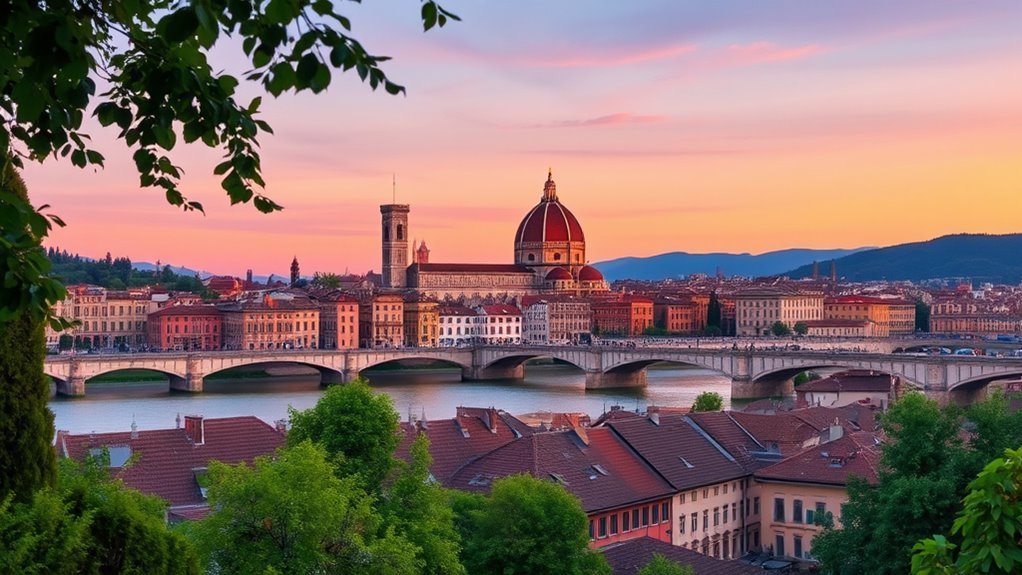
Piazzale Michelangelo is Florence’s best-known panoramic terrace. The viewpoint looks across the Arno toward the Duomo, Palazzo Vecchio, Santa Croce, Ponte Vecchio, and the hills beyond the historic center.
You can reach it by walking uphill from the San Niccolò area, using the landscaped ramps from Piazza Poggi, or taking public transportation. The climb is manageable for many visitors but feels strenuous after a full day of walking.
Iconic City Skyline Views
From the terrace, the major monuments align in a broad city panorama. The view is especially effective near sunset, when lower light gives the terracotta roofs and pale stone buildings more definition.
- Duomo: Brunelleschi’s dome remains the dominant feature.
- Palazzo Vecchio: The Arnolfo Tower rises above Piazza della Signoria.
- Ponte Vecchio: Visible across the Arno among the central bridges.
- Santa Croce: Seen toward the eastern side of the historic center.
A bronze copy of Michelangelo’s David stands in the piazzale, although most visitors focus on the skyline rather than the monument itself.
Choose the Right Sunset Time
Do not rely on a fixed 6–8 p.m. window. Florence’s sunset time changes throughout the year and can occur earlier in winter or later in summer.
Check the exact sunset time for your date and arrive 45–60 minutes beforehand. This provides time to find a viewing position, take daylight photographs, and watch the city change as the light fades.
Pro Tip: Continue uphill to San Miniato al Monte for another panoramic view. It is usually calmer than the central part of Piazzale Michelangelo, although the additional climb requires more effort.
Nearby Food and Dining Options
The viewpoint is better suited to a simple drink, gelato, or picnic than to destination dining. Pack out all waste and avoid blocking steps or viewing areas.
For a meal after sunset, descend toward San Niccolò, where Rifrullo and other restaurants are located. Trattoria La Casalinga is farther west in Santo Spirito rather than directly beside Piazzale Michelangelo, so allow time to cross the Oltrarno if you plan to eat there.
Restaurant hours and closing days vary. Reserve popular dinner spots separately instead of assuming a table will be available after sunset.
A Simple Three-Day Florence Itinerary
Day 1: Duomo, Accademia, and the Historic Center
- Begin with a reserved climb of Brunelleschi’s Dome.
- Visit the Cathedral, Baptistery, and Opera del Duomo Museum.
- See Michelangelo’s David at the Accademia.
- Eat lunch at Mercato Centrale.
- Walk through Piazza della Repubblica, Piazza della Signoria, and Ponte Vecchio.
- End at Piazzale Michelangelo for sunset.
Day 2: Uffizi, Santa Croce, and Oltrarno
- Use a morning reservation for the Uffizi Gallery.
- Visit Piazza della Signoria again when it is less crowded.
- Continue to Santa Croce and its surrounding streets.
- Cross the Arno and explore Santo Spirito and artisan workshops.
- Choose Pitti Palace or the Boboli Gardens for the afternoon.
- Have dinner in Santo Spirito, San Frediano, or San Niccolò.
Day 3: Choose a Deeper Florence Experience or Day Trip
Stay in Florence for a cooking class, additional museums, Palazzo Vecchio, the Bargello, Medici Chapels, or a slower Oltrarno day. Alternatively, devote the full day to either Pisa or Siena.
Avoid combining a long cooking class and a major day trip on the same day. Both experiences are more rewarding when they are not compressed around travel deadlines.
Frequently Asked Questions
What should you not miss in Florence?
First-time visitors should prioritize the Duomo complex, Michelangelo’s David, the Uffizi Gallery, Piazza della Signoria, Ponte Vecchio, the Oltrarno, and the view from Piazzale Michelangelo. Mercato Centrale or a traditional trattoria adds an essential food experience.
What is Florence, Italy, best known for?
Florence is best known for Renaissance art and architecture, the Medici family, Brunelleschi’s Dome, Michelangelo’s David, the Uffizi collection, artisan traditions, and Tuscan dishes such as ribollita, lampredotto, and bistecca alla fiorentina.
Can you see Florence in three days?
Yes. Three days provide enough time for the Duomo, Accademia, Uffizi, Santa Croce, Ponte Vecchio, the Oltrarno, Boboli Gardens or Pitti Palace, and Piazzale Michelangelo without rushing every visit.
What should first-time visitors do in Florence?
Reserve the dome, Accademia, and Uffizi first. Group nearby attractions together, wear comfortable shoes, leave space for an unplanned neighborhood walk, and verify attraction hours shortly before each visit.
What are the best free things to do in Florence?
Free highlights include Piazza della Signoria, the Loggia dei Lanzi, Ponte Vecchio, Piazza del Duomo, the Cathedral interior, Oltrarno streets, San Miniato al Monte, and the panoramic terrace at Piazzale Michelangelo.
Which Florence attractions need advance reservations?
Reserve Brunelleschi’s Dome, the Galleria dell’Accademia, and the Uffizi Gallery. Reservations are also sensible for popular cooking classes, guided tours, special exhibitions, and restaurants with limited seating.
Conclusion
Florence rewards a balanced itinerary. Reserve the most important museum and dome appointments, but leave time to walk across the Arno, visit a market, pause in a public square, and view the skyline from above.
Two days cover the essentials, while three days provide room for the Boboli Gardens, Santa Croce, artisan workshops, a cooking class, or a day trip. Check official notices before arrival, especially for ticket prices, timed-entry rules, religious closures, and restoration work.
Sources
- Opera di Santa Maria del Fiore — Duomo tickets, stair counts, entry rules, accessibility, and restoration notices.
- Uffizi Galleries — Current Uffizi, Pitti Palace, and Boboli Gardens ticket prices.
- Galleria dell’Accademia di Firenze — Accademia admission, reservations, opening hours, and visitor rules.
- FeelFlorence — Official Florence tourism information, attractions, events, markets, and visitor planning.
- Opera di Santa Croce — Santa Croce artworks, tombs, visiting information, and restoration notices.
- Trenitalia Tuscany Line — Regional train connections and published Florence–Pisa fares.
