
Last Updated on July 28, 2026 by Daniel Globe
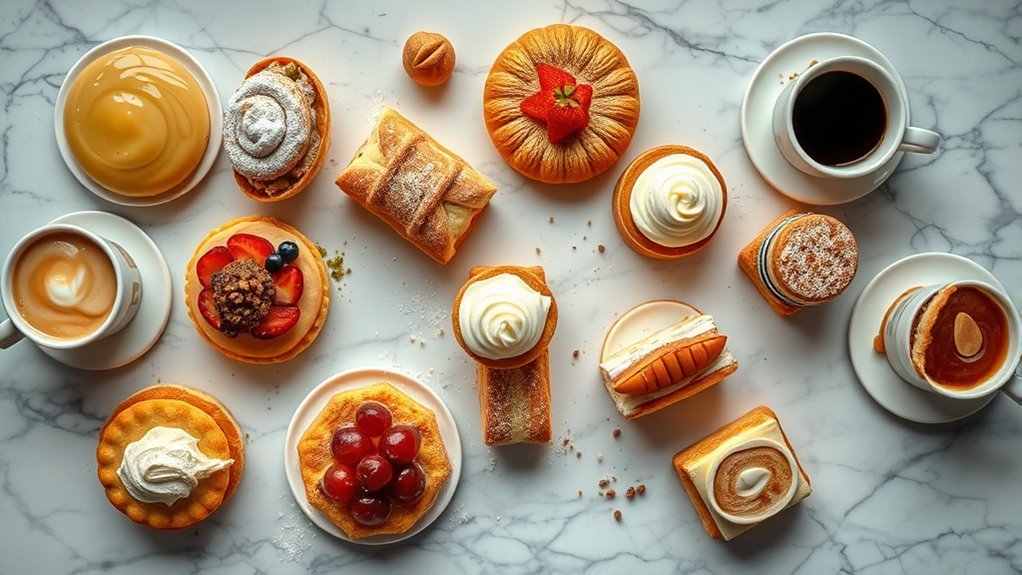
Italy’s best-known pastries range from crisp Sicilian cannoli to soft Roman maritozzi and rum-soaked Neapolitan babà. The strongest examples are closely tied to a city or region, so the place, filling, texture, and serving style matter as much as the name. This guide covers 10 classics, their histories, and how to enjoy them at their best.
Quick Answer
Italy’s most iconic pastries and desserts include Sicilian cannoli and cassata, Treviso-style tiramisu, Neapolitan sfogliatella and babà, Sorrento’s delizia al limone, Roman maritozzi, Tuscan bomboloni, and Catania’s minne di Sant’Agata. For the best texture, buy cream-filled and fried pastries fresh and eat them soon after serving.
Key Takeaways
- Italian pastry is regional: Sicily favors ricotta and candied fruit, Campania is known for layered dough and citrus, and Rome is famous for cream-filled maritozzi.
- Several origin stories are traditional accounts rather than fully documented facts, especially those for cannoli, cassata, and sfogliatella.
- Modern tiramisu is strongly associated with Treviso, although competing origin claims still exist.
- Delizia al limone has a comparatively recent history and is widely credited to pastry chef Carmine Marzuillo in 1978.
- Cannoli, sfogliatelle, bomboloni, maritozzi, and other filled pastries are best eaten fresh, before their shells or crumb soften.
Italian Pastries at a Glance
| Cannolo — Sicily | Fried shell filled with sweet ricotta; crisp, cool, and creamy. |
| Tiramisù — Treviso, Veneto | Espresso-soaked savoiardi layered with mascarpone cream and cocoa. |
| Sfogliatella — Campania | Layered or shortcrust shell with ricotta, semolina, and candied citrus. |
| Babà — Naples | Light yeast cake soaked in rum syrup; moist and aromatic. |
| Cassata — Sicily | Sponge, sweet ricotta, candied fruit, marzipan, and icing. |
| Delizia al limone — Sorrento and the Amalfi Coast | Lemon-soaked sponge dome filled and coated with lemon cream. |
| Maritozzo — Rome | Soft sweet roll split and generously filled with whipped cream. |
| Bombolone — Tuscany | Fried yeast dough coated with sugar and often filled with custard or jam. |
| Minne di Sant’Agata — Catania | Small iced cakes with ricotta filling and a candied cherry. |
Disclosure: As an Amazon Associate I earn from qualifying purchases. Some links on this page are affiliate links, at no extra cost to you.
Why Italian Pastries Stand Out
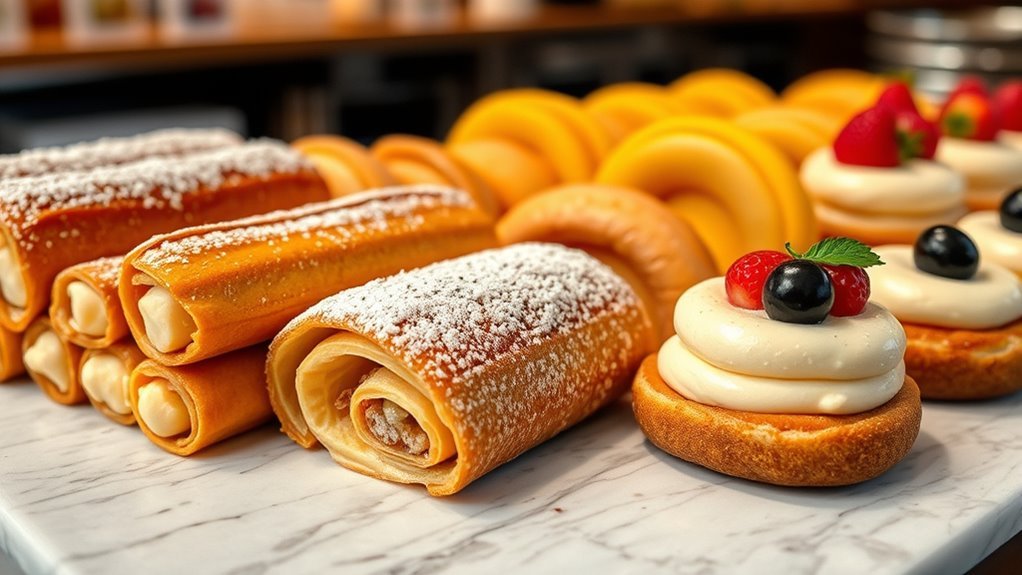
Italian pastries stand out because they reflect local ingredients and traditions. Sicily is known for sheep’s-milk ricotta, candied citrus, pistachios, and marzipan. Campania pairs layered dough, rum syrup, and fragrant lemons with rich creams. Rome turns a simple sweet roll into the cream-filled maritozzo.
Texture is just as important as flavor. A good cannolo should crack when you bite it. A fresh sfogliatella should shed thin, crisp layers. A babà should feel moist but not waterlogged, while tiramisu should hold soft layers without becoming soupy. These contrasts are why the best Italian pastries feel rooted in place rather than interchangeable.
Note: In Italian, cannolo, bombolone, maritozzo, and sfogliatella are singular. Their common plurals are cannoli, bomboloni, maritozzi, and sfogliatelle.
Cannoli: Sicily’s Most Famous Pastry
A well-made cannolo combines a crisp, fried tube with cool sweetened ricotta. Many shells are flavored with wine, cocoa, or spices, while the ends may be finished with pistachios, chocolate, or candied orange. The filling should be added close to serving time so the shell stays crisp.
Cannoli are often linked to Sicily’s Arab-era culinary influences, but the exact birthplace and date are not firmly documented. What is clear is their place in Sicilian pastry culture. Italy’s national tourism site describes cannoli as a signature Sicilian sweet that highlights local ricotta, and regional versions often use sheep’s-milk ricotta.
A great cannolo is a study in contrast: a brittle shell, cool ricotta, and a fresh garnish added at the last moment.
- Look for a shell that is crisp, blistered, and not greasy.
- Choose a filling with a clean ricotta flavor rather than heavy frosting.
- Try pistachio, chocolate, or candied citrus variations after tasting the classic version.
- Eat it soon after filling; a prefilled shell can turn soft.
Cannoli are festive, portable, and available year-round, although they are also connected with Carnival traditions in Sicily. Their simple format makes quality easy to judge: if the shell is crisp and the ricotta tastes fresh, the pastry needs little else.
Tiramisu: The Coffee Dessert Everyone Loves
Tiramisù is technically a chilled layered dessert rather than a baked pastry, but it belongs on any list of Italy’s essential sweets. It combines coffee-soaked savoiardi, mascarpone cream, and cocoa. The modern version is strongly associated with Treviso in Veneto, although other places, especially in Friuli-Venezia Giulia, have competing origin claims.
Coffee-Soaked Layers
Tiramisù gets its character from strong coffee absorbed by the ladyfingers. They should soften without dissolving. A resting period in the refrigerator allows the coffee, cocoa, and mascarpone layers to blend and makes the dessert easier to slice.
- Espresso gives the clearest coffee flavor.
- A light dip keeps the ladyfingers tender rather than soggy.
- Several hours of chilling improves structure and flavor.
- Chocolate, fruit, and alcohol-flavored versions are common, but they are variations.
Mascarpone and Cocoa
Mascarpone gives tiramisù its smooth, rich body. Traditional-style recipes often use eggs, sugar, mascarpone, savoiardi, coffee, and cocoa; some modern versions add whipped cream for a lighter or more stable filling. The cocoa should add a dry, bittersweet finish that balances the sweet cream.
Warning: Tiramisù may contain raw or lightly cooked eggs, alcohol, dairy, gluten, and caffeine. Ask the restaurant or pastry shop about its recipe when serving children, pregnant people, or anyone with allergies or a weakened immune system.
Sfogliatella: Naples’ Flaky Classic
You can taste sfogliatella’s story on the Amalfi Coast and in Naples. Tradition places its precursor at the Santa Rosa monastery in Conca dei Marini, where nuns are said to have wrapped a semolina-based filling in dough. The recipe later reached Naples and evolved into the forms widely sold today.
Origins at Santa Rosa
The monastery story is best treated as a well-established culinary legend rather than a fully documented invention record. Accounts describe a filling made from semolina, sweetener, dried or candied fruit, and citrus. In the early 1800s, Neapolitan pastry maker Pasquale Pintauro is traditionally credited with adapting the pastry for his shop.
- The Santa Rosa version is linked to Conca dei Marini.
- The riccia has many crisp, curled layers.
- The frolla uses a softer shortcrust shell.
- Both commonly contain ricotta, semolina, sugar, and candied citrus.
Flaky Layers and Filling
The riccia is the dramatic version: thin sheets form a ridged shell that shatters around a creamy, lightly textured center. The frolla offers the same style of filling inside tender shortcrust. Neither should feel heavy or wet. The best versions balance citrus, ricotta, and semolina without burying the pastry under sugar.
Best Served Fresh and Warm
Sfogliatelle are best when fresh and slightly warm. The shell still crackles, the aromas are stronger, and the filling is soft without being loose.
- Choose riccia for maximum crunch.
- Choose frolla for a softer, cookie-like shell.
- Pair it with coffee for a classic breakfast.
- Eat it before humidity softens the layers.
Babà Napolitano: Naples’ Rum-Soaked Treat
Babà is a light yeast cake soaked in syrup, usually flavored with rum. Its story begins outside Naples. It is commonly traced to the 18th-century court of Stanisław Leszczyński, the former king of Poland, and to a soaked kugelhopf-style cake. The dessert later developed in France before becoming a Neapolitan specialty.
Neapolitan babà are often baked in small, tall molds that give them a mushroom-like shape; ring-shaped versions are also common. After baking, the airy crumb absorbs rum syrup without collapsing. Pastry shops may serve babà plain or add pastry cream, whipped cream, fruit, or a little limoncello.
- Expect a moist, springy crumb rather than a dense cake.
- Rum should perfume the pastry without making it harsh.
- Small babà are easy to eat as a street-side sweet.
- Cream-filled versions should be refrigerated and eaten promptly.
Cassata: Sicily’s Colorful Celebration Cake
Cassata is one of Sicily’s most ornate desserts. It combines sponge cake, sweetened ricotta, candied fruit, marzipan or almond paste, and icing. The exact origin and even the name’s etymology are debated, but Sicily’s official tourism site notes that the dessert has a long history shaped by the island’s many cultures and may date back to the Arab period.
- Sweetened ricotta creates the creamy center.
- Sponge cake provides a soft base.
- Candied fruit adds color and concentrated sweetness.
- Marzipan and icing give the cake its polished finish.
Cassata is especially associated with Easter and celebrations, but pastry shops may sell it throughout the year. Styles vary by town and bakery. Some versions are highly decorated, while others are simpler or served frozen as cassata gelato.
Delizia al Limone: Amalfi’s Lemon Gem
Delizia al limone is a small sponge dome filled and coated with lemon cream. It is usually brushed with a lemon or limoncello syrup and finished with a pale glaze. The dessert comes from the Sorrento and Amalfi Coast pastry tradition and is widely credited to pastry chef Carmine Marzuillo in 1978.
The dessert’s appeal comes from contrast: soft sponge, cool cream, bright lemon, and a light alcoholic note when limoncello is used. For a historic Amalfi stop, Pasticceria Pansa traces its history to 1830 and serves regional sweets, including delizia al limone.
Pro Tip: Order delizia al limone fresh at a pastry shop. Its cream, soaked sponge, and glaze do not travel as well as dry cookies or packaged cakes.
Maritozzi: Rome’s Cream-Filled Sweet Roll
A maritozzo is a soft, lightly sweet roll split open and filled with whipped cream. Its ancestry is often traced to sweetened loaves eaten in ancient Rome, but the modern cream-filled pastry developed much later. Older versions could include honey, raisins, pine nuts, or citrus.
The name is linked by tradition to marito, the Italian word for husband. Young men are said to have given decorated maritozzi to sweethearts, sometimes hiding a ring or small gift inside. The pastry also became connected with Lent, when leaner versions made without animal fats could be eaten.
- Look for a soft, fluffy crumb that can support the filling.
- The cream should taste fresh and lightly sweet.
- Plain or fruit-studded dough reflects older styles.
- Enjoy it at a Roman café, especially with coffee.
The modern maritozzo is simple but generous. The best version balances bread and cream, so neither overwhelms the other.
Bombolone: Italy’s Filled Donut Favorite
Bomboloni are Italian fried yeast pastries closely associated with Tuscany, although related versions appear across the country. They are coated with sugar and often filled with pastry cream, chocolate-hazelnut spread, or jam. In some Tuscan areas, unfilled ring-shaped relatives are called frati.
Origins and Popularity
Bomboloni are sold in cafés, pastry shops, fairgrounds, and beach resorts. Their appeal is direct: warm fried dough, a soft center, and a sweet coating. The filling may be piped from the top and left visible.
- Fried yeast dough creates a fluffy crumb.
- Custard and jam are classic fillings.
- Granulated sugar is more traditional than a heavy powdered coating.
- They are eaten at breakfast, as a snack, or as a beachside treat.
Cream-Filled Delight
A good bombolone should feel airy rather than oily. Fresh pastry cream gives it richness, while jam adds acidity and fruit flavor. Because fried dough loses its best texture with time, choose a recently made pastry and eat it while the outside still has a slight bite.
Minne di Sant’Agata: Catania’s Sacred Sweet
Minne di Sant’Agata, also called minnuzze or cassatelle di Sant’Agata, are Catania sweets dedicated to the city’s patron saint. Their rounded shape recalls Saint Agatha’s martyrdom. Common versions use sponge cake or a pastry shell with sweet ricotta, then add white icing and a candied cherry.
White icing and a red cherry make minne di Sant’Agata instantly recognizable, but their meaning comes from Catania’s religious history.
- Ricotta provides the central filling.
- Chocolate chips or candied fruit may be added.
- White icing creates the signature finish.
- A candied cherry sits on top.
They are most closely tied to the Feast of Saint Agatha, celebrated in early February, with February 5 as the saint’s feast day. Many Catania pastry shops also sell them at other times of year. The sweet is both a dessert and a symbol of local faith, identity, and remembrance.
How to Order Italian Pastries Like a Local
In a busy Italian café or pastry shop, you may pay at the register first and take the receipt to the counter. In other places, you order at the counter and pay afterward. Watch what local customers do, or ask, “Si paga prima?”—“Do I pay first?”
- Ask what was made recently. Freshness matters most for fried, layered, and cream-filled pastries.
- Eat at the counter for a quick stop. Table service can cost more in tourist areas.
- Use the singular when ordering one. Ask for un cannolo, un maritozzo, or una sfogliatella.
- Check for alcohol. Babà normally contains rum, and tiramisù or delizia al limone may contain liqueur.
- Ask about allergens. These sweets commonly contain wheat, eggs, dairy, nuts, or alcohol.
Other Italian Pastries Worth Trying
Italy has far more than 10 essential sweets. If you see them in their home regions, also look for Neapolitan pastiera, Saint Joseph’s zeppole, jam or custard crostata, breakfast cornetti, Sicilian brioche with granita, Apulian pasticciotti, and seasonal panettone or pandoro. Each fills a different role, from everyday breakfast to religious feast-day dessert.
Frequently Asked Questions
What are the most famous Italian pastries?
Cannoli, sfogliatelle, babà, maritozzi, bomboloni, and cassata are among Italy’s most famous pastries. Tiramisù is also essential, although it is a chilled layered dessert rather than a baked pastry.
What pastries are popular in Italy?
Popular choices include cornetti for breakfast, regional specialties such as Sicilian cannoli and Neapolitan sfogliatelle, and celebration sweets such as cassata, pastiera, panettone, and zeppole.
What are 10 Italian pastries and desserts to try?
Try cannoli, tiramisù, sfogliatella, babà, cassata, delizia al limone, maritozzo, bombolone, minne di Sant’Agata, and pastiera. Together they cover crisp shells, layered dough, cream fillings, citrus, coffee, ricotta, and rum syrup.
What are the top five Italian desserts?
A strong top five is tiramisù, cannoli, sfogliatella, babà, and cassata. The best choice depends on whether you prefer coffee and cream, crisp ricotta-filled shells, flaky layers, rum-soaked cake, or candied fruit and marzipan.
Which Italian pastries should be eaten fresh?
Cannoli, sfogliatelle, bomboloni, maritozzi, and cream-filled babà are best eaten soon after purchase. Moist fillings soften crisp shells and fried dough loses its light texture as it sits.
Do Italian pastries contain alcohol or common allergens?
Many contain wheat, eggs, dairy, or nuts. Babà usually contains rum, while tiramisù and delizia al limone may include liqueur. Recipes vary, so ask the bakery when allergies, pregnancy, age, or alcohol avoidance is a concern.
Sources
- Italia.it: Typical Sicilian Products — cannoli, cassata, ricotta, marzipan, and other Sicilian specialties.
- Le Beccherie: The Original Tiramisù — the Treviso restaurant’s documented account and 1972 menu debut.
- Italia.it: Campania Pastry Traditions — sfogliatella riccia, frolla, and the Santa Rosa monastery tradition.
- Visit Naples: Babà, a Royal Dessert — the cake’s route from the Polish court through France to Naples.
- La Cucina Italiana: Delizia al Limone — Carmine Marzuillo’s 1978 creation and the dessert’s modern form.
- Italia.it: Catania Guide — Catania’s sweets dedicated to Saint Agatha.
Conclusion
Italy’s pastries make the most sense when you connect them to place. Cannoli and cassata express Sicily’s love of ricotta and candied fruit. Sfogliatella and babà show Naples’ gift for texture and syrup. Maritozzi belong to Roman café culture, while delizia al limone captures the citrus of the Sorrento and Amalfi coasts.
Start with the classic version, buy it fresh, and pay attention to texture. A crisp shell, light crumb, balanced filling, and clear regional flavor will tell you more than an elaborate display ever could.
