
Last Updated on September 11, 2026 by Daniel Globe
Putting a plastic bag over a car mirror can be useful while your vehicle is parked. An opaque cover can stop territorial birds from reacting to their reflections, and it may reduce snow or ice buildup overnight. However, it is only a temporary parked-car solution. Remove the bag, straps, and any loose material before driving.
Quick Answer
People cover parked car mirrors mainly to stop birds from attacking their reflections or to reduce overnight snow and ice buildup. Use a clean, opaque cover and secure it without blocking or damaging the mirror mechanism. Never drive with the cover attached, and do not treat it as theft protection or a roadside distress signal.
Key Takeaways
- An opaque cover can block the reflection that triggers territorial bird attacks.
- A bag or reusable cover may reduce frost, snow, dust, and debris while the car is parked.
- A mirror cover does not secure your vehicle or reliably hide valuables inside it.
- Remove the cover and every fastening item before starting the vehicle.
- Reusable fabric or purpose-made mirror covers are usually safer and less likely to become litter.
At a Glance
| Time Required | 2 to 5 minutes |
| Difficulty | Easy |
| Tools Needed | Clean opaque bag or reusable mirror cover, plus a wide elastic strap if needed |
| Cost | About $0 to $15 |
Warning: Never drive with a bag, fabric cover, rubber band, string, or strap attached to a side mirror. A covered mirror reduces your view, and loose material can detach and create a hazard.
Disclosure: As an Amazon Associate I earn from qualifying purchases. Some links on this page are affiliate links, at no extra cost to you.
Why Put a Plastic Bag Over a Car Mirror?
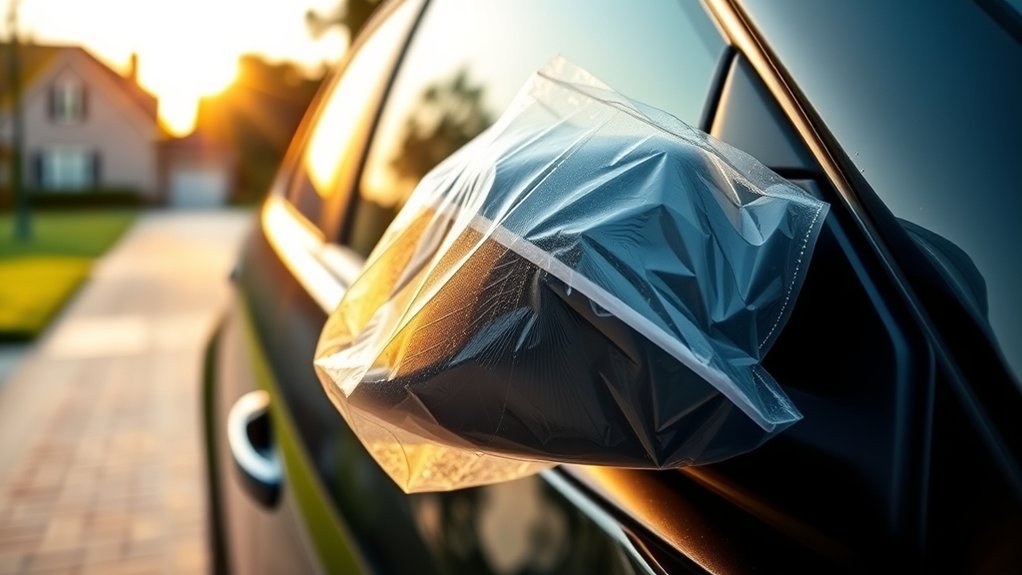
You might cover a parked car mirror for three practical reasons: to block a bird’s reflection, reduce overnight snow or ice buildup, or keep dust and light debris off the glass. These are temporary uses for a stationary vehicle.
The best-supported reason is bird behavior. Territorial birds sometimes see their reflection in a car mirror and treat it as another bird. The Cornell Lab of Ornithology recommends covering the reflective surface when this happens. An opaque cover works because the bird can no longer see the image that triggers the attack.
A mirror bag is not an anti-theft device. It does not lock the car, disable the mirror, or reliably prevent someone from seeing valuables through a window. Remove bags, electronics, and other attractive items from view inside the vehicle instead.
How the Plastic Bag Bird Trick Works
The bird trick is simple: completely hide the reflective surface while the car is parked. A transparent bag is less useful because the bird may still see its image through the plastic.
Bird Reflection Trigger
During territorial periods, especially around breeding season, a bird may mistake its reflection for a rival. American robins and northern cardinals are commonly reported examples, although other territorial species may behave the same way. Audubon notes that both male and female birds can attack reflections. The behavior may continue until the reflection disappears or the territorial response fades.
Repeated attacks can leave droppings and marks on the mirror. They may also waste the bird’s energy. Covering the surface breaks the visual trigger without harming the bird.
Opaque Cover Effect
An opaque bag, fabric cover, towel, or purpose-made mirror sleeve prevents the mirror from displaying a clear reflection. Cover the entire glass area rather than leaving a shiny strip exposed.
- Park the vehicle and switch it off.
- Use a clean, opaque cover large enough to fit without stretching tightly.
- Place it over the mirror housing without forcing the mirror to fold.
- Secure it around the housing, away from the glass, hinge, camera, light, and power-fold joint.
- Check that no loose edge can flap or blow away.
Pro Tip: If the same bird returns each day, use a washable fabric cover. It is easier to reuse and less likely to tear or become litter than a thin grocery bag.
Safe Removal Before Driving
Remove both covers before entering traffic. Check around each mirror for rubber bands, string, torn plastic, bird droppings, or other debris. Adjust the mirrors if someone moved them while installing the covers.
- Remove the cover and fastening strap completely.
- Inspect the mirror glass and housing.
- Clean away anything that blocks the view.
- Confirm that both mirrors are adjusted correctly.
When to Use Plastic Bags on Mirrors
A plastic bag is best treated as a quick, short-term cover. The following situations are reasonable uses while the vehicle remains parked.
| When to Use It | Why It May Help |
|---|---|
| A bird repeatedly attacks the mirror | An opaque cover removes the visible reflection. |
| Snow or freezing rain is expected overnight | The cover may reduce ice and snow on the glass. |
| The vehicle is parked in a dusty area | It can keep light dust or airborne debris off the mirror. |
| You need a temporary cover immediately | A clean bag may work until you obtain a reusable cover. |
Do not use a bag as a security signal, an anti-theft product, or a permanent outdoor cover. A thin bag is also a poor choice during severe wind because it can tear or escape.
Plastic Bag Mirror Covers in Winter
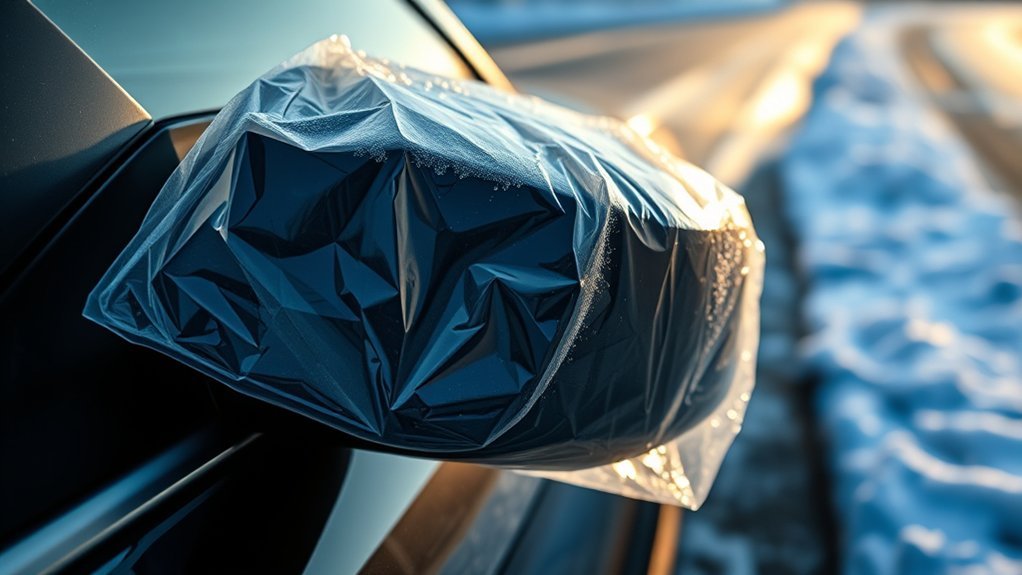
In winter, a cover can keep some snow, freezing rain, and frost off a parked vehicle’s side mirrors. It is most useful on cars without heated mirrors, but it does not guarantee that the housing or folding joint will remain unfrozen.
Winter Weather Protection
Install the covers before precipitation begins. Use material that is dry, clean, and large enough to slide off without pulling on the mirror. Avoid tying knots tightly around painted surfaces or moving parts.
- Dry the mirror before covering it when possible.
- Cover the entire mirror housing.
- Secure the cover with a wide strap that will not cut into the finish.
- Remove it carefully in the morning.
- Clear any remaining ice before adjusting or folding the mirror.
Do not force a power-folding mirror if the joint is frozen. Allow ice to loosen naturally or use a vehicle-safe de-icer according to its label.
Safe Removal Before Driving
Take every cover off before starting your trip. Walk around the vehicle and make sure snow, ice, plastic, and fastening materials are no longer blocking the mirrors, windows, lights, cameras, or license plates.
| Check | Action |
|---|---|
| Mirror covers | Remove both covers and all straps. |
| Mirror glass | Clear remaining frost, moisture, or dirt. |
| Mirror adjustment | Confirm a clear rearward view from the driver’s seat. |
| Surrounding equipment | Check lights, cameras, windows, and sensors. |
Is It Legal to Drive With Covered Mirrors?
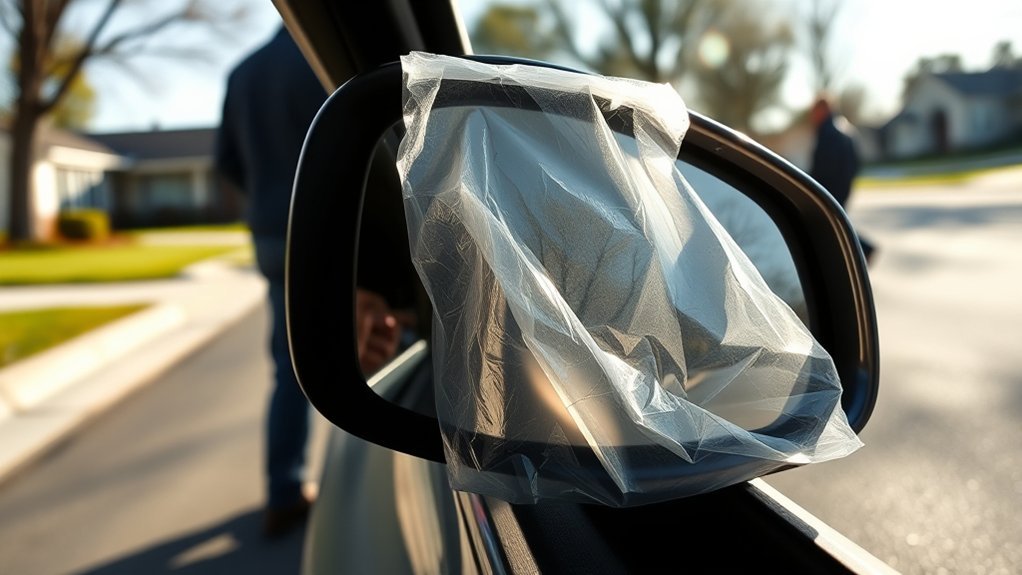
Do not assume that driving with a covered side mirror is legal. Mirror requirements vary by vehicle type and jurisdiction, and blocking a mirror that must provide a rearward view may lead to a citation or unsafe-driving violation.
NHTSA explains that Federal Motor Vehicle Safety Standard No. 111 establishes rear-visibility requirements for new vehicles. Rules governing a vehicle while it is being driven are also affected by state and local law.
For example, California Vehicle Code Section 26709 requires covered vehicles to have specified mirrors, including a left-side mirror, and requires certain mirrors to provide a view of the highway behind the vehicle. Other states use different language and may require one, two, or more usable rear-view devices depending on the vehicle and whether the interior view is obstructed.
The safest rule is simple: uncover and check every mirror before the vehicle moves. A backup camera, blind-spot warning system, or parking sensor is not a reason to drive with a mirror blocked.
Note: This article provides general safety information, not jurisdiction-specific legal advice. Check your state, provincial, or local vehicle code when you need a legal determination.
Better Alternatives to Plastic Bags for Mirrors
A plastic bag works in an emergency, but a reusable cover is usually the better long-term choice. Purpose-made covers fit more securely, resist tearing, and are easier to remove without leaving scraps behind.
| Option | Best Use | Main Limitation |
|---|---|---|
| Opaque plastic bag | Immediate, short-term protection | Can tear, flap, or become litter |
| Fabric or cloth cover | Repeated bird-reflection problems | May absorb water and freeze |
| Weatherproof mirror sleeve | Winter weather and regular outdoor parking | Must match the mirror size |
| Garage or covered parking | Weather, dirt, and bird protection | Not always available |
Choose a cover that fits over the housing without pressing on the glass. Check whether your mirror contains a camera, puddle light, turn signal, temperature sensor, or power-fold mechanism before securing anything around it.
How to Secure Mirror Bags Safely
If you use a plastic bag, choose one that is clean, opaque, and strong enough not to tear during normal parked use. Avoid bags with grit inside because dirt rubbing against painted plastic can leave marks.
- Inspect the mirror. Check for cameras, indicator lights, cracked glass, or loose trim.
- Open the bag fully. Do not force a bag that is too small over the mirror.
- Cover the housing. Slide the bag over the mirror while supporting the housing with your other hand.
- Secure it gently. Place a wide rubber band or reusable strap around the outer housing, not the folding joint.
- Test the fit. Pull lightly to make sure the cover will not blow off.
- Set a reminder. Place a note on the steering wheel or driver’s door handle so you remember to remove both covers.
Do not use metal wire, strong adhesive tape, sharp clips, or narrow cords that can scratch the housing or damage wiring. Never tie the bag to the door handle, window, wheel, or another moving part.
Note: Secure loose plastic carefully and dispose of damaged bags properly. The U.S. Environmental Protection Agency warns that escaped plastic bags can enter waterways and harm wildlife.
Remove the Bags Before You Drive
Bag removal should be part of your normal pre-drive check. Do not wait until you are seated and ready to pull away. Walk around the vehicle first and remove every cover, band, string, and torn fragment.
After uncovering the mirrors, sit in the driver’s seat and verify that each mirror provides the view you normally use for reversing, turning, merging, and changing lanes. Clean the glass if moisture, frost, dirt, or bird droppings remain.
Also check the ground around the vehicle. A loose bag can be pulled under a tire, carried into traffic, or blown into a drain or natural area. Store reusable covers in the trunk or dispose of damaged plastic in accordance with local waste rules.
A mirror cover is useful only while the car is parked. Before the vehicle moves, every required mirror should be uncovered, clean, adjusted, and ready to use.
Frequently Asked Questions
Why do people put plastic bags over their mirrors?
The main reasons are to block reflections that attract territorial birds and to reduce snow, frost, dust, or light debris on a parked vehicle. The cover must come off before driving.
Why should I put a plastic bag over my car mirror when I am traveling alone?
Traveling alone does not create a special reason to cover a mirror. Use a cover only for a real parked-car problem, such as bird attacks or expected ice. It does not improve personal security or replace normal travel-safety precautions.
Why do people put a bag in the window of a car on the side of the road?
In some places, a cloth or bag may be used informally to show that a disabled vehicle has not been abandoned. However, there is no universal meaning. Use hazard lights, move as far from traffic as safely possible, contact roadside assistance, and follow local rules for warning devices.
What does a plastic bag symbolize on a vehicle?
A plastic bag has no universal automotive meaning. It may simply be covering a mirror, holding a broken window temporarily, or being used informally near a disabled vehicle. Do not rely on it as an official emergency, parking, or towing signal.
Can a plastic bag damage a car mirror?
A clean, loosely fitted bag is unlikely to damage an intact mirror during short parked use. Damage is more likely if dirt is trapped underneath, a cord is overtightened, adhesive touches the finish, or the cover interferes with a power-fold joint, camera, or light.
Is a reusable mirror cover better than a plastic bag?
Usually, yes. A properly sized reusable cover is less likely to tear, flap, or become litter. A plastic bag remains useful as a temporary solution when no reusable cover is available.
Sources
- Cornell Lab of Ornithology: Birds Attacking Car Mirrors — explains reflection-driven territorial behavior and covering the reflective surface.
- National Audubon Society: Why Birds Attack Windows and Mirrors — supports the breeding-season explanation and notes that both sexes may display the behavior.
- Penn State Extension: Bird Continually Hitting Window — explains territorial reflection attacks and the use of visual covers.
- National Highway Traffic Safety Administration: Mirror Regulation Interpretation — explains the scope of federal rearview-mirror equipment standards.
- California Vehicle Code Section 26709 — provides an example of state mirror and rearward-visibility requirements.
- U.S. Environmental Protection Agency: Plastic Bag and Pollution Guidance — supports the warning about loose plastic entering waterways and harming wildlife.
Conclusion
A plastic bag over a car mirror can be a useful temporary cover when territorial birds attack the reflection or winter weather is expected. Use a clean, opaque bag, secure it gently, and keep it away from moving parts and electronics. A reusable mirror cover is better for repeated use. Most importantly, remove every cover and fastening item before driving so your mirrors remain clear, legal, and safe.
