Last Updated on July 30, 2026 by Caleb Warren
A roll top backpack is a top-loading pack that closes by folding or rolling the upper fabric several times and securing it with buckles or straps. The design can accommodate changing loads and may provide strong rain protection, but not every roll top is waterproof. Its actual performance depends on the fabric, seams, openings, closure technique, and manufacturer rating.
Quick Answer
A roll top backpack closes by rolling its flexible upper section and fastening the ends. This creates adjustable storage and can help block rain. However, the closure does not automatically make the bag waterproof or submersible. Check the fabric, seams, zippers, test rating, capacity, harness, and manufacturer instructions before choosing one.
Key Takeaways
- The rolled closure can compress a small load or accommodate extra gear, but the expansion range varies by model.
- A roll top is not automatically waterproof. Fabric coatings, seam construction, side openings, and published ratings matter.
- Roll tops work well for commuting, cycling, school, hiking, travel, and wet environments when their features match the activity.
- The main disadvantages are slower access and less built-in organization in minimalist models.
- Liters describe internal volume, not the maximum weight the backpack can safely carry.
Disclosure: As an Amazon Associate I earn from qualifying purchases. Some links on this page are affiliate links, at no extra cost to you.
What Is a Roll Top Backpack?
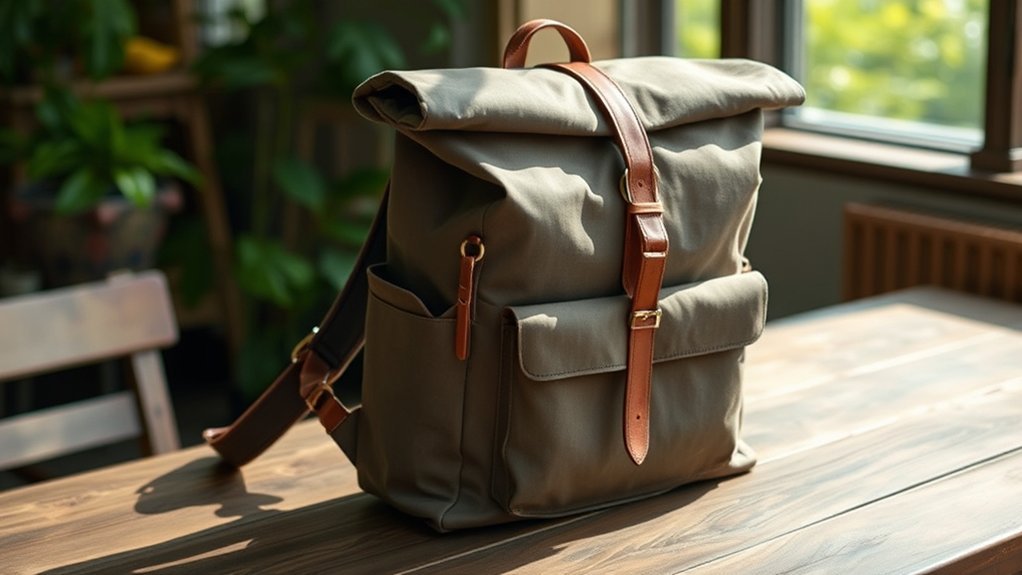
A roll top backpack has a flexible upper opening instead of a conventional full-width zipper. You press the two sides of the opening together, fold or roll the material downward, and secure it with a buckle or strap.
This design is common in commuter packs, cycling bags, hiking packs, fishing packs, and dry bags. It creates a wide opening for packing clothing, groceries, cameras, or other bulky items. The top can often be rolled farther when the load is small or closed higher when extra space is needed.
Many roll tops use one large main compartment. That simple layout can reduce clutter and make odd-shaped gear easier to pack. However, it may also require smaller pouches or packing cubes to stop loose items from collecting at the bottom. Other models add laptop sleeves, side-access zippers, bottle pockets, organizer panels, or external attachment loops.
A roll-top closure is only one part of the protection system. The fabric, seams, pockets, zippers, and closure technique determine how well the backpack keeps water out.
Key Features of Roll Top Backpacks
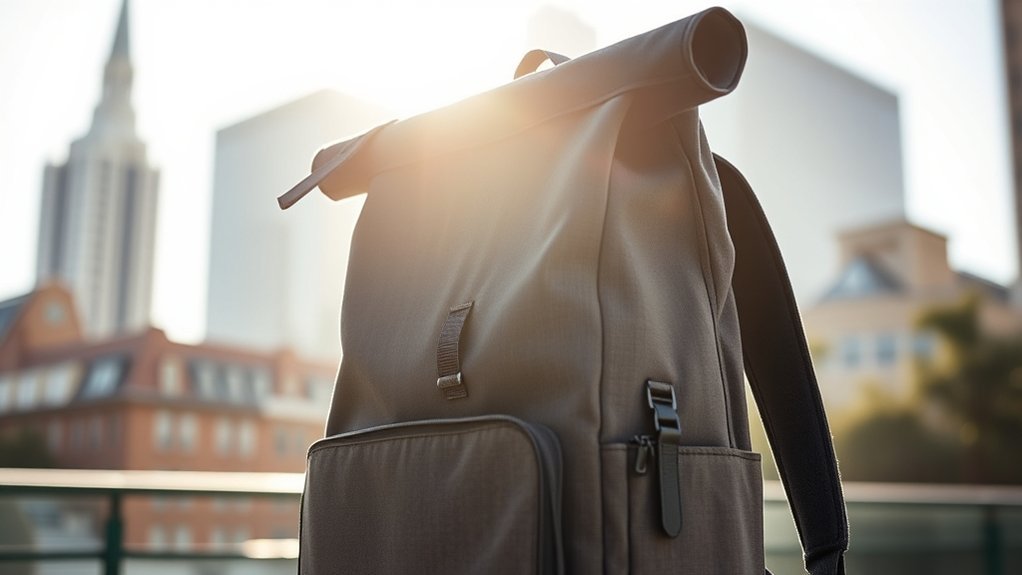
Roll top backpacks vary widely, but most models share several design features:
- Adjustable top opening: The flexible upper section can be rolled tightly around a small load or closed higher when more space is needed.
- Wide packing access: A large top opening makes it easier to load clothing, groceries, camera equipment, or oddly shaped gear.
- Compression: Rolling the top downward removes unused space and can reduce movement inside the bag.
- Simple construction: Minimalist models may use fewer pockets and less closure hardware than compartment-heavy zipper packs.
- Weather-focused materials: Depending on the model, the body may use coated nylon, polyester, polyamide, TPU-backed fabric, waterproof laminate, or water-resistant canvas.
- Optional organization: Commuter models may include laptop sleeves, side-access zippers, internal mesh pockets, bottle pockets, and attachment loops.
- Different support systems: Lightweight daypacks may have a simple foam back panel, while hiking models may add a frame, sternum strap, hip belt, and load-supporting harness.
Note: “Roll top” describes the closure style. It does not describe a single capacity, material, carrying limit, or level of waterproofing.
Are Roll Top Backpacks Waterproof?
Some roll top backpacks are waterproof, but many are only water-resistant. The difference matters when you are carrying a laptop, phone, camera, documents, or dry clothing.
Water-Resistant Roll Top Backpacks
A water-resistant pack is designed to slow water entry during light rain or brief exposure. It may use a coated fabric and a tightly rolled top, but stitched seams, side zippers, external pockets, or the fabric itself may eventually allow water through.
For example, the Patagonia Fieldsmith Roll-Top Pack 32L uses water-resistant organic cotton canvas. Its roll top adds weather protection and variable storage, but the manufacturer does not present the pack as an immersion-rated dry bag.
Waterproof Roll Top Backpacks
A manufacturer may describe a pack as waterproof when it combines waterproof material with welded or sealed seams and a closure designed to keep water out. Even then, read the product details carefully. A waterproof main compartment does not necessarily mean that every external pocket or zipper offers the same protection.
The ORTLIEB Velocity, for example, carries an IP64 rating. That rating covers dust and splashing water from all directions, including heavy rain, but it is not the same as an immersion rating.
Submersible and Immersion-Rated Packs
Do not assume a backpack can be submerged because it has a roll top. Temporary immersion protection should be stated explicitly by the manufacturer, normally with a defined test or protection rating. Water can still enter through an imperfect roll, a damaged seam, an accessory opening, or trapped debris.
Warning: Do not rely on a single roll-top compartment to protect an unsealed phone, laptop, camera, medication, or important documents near deep water. Sea to Summit advises using an additional waterproof layer for electronics because water can seep through a roll-top closure.
Advantages of Using a Roll Top Backpack
A well-designed roll top backpack can adapt to changing loads while maintaining a clean shape. It is especially useful when you sometimes carry only daily essentials but occasionally need space for a jacket, groceries, climbing gear, or an overnight kit.
Expandable Storage Capacity
The flexible upper section allows some models to carry more than their smallest rolled-down configuration. The exact range is not standard. For example, the Chrome Urban Ex 20L is listed at 20–25 liters, while other roll tops use fixed 30-liter, 32-liter, or larger designs.
| Feature | What It Does | Useful For |
|---|---|---|
| Adjustable closure height | Accommodates smaller or larger loads within the model’s design limits | Commuting, shopping, and short trips |
| Wide top opening | Makes bulky or awkward items easier to load | Outdoor gear and groceries |
| Load compression | Reduces unused space when the pack is lightly filled | Cycling and daily travel |
Expansion is not unlimited. The top must still have enough material to complete the number of rolls required by the manufacturer. Overfilling the pack can weaken the closure, reduce weather protection, and place extra stress on seams and buckles.
Strong Weather Protection on Suitable Models
A properly designed roll closure can limit direct paths for rain to enter the main compartment. Waterproof or highly water-resistant models may combine the closure with coated fabric, taped lining, welded seams, and protected openings.
This can be helpful during cycling, commuting, hiking, fishing, or paddling. However, compare the complete construction rather than assuming every roll top performs better than every zipper backpack. Waterproof zippers and sealed zipper designs can also provide substantial protection.
Pro Tip: Keep the closure fabric flat, push out excess air, and make at least three firm rolls unless the manufacturer specifies a different method. A loose, uneven, or overstuffed closure is less reliable.
Simple and Adaptable Layout
The open main compartment can hold items that do not fit neatly into rigid organizer panels. Fewer external compartments may also mean fewer openings exposed to rain. For users who prefer a clean exterior and pack most belongings in pouches, this layout can be efficient.
Disadvantages of Roll Top Backpacks
Roll top backpacks are not the best option for every user. Their most common disadvantages involve access, organization, and convenience.
- Slower main-compartment access: You must release the buckle and unroll the top before reaching the contents.
- Items can settle at the bottom: A tall, single compartment may require you to remove several objects to reach one buried item.
- Limited built-in organization: Minimalist designs may have few pockets, although commuter models often add laptop sleeves and side access.
- Reduced protection when overfilled: Leaving too little material for a secure roll can weaken the closure.
- Variable comfort: A flexible closure does not guarantee a supportive harness, ventilated back panel, frame, sternum strap, or hip belt.
- Different levels of weather protection: A roll top made from ordinary canvas can perform very differently from a welded, IP-rated pack.
- Extra closure steps: A zipper is usually faster when you need frequent access throughout the day.
Side-access zippers can reduce some of these problems, but they also create another opening that should be checked for water protection. Choose the layout according to how often you need your laptop, keys, wallet, transit card, water bottle, or camera.
How to Close a Roll Top Backpack Correctly
The exact method can vary, so follow the instructions supplied with your backpack. A typical closure process is:
- Pack below the closure zone. Leave enough empty fabric at the top to complete several rolls without forcing the material.
- Remove excess air. Gently compress the load if the bag is designed to release air safely.
- Align the top edges. Flatten the opening and keep the sealing surfaces free from grit, folded clothing, and other obstructions.
- Roll firmly. Fold or roll the top at least three times, or use the number specified by the manufacturer. Sea to Summit instructs users to fold over the sealing strip and then roll at least two more times.
- Fasten the buckles. Clip the ends together or secure them to the side straps, depending on the design.
- Check the seal. Make sure the rolls are even, tight, and not being pulled open by an overfilled compartment.
See the official Sea to Summit roll-top closure instructions and the ORTLIEB roll-closure guide for examples of manufacturer-approved techniques.
Ideal Use Cases for Roll Top Backpacks
The design works best when variable storage, a wide opening, or enhanced weather protection matters more than instant access to several small compartments.
Outdoor Adventures
Roll top backpacks can work well for hiking, fishing, paddling, cycling, climbing, and beach trips. A weather-focused model can protect spare layers, food, maps, or camping equipment from rain and splashes. A wide opening also makes it easier to pack a dry suit, rope, helmet, or other bulky gear.
For longer hikes, look beyond the closure. Check the frame, back length, shoulder straps, hip belt, sternum strap, ventilation, hydration compatibility, and published payload. A waterproof shell does not make a poorly fitting pack comfortable under a heavy load.
Daily Commuting Needs
A roll top backpack can be a practical commuting bag when it includes the access points and organization you use every day:
- Weather protection: A suitable coating, sealed construction, and secure closure can help protect work items during rain.
- Adjustable capacity: The top can accommodate a light daily load or extra items such as lunch, gym clothes, or groceries.
- Laptop storage: A suspended, padded sleeve keeps the computer away from the base and makes it easier to organize the main compartment.
- Quick-access pockets: External or side-access storage is useful for keys, a phone, a transit card, or a bicycle lock.
- Visibility features: Reflective loops or panels can improve visibility during low-light cycling, although they do not replace lights or reflective clothing.
School and Travel
Students may appreciate the flexible storage and simple shape, especially when the pack has a padded laptop sleeve and separate pockets for small supplies. Check that the opening is wide enough for books and that the harness remains comfortable when the bag is fully loaded.
For travel, a roll top can carry an extra layer or compress after you unload gear. Measure the packed bag rather than relying only on its stated liter capacity if you intend to use it as an airline personal item or carry-on. An expanded top may exceed an airline’s dimensional limit.
How to Choose a Roll Top Backpack
Start with the activity, weather exposure, and load you expect. Then compare the following details:
| Buying Factor | What to Check |
|---|---|
| Intended use | Commuting, school, hiking, cycling, fishing, paddling, travel, or mixed use |
| Capacity | The listed liter volume, usable expansion range, and minimum rolls required for secure closure |
| Payload | The manufacturer’s maximum carrying weight and whether the frame and harness suit that load |
| Weather protection | Water-resistant or waterproof wording, seam construction, zipper protection, and any published IP rating |
| Fit and comfort | Torso fit, shoulder padding, back-panel ventilation, sternum strap, hip belt, and frame support |
| Organization | Laptop sleeve, side access, bottle pockets, internal pockets, key clip, and attachment points |
| Materials | Nylon, polyester, polyamide, canvas, laminate, TPU or PU coatings, and abrasion resistance |
| Care and repair | Cleaning instructions, replaceable buckles, repair service, spare parts, and warranty exclusions |
Note: A 30-liter backpack does not have a universal 30-pound or 30-kilogram load limit. Liters measure internal volume. The safe carrying weight must come from the manufacturer and depends on the pack’s structure.
Roll Top vs. Zipper Backpacks
Neither closure is automatically better. The stronger option depends on its construction and how you use the pack.
| Feature | Roll Top Backpack | Zipper Backpack |
|---|---|---|
| Access | Wide opening, but several steps are needed to open and close it | Usually faster and may open around several sides |
| Capacity | Often adjusts to different loads within a model-specific range | Usually has a more defined compartment shape and fixed closure path |
| Organization | May rely on one large compartment and separate pouches | Often includes more divided compartments and quick-access pockets |
| Weather protection | Can be excellent with coated fabric, sealed seams, and a proper roll | Ranges from basic zippers to highly waterproof sealed zippers |
| Convenience | Good for changing loads but slower for frequent access | Better when you repeatedly retrieve small items |
| Best fit | Cycling, wet-weather commuting, flexible packing, and minimalist carry | School, office use, travel organization, and frequent access |
Choose a roll top when adjustable storage and a protected top opening are priorities. Choose a zipper backpack when fast access and compartmental organization matter more. Hybrid models provide a roll top plus a side or rear zipper, but the additional opening may have a different water-resistance level.
Maintenance and Care for Roll Top Backpacks
Proper cleaning, complete drying, and regular inspection help preserve the coating, seams, straps, and closure.
- Read the care label first. Materials and coatings differ, so manufacturer instructions should override generic advice.
- Empty the pack completely. Open every pocket and remove grit, crumbs, and loose dirt with a soft brush or cloth.
- Spot clean or hand wash when directed. Use cool or lukewarm water and a small amount of mild soap. Avoid bleach, solvents, fabric softener, and aggressive stain removers unless specifically approved.
- Rinse after saltwater or chlorine exposure. Residue can affect hardware, coatings, and fabric over time.
- Dry the pack open. Unroll the top, open the pockets, and air-dry it fully in a shaded, ventilated location before storage.
- Inspect the closure. Check buckles, stiffener strips, seam tape, welded joints, and coating for cracks, separation, or abrasion.
- Store it loosely. Keep the backpack clean, dry, and away from prolonged direct sunlight or excessive heat.
Do not machine wash a pack unless its care label permits it. Chrome, for example, directs owners of the Urban Ex 20L to spot clean the bag and hang it in a ventilated area to dry. Apply a water-repellent or repair product only when it is compatible with the pack’s material and recommended by the manufacturer.
Popular Brands and Current Roll Top Models
Current roll top backpacks demonstrate why buyers should compare specific construction rather than relying on the closure style alone:
- ORTLIEB Velocity: A waterproof urban pack offered in multiple sizes. ORTLIEB lists IP64 protection, welded seams, a laptop compartment, and a 10 kg maximum payload.
- Chrome Urban Ex 20L: A commuter-focused waterproof roll top with welded construction, a padded laptop sleeve, and a listed 20–25 liter volume.
- Fjällräven Ulvö Rolltop 30: A 30-liter waterproof daypack using Bergshell fabric and a taped lining, with laptop and small-item storage.
- Patagonia Fieldsmith Roll-Top Pack 32L: A water-resistant organic-cotton canvas model with variable storage, a side-access laptop sleeve, exterior pockets, and attachment points.
Each model addresses a different need. The best choice depends on whether you value a tested waterproof construction, laptop organization, hiking support, natural-fiber fabric, adjustable volume, or quick side access.
Frequently Asked Questions
Can roll top backpacks be machine washed?
Only machine wash a roll top backpack when its care label or manufacturer specifically allows it. Coatings, seam tape, welded joints, foam, and hardware may be damaged by a washing machine. Spot cleaning or gentle hand cleaning with mild soap is the safer default for many technical packs.
How much weight can a roll top backpack hold?
There is no universal weight limit. Liters describe volume, not payload. The safe load depends on the frame, harness, seams, buckles, fabric, and manufacturer rating. Check the specifications for the exact model; for example, ORTLIEB lists a 10 kg maximum payload for the Velocity.
Are roll top backpacks suitable for school?
Yes, especially when the backpack has a padded laptop sleeve, a supportive harness, bottle pockets, and quick-access storage. A minimalist single-compartment model may require pencil cases or pouches to keep small school supplies organized.
What materials are commonly used in roll top backpacks?
Common materials include nylon, polyester, recycled polyamide, laminated technical fabrics, and canvas. Waterproof models may use PU or TPU coatings, welded seams, or taped linings. Material thickness, coating, seam construction, and abrasion resistance are more informative than the fabric name alone.
Do roll top backpacks come with warranty options?
Many do, but the duration and coverage vary. Warranties commonly cover defects in materials or workmanship rather than normal wear, abrasion, punctures, misuse, or water damage to the contents. Read the brand’s current warranty terms before buying.
Are all roll top backpacks waterproof?
No. Some are water-resistant, some have waterproof main compartments, and some carry a defined IP rating. Check the fabric, seams, external pockets, side zippers, closure instructions, and manufacturer test claims instead of relying on the roll-top shape.
How many times should a roll top be rolled?
Many manufacturers require at least three firm folds or rolls, but the instructions vary by design. Leave enough empty fabric above the load, keep the sealing surfaces flat, and use the exact method specified for your backpack.
Conclusion
A roll top backpack combines a wide top opening with a closure that can compress smaller loads or accommodate extra gear. It can be an excellent choice for commuting, cycling, school, travel, or outdoor use when its capacity, harness, organization, and weather protection match the activity.
Do not judge the pack by its rolled appearance alone. Check whether the manufacturer calls it water-resistant or waterproof, how the seams are constructed, whether an IP rating is published, how much weight it can carry, and how many rolls are required. A carefully selected and correctly closed roll top can offer flexible storage without sacrificing comfort or dependable protection.
Sources
- Sea to Summit: How to Close a Roll-Top Dry Bag — correct folding, rolling, and buckle technique.
- Sea to Summit: Protecting Electronics in Dry Bags — limitations of roll-top closures and additional protection for electronics.
- ORTLIEB: Roll Closure Instructions — recommended number of rolls and closure operation.
- ORTLIEB Velocity Specifications — IP64 rating, materials, sizes, payload, warranty, and construction.
- Chrome Urban Ex 20L Specifications — adjustable volume, welded construction, materials, laptop storage, and care instructions.
- Fjällräven Ulvö Rolltop 30 Specifications — waterproof fabric, taped lining, capacity, pockets, and intended uses.