
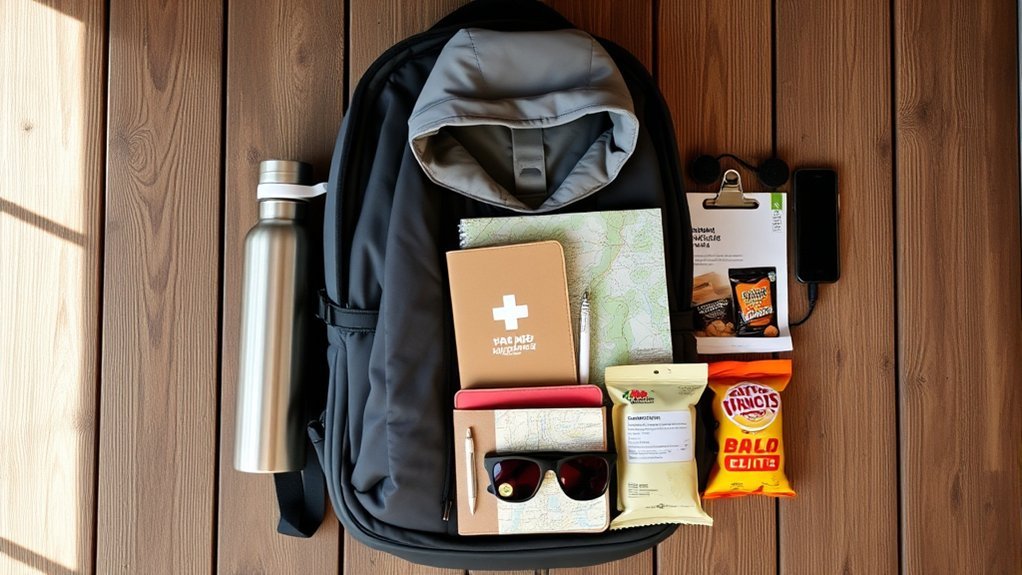
Last Updated on July 30, 2026 by Caleb Warren
Packing a daypack well is less about filling every pocket and more about carrying the right items in the right places. Choose a pack that fits your body and your plans, then organize water, food, clothing, documents, electronics, and safety gear so they stay protected and easy to reach. A balanced load will also feel lighter during a long day of travel.
Quick Answer
Choose a comfortable daypack sized for the outing, then pack only what you expect to use. Put light, bulky items near the bottom, dense items near the middle of your back, and frequently used gear on top or in outer pockets. Before leaving, check the weather, route, airline rules, and destination requirements.
Key Takeaways
- Match the daypack’s capacity and dimensions to your activity, weather, electronics, and airline limits.
- Carry water, food, identification, medication, weather protection, a phone, and basic safety supplies.
- Place dense items close to the middle of your back instead of dropping them into the bottom of the pack.
- Keep liquids, travel documents, electronics, and power banks in separate, protected compartments.
- Test the loaded pack before departure and remove anything that does not serve a clear purpose.
At a Glance
| Time Required | About 10–15 minutes |
| Difficulty | Easy |
| Tools Needed | Daypack, water bottle, small pouches or packing cubes, and any trip-specific gear |
| Cost | Usually $0 when using gear you already own; optional organizers or rain protection add to the cost |
Disclosure: As an Amazon Associate I earn from qualifying purchases. Some links on this page are affiliate links, at no extra cost to you.
Choosing the Right Daypack
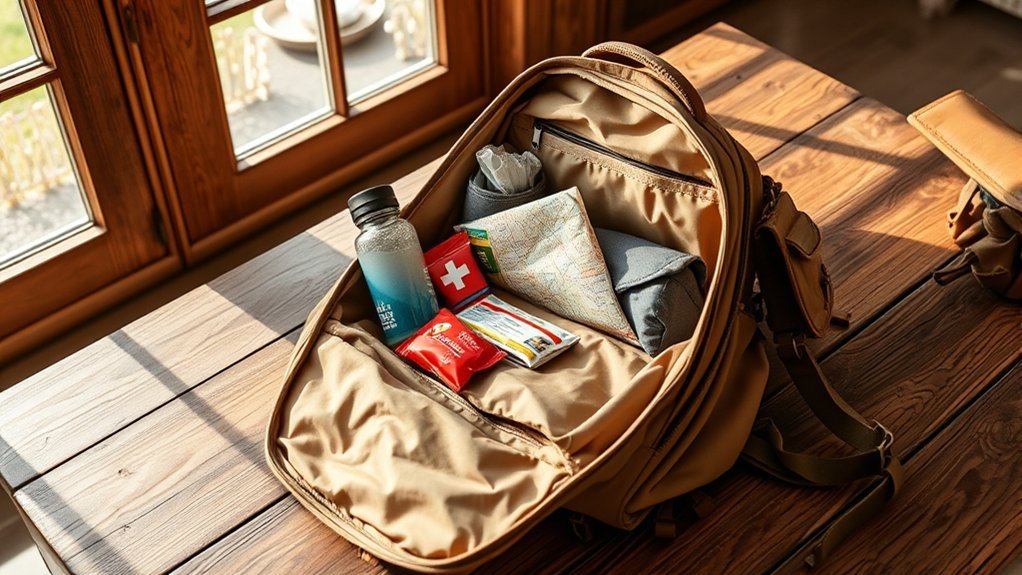
The right daypack should fit your body, hold the gear required for the day, and remain comfortable when fully loaded. Look for adjustable shoulder straps, a padded or ventilated back panel, secure zippers, and at least one pocket you can reach without emptying the main compartment.
A capacity of roughly 15–30 liters works for many day trips, but it is a planning range rather than a universal rule. A small pack may be enough for a short city outing. A larger daypack may be useful when you need a laptop, camera, cold-weather layers, children’s supplies, or outdoor safety gear.
- Light city outing: A compact pack for water, a phone, documents, a light layer, and small purchases.
- Full sightseeing day: Extra room for food, rain protection, a power bank, sunscreen, and a change of layer.
- Laptop or camera day: A padded compartment plus enough depth to prevent equipment from pressing into your back.
- Outdoor excursion: Space for additional water, navigation, first aid, insulation, illumination, and emergency supplies.
Water-resistant fabric can protect against light rain, but it does not make every zipper or seam waterproof. For wet conditions, use an integrated rain cover or place sensitive gear in a sealed dry bag or properly rated waterproof pouch.
Note: When the daypack will serve as a personal item or carry-on, compare its filled dimensions with your airline’s current baggage limits. A soft pack can become too large when overstuffed.
Build Your Daypack Packing List
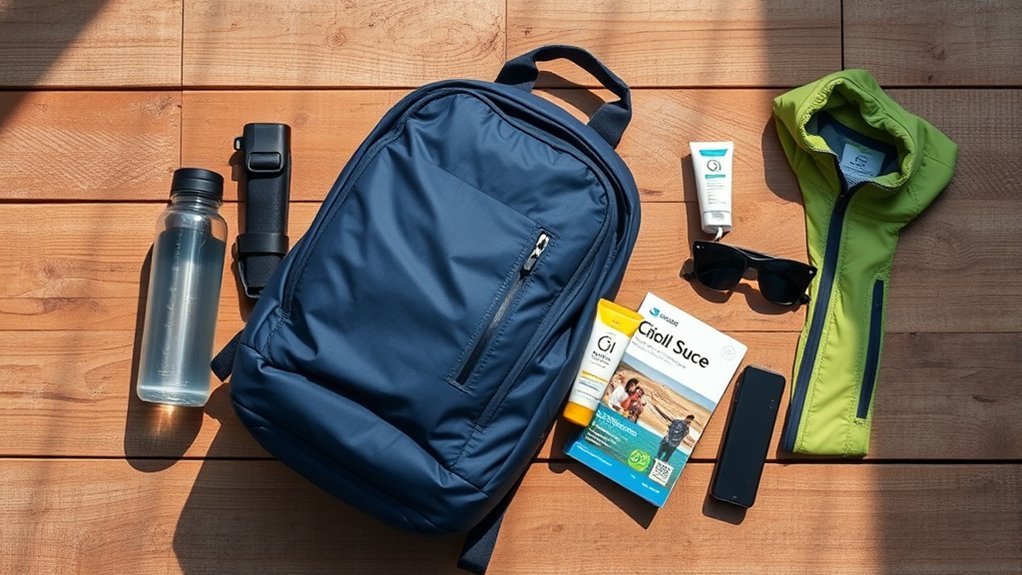
Start with the items you are likely to need on almost every outing. Then add equipment for the weather, activity, destination, and length of the day. This prevents a short city walk from turning into an overloaded expedition pack.
Everyday Travel Essentials
- A reusable water bottle
- Compact snacks that tolerate the day’s temperature
- Identification, tickets, and any required travel documents
- Phone with offline directions or saved addresses
- Personal medication and a small first-aid kit
- A lightweight rain jacket, windbreaker, or weather layer
- Sunglasses, sunscreen, and a hat when sun exposure is likely
- Hand sanitizer, tissues, and a small amount of toilet paper when appropriate
- A portable power bank and charging cable
- A small pouch for keys, coins, and other loose items
Pack only enough toiletries for the day. Store liquids upright in a sealed pouch so a leaking container does not soak clothing, documents, or electronics. Keep your phone, camera, laptop, and chargers in padded or water-resistant storage. Use a true waterproof container when immersion or heavy rain is possible.
Outdoor Day-Trip Additions
For a hike, remote attraction, or outing where delays are possible, expand the list based on the conditions. The National Park Service Ten Essentials include navigation, sun protection, insulation, illumination, first aid, fire, repair supplies, food, water, and emergency shelter.
- A downloaded map plus a backup navigation method
- A headlamp or flashlight rather than relying only on a phone
- Extra food and water for an unexpected delay
- Insulation and rain protection suitable for the forecast
- A whistle or another simple signaling device
- Activity-specific items such as insect repellent, traction aids, or a personal flotation device
Pack for the conditions you could face during the day, not only the conditions you see when you leave.
Flight-Day Additions
- Passport or accepted identification
- Boarding pass and destination address
- Prescription medication and essential medical supplies
- Headphones, charging cable, and power bank
- A clear liquids bag prepared for the applicable checkpoint
- An empty reusable bottle that can be filled after screening
- A warm layer for the aircraft cabin
Warning: Power banks and spare lithium batteries must remain in carry-on baggage. Under current FAA PackSafe guidance, they must be protected from damage and short circuit. Most lithium-ion batteries are limited to 100 Wh without airline approval. If your daypack is gate-checked, remove the power bank and keep it with you in the cabin.
How to Organize and Pack Your Daypack
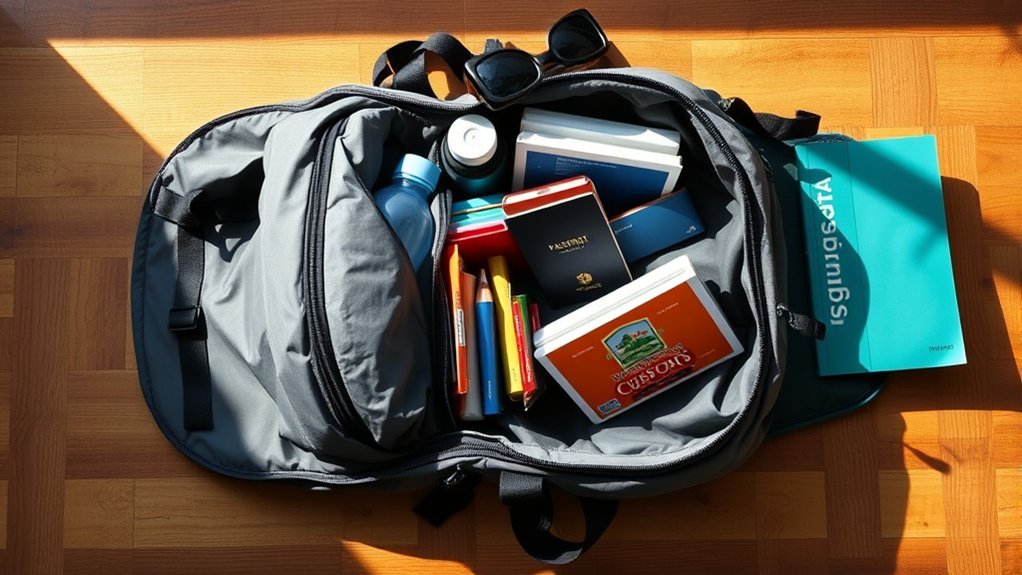
Use packing cubes or small pouches to group similar items, but avoid filling the pack with so many organizers that they add bulk. One pouch for electronics, one for health or hygiene items, and one for small loose objects is usually easier to manage than many tiny bags.
- Empty the pack. Remove old receipts, wrappers, duplicate cables, and anything left from the previous trip.
- Sort the gear. Group items into clothing, food, water, documents, electronics, health supplies, and quick-access items.
- Pack light, bulky items low. A compressible jacket, scarf, or soft clothing can cushion the bottom of the pack.
- Place dense items near your back. Put a compact camera, food container, or other heavy object near the middle of the pack and close to your shoulder-blade area. This keeps the center of gravity closer to your body. Backpack manufacturer Deuter recommends carrying heavier gear close to the back rather than at the bottom or outer edge.
- Protect electronics. Slide a laptop into its padded sleeve. Keep a camera or tablet away from a metal bottle, keys, and hard-edged objects.
- Secure liquids. Keep bottles upright and separate from documents and electronics.
- Load quick-access items last. Put snacks, a light jacket, sunscreen, transit cards, and a small umbrella near the top or in accessible pockets.
- Balance both sides. If a full water bottle sits on one side, offset it with another item or use a centered internal sleeve.
- Close and compress the pack. Tighten compression straps enough to stop the contents from shifting without crushing food or electronics.
Rolling clothing can save space and improve visibility, but it is optional. Fold structured garments when rolling would create deep wrinkles. The best method is the one that lets you see and retrieve an item without unpacking everything above it.
Pro Tip: Wear the fully packed daypack for five minutes before leaving. Walk, turn, climb a few stairs, and reach for your water. If the pack sways, pulls backward, or creates a hard pressure point, repack it before the trip.
Prepare for Changing Weather
Check the forecast for the destination and the hours you expect to be outside. A sunny morning does not guarantee a dry or warm afternoon, especially in mountains, coastal areas, or places with strong air conditioning.
Pack versatile layers that can be added or removed without emptying the daypack. A lightweight, packable rain jacket or windbreaker gives more dependable coverage than an umbrella in strong wind. Moisture-wicking clothing may improve comfort in heat or humidity, while an insulating layer is useful in cool weather.
- Hot and sunny: Water, sunscreen, sunglasses, a brimmed hat, and a light breathable layer.
- Rainy: Rain jacket or poncho, pack cover, and sealed protection for documents and electronics.
- Cool or windy: Wind-resistant outer layer, warm hat, gloves, or a compact insulating layer.
- Mixed conditions: Thin layers that can be combined instead of one bulky garment.
A small travel umbrella can work well in cities, while a poncho may cover both you and the pack. Choose the option that matches the destination, expected wind, walking distance, and available space.
Keep Travel Documents and Valuables Secure
Designate one zipped compartment for your passport, boarding pass, travel insurance details, emergency contacts, and other important documents. The compartment should be protected from rain but still accessible when you reach a checkpoint or hotel desk.
A small document wallet or waterproof pouch can keep papers together. Do not place a passport loose in an open outer pocket. In crowded areas, keep the document compartment closed and positioned where another person cannot easily reach it. A neck pouch or money belt under clothing may provide added protection when pickpocketing is a concern.
The U.S. State Department international travel checklist advises travelers to make copies of required documents. Keep one set separate from the originals, leave another set with a trusted person, and store protected digital copies where you can retrieve them if your phone is lost.
- Check that you still have your documents after security, immigration, boarding, and hotel check-in.
- Keep emergency contact details available offline.
- Do not store the only document copy in the same wallet or bag as the original.
- If a valid U.S. passport is lost or stolen, report it promptly and contact the nearest U.S. embassy or consulate when abroad.
Check Airport Security and Restricted-Item Rules
Airport rules depend on the country, airport, airline, destination, and item. Check the official rules shortly before departure instead of relying on an old packing list.
Liquids at U.S. TSA Checkpoints
Under the TSA liquids, aerosols, and gels rule, standard carry-on liquids, gels, creams, pastes, and aerosols must be in containers of 3.4 ounces or 100 milliliters or less and fit into one quart-size bag. Certain medications, breast milk, infant supplies, and other necessary items may qualify for separate screening or exemptions.
A reusable water bottle is allowed through a U.S. checkpoint when it is empty. Fill it after screening. Rules at airports outside the United States may differ.
Sharp Tools and Other Items
Do not assume that every small tool is allowed. Knives and many sharp objects are prohibited in carry-on baggage, while the rules for scissors, tools, sporting equipment, food, and medical items depend on the specific item. Search the official TSA “What Can I Bring?” database and check the rules at your departure airport.
Laptops and Electronics
A laptop can be packed in a daypack when the bag has a padded compartment that fits it securely. Keep the laptop accessible so you can follow the screening instructions in your lane. Do not place a full bottle, keys, or other hard objects where they can press against the screen.
Note: Security officers and airlines make the final decision on individual items. When an item is unusual, valuable, sharp, battery-powered, or medically necessary, verify it before reaching the airport.
Tips for a Comfortable Carry Experience
Begin with the shoulder straps loose. Put on the loaded daypack, tighten the straps evenly, and position the pack so it rests close to your back instead of hanging low. Fasten the sternum strap when the pack has one, but do not tighten it enough to restrict breathing.
Keep dense items close to your back, with lighter items toward the front of the pack. Adjust the load if the pack leans, bounces, or pulls on one shoulder. Frequently used items such as water, snacks, transit cards, and a light jacket should remain easy to reach.
A hydration reservoir can keep water centered and accessible. An external bottle pocket is simpler to refill, but a large bottle on one side may cause an uneven load. Check the bottle pocket while bending or climbing stairs to make sure the bottle cannot slide out.
Here is a quick reference:
| Feature | How to Use It | Why It Matters |
|---|---|---|
| Adjustable Straps | Tighten both sides evenly and keep the pack close to your back. | Reduces swinging and uneven pressure. |
| Weight Distribution | Place dense items near the middle of your back and light items lower or farther out. | Improves balance and keeps the load from pulling backward. |
| Easy-Access Pockets | Store water, snacks, sunscreen, and transit items without exposing valuables. | Reduces repeated unpacking while keeping sensitive items secure. |
Quick Fit Check
- The top of the pack should not force your head forward.
- The bottom should not hang so low that it hits your hips or seat while walking.
- Both shoulder straps should carry similar pressure.
- The pack should remain close to your back when you turn.
- No bottle, charger, or hard object should create a pressure point.
Fix Common Daypack Problems
- The pack pulls backward: Move dense items closer to your back and remove unnecessary weight from the outer pocket.
- The pack sways from side to side: Balance the contents and tighten the compression straps.
- One shoulder hurts: Check for uneven strap length, a heavy side pocket, or a twisted strap.
- A hard object presses into your back: Move it away from the back panel or cushion it with a soft layer.
- The zipper is under tension: Remove an item rather than forcing the pack closed.
- You cannot find anything: Reduce the number of pouches and give each compartment one clear purpose.
Complete a Final Pre-Departure Check
Before leaving your room, vehicle, or home, review the day rather than the bag alone. A well-organized pack cannot compensate for a dead phone, expired ticket, closed attraction, or missed weather warning.
- Check the hourly weather forecast and sunset time.
- Confirm tickets, reservations, opening hours, and route changes.
- Charge your phone and power bank.
- Download maps, tickets, addresses, and translations needed offline.
- Refill water and check that food is suitable for the expected temperature.
- Confirm that medication and emergency contact details are packed.
- Check the passport, wallet, keys, and phone before closing the pack.
- Remove duplicate clothing, excess toiletries, and “just in case” items with no realistic use.
Frequently Asked Questions
What size daypack is best for day trips?
A pack in the 15–30-liter range works for many travelers, but the best size depends on the activity. A minimal city outing may require less space, while cold weather, a laptop, camera gear, children’s supplies, or outdoor safety equipment may require more. Check airline dimensions when the pack will be used as a personal item.
Can I pack a laptop in my daypack?
Yes. Use a padded sleeve that fits the laptop securely, keep liquids in a separate sealed pouch, and prevent bottles or hard objects from pressing against the screen. Keep the laptop accessible so you can follow the instructions at the security checkpoint.
Where should the heaviest items go in a daypack?
Place compact, dense items near the middle of the pack and close to your back. Light, bulky items can sit lower, while frequently used items belong near the top. Avoid loading the heaviest objects at the bottom or far away from your body.
Can I carry a power bank in my daypack on a plane?
Yes, but it must remain in carry-on baggage and be protected from damage and short circuit. Most power banks are limited to 100 Wh without airline approval. Units rated from 101–160 Wh require airline approval, and larger units are generally prohibited. Remove the power bank if the daypack is gate-checked.
How do I clean my daypack?
Empty the pack, shake out debris, and check the manufacturer’s care label. For many packs, mild soap, warm water, and a soft cloth or brush are suitable. Rinse away soap and air-dry the pack fully in a ventilated place away from direct heat. Do not machine-wash it unless the manufacturer specifically allows that method.
Are there travel restrictions for items in a daypack?
Yes. At U.S. TSA checkpoints, standard carry-on liquids are generally limited to containers of 3.4 ounces or 100 milliliters inside one quart-size bag. Knives and many sharp objects are prohibited in carry-on baggage, while the rules for tools, food, medication, and other items vary. Check the official item list, airline policy, and departure-country rules before traveling.
How do I choose a daypack color?
Choose a color you will use comfortably and can identify quickly. Bright colors may be easier to spot outdoors or among other bags. Dark or neutral colors may hide dirt and attract less attention in cities. Visibility, maintenance, and personal preference matter more than fashion rules.
Sources
- Transportation Security Administration — Liquids, Aerosols, and Gels Rule — carry-on liquid limits and screening context.
- Transportation Security Administration — What Can I Bring? — item-specific carry-on and checked-baggage rules.
- Federal Aviation Administration — PackSafe Lithium Batteries — power-bank placement, protection, and battery limits.
- U.S. Department of State — International Travel Checklist — travel-document copies and preparation.
- National Park Service — Ten Essentials — outdoor safety and emergency packing categories.
- Deuter — How to Pack a Backpack — correct placement of heavy and light gear.
Conclusion
A well-packed daypack should support the day rather than slow you down. Choose a pack that fits, carry gear suited to the activity and weather, protect documents and electronics, and place dense items close to the middle of your back. Keep frequently used supplies accessible, verify airport restrictions before flying, and test the loaded pack before departure. These steps create a lighter, safer, and more comfortable travel experience.

