
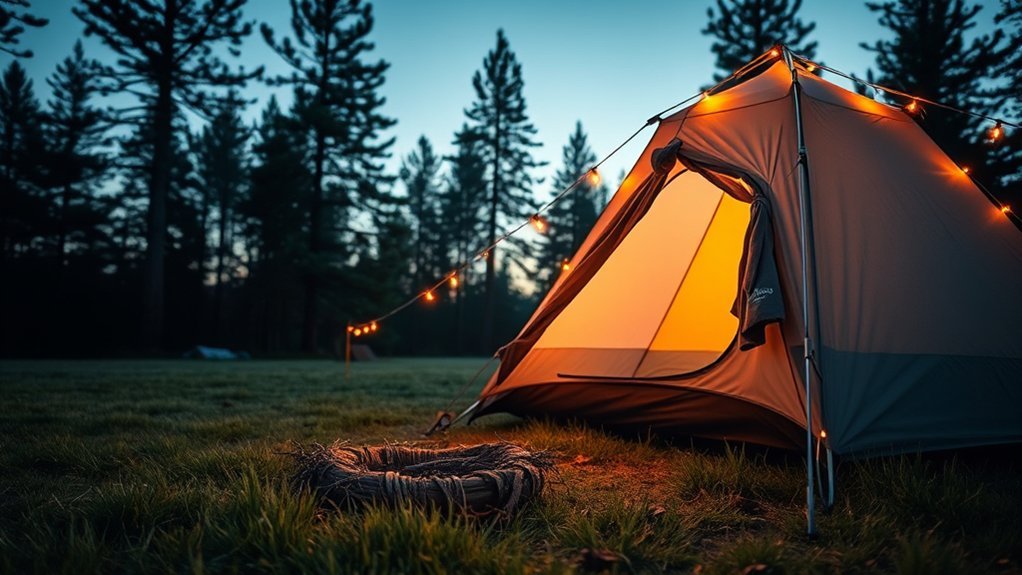
To keep spiders out of your tent, choose a campsite away from tall grass and wood piles, and opt for well-drained, elevated ground. Seal your tent properly and shake it out often to remove hiding spiders. Use natural repellents like peppermint or clove sprays around your tent, and consider creating scent sacs with crushed chestnuts. Regularly maintain your gear and avoid sweet-smelling personal care products. There are more effective tips to guarantee a bug-free experience waiting for you.
Understanding Spider Behavior

Have you ever wondered why spiders seem to invade your space during camping trips? Understanding their behavior can help you minimize encounters. Spiders, like the brown recluse, have strong instincts to avoid humans. They generally prefer dark, secluded areas—think unused clothing, wood piles, and tent corners—as their hiding spots. When startled or pressed against skin, they might bite, which can lead to severe tissue damage due to their necrotic venom.
To keep spiders at bay, be aware of their hiding preferences. Maintain a clean campsite, and store your gear properly. Natural repellents can also work wonders since spiders detect scents through their feet. By understanding spider instincts and behavior, you can create a more inviting space for yourself and minimize the chances of an unwelcome encounter. With this knowledge, you’re empowered to enjoy your camping experience without the worry of these eight-legged intruders.
Choosing the Right Campsite
Choosing the right campsite is essential for minimizing spider encounters. Start your campsite selection by picking a spot at least 200 feet away from standing water sources, as these attract insects, which in turn draw spiders. Steer clear of wood piles, tall grass, and dense vegetation, as these are common spider habitats.
Aim for clear, dry ground free from debris and clutter, providing fewer hiding spots for spiders. Elevated camping spots like hills or ridges are ideal, offering better airflow that deters insects. Additionally, consider the wind direction; choose a location where the breeze blows away from your tent to help keep spiders and other pests at bay. By carefully selecting your campsite, you can greatly reduce the likelihood of spider encounters, allowing you to enjoy your outdoor experience with peace of mind.
Effective Preventive Measures
To keep spiders out of your tent, it’s essential to combine effective preventive measures. Use natural repellents like peppermint or citrus sprays, hang scent sacs filled with crushed chestnuts or cloves, and make sure your tent is properly sealed. By setting up your campsite wisely and treating your gear, you can create a spider-free zone for a more enjoyable camping experience.
Natural Repellent Options
While camping, natural repellent options can effectively keep spiders at bay without the use of harsh chemicals. You can use natural deterrent methods like garlic, onion, and peppermint to create an unwelcoming environment for these critters. Combine essential oil blends such as lavender and eucalyptus in homemade sprays to form an aromatic barrier.
| Natural Repellents | Benefits | Application |
|---|---|---|
| Garlic | Strong odor deters | Spray or hang around tent |
| Essential Oils | Creates a barrier | Mix with water for spray |
| Cucumber | Invigorating scent | Place slices around the tent |
| Coffee Filters | Scent sacs | Fill with chestnuts/cloves |
Using these methods guarantees a pleasant camping experience free from chemical pesticides.
Scent Sac Techniques
Natural repellents, like the ones previously discussed, can be complemented with scent sac techniques for an even more effective strategy against spiders. Create scent sacs using coffee filters filled with crushed chestnuts or cloves, as these have strong scent potency that spiders dislike. For added effectiveness, incorporate onion or garlic powder into the mix. Hang these scent sacs around the perimeter of your tent and on the legs of your cot to form a barrier against spider intrusion. Since spiders detect smells through their feet, this strategic approach keeps them at bay without harsh chemicals. By consistently using these natural scent repellents, you’ll likely observe a notable reduction in spider presence during your camping adventures.
Proper Tent Setup
Setting up your tent properly is crucial for keeping spiders and other pests at bay. Follow these effective preventive measures for best tent placement:
- Choose a dry spot: Set your tent away from standing water and trash, which attract insects and spiders.
- Use a ground tarp: Lay a ground tarp beneath your tent to create a barrier against crawling insects and keep the floor clean.
- Keep it zipped: Confirm your tent is fully zipped at all times, with no gaps or holes, to prevent unwanted guests.
Additionally, elevate your tent slightly off the ground with stakes and regularly inspect and shake it out before entering. These steps will help you enjoy a spider-free camping experience.
Natural Repellents and Scents
Using natural repellents and scents can make a noticeable difference in keeping spiders out of your tent. Spiders have unique preferences when it comes to smells, so harnessing this can be your advantage. Consider creating scent combinations with crushed chestnuts, cloves, and garlic powder. These can be effective when hung around your tent. Essential oils, like peppermint and lavender, also work well—just dilute them in water and spray around the area. Another simple trick is to incorporate cucumber peels into your camping setup, as spiders dislike their scent. Regularly applying these natural repellents can greatly reduce spider presence during your trips. By using these methods, you can create a more enjoyable camping experience, free from unwanted eight-legged guests. Enjoy your time outdoors while confidently keeping your tent spider-free!
Creating Spider Scent Sacs
Creating effective spider scent sacs is a straightforward and practical way to keep your tent spider-free. Using natural scents can ward off those eight-legged intruders without harsh chemicals. Here’s how to create them:
- Scent sac materials: Fill coffee filters with crushed chestnuts or cloves. For an extra punch, add onion or garlic powder to enhance their odor.
- Preparation: Gather the filled coffee filters and tie them securely to prevent spillage.
- Scent sac placement: Hang the scent sacs around your tent and at the legs of your cot. This strategic placement takes advantage of how spiders detect smells through their feet, creating a barrier against their entry.
Utilizing Permethrin Spray
To keep spiders at bay while camping, consider utilizing Permethrin spray, a powerful insect repellent derived from chrysanthemum flowers. This synthetic repellent effectively deters both spiders and insects when applied to your camping gear and clothing. For ideal protection, make sure to focus on Permethrin application to tarps, tents, and any fabric items you plan to use. The treatment can last for up to six weeks, giving you long-lasting defense against arachnids and other pests.
Regular Tent Maintenance
While enjoying the great outdoors, keeping your tent in top shape is crucial to preventing spider invasions. Regular tent maintenance helps you create an unwelcoming environment for these critters. Here are three essential steps to follow:
Keeping your tent in top shape is essential for preventing spider invasions during your outdoor adventures.
- Damage Inspection: Routinely check your tent for holes, tears, or any damage. Even the smallest entry points can invite spiders and insects inside.
- Tent Cleaning: Periodically wash your tent with a mild soap solution to eliminate residues that might attract pests. A clean tent is less appealing to spiders.
- Proper Storage: After each trip, verify your tent is completely dry and free from debris before storing it. This prevents infestations and maintains its integrity.
Additional Tips for a Bug-free Experience
After ensuring your tent is well-maintained, there are additional strategies to keep it bug-free during your outdoor adventures. First, position your tent away from standing water and trash, as these attract insects. When it comes to personal care products, skip the sweet-smelling ones; they can lure bugs, increasing spider encounters.
Use natural repellents like garlic, peppermint, and cucumber scents to deter insects effectively. Create spider scent sacs by filling coffee filters with crushed chestnuts or cloves and hanging them around your tent. Treat your camping gear and clothing with permethrin for a protective barrier against spiders and other pests for up to six weeks.
Finally, remember campfire safety: keep your fire at a safe distance from your tent to reduce insect attraction. Familiarize yourself with insect identification to know which pests to avoid, ensuring a more enjoyable outdoor experience.
Enjoying Nature Without Pests
Enjoying nature doesn’t have to mean battling pests. With the right strategies, you can savor your outdoor activities without the annoyance of insects. Here are some effective outdoor essentials to keep pests at bay:
- Choose your campsite wisely: Set up camp away from standing water and trash to minimize insect disturbances.
- Use natural repellents: Create homemade insect repellents using scents like clove, peppermint, and basil. These can effectively deter various pests during your trip.
- Opt for scent sacs: Hang scent sacs filled with crushed chestnuts or cloves around your tent to keep spiders away.
Additionally, consider consuming garlic capsules and applying permethrin to your gear for long-lasting protection. By taking these simple steps, you can immerse yourself in the beauty of nature, free from pesky interruptions. Enjoy your adventure!
Frequently Asked Questions
Can Spiders Enter Through Zippers or Seams?
Yes, spiders can enter through zippers and seams if the zipper design isn’t tight or the seam integrity is compromised. Check for gaps regularly to guarantee your tent offers a solid barrier against these critters.
What Types of Spiders Are Common in Camping Areas?
In camping areas, you’ll encounter common spider species like orb weavers, wolf spiders, and jumping spiders. These critters often hide in foliage, seeking shelter and food, so understanding their behavior helps you stay spider-free.
Do Spider Repellents Affect Other Insects?
Yes, spider repellents can affect other insects. When you use insect repellents, you might disrupt natural predators, leading to an imbalance. It’s essential to choose products that target specific pests without harming beneficial insects.
Is It Safe to Use Essential Oils in My Tent?
Absolutely, essential oils can be safe in your tent if used wisely. Just guarantee proper dilution and ventilation. These natural repellents can enhance your experience while keeping unwanted critters at bay. Enjoy your adventure!
How Can I Identify Spider Webs Near My Campsite?
To identify spider webs near your campsite, look for their characteristic shapes—orb, funnel, or sheet—in corners, under branches, or near rocks. Checking these web locations helps you stay aware and prepared for unwelcome guests.
Conclusion
By following these simple strategies, you can keep spiders out of your tent and enjoy your camping experience like a cozy night under the stars. Remember, it’s all about creating a space that’s uninviting to these critters while still embracing the beauty of nature. Regular maintenance and a few natural repellents can make all the difference. So gear up, take these tips to heart, and sleep soundly without unwanted eight-legged visitors!