
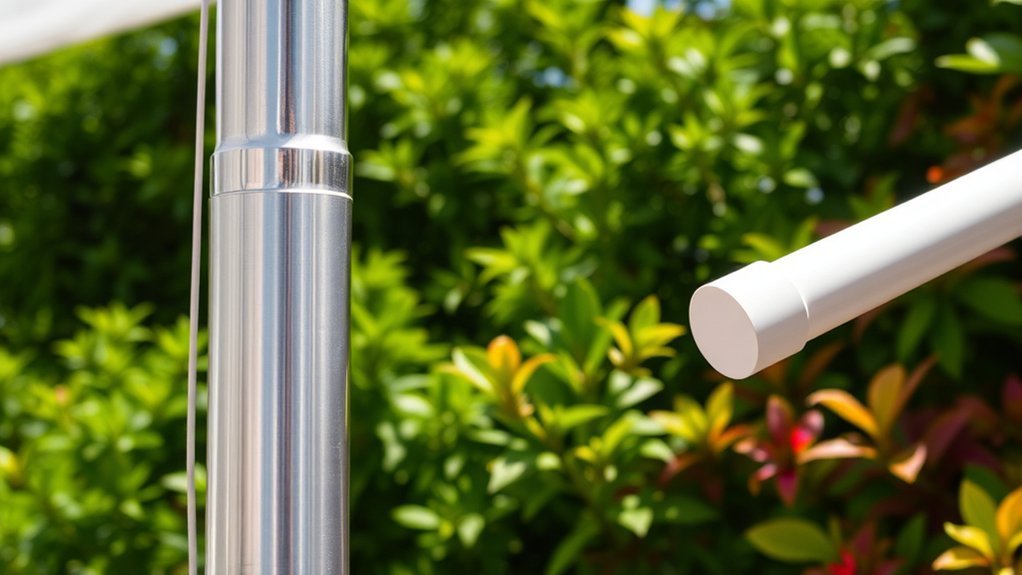
When choosing tent poles, aluminum poles are generally better than fiberglass. They weigh 30-40% less, offering portability for backpacking while providing superior durability in extreme conditions. Aluminum resists brittleness in the cold and performs well in rugged terrains. Although fiberglass is cheaper, it doesn’t hold up over time and may require frequent replacements. If you want to better understand your options and their implications for your adventures, keep exploring the details on this topic.
Weight Comparison: Fiberglass Vs Aluminum Tent Poles

When you’re choosing tent poles, understanding the weight difference between fiberglass and aluminum can make a significant impact on your outdoor experience. Aluminum poles are generally lighter, weighing about 30-40% less than their fiberglass counterparts. This weight efficiency gives you a portable advantage, especially when you’re backpacking or hiking long distances. You’ll appreciate how much easier it is to carry a lighter load, making your trek more enjoyable and less exhausting.
While fiberglass poles might be a more affordable option for car camping, they don’t offer the same weight benefits. If you prioritize lightweight gear, aluminum is the clear choice, allowing for a more manageable pack weight. This difference can greatly enhance your overall experience, letting you focus on the adventure rather than the burden of heavy equipment. So, if liberation in your outdoor pursuits is what you seek, go for aluminum—your back will thank you!
Durability and Strength
Durability is an essential factor in choosing tent poles, and here, aluminum poles shine. If you’re serious about camping, you want poles that can withstand the elements and provide reliable strength. Here’s why aluminum is the better choice:
Durability is key in selecting tent poles, and aluminum excels in providing reliable strength for serious campers.
- Rigidity: Aluminum poles are more rigid, providing excellent performance under tension, reducing the risk of breaks or splintering.
- Longevity: Unlike fiberglass, which can lose strength over time due to UV exposure and temperature changes, aluminum maintains its integrity, even in extreme cold.
- User Reviews: Many users highlight aluminum’s durability, especially in harsh conditions, making them a staple for serious adventurers.
With proper tent pole maintenance, aluminum poles can offer years of dependable service. If you want long-term reliability for your outdoor escapades, aluminum poles are the way to go.
Cost Comparison: Fiberglass Vs Aluminum Tent Poles
While many campers prioritize performance and durability, the cost of tent poles remains a critical factor in decision-making. Fiberglass tent poles typically offer greater cost efficiency, appealing to budget-conscious campers. Their lower price makes them accessible, but keep in mind they may require more frequent replacements. In contrast, aluminum poles, while initially pricier, provide superior strength and lightweight properties, leading to better long-term value for serious adventurers. If you’re considering budget considerations, weigh the initial savings of fiberglass against the durability of aluminum. The price difference can be significant, especially for high-end tents designed for demanding conditions. Ultimately, if you envision many camping trips ahead, investing in aluminum poles may liberate you from the hassle of constant replacements. Balancing upfront costs with potential long-term benefits is essential in making the right choice for your outdoor experiences.
Performance in Extreme Conditions
When you’re facing extreme conditions, the choice between aluminum and fiberglass poles can greatly impact your camping experience. Aluminum poles excel in cold temperatures, maintaining durability without becoming brittle, while fiberglass offers flexibility that can bend in harsh weather but may weaken over time. Understanding these differences is essential for selecting the right pole to withstand the elements and keep your tent secure.
Flexibility in Harsh Weather
In harsh weather conditions, the choice between aluminum and fiberglass tent poles can considerably impact your camping experience. Understanding their flexibility benefits and weather resilience is essential for your comfort and safety.
- Fiberglass: Offers great flexibility, bending without breaking in windy conditions, but can lose strength over time due to UV exposure and extreme temperatures.
- Aluminum: Maintains rigidity and durability, preventing brittleness and breakage in severe weather; it’s built to last.
- Long-term Performance: While fiberglass may initially perform well, aluminum poles provide consistent structural integrity, ensuring reliability in extreme conditions.
Choosing aluminum poles gives you peace of mind, knowing they’ll withstand the elements better than fiberglass in the long run.
Cold Temperature Performance
As you gear up for winter camping, the performance of your tent poles in cold temperatures becomes a critical factor. Aluminum poles stand out in cold weather, maintaining their strength and flexibility even in extreme conditions. Unlike fiberglass, which can become brittle and prone to breaking, aluminum retains its integrity, ensuring reliable support for your tent. When facing harsh winter environments, you want poles that won’t splinter or shatter under pressure. Aluminum’s resistance to temperature extremes makes it the superior choice for serious campers. While fiberglass may offer some flexibility, its performance greatly diminishes in the cold. For ultimate peace of mind and durability, aluminum poles are the way to go when venturing into icy terrains.
UV Exposure Effects
While many campers may overlook the effects of UV exposure on tent poles, understanding its impact is essential for ensuring your gear performs reliably. UV degradation can compromise the materials, especially fiberglass, leading to hazardous failures. To improve your pole maintenance and performance in harsh conditions, consider these points:
- Fiberglass poles weaken: Prolonged UV exposure can cause splintering or shattering, particularly during windy or stormy weather.
- Aluminum’s resilience: Unlike fiberglass, aluminum maintains structural integrity and doesn’t become brittle in extreme conditions.
- Corrosion resistance: Aluminum’s anodized surface protects against corrosion, ensuring durability even in adverse weather.
Factors Influencing Tent Pole Choice
When choosing tent poles, you’ll want to contemplate material strength, weight, and how climate and terrain affect performance. Aluminum offers superior durability and lightweight benefits, making it ideal for challenging environments. On the other hand, fiberglass poles can be heavier but might fit your budget better for casual outings.
Material Strength Comparison
Choosing the right tent pole material can greatly impact your camping experience, especially in challenging weather conditions. When evaluating material strength, consider these factors:
- Durability: Aluminum poles are generally stronger and more durable than fiberglass, making them ideal for harsh environments.
- Flexibility vs. Risk: Fiberglass offers flexibility, allowing for some bending without breaking. However, it can splinter and become brittle under extreme conditions.
- Repairability: Aluminum poles can be easier to repair in the field, while fiberglass may crack and create sharp edges, compromising your tent’s integrity.
Understanding how tension distribution and pole design affect performance will help you choose a pole that enhances your outdoor adventures. Make an informed decision for a more liberated camping experience!
Weight and Portability
The weight of your tent poles plays an essential role in determining how easily you can transport and set up your camping gear. Aluminum tent poles typically weigh less than fiberglass ones, making them a go-to choice for backpackers and long treks. Their lightweight design features streamline your packing process, reducing your overall load and enhancing portability. While fiberglass poles offer a decent strength-to-weight ratio for casual camping, they may not meet the demands of extensive travel. User preferences often lean toward aluminum for quick installation, especially beneficial for novice campers or in challenging weather. Ultimately, the choice between aluminum and fiberglass poles greatly impacts your camping experience, emphasizing the importance of weight and portability.
Climate and Terrain Impact
Weight and portability are essential considerations, but climate and terrain also play significant roles in your choice of tent poles. Understanding these factors can help you select the right tent pole materials for your adventures:
- Cold Weather: Aluminum poles resist brittleness in extreme cold, while fiberglass may shatter.
- Windy Conditions: Aluminum offers strength and rigidity, guaranteeing stability against gusts, unlike flexible fiberglass.
- Moisture Exposure: Both aluminum and fiberglass provide corrosion resistance, but aluminum has superior longevity in humid environments.
When maneuvering through rocky terrain, stronger materials like aluminum or steel outperform fiberglass, delivering reliable support. Prioritize environmental considerations to make certain your tent poles withstand diverse conditions, enhancing your outdoor experience and liberating your adventures.
Materials for Tent Poles
When selecting tent poles, understanding the various materials available is essential for ensuring durability and performance in different environments. Aluminum tent pole materials, crafted from 6063-T5 alloy, offer a lightweight yet robust option, showcasing excellent corrosion resistance ideal for adverse weather. Fiberglass poles present an economical choice with good elasticity but demand more weight for strength and can shatter under stress. If you need extreme durability, steel poles, often made of Q235 steel, provide reliability in harsh conditions despite being heavier. Wood poles offer a natural aesthetic and affordability but are prone to rot and moisture damage, limiting their practicality. Finally, carbon fiber poles combine lightweight strength with variable performance in extreme temperatures, making them less versatile than aluminum or fiberglass. By considering these material properties, you can choose the best tent pole for your outdoor adventures.
Conclusion: Which Is Right for You?
Choosing the right tent pole material can greatly impact your camping experience, especially when weighing the advantages of aluminum versus fiberglass. Here’s what to take into account for your next adventure:
- User Experience: If you’re a serious camper, aluminum poles offer superior strength and lightweight design, enhancing your overall experience on long treks.
- Budget and Frequency: For occasional campers on a budget, fiberglass poles provide flexibility but may require more tent pole maintenance and replacements due to wear and tear.
- Durability in Conditions: Aluminum excels in extreme conditions without becoming brittle, while fiberglass can degrade under harsh weather and UV exposure.
Ultimately, if you prioritize longevity and performance, aluminum is the clear choice. However, if you’re looking for a cost-effective solution for casual outings, fiberglass might suit your needs. Choose wisely to guarantee your camping trips are enjoyable and worry-free!
Frequently Asked Questions
How Do I Repair a Broken Fiberglass Tent Pole?
To repair a broken fiberglass tent pole, use fiberglass repairs kits or epoxy. If the damage’s extensive, consider pole replacement. Always guarantee a secure fit to maintain structural integrity and enhance your camping experience.
Can Aluminum Tent Poles Be Recycled?
Yes, aluminum tent poles can be recycled. By participating in aluminum recycling, you contribute to environmental benefits like reduced waste and energy savings, helping create a more sustainable future for outdoor enthusiasts and our planet.
What Is the Lifespan of Aluminum Tent Poles?
Aluminum tent poles typically last 10-15 years, depending on usage and care. In a durability comparison, they’re stronger and lighter than fiberglass, making weight considerations essential for backpackers seeking efficient gear without sacrificing longevity.
Are Aluminum Poles More Flexible Than Fiberglass?
Aluminum poles aren’t more flexible than fiberglass; they offer greater material durability. In flexibility comparison, fiberglass bends without breaking, making it ideal for absorbing shock. Choose based on your camping style and conditions for peak performance.
Do Aluminum Tent Poles Require Special Maintenance?
Aluminum tent poles don’t require special maintenance, but proper tent pole care is vital. Did you know that 80% of pole failures happen due to neglect? Follow maintenance tips like cleaning and inspecting regularly to guarantee longevity.
Conclusion
In the battle of aluminum vs fiberglass tent poles, your choice hinges on your specific needs. Are you prioritizing weight and strength for high-altitude adventures, or is cost and flexibility more essential for casual camping? Each material holds unique advantages, but one may tip the scales for you. So, as you gear up for your next trip, ask yourself: which qualities matter most in your quest for the perfect shelter? The answer could change everything.