
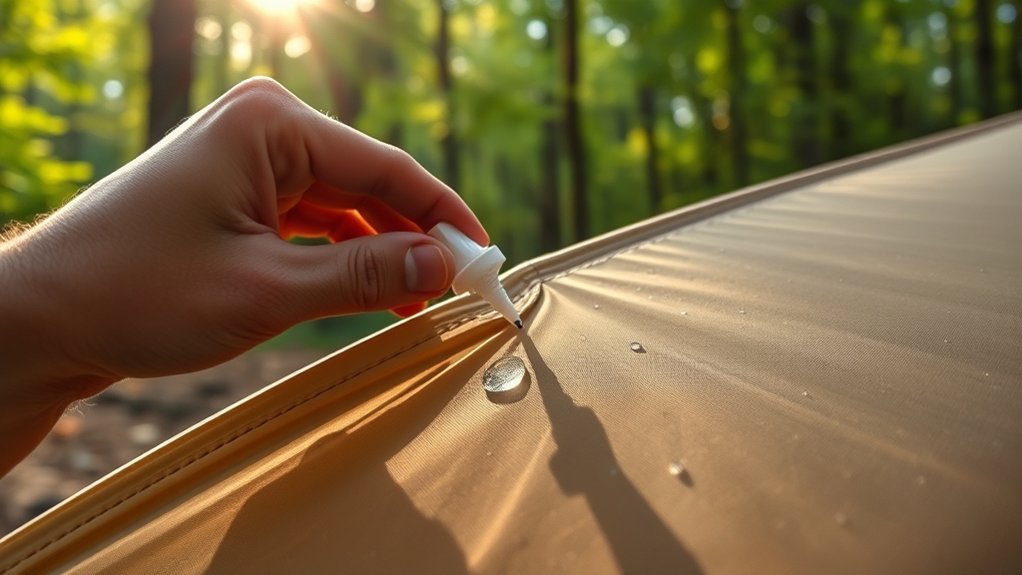
You should inspect and seam seal your tent at least once a year to maintain its waterproof integrity. After heavy use or exposure to harsh conditions, additional sealing may be required. Regular checks are essential for identifying signs of delamination, frayed threads, or visible gaps that indicate leaks. Remember to follow manufacturer guidelines for sealing methods and products. If you want to learn more about proper care and sealing techniques, keep exploring this topic for helpful insights.
Understanding the Importance of Seam Sealing

When you set up your tent, you might not realize that the stitched seams are often the most vulnerable points for water intrusion. Understanding the importance of seam sealing is essential for maintaining your tent’s waterproof integrity. Most leaks originate from these seams rather than the fabric itself. Employing effective seam sealing techniques can considerably extend your tent’s lifespan. Regular inspections after heavy use are fundamental to identify any wear or damage that could lead to leaks. While taped seams are durable and generally don’t require frequent sealing, delamination may call for manufacturer repair. It’s crucial to use appropriate waterproofing materials and apply seam sealing sparingly; over-sealing can create buildup that diminishes effectiveness. By prioritizing proper seam sealing, you guarantee your tent remains functional and waterproof, allowing you to focus on the freedom of your outdoor adventures without the worry of unexpected leaks.
When to Seam Seal a New Tent
When you get a new tent, it’s essential to perform an initial seam inspection after your first few outings. While manufacturers design the taped seams to be waterproof, checking for any signs of delamination or damage is vital. If you notice water seeping through the seams during rain, consider seam sealing to prevent further issues.
Initial Seam Inspection
Before you take your new tent on its first adventure, it’s vital to inspect the seams for any visible defects or signs of delamination. Use the following tent inspection checklist to identify seam damage indicators:
- Look for gaps: Check if seams are fully sealed without any openings.
- Inspect for wrinkles: Wrinkles may indicate poor adhesion or delamination.
- Feel for texture changes: The surface should be smooth; any rough areas may signal damage.
- Examine stitching: Confirm stitches are tight and not frayed.
If you notice any seam damage during your inspection, contact the manufacturer for repair or replacement. Regular inspections after heavy use are essential to prevent leaks and maintain your tent’s integrity.
Manufacturer’s Recommendations
After completing your initial seam inspection, understanding the manufacturer’s recommendations for seam sealing is important. Most new tents come with taped seams and modern waterproof materials, making routine seam sealing unnecessary. Manufacturer guidelines typically suggest you only consider seam sealing if you notice delamination or wear after extensive use. Instead of sealing routinely, focus on inspecting your tent’s seams following heavy use or exposure to harsh weather. If you find any issues with seam integrity, it’s best to follow the manufacturer’s protocol and return the tent for repair rather than applying aftermarket sealing techniques. This approach guarantees you maintain the tent’s integrity and warranty while maximizing your camping experience.
Signs Your Tent Needs Seam Sealing
Noticing signs of wear on your tent can save you from a soggy camping experience, as these indicators often point to the need for seam sealing. Here are some key signs to watch for:
- Delamination: If you see separation at the seams, it’s a clear signal that leaks could occur during rain.
- Frayed Threads: Inspect for any fraying in the seam threads that may compromise waterproofing.
- Visible Gaps: Look for gaps in the seam tape that suggest sealing is necessary.
- Water Ingress: If water enters the tent while in use, your seams likely need attention, not just the fabric.
Regularly checking these signs, especially after heavy use or adverse weather, can help maintain your tent’s integrity. If your tent is several years old, consider using seam sealing products as part of your tent waterproofing techniques to prevent future issues.
Annual Inspection of Tent Seams
Regular inspections of your tent seams help catch issues before they escalate into major problems. Conducting an annual inspection is crucial for effective tent care, as it identifies early signs of delamination or wear that could lead to leaks. Focus on high-stress areas, like corners and where the tent body meets the rainfly, during your assessment.
If you spot any seams starting to degrade or separate, seal them promptly with a suitable seam sealer to prevent future water entry. While taped seams generally hold up well, checking them annually guarantees they remain intact and functional. This proactive approach not only maintains your tent’s waterproof integrity but also enhances seam longevity, ultimately extending your tent’s overall lifespan. By prioritizing these inspections, you empower yourself to enjoy your outdoor adventures without the worry of unexpected leaks.
The Role of Wear and Tear in Seam Integrity
Wear and tear can greatly impact the integrity of your tent’s seams, often leading to issues like delamination. Regular inspections are essential to catch any damage early, especially after extensive use or exposure to harsh conditions. If you notice deterioration, addressing it promptly will help maintain your tent’s waterproof capabilities.
Causes of Seam Damage
Seam damage often occurs due to a combination of factors, primarily wear and tear from frequent use and environmental exposure. Understanding these causes can help you take action for better seam protection.
- Frequent Use: Repeatedly pitching and taking down your tent increases friction at the seams, leading to deterioration.
- Harsh Weather: UV radiation and moisture degrade seam materials, resulting in delamination over time.
- Improper Storage: Storing your tent improperly can exacerbate wear on seams.
- Lack of Maintenance: Neglecting to clean and inspect seams can allow small issues to evolve into significant leaks.
Importance of Regular Inspections
Inspecting your tent’s seams frequently is essential for maintaining their integrity and preventing leaks. Regular seam inspections help you catch signs of wear and tear early, avoiding potential delamination and water intrusion during your adventures. Here’s a quick overview of what to look for:
| Inspection Aspect | Signs of Deterioration | Action Required |
|---|---|---|
| Stitching Condition | Fraying or loose threads | Reseal or restitch |
| Sealing Integrity | Cracks or peeling | Reapply sealant |
| UV and Moisture Effects | Fading or discoloration | Store properly |
Repairing Delaminated Seams
Addressing delaminated seams promptly is essential for preserving your tent’s waterproof capabilities. Delamination causes often stem from wear and tear, particularly due to UV exposure and moisture. Regular inspections help catch issues early, especially after heavy use. If you notice delamination, follow these steps for effective seam repair:
- Identify affected seams.
- Inspect for additional damage.
- Contact the manufacturer for professional repair.
- Avoid after-market sealing solutions that may be ineffective.
How to Properly Apply Seam Sealer
To guarantee your tent remains waterproof, you’ll want to apply seam sealer correctly and efficiently. Start by ensuring your tent is clean and dry; this promotes better adhesion. Choose a seam sealer type specifically designed for tent materials, as regular adhesives won’t bond well with nylon or polyester.
Using a brush or applicator tube, apply the seam sealer evenly along the stitched seams, ensuring complete coverage to prevent leaks. Pay attention to any areas that may need extra sealant. After application, allow the seam sealer to cure fully, typically requiring 24 hours before exposing your tent to moisture.
Regularly inspect sealed seams for signs of wear or delamination. If you notice any issues, reapply the seam sealer as needed, especially after heavy use or exposure to harsh conditions. Following these application techniques will help maintain your tent’s waterproof integrity.
Alternatives to Seam Sealing
While seam sealing is essential for maintaining a tent’s waterproof integrity, there are effective alternatives that can minimize this task. Consider the following seam alternatives for enhancing tent longevity:
- Inspect Regularly: Check seams for signs of delamination or wear, addressing issues promptly to maintain waterproof integrity.
- Taped Seams: Use tents with taped seams, which generally withstand the test of time without frequent maintenance.
- Manufacturer Repairs: If you encounter seam problems, return the tent to the manufacturer for professional repairs rather than using after-market sealants that may not be effective.
- Proper Care: Regularly clean and store your tent properly to prevent seam deterioration and reduce the risk of leaks.
Maintenance Tips for Prolonging Tent Life
Maintaining your tent properly can greatly extend its lifespan and performance. Regularly inspect your tent for signs of wear, especially at the seams, since seam damage is a leading cause of water entry. While seam sealing is necessary only when delamination occurs, routine tent care is essential. After each use, employ effective cleaning techniques to remove dirt and prevent material degradation.
For ideal tent storage, pack your tent loosely in breathable cotton bags. This method helps avoid moisture retention, which can lead to mold growth. Additionally, when pitching your tent, choose shaded areas to shield it from direct sunlight, as UV radiation can weaken fibers over time. By following these maintenance tips, you’ll keep your tent in excellent condition, ensuring it serves you well on countless adventures.
Common Mistakes to Avoid With Seam Sealing
One major mistake many tent owners make is over-sealing seams. Over-sealing can lead to buildup, compromising your tent’s performance. Instead, focus on specific common sealing errors to avoid:
- Sealing without inspection: Regularly check seams for wear and damage before applying sealant.
- Using the wrong product: Verify you choose the correct sealant designed specifically for your tent’s material.
- Improper application: Apply sealant evenly and avoid excess, which can cause more harm than good.
- Ignoring manufacturer guidelines: If seams delaminate, return the tent to the manufacturer instead of attempting a DIY fix.
Frequently Asked Questions
Can I Use Any Adhesive for Seam Sealing My Tent?
You can’t use just any adhesive for seam sealing your tent. Opt for specific tent care adhesives designed for the fabric type; they guarantee durability, flexibility, and waterproofing, maintaining your tent’s integrity during outdoor adventures.
How Long Does Seam Sealant Last After Application?
Seam sealant typically lasts one to three years after application, depending on conditions. You should check regularly and consider reapplication frequency based on wear and weather exposure for best performance and protection.
Is Seam Sealing Necessary for All Tent Materials?
Seam sealing’s certainly essential for certain tent materials, particularly those prone to leaks. If your tent’s fabric isn’t inherently waterproof, applying sealant will safeguard your shelter from the stormy skies and keep you dry.
Can I Seam Seal a Tent in Cold Weather?
You can seam seal a tent in cold weather, but be aware of cold weather considerations. Low temperatures can affect the adhesive’s performance, potentially compromising the tent’s waterproofing and overall performance during your outdoor adventures.
Will Seam Sealing Affect My Tent’s Breathability?
Seam sealing’s like adding armor; it protects but can hinder. While it seals moisture buildup concerns, it may reduce tent breathability factors. Proper ventilation remains essential to balance protection and airflow for a comfortable experience.
Conclusion
In conclusion, regular seam sealing is vital for keeping your tent in top shape. Stay vigilant and inspect your seams annually, addressing wear and tear promptly. By applying seam sealer correctly and avoiding common mistakes, you’ll safeguard your shelter from leaks and prolong its life. Remember, proactive maintenance promotes peak performance, so don’t neglect those necessary tasks. With diligence and dedication, you can guarantee your tent remains a reliable refuge for all your outdoor adventures.