
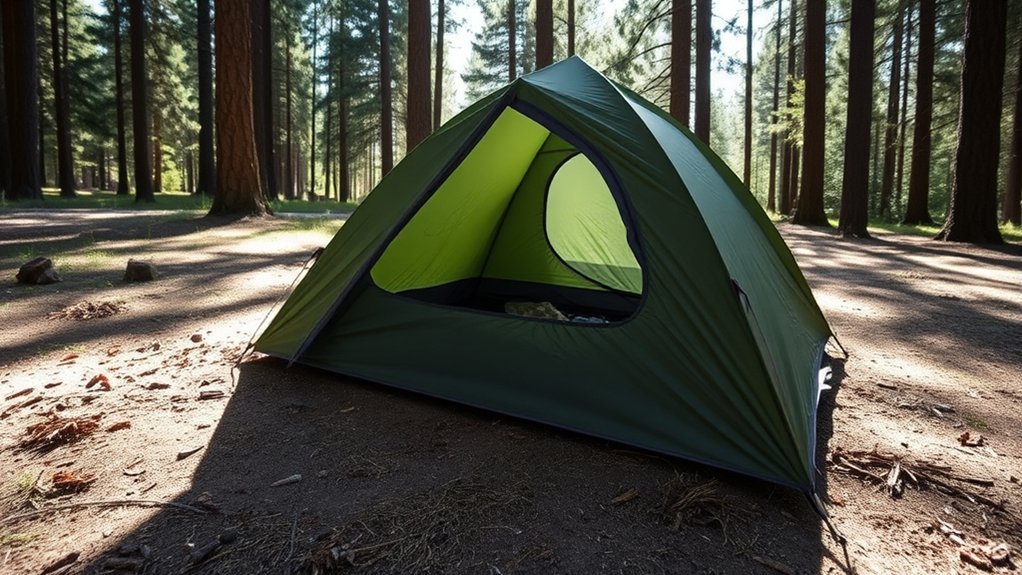
A tent footprint is a tailored tarp that fits your tent’s shape, offering essential protection against sharp objects and wear. It helps maintain waterproof integrity while providing insulation from the cold ground, enhancing your comfort. The footprint also simplifies setup with clear guidelines for placement and makes packing away easier by keeping the tent floor clean. By investing in a tent footprint, you’re prolonging the life of your gear and ensuring a better camping experience, which you’ll discover more about.
What Is a Tent Footprint?

A tent footprint is a specialized tarp cut to match your tent’s floor shape, providing essential protection when camping. It’s typically made from durable materials like nylon or polyester, which offer resistance against punctures and abrasions caused by sharp objects like rocks and twigs. By using a footprint, you extend the lifespan of your tent’s floor and enhance its waterproofing capabilities, reducing the risk of water seeping through during rainy conditions.
When selecting a tent footprint, consider the various tent footprint sizes available to guarantee a proper fit. Ideally, the footprint should be slightly smaller than your tent floor to prevent water pooling beneath it. Most commercial options fall within the price range of $20 to $120, averaging around $50, with weights of approximately 8 to 10 ounces. Investing in a tent footprint is a practical step toward guaranteeing a more enjoyable camping experience.
Benefits of Using a Tent Footprint
Using a tent footprint greatly enhances your tent’s durability by protecting it from sharp objects and wear. It also improves weather protection, keeping the interior drier and more comfortable during adverse conditions. Additionally, a footprint simplifies the setup process by providing a clear outline for tent placement.
Enhanced Tent Durability
While camping, protecting your tent’s floor from sharp objects is essential for enhancing durability, and that’s where a tent footprint comes into play. A footprint acts as a robust barrier against abrasions and cuts, prolonging your tent’s lifespan considerably. By fitting specific tent models, its tailored footprint shapes guarantee ideal coverage, reducing the risk of water pooling beneath. Additionally, this extra layer of insulation minimizes heat loss to the ground, keeping you warmer during chilly nights. With waterproofing capabilities, it enhances your tent materials’ resistance to moisture, preventing leaks during rain. Plus, using a footprint streamlines setup, providing a defined area for placement, which saves you time and hassle on your camping adventures.
Improved Weather Protection
When it rains, having a tent footprint can greatly improve your weather protection by adding an extra layer of waterproofing. This moisture barrier prevents water from seeping through the tent floor, ensuring a dry interior. The footprint’s design, slightly smaller than the tent, helps direct rainwater away, preventing pooling underneath. Additionally, it provides insulation from cold or snowy ground, which enhances your comfort while camping. By acting as a shield against sharp objects like rocks and twigs, a footprint reduces the risk of punctures, prolonging your tent’s lifespan. Overall, using a footprint not only boosts weather resistance but also keeps your tent clean and dry, making your outdoor experience more enjoyable.
Simplified Setup Process
A tent footprint not only enhances weather protection but also streamlines the setup process. By using a footprint, you’ll experience improved setup efficiency and camping convenience. Here’s how:
- Clear Outline: Footprints are tailored to specific tent models, ensuring accurate placement and eliminating guesswork.
- Quick Positioning: You can pitch your tent faster without extensively evaluating ground conditions, saving valuable time.
- Reduced Water Issues: The smaller footprint size prevents water pooling, allowing easier setup in wet conditions without concerns of seepage.
With a footprint in place, you’ll quickly identify where to start pegging your tent, minimizing potential frustrations during setup. Embrace the liberation of a smooth, efficient camping experience.
When to Use a Tent Footprint
Using a tent footprint can enhance your camping experience in several scenarios. If you own an expensive tent or worry about your ability to repair a damaged floor, a footprint is crucial. It provides a protective barrier against the ground, especially beneficial for tarp camping where no built-in floor exists. When you’re carrying an emergency tarp, a footprint serves dual purposes, maximizing your gear’s utility.
Additionally, a footprint offers insulation from cold or snowy ground, greatly improving your comfort. It’s also a best practice for maintaining a clean tent floor, reducing the cleaning effort before your next outing. When choosing materials for your footprint, prioritize durability and water resistance to guarantee it meets your camping needs. By integrating a tent footprint into your setup, you enhance both protection and comfort, making your outdoor adventures more enjoyable.
Prolong the Life of Your Tent
Using a tent footprint is essential for protecting your tent against abrasions and cuts from sharp objects on the ground. This simple addition can save you money by greatly reducing the risk of costly repairs or replacements down the line. By investing in a footprint, you guarantee your tent remains durable and functional for many trips to come.
Protect Against Abrasion
Tent footprints serve as an essential protective barrier, shielding your tent floor from abrasive surfaces like rocks and twigs. By using a footprint, you can greatly reduce wear and tear while prolonging your tent’s lifespan. Here’s how:
- Impact Absorption: Footprints absorb impact, preventing cuts and punctures from sharp objects on the ground.
- Durable Footprint Materials: Constructed from resilient materials, footprints enhance your tent’s durability against rough terrain compatibility.
- Water Prevention: Designed slightly smaller than the tent floor, they prevent water pooling, which can compromise your tent’s integrity.
Investing in a footprint is a smart way to protect your gear and guarantee you’re ready for your next adventure without the worry of costly repairs.
Cost-Effective Investment
A tent footprint is a smart, cost-effective investment that can greatly extend your tent’s lifespan. By acting as a protective barrier, it safeguards the tent floor from abrasions and cuts caused by sharp objects, ultimately reducing the risk of costly repairs or replacements. This not only leads to significant cost savings but also enhances your camping experience. Additionally, footprints help maintain the waterproof integrity of the tent, preventing moisture and dirt from seeping in, which can cause wear over time. Given their lighter weight and lower replacement cost compared to the tent itself, the investment benefits of a footprint are clear. It’s a simple step that can preserve your gear and keep your adventures worry-free.
Add Extra Warmth
When temperatures drop at night, adding a tent footprint can greatly enhance your warmth. It creates an insulating layer between the cold ground and your tent, considerably improving heat retention. Here’s how it helps:
- Minimizes Heat Loss: The footprint reduces body heat transfer to the ground, allowing you to maintain warmth.
- Acts as a Thermal Break: It prevents cold ground temperatures from seeping into your tent, especially in snowy or chilly conditions.
- Enhances Comfort: When used with a sleeping mat or air bed, the insulation benefits multiply, creating a cozier sleeping environment.
Add Extra Waterproofing
By adding a tent footprint, you greatly enhance your tent’s waterproofing capabilities, creating a reliable barrier against moisture from the ground. This additional layer of protection is essential for keeping your tent’s interior dry, especially during prolonged rain. The footprint, designed to be slightly smaller than your tent floor, minimizes the risk of water pooling underneath, ensuring effective moisture protection.
Using a footprint also helps maintain your tent’s overall condition over time by reducing direct exposure to wet ground. This is particularly beneficial during damp conditions, where even minor moisture can compromise your camping experience. With an added waterproof barrier, you can enjoy peace of mind, knowing your investment is safeguarded against the elements. Whether you’re a weekend warrior or a seasoned explorer, a tent footprint is a smart investment for any camping trip, allowing you to focus on the adventure ahead without worrying about soggy gear.
Easier and Simplified Pitching
Using a tent footprint not only enhances waterproofing but also makes pitching your tent easier and more efficient. The footprint serves as a precise outline, simplifying your setup and ensuring accurate tent alignment. Here’s how it helps:
A tent footprint simplifies setup, enhances waterproofing, and ensures accurate alignment for a hassle-free camping experience.
- Clear Guide: The footprint provides a defined area, aiding you in choosing the right spot and aligning your tent correctly without guesswork.
- Efficient Pegging: It clearly indicates where to start pegging, streamlining your pitching techniques and reducing setup time.
- Reduced Misplacement: By using a footprint, you minimize the chances of misplacing your tent, avoiding complications and delays in your camping adventure.
Packing Away Is Less Hassle
Packing away your tent becomes considerably easier with a footprint in place. This essential accessory enhances packing efficiency by keeping your tent’s sewn-in groundsheet clean and dry. When you’re ready to pack up after a trip, the footprint prevents dirt and mud from transferring to your gear, ensuring a cleaner process.
In wet or muddy conditions, it acts as a protective barrier, allowing you to maintain a tidy packing area and manage wet items separately from your tent’s interior. You can quickly shake off or wipe down the footprint, minimizing the hassle of cleanup. This streamlined approach not only saves time but also reduces the effort needed to prepare your tent for storage. The result? You can focus on your next adventure instead of dealing with the mess. By prioritizing dirt prevention, a footprint truly transforms the packing experience into a hassle-free task.
Tailor-Made to Suit Your Tent
When you choose a tent footprint, it’s crucial to select one that’s tailor-made for your specific tent model. A custom fit guarantees compatibility and functionality, enhancing your camping experience. Here’s why a tailored footprint matters:
- Exact Dimensions: Most footprints are designed to match your tent’s unique shape, preventing damage to the tent floor.
- Water Management: They’re cut slightly smaller than the tent floor plan, which helps avoid water pooling underneath during rain.
- Streamlined Setup: Tailor-made footprints often include clear outlines, making tent placement easier and quicker.
You’ll find various material options available, providing durability and protection against abrasions. Choosing the right footprint not only secures your tent but also liberates you from worries about wear and tear. Embrace the freedom of a well-prepared campsite by investing in a footprint that’s just right for your tent.
Frequently Asked Questions
Can I Make My Own Tent Footprint?
Yes, you can make your own tent footprint using DIY materials like tarps or heavy-duty fabric. Just measure your tent and cut the material to custom sizes, ensuring it provides adequate protection and coverage.
How Do I Choose the Right Size Footprint?
To choose the right size footprint, measure your tent’s dimensions and consider footprint materials. Make certain it slightly exceeds the tent’s base for best coverage, accounting for any gear or features that might extend beyond the tent’s edges.
Are Tent Footprints Compatible With All Tent Types?
Not all tent footprints fit every tent type. When selecting, consider footprint features and materials. Match dimensions and design for ideal protection, ensuring your setup survives the elements while you enjoy the great outdoors.
Can I Use a Footprint for Other Outdoor Activities?
Yes, you can definitely use a footprint for other outdoor activities. It’s a versatile piece of camping gear and backpacking essential, providing extra protection and durability for various surfaces, enhancing your overall outdoor experience.
How Do I Clean and Maintain My Tent Footprint?
To clean and maintain your tent footprint, use gentle soap and water, then air dry. For durability, avoid harsh chemicals. Regular inspections for tears or wear can enhance longevity, ensuring your adventures stay worry-free.
Conclusion
Incorporating a tent footprint into your camping gear can greatly enhance your outdoor experience. For instance, imagine setting up camp in a rain-soaked area; a footprint not only keeps your tent dry but also adds insulation against the chilly ground. By protecting your tent and simplifying setup, you’re ensuring a more comfortable stay. So, whether you’re trekking through the Rockies or camping at a local park, a tent footprint is a smart investment for any adventurer.