
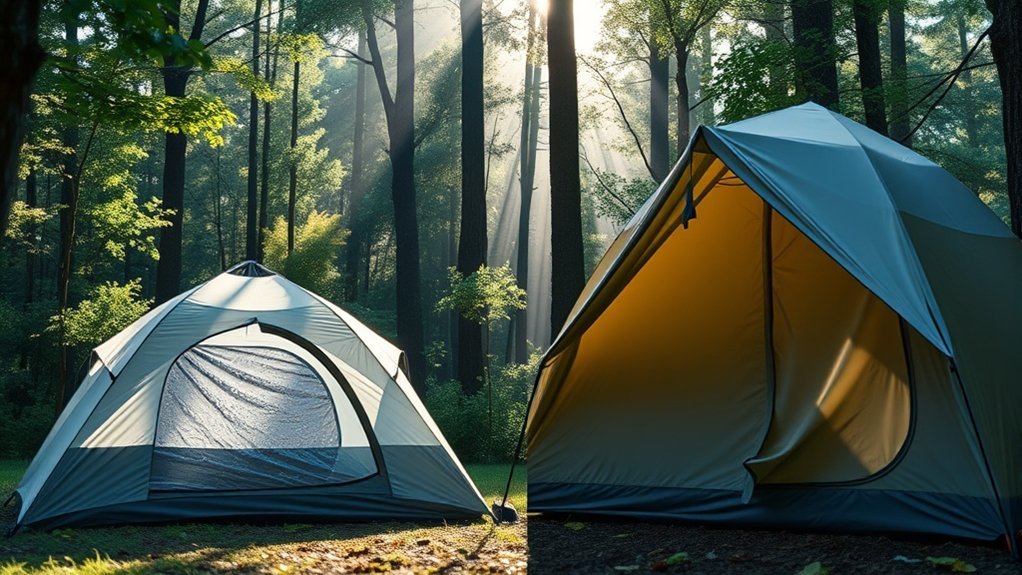
When comparing single-wall and double-wall tents, consider condensation, weight, and warmth. Single-wall tents are lightweight and efficient for alpine conditions but may struggle with moisture control. In contrast, double-wall tents offer better ventilation and insulation, making them ideal for longer trips. They provide more space and manage condensation effectively, ensuring a comfortable stay. Each type has its strengths, so assess your specific needs and preferences for your next outdoor adventure. You’ll find deeper insights as you explore further.
Understanding Single-Wall Tents

When you’re considering the weight of your gear for ultralight backpacking or mountaineering, single-wall tents offer a compelling option due to their construction from a single layer of waterproof and breathable fabric. This single-wall design greatly reduces weight, making it an efficient choice for those prioritizing minimalism. These tents excel in dry, cold alpine environments, where their streamlined structure allows for quick setups and immediate shelter.
However, you’ll want to be mindful of condensation management, as single-wall materials often lack the ventilation features of double-wall tents. This can lead to moisture buildup inside, especially in humid conditions. Additionally, the smaller footprint and limited interior space may restrict gear storage, which can be a consideration for longer trips. Overall, if you’re seeking to lighten your load without sacrificing durability, single-wall tents can be an excellent solution for your adventures.
Understanding Double-Wall Tents
Double-wall tents represent a versatile solution for campers seeking a balance between comfort and protection. Their design features include a breathable inner tent paired with a waterproof fly, ensuring enhanced ventilation and markedly reducing condensation. This breathable layer allows moisture from your breath to escape, creating a drier sleeping environment.
Additionally, double-wall tents typically offer multiple doors and vestibules, which provide greater living space and gear storage during extended stays. You can pitch the inner tent alone in dry conditions for increased airflow, yet still rely on the outer fly for rain protection. This modular design adapts well to various weather situations, enhancing insulation effectiveness during colder trips. Overall, double-wall tents combine practical ventilation benefits with flexible options, making them an excellent choice for campers who value both comfort and adaptability in their outdoor adventures.
Advantages of Single-Wall Tents
For campers who prioritize ultralight gear and quick setups, single-wall tents offer compelling advantages. Their lightweight design notably reduces the burden on your back, making them ideal for ultralight backpackers and fast-and-light missions. You’ll appreciate the simplified setup process, allowing you to pitch your tent rapidly, especially in adverse weather conditions common in alpine environments. This is vital when you need to escape the elements quickly.
With no rainfly, you also minimize the risk of water ingress during setup, keeping your interior dry when it rains. Their smaller footprint and lighter materials make them easier to pack, perfect for long hikes or climbs. Additionally, single-wall tents excel in dry and cold alpine conditions, where weight savings are paramount, and experienced users can effectively manage condensation. Embrace the liberation of a streamlined camping experience with a single-wall tent, designed for efficiency and performance.
Advantages of Double-Wall Tents
While you might prioritize weight savings on shorter trips, double-wall tents offer important advantages that can enhance your overall camping experience. Their breathable design greatly improves ventilation, reducing condensation buildup—a common issue with single-wall models. This feature alone can make your nights more comfortable and your gear drier.
Additionally, double-wall tents typically provide greater living space and better gear management. With multiple doors and vestibules, you can efficiently store your equipment, keeping your sleeping area organized and clutter-free. The modular design allows you to pitch the inner tent alone for enhanced airflow or use the fly for waterproof protection, adapting to diverse environments and variable weather conditions.
Moreover, their insulating properties help maintain warmth, preventing moisture from reaching your sleeping area. For longer trips where comfort and performance are crucial, double-wall tents are undeniably an excellent choice that supports a liberated camping lifestyle.
Choosing the Right Tent for Your Adventure
When you’re selecting a tent, consider how its performance aligns with the weather conditions you’ll face. Single-wall tents excel in lightweight, fast-paced scenarios, but may struggle in humid environments where condensation becomes an issue. On the other hand, double-wall tents offer superior moisture management and warmth, making them more suitable for extended trips in variable climates.
Tent Performance Considerations
Choosing the right tent for your adventure hinges on understanding how performance factors like weight, condensation management, and insulation play crucial roles in your outdoor experience.
Consider these tent performance factors:
- Lightweight design for ultralight backpacking.
- Condensation management to guarantee comfort during prolonged stays.
- Insulation capabilities for warmth in diverse weather conditions.
- Durability features and material comparisons that influence longevity.
Single-wall tents excel in portability but struggle with condensation, while double-wall options provide superior livability and comfort for longer trips. Your choice should reflect your trip duration, weather expectations, and personal comfort preferences. Invest wisely, and your outdoor experience will be liberating and enjoyable.
Weather Conditions Impact
Understanding how weather conditions impact your choice of tent is essential for ensuring a successful outdoor experience. In humid environments, double-wall tents excel in managing humidity effects, keeping the interior dry and comfortable. Conversely, if you’re tackling dry, cold conditions, a single-wall tent offers a lighter option without compromising performance. When facing temperature fluctuations, double-wall tents provide excellent insulation and adjustable ventilation, minimizing condensation risks. For multi-day adventures in variable weather, their versatility and livability make them a wise choice, despite the added weight. Ultimately, choosing the right tent hinges on your specific conditions—prioritizing moisture management and temperature control can notably enhance your outdoor journey.
Tips for Managing Condensation and Ventilation
Although managing condensation can be challenging, especially in varying weather conditions, a few strategic practices can greatly enhance ventilation in your tent. Here are some effective condensation solutions and ventilation techniques to take into account:
- Keep vestibules open for cross ventilation; this allows fresh air to flow and reduces moisture buildup.
- Utilize the breathable inner layer of double-wall tents, adjusting ventilation based on humidity levels for ideal airflow.
- Use absorbent materials, like Swedish dish rags, to wipe down any condensation inside, keeping your space dry and comfortable.
- Adjust the rainfly tension after setup to improve airflow and prevent moisture accumulation on inner walls.
Frequently Asked Questions
Can I Use a Single-Wall Tent in Winter Conditions?
Yes, you can use a single-wall tent in winter camping, but be cautious of condensation issues. Make certain proper ventilation and consider the tent’s materials to enhance warmth and reduce moisture buildup during cold conditions.
How Do I Clean and Maintain My Tent?
You clean your tent by shaking out dirt, wiping it down with mild soap and water, and letting it air dry. For tent repairs, patch any damage, and store it in a cool, dry place.
What Materials Are Commonly Used in Tent Construction?
Nylon fabrics and polyester blends dominate tent construction, offering durability and water resistance. You’ll appreciate how these materials balance weight and strength, ensuring your shelter withstands the elements while keeping you comfortable during your adventures.
How Do I Choose Tent Size for My Group?
When choosing tent size, consider your group size recommendations and tent capacity considerations. Aim for a tent that provides enough space for everyone, ensuring comfort and gear storage, while avoiding overcrowding during your outdoor adventures.
Are There Waterproof Options for Single-Wall Tents?
Yes, many single-wall tents feature waterproof coatings, enhancing their resistance to moisture. However, guarantee proper tent ventilation to minimize condensation, balancing waterproofing with air circulation for peak comfort during your outdoor adventures.
Conclusion
So, whether you’re embracing the minimalist lifestyle with a single-wall tent or reveling in the cozy confines of a double-wall setup, remember: condensation is just nature’s way of giving your gear a revitalizing spa treatment. Choosing the right tent isn’t rocket science, but it might feel like it when you’re shivering in the middle of the night. So pick wisely, and may your adventures be more about the views and less about the moisture! Happy camping!