
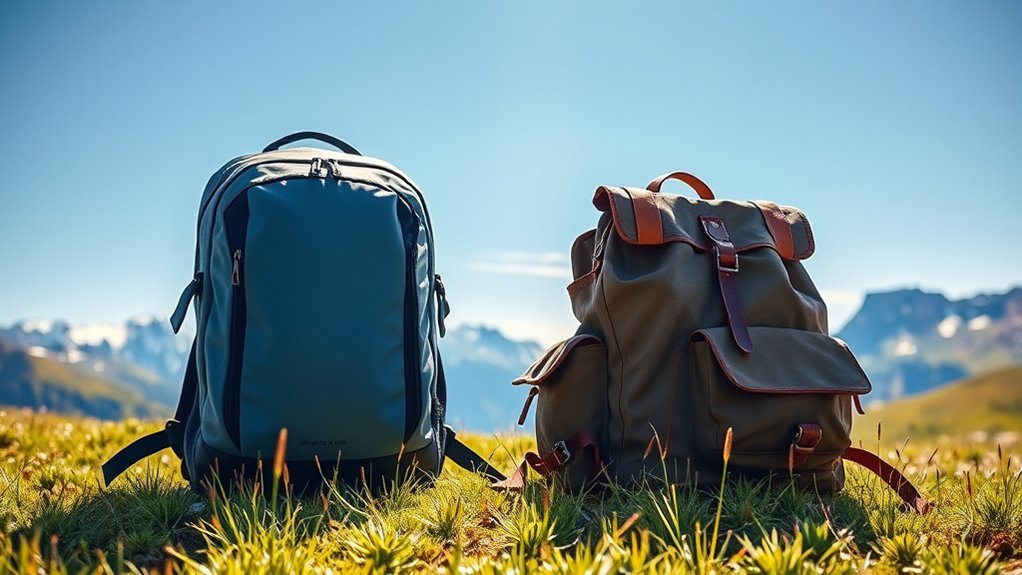
When choosing between a travel backpack and a rucksack, consider their core differences. Travel backpacks are lightweight, designed for everyday use, with multiple compartments for organization. Rucksacks, on the other hand, are built for durability and larger loads, perfect for outdoor adventures. They feature thicker straps and hip belts for stability. Knowing your intended use can guide your choice. Explore the nuances in design and functionality to find the ideal fit for your next adventure.
Definition and Origin

When it comes to choosing between a travel backpack and a rucksack, it’s essential to understand their distinct definitions and origins. A travel backpack is designed for convenience, featuring two shoulder straps, zippers, and multiple compartments to help you organize your essentials for everyday use. These bags evolved from simple cloth sacks, gaining popularity in the 20th century as urban commuting and outdoor activities surged.
On the other hand, the term “rucksack” comes from the German word “Ruck,” meaning “back.” Rucksacks boast a rugged design and are built for heavy-duty use, making them ideal for hikers, campers, and military personnel. They often feature flap-over tops secured by buckles or drawstrings, emphasizing durability and capacity for carrying bulky items over long distances. Understanding these definitions sets the stage for appreciating their unique functionalities in your adventures.
Design and Structure Differences
When comparing the design and structure of backpacks and rucksacks, you’ll notice distinct features tailored to different uses. Backpacks offer lightweight materials and multiple compartments for efficient organization, while rucksacks prioritize durability with larger storage and rugged aesthetics. Understanding these differences in storage capacity and comfort can help you choose the right option for your adventures.
Design Features Comparison
The design features of travel backpacks and rucksacks highlight their distinct purposes and user experiences. Backpacks boast a sleek, modern look with zippered compartments for quick access, while rucksacks offer a rugged design, often featuring flap closures secured with buckles or drawstrings.
| Feature | Backpack | Rucksack |
|---|---|---|
| Aesthetic | Sleek, modern | Rugged, traditional |
| Material | Lightweight synthetics | Heavy-duty leather or canvas |
| Comfort Focus | Padded straps, ergonomic design | Thicker straps, load-bearing support |
While backpacks are lightweight for daily use, rucksacks excel in durability and capacity, making them ideal for carrying heavier loads over longer distances. Choose based on your adventure needs!
Storage Capacity Variations
While both travel backpacks and rucksacks serve as essential companions for your journeys, their storage capacities reflect their unique designs and intended uses.
- Backpacks typically feature multiple compartments and come in various sizes, perfect for organizing school supplies, laptops, and daily essentials.
- Rucksacks, on the other hand, are larger and designed for bulkier items, making them ideal for camping gear and outdoor equipment.
- While backpacks emphasize a streamlined design with zippers for easy access, rucksacks often have flap-over tops secured by buckles or drawstrings, focusing on durability.
In essence, if you seek versatility for everyday use, a backpack fits your needs. But for outdoor adventures and long trips, a rucksack’s ample storage capacity is your best bet.
Comfort and Ergonomics
Choosing the right bag for your needs hinges on understanding how comfort and ergonomics play a role in design. Backpacks boast padded shoulder straps and ergonomic designs that evenly distribute weight, perfect for daily use. They’re lightweight and compact, fitting seamlessly into urban settings. In contrast, rucksacks prioritize stability, featuring thicker straps and padded hip belts for heavy loads over long distances. This design focuses on durability, making them ideal for rugged adventures. However, proper adjustment of a rucksack’s straps is essential; an ill-fitted rucksack can lead to discomfort. While backpacks offer user-friendly organization, rucksacks emphasize capacity. Ultimately, your choice should align with your intended use, balancing comfort and functionality for your adventures.
Capacity and Storage Comparison
When considering capacity and storage, you’ve got distinct differences between backpacks and rucksacks that cater to various needs. Here’s a quick breakdown:
- Size Range: Backpacks typically range from 15 to 50 liters, perfect for everyday essentials like books and laptops. Rucksacks usually exceed 50 liters, accommodating bulky camping gear and survival equipment for long trips.
- Organization: Backpacks come with multiple compartments, ideal for keeping your items organized. In contrast, rucksacks focus on a spacious main compartment, simplifying the packing of larger items.
- Durability vs. Convenience: While backpacks often feature laptop sleeves and tech pockets, rucksacks prioritize ruggedness and comfort for heavier loads, offering additional attachment points for external gear.
Choosing between the two depends on whether you need structured organization for daily use or the capacity to carry everything you need for an adventure.
Usage Scenarios: Which One to Choose?
When you’re deciding between a travel backpack and a rucksack, consider your daily commuting needs, outdoor adventure requirements, and travel versatility. A backpack is perfect for urban settings, offering organized compartments for your essentials. In contrast, a rucksack excels in rugged environments, providing the durability and capacity for extended excursions.
Daily Commuting Needs
As you navigate the hustle and bustle of daily commuting, the choice between a backpack and a rucksack becomes essential for optimizing your experience. For everyday use, backpacks outshine rucksacks due to their thoughtful design. Here are three reasons to evaluate a backpack:
- Lightweight Design: Ideal for carrying essentials like laptops and notebooks without added bulk.
- Multiple Compartments: Keep your items organized and easily accessible, perfect for urban environments.
- Ergonomic Comfort: Padded shoulder straps support longer wear, ensuring you stay comfortable during your commute.
While rucksacks excel in durability, they’re better suited for outdoor adventures. For the daily commuter, a backpack’s versatility and convenience make it the superior choice.
Outdoor Adventure Requirements
Choosing the right gear for outdoor adventures can greatly impact your experience, especially when deciding between a rucksack and a backpack. If you’re planning a long-distance hike or an extended camping trip, a rucksack is your best bet. Its rugged construction and larger capacity can accommodate bulky gear, making it ideal for rough terrains. With features like tie-downs and external pockets, you’ll access essentials quickly while on the move. Backpacks, while versatile for daily use, often lack the durability and support required for heavy-duty adventures. Consider the duration and intensity of your trip; for serious outdoor escapades, a rucksack delivers superior weight distribution and comfort, ensuring you stay focused on the journey ahead.
Travel Versatility Considerations
Selecting the right bag for your travels hinges on the activities you plan to undertake. If you’re after versatility, a backpack is your go-to. However, for rugged adventures, a rucksack shines. Here’s how to decide:
- Daily Use: Choose a backpack for commuting or urban travel. Its compartments keep your essentials organized.
- Outdoor Activities: Opt for a rucksack when hiking or camping. It’s built to handle bulky gear and offers stability for heavy loads.
- Longer Trips: If your adventure requires carrying substantial weight, a rucksack guarantees comfort and efficient load distribution.
Evaluate your plans carefully; this will guide you to the bag that matches your spirit of exploration and freedom.
Material and Durability
When it comes to material and durability, understanding the differences between travel backpacks and rucksacks is essential for making the right choice for your needs. Backpacks typically utilize lightweight synthetic materials like nylon or polyester, prioritizing portability. In contrast, rucksacks are crafted from heavier-duty materials such as canvas or leather, built to endure rugged conditions.
Here’s a quick comparison:
| Feature | Travel Backpack |
|---|---|
| Material | Nylon/Polyester |
| Weight | Lightweight |
| Durability | Moderate |
| Price | Generally Affordable |
| Use | Everyday Activities |
| Feature | Rucksack |
| Material | Canvas/Leather |
| Weight | Heavier Duty |
| Durability | High |
| Price | Long-term Investment |
| Use | Outdoor Expeditions |
Both options may offer specialized features, ensuring you find the perfect fit for your adventures.
Comfort and Ergonomics
While both travel backpacks and rucksacks serve distinct purposes, comfort and ergonomics play an important role in your experience, especially during extended use. Here’s what you need to take into account:
- Weight Distribution: Backpacks typically feature padded shoulder straps and a comfortable back panel, guaranteeing even weight distribution for daily use and longer trips. This helps reduce stress on your shoulders and back.
- Load-Bearing Capability: Rucksacks prioritize stability with thicker straps and padded hip belts, making them suitable for heavy loads. However, they can be bulkier, potentially leading to discomfort on long hikes.
- Adjustment: Properly adjusting rucksacks, including waist and chest straps, is vital for maximizing comfort. This ensures the weight is evenly distributed, minimizing fatigue during your adventures.
Choosing the right option for your journey can greatly enhance your comfort and overall experience.
Frequently Asked Questions
Can I Use a Travel Backpack for Hiking?
Yes, you can use a travel backpack for hiking, but make certain it has adequate support, hydration access, and storage for gear. It’s versatile, but dedicated hiking packs might offer better comfort and functionality for long treks.
Are Rucksacks Suitable for Daily Commuting?
“Don’t put all your eggs in one basket.” Rucksacks are perfect for daily commuting; they’re spacious, comfortable, and versatile. You’ll find them ideal for carrying your essentials while keeping your hands free for life’s adventures.
How Do I Clean My Travel Backpack?
To clean your travel backpack, empty it, shake out debris, and spot clean with mild soap and water. For deeper cleaning, hand wash or use a gentle cycle, then air dry completely before storing.
What Features Should I Look for in a Rucksack?
When choosing a rucksack, look for adjustable straps, durable materials, ample storage, and water resistance. Consider features like ventilation and pockets for organization. These elements’ll enhance your comfort and freedom on every adventure.
Do Travel Backpacks Come With Warranty Options?
Yes, many travel backpacks come with warranty options. You should check the brand’s policy for specifics, as warranties can cover defects or material failures, ensuring your investment stays protected during your adventures.
Conclusion
In the end, whether you’re maneuvering bustling city streets or trekking through rugged trails, choosing between a travel backpack and a rucksack boils down to your adventure’s demands. Picture yourself seamlessly zipping through airport terminals with a sleek backpack, or commencing on a mountain hike with a sturdy rucksack hugging your back. Each serves its purpose beautifully, so consider your journey’s landscape, and pick the one that’ll carry your essentials while making your travels a breeze.