
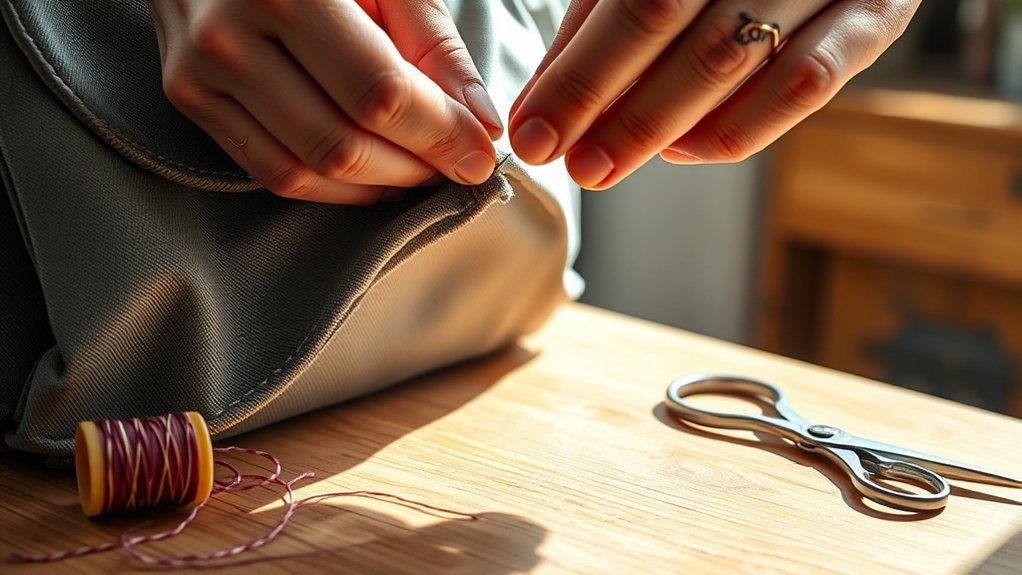
To repair a torn backpack seam, you’ll need a basic sewing kit and power tape. First, clean the area thoroughly. Then, position a patch over the tear and secure it with minimal adhesive. Use back stitches with heavy-duty thread for sewing, reinforcing the seam for durability. Seal cut edges with a fabric sealant to prevent fraying. Regular inspection and maintenance extend your backpack’s life. Discover more detailed tips for effective repairs to keep your backpack in top shape.
What NOT to Do

When you notice a torn seam on your backpack, it might be tempting to jump right into repairs, but there are significant missteps to avoid. First, don’t simply sew the torn fabric back together; this can worsen the damage and lead to further fabric loss. Addressing damage immediately is vital, so don’t delay repairs. Ignoring a small tear now can escalate into a larger issue later, resulting in costly fixes. Refrain from cutting away broken threads; this weakens the fabric even more. It’s also wise to avoid reinforcing tears with deeper stitching, as this can create additional stress on the fabric and exacerbate the tearing. Instead, recognize that prompt action on minimal damage is necessary for maintaining the integrity of your backpack. Stay vigilant and strategically approach the repair process to guarantee your gear remains reliable for your adventures.
What You Will Need
To repair a torn backpack seam effectively, you’ll need a few essential materials and tools. Gather a basic sewing kit, power tape, and scissors to guarantee a thorough patching process. Set aside about 10-20 minutes to complete the repair, which will enhance the seam’s durability.
Essential Repair Materials
Before you begin repairing a torn backpack seam, gather essential materials to assure a successful fix. Having the right tools will streamline your repair process and bolster durability.
- Basic Sewing Kit: Includes needles, thread (preferably matching your backpack’s color), and a thimble to help pierce through thick fabric.
- Power Tape: Look for tape with an internal thread weave for strong reinforcement. Apply it on both sides of the fabric.
- Scissors: Use them for precise cutting of tape and frayed threads before you start.
- Double Thread: Consider using this for added strength, particularly near zippers where stress is concentrated.
Investing 10-20 minutes in these repairs will greatly extend your backpack’s life.
Tools for Effective Patching
Effective patching requires a few key tools to guarantee a successful repair of your backpack’s torn seam. First, a sewing kit is essential, including needles, thread, and a thimble to help you sew through thick fabric layers. Next, power tape with an internal thread weave is recommended for reinforcing torn seams, adding strength to your repair. You’ll also need scissors for precise cutting, ensuring you only address the damaged areas without further fabric loss. Finally, having a variety of patch materials, especially adhesive patches designed for nylon, can enhance your repairs on different fabric types. With these tools in hand, you’re well-equipped to tackle that seam repair effectively and confidently.
Time Investment Required
While repairing a torn backpack seam might seem intimidating, it only takes about 10-20 minutes to complete the process. To guarantee a successful repair, gather the following materials:
- Sewing Kit: Includes needles, thread, and a thimble for better grip during stitching.
- Power Tape: With an internal thread weave, it reinforces the damaged area before sewing, providing added strength and adhesion.
- Scissors: For precise cutting of tape and excess threads, guaranteeing a clean repair surface.
- Affordable Materials: Make sure your supplies are easily accessible, so you can perform quick repairs whenever necessary.
With these tools in hand, you’ll be ready to restore your backpack’s functionality and hit the road again.
Clean the Area
To guarantee a successful repair of a torn backpack seam, start by thoroughly cleaning the area around the tear. Use a damp cloth to wipe away any dirt or debris, ensuring a clean surface for the repair. If the fabric is heavily soiled, wash the area with mild soap and water, then let it dry completely before moving forward. Check for any oils or residues, such as those from snacks, as these can weaken adhesive bonds during the repair process.
Next, use rubbing alcohol on a cotton swab to clean the area surrounding the tear. This step effectively removes oils and enhances the adhesion of your tape or adhesive. Remember, proper cleaning greatly improves the effectiveness and durability of your repair materials. Taking this time to clean will pay off, ensuring your backpack is ready for whatever adventures lie ahead.
Apply the Patch
Position the patch over the torn area, ensuring it’s larger than the rip for maximum coverage. Opt for patches with rounded corners to enhance adhesion and prevent lifting. Follow these steps for a successful application:
Position the patch over the tear, ensuring it’s larger than the rip for optimal coverage and durability.
- Clean Surroundings: Make sure the area around the tear is free from dirt and oils to promote strong adhesion.
- Adjust if Needed: If using a repositionable patch, position it carefully and adjust before pressing it down firmly.
- Apply Minimal Glue: Use a small amount of glue to avoid seepage, ensuring it remains discreet on the fabric.
- Cure Time: Allow the patch to cure for at least 24 hours, ensuring ideal adhesion and durability before putting the backpack to use.
Sewing Techniques
When repairing your backpack seam, selecting the right thread and stitching technique is essential for durability. Use a back stitch with double thread to guarantee a strong hold, especially in high-stress areas. Finally, secure your work with a reliable knot to prevent unraveling after you finish sewing.
Choosing the Right Thread
Choosing the right thread is essential for successfully repairing a torn backpack seam, as it directly impacts the durability of your repair. Here are key factors to take into account:
- Thread Type: Use heavy-duty polyester or nylon for superior strength and wear resistance.
- Thread Weight: Match the thread thickness to your fabric; opt for heavier thread on thick nylon and lighter thread for thinner materials.
- Double Thread: Think about using double thread for added strength, reducing the risk of the seam breaking under stress.
- Color Choice: Select a thread color that matches your fabric for a seamless look, or go for a contrasting color to add a stylish flair.
With the right thread, you can guarantee your repair holds up against the rigors of daily use.
Stitching Techniques for Durability
To guarantee your backpack seam repair stands the test of time, employing effective stitching techniques is essential. Use a back stitch to sew patches onto fabric, as it offers exceptional durability compared to other methods. When working with thick fabric layers, employ a thimble to push the needle through easily, minimizing finger injuries and ensuring smooth stitching. Align the fabric pieces as they were originally positioned to maintain structural integrity. For maximum strength, opt for double thread; this not only fortifies the seam but also reduces the risk of breakage during use. Match the thread color to the fabric for a seamless look, and apply a sealant like fray check to the edges of your stitches to prevent further fraying.
Knotting for Secure Finishing
After employing effective stitching techniques, securing your threads with proper knotting is essential for a durable seam repair. Here’s how to knot effectively:
- Use a double knot: This prevents unraveling, especially in high-stress areas like seams.
- Leave a tail: Keep at least 1-2 inches of thread to guarantee a firm grip and minimize slipping.
- Wrap the thread: For a strong knot, wrap the thread around your needle at least three times before pulling it through the loop.
- Consider a back stitch: This reinforces the seam before knotting, providing extra durability.
Regularly check and re-knot any loose threads after repairs to maintain seam integrity and extend your backpack’s lifespan.
Sealing the Edges
Sealing the edges of a torn backpack seam is vital for preventing further fraying and damage. Begin by applying a fabric sealant, such as fray check, to the cut edges of the fabric. Select a patch that’s larger than the rip, guaranteeing it covers the damaged area completely. Before affixing the patch, coat its edges with the sealant to form a robust bond that enhances durability.
For nylon fabrics, opt for a flexible adhesive specifically designed for outdoor gear. This will provide a waterproof seal along the edges, protecting against moisture and wear. After you’ve applied the patch, it’s important to let the adhesive cure for 24 hours to confirm a solid, lasting bond.
Regularly inspect and seal the edges on your seams to maintain your backpack’s integrity. Addressing wear promptly not only prolongs its life but also liberates you from future repair headaches.
Allowing the Repair to Cure
While you might be enthusiastic to use your backpack again, allowing the repair to cure properly is essential for guaranteeing the patch adheres effectively. Rushing this step can compromise your hard work.
Here are some key points to follow during the curing period:
- Cure Time: Allow the patch to cure for at least 24 hours for ideal adhesion.
- Avoid Disturbance: Don’t move or disturb the patched area to prevent shifting and weakening the bond.
- Use Clips or Weights: If needed, secure the patch with clips or weights to guarantee consistent contact with the fabric.
- Ventilation: Keep your backpack in a dry, well-ventilated area to aid the drying process of the adhesive.
After the curing period, inspect the patch and surrounding fabric for any signs of weakness before resuming regular use. This diligence guarantees your backpack is ready for your next adventure!
Maintenance Tips for Longevity
To guarantee your backpack lasts through countless adventures, it’s important to incorporate regular maintenance into your routine. Start by inspecting your backpack frequently for signs of wear, like frayed seams or small rips. Addressing these issues early prevents them from escalating. Clean your backpack periodically to remove oils and dirt that can weaken adhesive patches and seams. When it’s time to store your backpack, choose a cool, dry place to avoid material degradation from excess moisture and heat.
Avoid overpacking your backpack; mechanical stress from excessive weight can lead to fabric tears and seam damage. If repairs are necessary, use appropriate materials such as nylon patches and heavy-duty thread to promote durability. By following these maintenance tips, you’ll enhance your backpack’s longevity and keep it ready for your next adventure.
Frequently Asked Questions
Can I Use Regular Glue Instead of Flexible Glue?
No, you can’t use regular glue for fabric repairs. It’ll harden and crack, compromising flexibility. Instead, opt for flexible glue designed for fabric to guarantee a durable, long-lasting bond that maintains your backpack’s functionality.
How Do I Choose the Right Patch Material?
Choose a patch material that matches your backpack’s fabric type—nylon or polyester works best. Make certain it’s durable, waterproof, and flexible. Test for adhesion and compatibility with adhesives to guarantee a long-lasting repair.
What if the Tear Is Too Large to Patch?
If the tear’s too large to patch, consider sewing it with heavy-duty thread or using fabric glue for a more robust repair. Reinforce with a backing piece for added strength, ensuring your backpack’s durability.
Can I Machine Sew Instead of Hand Sewing?
Yes, you can machine sew instead of hand sewing. Just guarantee you use a heavy-duty needle and appropriate thread for durability. This method speeds up the process and often results in a stronger seam.
How Often Should I Check My Backpack for Damage?
You should check your backpack for damage regularly, ideally before each major use. Inspect seams, zippers, and fabric for wear and tear to prevent issues during your adventures, ensuring it performs reliably when you need it most.
Conclusion
Now that you’ve tackled the repair, there’s one last step to guarantee your backpack stands the test of time. Will your patch hold up against the elements? As you let the repair cure, imagine the adventures awaiting you. Each trip could be a test of your handiwork. Regular maintenance will keep your backpack ready for whatever comes next. So, are you prepared to take on the world with confidence in your repair? The journey begins now.