
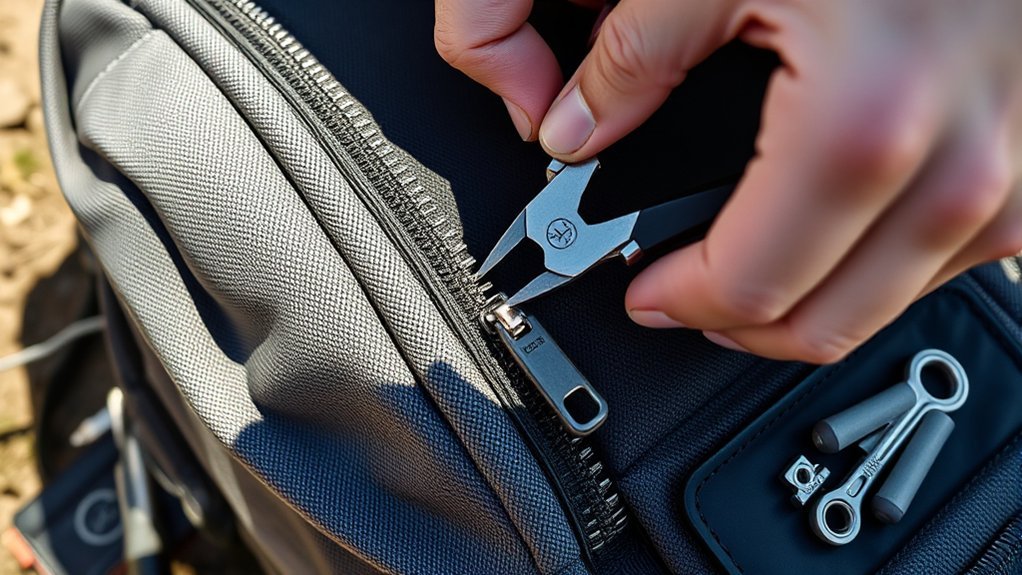
To fix zipper teeth on your backpack, start by inspecting for gaps and misalignment. Use needle nose pliers to gently squeeze the zipper teeth together to align them properly. Test the zipper’s movement after adjustments to guarantee it’s functioning smoothly. Clean any debris and apply lubricant if necessary. Regular maintenance can prolong the zipper’s life and prevent future issues. Keep going to uncover further tips and tricks for effective zipper repair.
Understanding Zipper Misalignment

When you notice your backpack zipper having trouble closing, it’s likely due to misalignment of the teeth. This misalignment often results from wear and tear caused by frequent use, leading to gaps between the top and bottom of the zipper. Addressing this promptly is essential; otherwise, it could worsen, making your zipper unusable. Regularly inspecting your zipper helps you catch early signs of misalignment, allowing for timely repairs.
To realign the zipper teeth, you can gently squeeze the misaligned sections using pliers. This simple action can restore functionality without needing a complete zipper replacement. Additionally, practicing proper maintenance and care will extend your zipper’s lifespan, reducing the chances of recurring issues. By understanding zipper misalignment, you empower yourself to take control of your backpack’s functionality, ensuring it serves you well on all your adventures.
Tools Needed for the Repair
To effectively repair zipper teeth on your backpack, you only need a pair of needle nose pliers. This simple household repair requires no additional materials or tools. The needle nose design provides better grip and precision, allowing you to work efficiently on those tiny zipper teeth.
When using the pliers, gently squeeze the zipper teeth together to correct any gaps that may have formed from wear and tear. It’s essential to apply minimal pressure during this process. Too much force can damage the zipper or its teeth, ultimately defeating the purpose of the repair.
This quick fix can restore the functionality of your zipper without the need for costly replacements. By taking this proactive approach, you not only save money but also extend the life of your backpack. So, grab those pliers and get ready to tackle that zipper issue with confidence.
Identifying the Gap in the Zipper
To identify the gap in your zipper, start with a visual inspection of the teeth on both sides when the zipper is fully closed. Look for any misalignments or bends that prevent proper closure. Measuring the alignment can help you determine the extent of the gap and guide your repair efforts.
Visual Inspection Techniques
How can you effectively identify gaps in your zipper? Start by fully opening the zipper to inspect the alignment of the teeth. Look for any signs of wear, like bending or misalignment, which can hinder proper closure. Examine both sides of the zipper closely; any visible gaps indicate misalignment that requires your attention. Verify the teeth interlock correctly—this is essential for functionality. Don’t overlook the slider; it should glide smoothly along the teeth. If you notice any obstruction or tightness, it’s a sign of potential issues. Regular visual inspections can catch problems early, saving you from more significant repairs or replacements down the line. Stay proactive to keep your backpack’s zipper functioning seamlessly.
Measuring Zipper Alignment
After completing a visual inspection of your backpack’s zipper, the next step involves measuring the alignment of the zipper teeth. Begin by fully opening the zipper and checking for any gaps between the top and bottom teeth. Use a ruler or measuring tape to determine the distance of the gap; consistency is key throughout the zipper’s length.
- A gap wider than 1/8 inch often signals misalignment.
- Pliers can help adjust the teeth back in line.
- Look for any damaged or missing teeth that could exacerbate issues.
- Regular assessments prevent further damage, keeping your zipper functional.
Using Pliers to Adjust the Zipper
If you’ve noticed a widening gap between the zipper teeth on your backpack, using needle nose pliers can be an effective solution. First, identify the gap at the top and bottom of the zipper caused by wear. Take your needle nose pliers and gently squeeze the zipper together, applying minimal pressure to avoid damaging the teeth. Make certain you’re aligning the teeth correctly as you do this. After squeezing, check the alignment to confirm both sides are closer together. Once you’ve made the adjustment, fully open the zipper and then attempt to close it to test if it functions smoothly. This simple fix can effectively extend the life of your backpack, saving you from a costly replacement. By leveraging this technique, you empower yourself to maintain your gear, making sure it remains reliable for your adventures.
Ensuring Proper Alignment
Confirming the proper alignment of zipper teeth is essential for maintaining the functionality of your backpack. Misalignment can lead to frustrating jams and eventual zipper failure. Follow these steps to achieve proper alignment:
- Inspect the Zipper: Look for visible gaps or misalignments between the top and bottom sections.
- Use Pliers Carefully: Gently squeeze the zipper together with pliers, applying minimal pressure to avoid damaging the teeth or tape.
- Check Interlocking: After squeezing, visually inspect both sides to verify the teeth interlock properly.
- Regular Maintenance: Frequently check and maintain the alignment to prevent future issues.
Testing the Zipper Functionality
After making your adjustments, fully open the zipper to guarantee all teeth align properly. Next, gently pull the zipper slider up and down to check for smooth operation without resistance. Pay attention to the teeth during this process to confirm they interlock correctly.
Fully Open Zipper
Once you’ve completed the zipper repair, fully opening the zipper is essential for testing its functionality. Check that all teeth align properly; this guarantees a smooth operation. Follow these steps to evaluate your repair:
- Inspect for obstructions or misalignments in the zipper teeth.
- Attempt to close the zipper and feel for any catching or sticking.
- Observe the zipper’s movement, confirming it glides freely.
- Confirm that the teeth interlock effectively when closed.
If the zipper closes seamlessly and operates without issue, your repair has been successful. You’ve not only restored the functionality of your backpack but also reclaimed the freedom to explore without the hassle of a faulty zipper. Enjoy your adventures!
Smooth Closing Test
A smooth closing test is essential to verify the zipper’s functionality after repairs. Start by fully opening the zipper to check for any gaps or misalignments. Next, slowly close the zipper, paying attention to any resistance or sticking points along the way. Ascertain that both sides align properly and the slider moves seamlessly along the teeth. If the zipper closes smoothly without issues, you’ve successfully completed the repair. However, if you encounter any problems, further adjustments are necessary. Regularly testing the zipper post-repair can help you catch alignment issues early, preventing them from escalating into larger problems. Prioritize this test to maintain the longevity and reliability of your backpack’s zipper.
Troubleshooting Common Issues
Zippers on backpacks can encounter several common issues that may hinder their functionality. Addressing these problems can restore your freedom to move without hassle.
Zipper issues on backpacks can disrupt your day, but with a few simple fixes, you can regain hassle-free mobility.
- Misaligned Teeth: If you notice misalignment, gently squeeze the zipper slider with pliers to bring the teeth closer together.
- Stuck Zipper: Always check for fabric caught in the teeth before trying to zip. Clear obstructions to avoid damage.
- Gaps in Teeth: Wear and tear can create gaps. Adjust the zipper slider to snug the fit and improve closure.
- Difficult Pull: If the zipper feels stiff, apply silicone spray lubricant to reduce friction and facilitate smoother movement.
Tips for Preventive Maintenance
To keep your backpack’s zipper functioning smoothly, regular maintenance is crucial. Start by inspecting the zipper frequently for signs of wear or misalignment. Catching issues early can save you from bigger problems later. Clean the zipper regularly, removing debris and lint that can obstruct its movement. A clean zipper operates more effectively. Periodically apply a zipper lubricant or wax to guarantee smooth operation and prevent sticking. This simple step can greatly extend the zipper’s life. Also, avoid overloading your backpack; excessive weight strains the zipper and can lead to damage. Finally, when you’re not using your backpack, store it in a dry, cool place. Moisture can cause wear on the zipper components, so proper storage is key to longevity. By following these preventive maintenance tips, you’ll enjoy a reliable and functional zipper for years to come.
Benefits of Repairing Over Replacing
While some may consider replacing a malfunctioning zipper, repairing it often proves to be the smarter choice. Here are some compelling benefits of opting for repair:
- Cost-Effective: Repairing a zipper is considerably cheaper than buying a new backpack, letting you keep your money for other priorities.
- Environmental Impact: Extending your backpack’s life through repairs reduces waste, promoting sustainability and a healthier planet.
- Time-Saving: You can perform simple repairs at home, eliminating the need for professional services and saving valuable time.
- Enhanced Usability: A well-functioning zipper restores your backpack’s reliability, allowing you to use it seamlessly without the hassle of a replacement.
Frequently Asked Questions
Can I Fix a Zipper That Has Completely Separated?
Yes, you can fix a completely separated zipper. Start by realigning the teeth, then use pliers to gently squeeze them together. If necessary, replace the slider for a smoother operation. It’s a straightforward process!
What if My Zipper Slider Is Broken?
If your zipper slider’s broken, don’t despair! You can replace it easily. Just purchase a compatible slider, remove the old one, and slide the new one on. Your backpack’ll be functional again in no time!
How Do I Prevent Zipper Teeth Misalignment?
To prevent zipper teeth misalignment, regularly clean the zipper track, avoid overloading your backpack, and guarantee the slider’s properly aligned before zipping. Check for debris or damage that could hinder smooth operation during use.
Is There a Temporary Fix for a Stuck Zipper?
If you find your zipper’s feeling a bit stubborn, try applying a lubricant like soap or wax to ease its journey. Gently wiggle the pull tab, and it should glide smoothly, freeing your bag’s contents.
Can I Use Lubricants on My Backpack Zipper?
Yes, you can use lubricants on your backpack zipper. Apply a small amount of silicone spray or wax to reduce friction and improve movement. Avoid grease-based products, as they may attract dirt and grime.
Conclusion
By following these steps, you can restore your backpack’s zipper to its former glory, saving it from the brink of irreparable disaster. Regular maintenance guarantees you won’t face these issues again, making your gear as reliable as a Swiss Army knife. Remember, a well-functioning zipper not only enhances your backpack’s lifespan but also keeps your belongings secure. So don’t hesitate to tackle those zipper repairs—your backpack deserves it!