Last Updated on July 30, 2026 by Caleb Warren
A useful digital nomad packing list should do more than name clothes and gadgets. It should help you protect your work, meet airline rules, stay connected, and move comfortably between destinations. Start with the items that keep you working and safe, then add clothing and conveniences based on the climate, laundry access, and length of your stay.
Quick Answer
Pack a carry-on-compliant bag, a reliable remote-work kit, one week of mix-and-match clothing, essential documents, medication, and a backup plan for power, internet, and lost devices. Check airline limits before departure, keep power banks in your carry-on, and remove anything you cannot explain or use regularly.
Key Takeaways
- Choose luggage by your airline’s dimensions and weight limits, not by liters alone.
- Keep your laptop, medication, documents, power bank, and one change of clothes in your personal item or carry-on.
- Build your wardrobe around laundry access and repeatable outfits rather than the total length of the trip.
- Carry a backup internet method, charging cable, payment card, and protected copy of essential work files.
- Test the fully packed bag before departure and remove items that add weight without solving a likely problem.
At a Glance
| Time Required | About 60–90 minutes for planning, packing, weighing, and testing |
| Difficulty | Easy to moderate |
| Tools Needed | Packing checklist, luggage scale, charging test, and optional packing cubes |
| Cost | $0 when using gear you own; optional luggage, adapters, backups, and ergonomic accessories vary in price |
Disclosure: As an Amazon Associate I earn from qualifying purchases. Some links on this page are affiliate links, at no extra cost to you.
Plan Around Your Trip and Work Requirements
Before opening your suitcase, write down the conditions your packing list must handle. Include your operating airline, destination climate, trip length, laundry access, accommodation type, work schedule, and any equipment your employer requires.
- Airline: Check the operating carrier’s current carry-on dimensions and weight allowance for every flight segment.
- Climate: Review expected heat, rain, humidity, insects, and indoor air conditioning.
- Laundry: Pack more only when washing clothes will be difficult or expensive.
- Work: List the ports, cables, authentication tools, software, and peripherals needed to complete a normal workday.
- Accommodation: Check whether towels, toiletries, a desk, kitchen equipment, and laundry facilities are supplied.
A 35–40L backpack is a common starting point for carry-on-focused travel, but liters do not determine compliance. The International Air Transport Association notes that cabin-bag limits vary by airline, cabin, and aircraft. Measure the bag with its pockets filled and include its wheels and handles.
Pro Tip: Pack your bag completely, walk with it for 20 minutes, climb stairs, and lift it overhead. A bag that feels acceptable in a bedroom may feel much heavier during a long transfer.
Essential Luggage and Travel Gear

Choose luggage that matches how often you move. A structured travel backpack is usually easier on stairs, trains, and uneven streets, while a wheeled carry-on can be more comfortable in airports and paved cities. Some travelers use a backpack such as the Tropicfeel Nest or Hive, while others prefer a lightweight four-wheel Samsonite carry-on. Treat these as examples rather than automatic recommendations.
Look for the following features:
- Comfortable fit: Padded shoulder straps, an adjustable sternum strap, and a hip belt when the load is heavy enough to need one
- Laptop protection: A padded compartment that keeps the computer away from the bottom edge of the bag
- Useful access: A clamshell or wide-opening design that lets you reach clothing without unloading everything
- Durable hardware: Reliable zippers, reinforced handles, and fabric suited to your travel conditions
- Weather protection: Water-resistant material or a separate rain cover for wet destinations
- Secure storage: Lockable zipper pulls or a bag that fits inside a hostel or hotel locker
Use packing cubes or compression bags to separate clothing, work equipment, underwear, and laundry. Compression can reduce volume, but it does not reduce weight. Leave enough room to repack the bag without forcing the zippers.
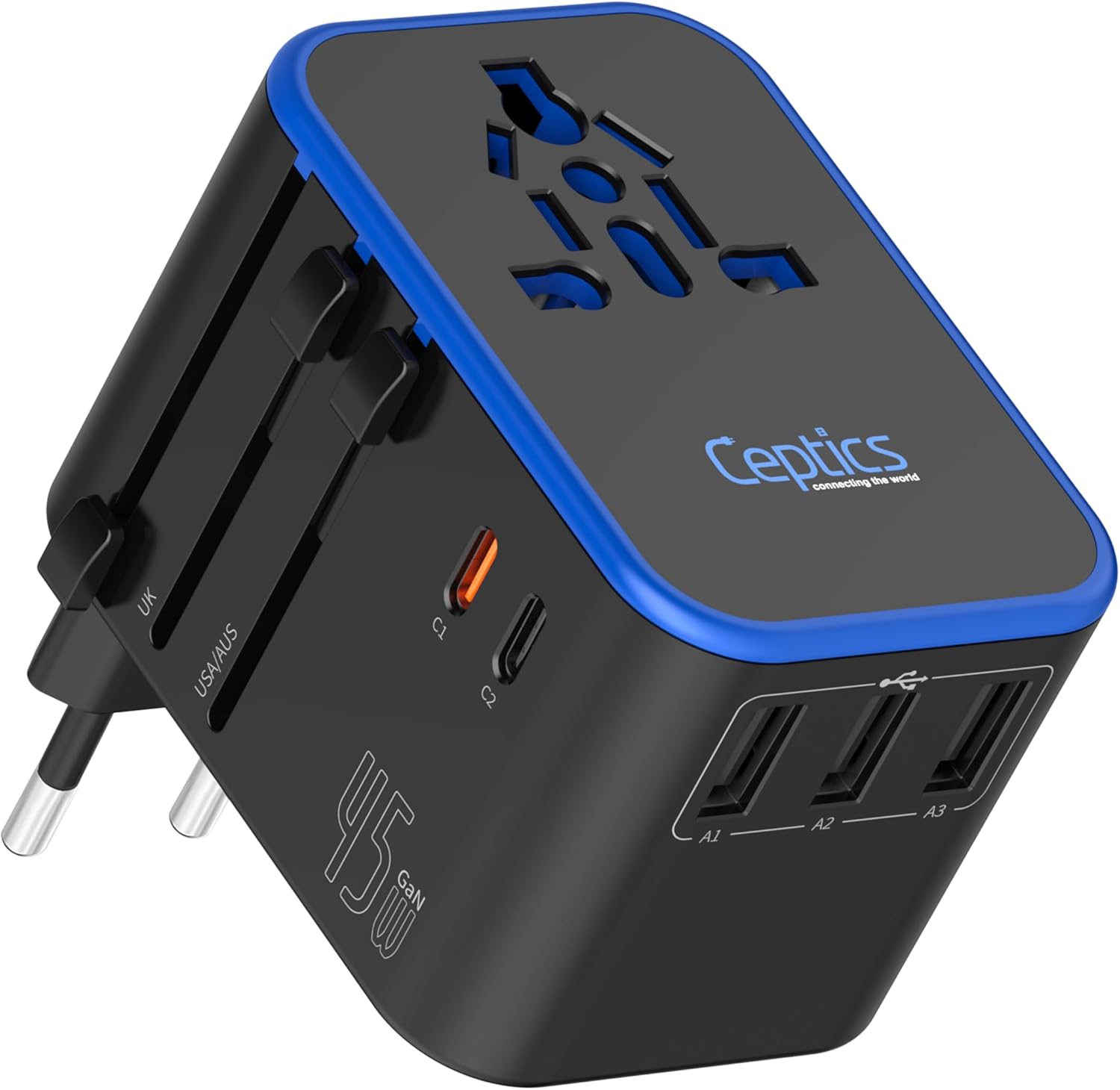
A universal travel adapter is useful when your destinations use different plugs. However, an adapter changes plug compatibility; it may not convert voltage. Check the electrical-input label on every charger or appliance before connecting it. Many laptop and phone chargers accept a broad input range, but high-heat appliances may not.
Clothing Essentials for Different Climates

Your wardrobe should cover the time between laundry days, not every day of the trip. A simple color palette makes it easier to repeat layers and create different outfits without packing separate pieces for every activity.
Warm and Humid Climates
- Four to six breathable shirts or tops
- Two or three lightweight bottoms
- One presentable outfit for meetings or evenings
- Underwear and socks for your normal laundry cycle
- A sun hat and lightweight rain layer
- Sleepwear that can double as comfortable indoor clothing
Quick-drying synthetic blends, merino wool, and some linen garments can be easier to wash on the road than heavy cotton. Cotton may feel comfortable but can remain damp longer in humid conditions.
Cool or Changeable Climates
Use layers instead of one bulky coat when conditions allow. Pack a base layer, a warm mid-layer, and a weather-resistant outer layer. A high-quality sweater and a compact wind jacket, including foldable options from brands such as Uniqlo, can cover many mild conditions.
Mosquito-Prone Destinations
Long dresses may cover some skin, but they are not a complete mosquito strategy. The CDC recommends loose-fitting long-sleeved shirts and long pants plus an appropriate EPA-registered insect repellent where mosquito-borne illness is a concern.
Footwear
Most nomads need no more than two or three pairs:
- Comfortable walking shoes or water-resistant sneakers
- Light sandals or Havaianas-style flip-flops for warm weather and shared showers
- An activity-specific pair only when the trip genuinely requires hiking, running, formal events, or specialized work
Note: Wear the bulkiest shoes and outer layer during transit when practical. This saves bag space without changing the total weight you must carry.
Must-Have Tech for Remote Work
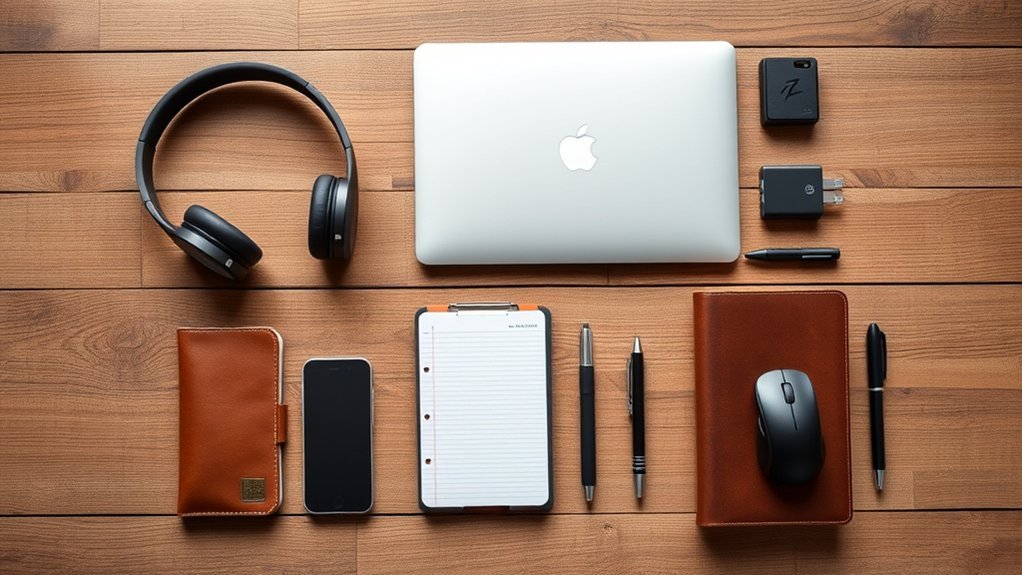
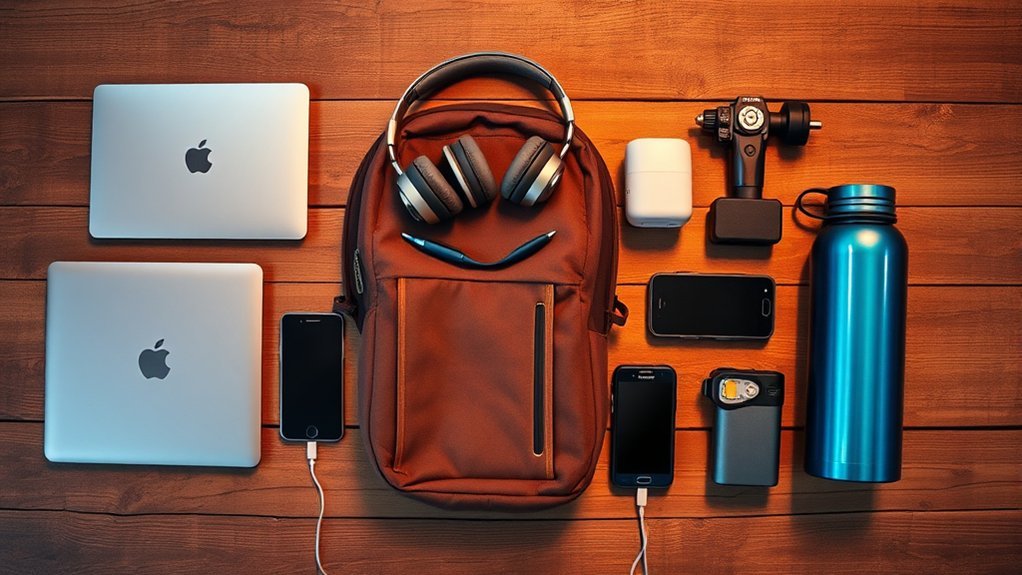
Pack technology around the work you actually perform. A writer may need only a laptop and headphones, while a designer, developer, photographer, or video editor may require more storage, ports, processing power, or display space.
- Laptop and charger: Use a machine capable of completing your normal workload without depending on a second computer.
- Phone: Keep booking details, maps, authentication apps, emergency contacts, and communication tools available offline where possible.
- Headphones: Noise-canceling headphones such as the Sony WH-1000XM5 can help in shared spaces, but compact earbuds may be easier to carry.
- USB-C hub or adapters: Bring only the ports required by your equipment.
- Charging cables: Standardize connectors when possible and carry one critical backup cable separately.
- External storage: Use an encrypted external drive when your work requires a local backup or large media files.
- Portable power bank: Select the capacity from your phone and workday needs rather than using 20,000mAh as an automatic minimum.
Warning: Power banks and spare lithium batteries belong in carry-on baggage, not checked baggage. Check the watt-hour rating printed on the battery. Under current FAA guidance, batteries up to 100 Wh are generally permitted for personal use, while 101–160 Wh batteries require airline approval and are limited. Airline and international rules may add restrictions.
A reputable VPN, including services such as NordVPN or ExpressVPN, may be useful or required by an employer. However, a VPN is only one layer of protection. It does not replace software updates, multi-factor authentication, secure passwords, device encryption, or careful handling of sensitive information.
Organizing Your Remote Office
Create a work kit that can be removed from your main bag in one movement. A tech-friendly backpack such as the Nomatic Travel Backpack is one example, but a simple padded sleeve and organized pouch can work just as well.
- Keep the laptop, charger, mouse, keyboard, stand, hub, and cables in consistent locations.
- Use cable ties or a small organizer so cords do not snag or bend sharply.
- Separate electronics from liquids, wet clothing, and toiletries.
- Place heavy technology close to your back when carrying a backpack.
- Keep small adapters in a closed pouch rather than loose in an open pocket.
- Store a backup charging cable away from the primary cable so one lost pouch does not stop your work.
Ergonomic accessories such as a portable laptop stand, separate keyboard, and mouse can improve a long workday. Pack them only when you use them consistently. Test the complete setup at home and confirm that every device connects, charges, and fits on a small table.
Documents, Money, and Insurance
Your documents and payment backups are more important than most optional gear. Before international travel, check passport validity, visa or entry requirements, permitted work activities, required onward-travel evidence, and destination-specific rules.
- Passport and any required visas or permits
- Driver’s license and international driving permit when applicable
- Health-insurance and travel-insurance information
- Prescription copies and clinician letters when needed
- Flight, train, and accommodation confirmations
- Emergency contacts and embassy or consulate information
- Two payment cards stored separately
- A modest amount of emergency cash
- Protected digital copies of essential documents
The U.S. State Department recommends making multiple copies of required travel documents, keeping a set separate from the originals, and leaving a set with a trusted person. Travelers from other countries should follow their own government’s equivalent guidance.
Review any travel-insurance policy instead of assuming it covers remote work or expensive electronics. Check the destinations, trip length, medical care, evacuation, exclusions, deductibles, and equipment limits. The State Department provides a useful travel-insurance checklist.
Pro Tip: Store one payment card, a small amount of cash, and a document copy away from your wallet. Losing one pouch should not remove every way to pay or identify yourself.
Internet, Data Security, and Backups
A digital nomad needs at least two realistic ways to get online when a deadline matters. Your options may include an international roaming plan, travel eSIM, local SIM, phone tethering, portable hotspot, or a second network provider.
Before departure:
- Confirm that your phone is unlocked and supports the destination’s networks.
- Download offline maps, bookings, emergency contacts, and files needed for the first workday.
- Update your operating system, browser, security software, and essential applications.
- Enable device encryption, screen locking, and remote-device location or wiping.
- Use a password manager and multi-factor authentication for important accounts.
- Store account-recovery codes securely and separately from the device used for authentication.
- Back up important work to an approved cloud service and, when appropriate, an encrypted local drive.
- Follow your employer’s rules for VPN use, confidential data, cross-border access, and personal devices.
CISA advises that a mobile network connection is generally more secure than public Wi-Fi. When public Wi-Fi is your only option, verify the network name, avoid unnecessary sensitive activity, use encrypted services, and disconnect when finished.
Toiletries and Personal Hygiene Items
Pack enough toiletries for the first few days, then replace common items locally when practical. A solid shampoo bar can reduce spills and does not count as a standard liquid. An electric toothbrush is fine if you already use one, although a manual brush is lighter and does not need charging.
- Toothbrush, toothpaste, and floss
- Deodorant
- Shampoo bar or travel-size shampoo
- Soap or body wash
- Razor and grooming items
- Sunscreen and lip protection
- Hand sanitizer for times when soap and water are unavailable
- Menstrual or other personal-care supplies
- Small quick-drying towel when accommodation does not supply one
- Reusable water bottle
For flights departing from or connecting through the United States, the TSA limits standard carry-on liquids, aerosols, gels, creams, and pastes to containers of 3.4 ounces or 100 milliliters that fit in the permitted liquids bag. Other countries may apply similar but not identical rules.
A small lock can secure a hostel locker or lockable bag. Do not assume a small zipper lock makes luggage theft-proof, and never leave a passport, laptop, or medication unsecured in a shared room.
First Aid and Health Kit Basics
Customize your health kit to your medical history, destination, activities, and access to care. The CDC recommends that travelers carry a personal first aid kit with supplies suited to their trip.
- Adhesive bandages for small cuts and blisters
- Antiseptic wipes
- Gauze and a small roll of medical tape
- Any prescribed medication, plus extra for reasonable travel delays
- A pain reliever you can safely take, such as acetaminophen or ibuprofen
- Antihistamine when appropriate for you
- Oral rehydration or electrolyte packets
- Destination-appropriate insect repellent
- Any clinician-recommended motion-sickness or diarrhea medication
Loperamide, sold under brands including Imodium, may be appropriate for some cases of non-bloody diarrhea. Follow the package directions and advice from a clinician or pharmacist. Do not rely on it as the only treatment when diarrhea is bloody or accompanied by fever, and seek medical care for severe illness, dehydration, persistent vomiting, or worsening symptoms.
Warning: This packing guide is general information, not personal medical advice. Check destination-specific vaccine and medication recommendations before travel, and confirm that your medicines are legal at your destination and transit points.
A microfibre towel can be useful for quick drying. Lavender or peppermint oil may be packed as an optional personal comfort item if you already use it safely, but essential oils should not replace appropriate headache treatment or medical care. Follow product directions, avoid ingestion, and stop using a product that irritates your skin or breathing.
Optional but Handy Items for Travelers
Optional items earn space only when they solve a likely problem on your specific route. Consider how often you will use an item, whether your accommodation provides it, and whether it creates an airline or customs issue.
| Item | Purpose | When It Earns Space |
|---|---|---|
| Portable Water Bottle | Provides a refillable container; some models include a filter | Useful for regular refills, but confirm what a filter removes before relying on it for uncertain water |
| Lightweight Travel Towel | Dries faster and packs smaller than a standard towel | Useful for hostels, beaches, gyms, or accommodation without towels |
| Compact Power Bank | Charges a phone or small device away from an outlet | Useful for long transit days when its watt-hour rating meets airline rules |
| Packable Day Bag | Carries daily essentials after arrival | Useful when the main travel bag is too large for cafés or day trips |
| Luggage Tracker | Helps locate compatible tracked belongings | Most useful when checking luggage or carrying expensive work equipment |
A small first aid kit is more useful than a large collection of unfamiliar products. A multi-tool can be helpful on road trips or longer stays, but check security and local-law restrictions before packing it.
Warning: Multi-tools containing knives and Swiss Army knives are prohibited in U.S. carry-on baggage under TSA rules. Pack a permitted tool in checked baggage where allowed, or leave it at home. Rules at other airports and destinations may differ.
How to Pack Efficiently as a Digital Nomad
Pack in priority order. Protect the items that keep you working, traveling, and healthy before using space for optional comfort items.
Use a Minimalist Packing Approach
- Check your limits: Record the airline’s bag dimensions and weight allowance.
- Lay out everything: Group items into documents, technology, clothing, toiletries, health, and optional gear.
- Pack the essentials first: Start with items that would be difficult, costly, or disruptive to replace.
- Remove duplicates: Avoid carrying multiple items that perform the same task unless one is a critical backup.
- Weigh the bag: Include water, food, and last-minute items in the final test.
- Repeat the test: Remove anything you cannot justify after carrying the load.
A 35–40L bag may support a carry-on-focused setup, but a smaller or larger bag may be appropriate depending on the airline and trip. The goal is not to reach a specific volume. It is to meet the rule and carry the bag comfortably.
Use the One-In, One-Out Rule during long-term travel. When you buy a lasting item, remove, replace, donate, or mail home something that performs a similar role.
Build a Versatile Capsule Wardrobe
A practical starting wardrobe may include four to six basic tops, two or three bottoms, one presentable outfit, one warm layer, one rain or wind layer, sleepwear, and enough underwear and socks for your laundry schedule. Two long dresses can add variety in warm climates when they match your normal style, but they should not be packed solely as mosquito protection.
Choose pieces that can be worn in several settings. Avoid packing an item that works with only one other garment unless it is required for a specific event or activity.
Organize With Packing Cubes
Packing cubes make categories easier to find and help prevent the entire bag from becoming disorganized during frequent moves.
- Use different sizes: Separate tops, bottoms, underwear, and laundry.
- Label by purpose: Keep work accessories apart from personal items.
- Use compression carefully: Reduce bulk without overloading the bag or exceeding its weight limit.
- Choose breathable panels: Mesh can help you identify contents and ventilate dry clothing.
- Keep one cube accessible: Store a change of clothes where you can reach it during delays.
Pack Your Personal Item for Disruptions
Assume that an overhead bag could be gate-checked or temporarily unavailable. Keep these items under your control:
- Passport, wallet, keys, and travel documents
- Laptop, phone, and essential work storage
- Power bank and spare lithium batteries
- Prescription medication
- One critical charger and cable
- Headphones
- One change of underwear and a lightweight shirt
- Items needed during the first 24 hours
Complete a Final Departure Check
Before leaving, confirm that:
- Your packed luggage meets the operating airline’s current size and weight rules.
- Your passport, visas, payment cards, medication, and insurance information are accessible.
- Your laptop, phone, adapter, hub, cables, and power bank have been tested together.
- The power bank has a readable watt-hour rating and is in carry-on baggage.
- Important files, maps, bookings, and contact details are available offline.
- Your accounts have working multi-factor authentication and protected recovery methods.
- Your valuables are documented for insurance and recovery purposes.
- You can carry the complete load comfortably through a normal travel day.
The best digital nomad packing list is not the longest list. It is the smallest reliable system that lets you work, travel, and recover when one part of the plan fails.
Frequently Asked Questions
How do I choose the right backpack for digital nomad life?
Start with the dimensions and weight permitted by your airline, then check torso fit, strap comfort, laptop protection, opening style, empty weight, and weather resistance. Test the backpack fully loaded. A 35–40L model is a common option, not a universal requirement.
What are the best travel apps for digital nomads?
Prioritize categories rather than collecting dozens of apps. Useful choices include an offline-capable map such as Google Maps, a calendar with time-zone support, your employer-approved communication platform, a password manager, an authenticator, a currency tool, and apps for your airline, accommodation, insurance, and local transportation. Trello and Slack are examples for organization and communication when they match your team’s workflow.
How can I stay productive while traveling?
Set fixed work blocks, protect your most productive hours, and choose accommodation with verified internet and a usable workspace. Download essential files before transit days, maintain a backup connection, and keep your work pouch ready so setup takes only a few minutes.
What should I do if my technology gets damaged abroad?
Stop using a device that is swollen, overheating, wet, or electrically damaged. Restore urgent work from your approved backup on a replacement or borrowed device, contact the manufacturer or insurer, and use a reputable repair provider. For theft, report it where required, change exposed passwords, and use remote lock or wipe tools when available.
How do I manage time zones effectively for work?
Keep your team’s main time zone visible in your calendar, enter meetings with the correct time-zone setting, and state deadlines with a city or UTC offset. Share your available overlap hours before moving to a new location and avoid relying on mental conversion for important meetings.
Can I put a power bank in checked luggage?
No. Spare lithium batteries and power banks should be carried in cabin baggage. Check the battery’s watt-hour rating and the rules of every airline on your itinerary before departure.
What documents should a digital nomad carry?
Carry your passport, required visas or permits, insurance details, prescriptions, booking confirmations, emergency contacts, and any work-related documents required by your destination or employer. Keep protected digital copies and a separate physical copy of the most important records.
Sources
- Federal Aviation Administration — Airline Passengers and Batteries — power-bank, spare-battery, carry-on, and watt-hour guidance
- International Air Transport Association — Passenger Baggage Rules — airline-specific cabin-baggage dimensions and weight limits
- Transportation Security Administration — Liquids, Aerosols, and Gels Rule — U.S. carry-on toiletries restrictions
- Centers for Disease Control and Prevention — Travel Health Kits — first aid, medication, and trip-specific health-kit preparation
- Cybersecurity and Infrastructure Security Agency — Cybersecurity While Traveling — safer connectivity and device practices
- U.S. State Department — International Travel Checklist — documents, copies, destination preparation, and emergency planning
Conclusion
A strong digital nomad packing list protects your ability to work without making every travel day harder. Start with documents, medication, technology, charging, and connectivity. Add a small capsule wardrobe, practical toiletries, and only the optional gear that matches your route.
Before departure, check airline rules, test every charger and adapter, confirm your backups, and carry the fully loaded bag. When every item has a clear purpose and every critical item has a recovery plan, your mobile office becomes lighter, safer, and easier to manage.