
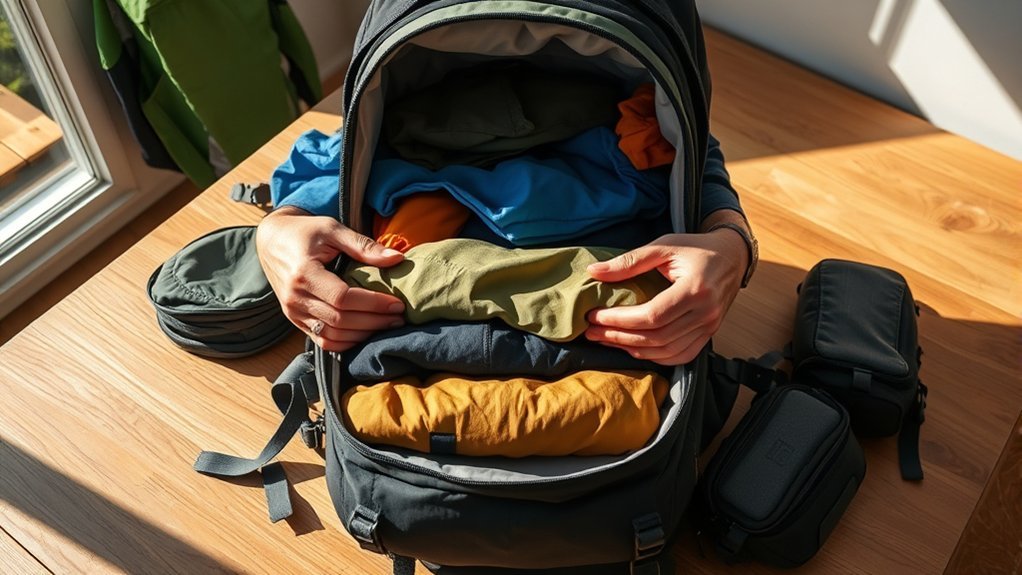
To distribute weight effectively in your backpack, start with large, soft items at the bottom for stability. Fill the middle with firmer gear and lighter items on top for balance. Utilize pockets wisely: keep quick access essentials like snacks and water bottles nearby. Secure fragile items with padding and avoid stacking heavy gear on them. This method minimizes strain and enhances comfort. Stick around for more tips to optimize your packing strategy further!
Understanding the Importance of Proper Distribution

When you’re hiking or traveling, understanding the importance of proper weight distribution in your backpack can make all the difference in your comfort and performance. An uneven load can strain your back and shoulders over time, leading to discomfort. By organizing and distributing your items effectively, you minimize this risk and can wear your backpack for longer without fatigue.
A well-balanced load enhances your backpack’s performance, preventing items from shifting while you move, which can cause instability. Positioning heavier items close to your back maximizes stability and reduces strain on your body. This balance not only supports your physical well-being but also allows for easier access to frequently used items. You’ll save time and avoid frustration during your outdoor adventures. Ultimately, mastering weight distribution empowers you to explore with freedom and ease, making every journey a more enjoyable experience.
Recommended Packing Order for Optimal Weight
To pack your backpack effectively, start with the largest and softest items at the bottom to create a stable base. Next, fill the middle section with firmer gear, like camera equipment, ensuring it’s secure. Finally, top it off with lighter items to keep the weight balanced and comfortable.
Bottom Layer Essentials
A solid foundation is essential for effective weight distribution in your backpack, and that starts with the bottom layer. Begin by placing your biggest and softest items, like clothing, at the bottom. This not only creates a stable base but also cushions more delicate gear above, preventing damage during your adventures. By using soft items to absorb impact, you guarantee that heavier items don’t directly press on fragile equipment. As you pack, remember that the middle section suits firmer items, like camera gear, while lighter items, such as toiletry bags, should go at the top. Following this packing order enhances weight distribution and keeps frequently used items accessible, making your journey smoother and more liberating.
Middle Section Gear
The middle section of your backpack is essential for maintaining balance and stability, so prioritize packing firm items like camera gear and lenses here. Placing heavier items closer to your back enhances balance and reduces shoulder strain. This strategic positioning prevents the gear from shifting during movement, allowing for better organization overall.
Avoid packing fragile items in this section unless they’re well-protected, as surrounding gear can cause damage. Organize with a clear layout to enhance accessibility; this way, you can easily retrieve or replace items without disrupting the entire pack. By maximizing the middle section effectively, you’ll enjoy a more liberating hiking experience, free from the distractions of disorganized and unbalanced gear.
Top Layer Lightweight Items
Packing lightweight items in the top layer of your backpack is essential for maintaining balance and accessibility. This strategic placement guarantees you can easily reach what you need without disturbing heavier gear below. Here are some ideal items to include:
- Toiletry bag
- Snacks or energy bars
- Lightweight jacket or shell
- First aid kit
- Map or guidebook
Keep the top layer organized and avoid overloading it, as too many items can create instability and discomfort. Remember, lightweight items shouldn’t exceed the weight limit that could affect the balance of heavier gear packed underneath. By utilizing the top layer effectively, you enhance accessibility, making your hiking or travel experience more enjoyable.
Utilizing Pockets and Compartments Effectively
When packing your backpack, think about how you can use pockets for quick access to essential items. Organizing compartments based on what you need most often will streamline your experience, making it easier to grab what you need on the go. By strategically placing items, you can maintain balance and keep your pack tidy.
Quick Access Pockets
Quick access pockets are essential for any backpacker looking to stay organized and efficient on the trail. By utilizing these pockets effectively, you can grab what you need without fumbling through your entire pack. Here are some tips:
- Front pockets: Store quick access items like batteries, snacks, or maps.
- Side pockets: Keep water bottles or tripods handy for easy access.
- Bottom straps: Secure larger items like sleeping bags or mats to free up space.
- Shoulder strap connections: Attach small items like keys or a flashlight for immediate access.
- Specific pocket organization: Prevent mess and enhance retrieval efficiency.
Embrace these strategies to liberate your adventure and enjoy the journey with ease!
Compartment Organization Strategies
Effective compartment organization is key to maximizing your backpack’s efficiency. Use front pockets for quick-access items like battery cases, so you save time when retrieving essentials. Side pockets are perfect for water bottles or tripods, keeping them separate and easily accessible. Secure larger items, such as sleeping bags, with bottom straps to prevent shifting during movement. For small items like keys, attach them to shoulder strap connections to avoid losing them in the main compartment. Maintain clear organization within compartments to facilitate easy retrieval and prevent a messy backpack. By implementing these strategies, you’ll navigate your adventures with ease and liberation, knowing everything is right where you need it.
Advantages of Balanced Weight Distribution
Balanced weight distribution in a backpack offers numerous advantages that enhance your outdoor experience. When you pack your gear thoughtfully, you’ll notice significant improvements in comfort and performance. Here are some benefits of balanced weight distribution:
Balanced weight distribution in your backpack significantly enhances comfort and performance during your outdoor adventures.
- Minimizes strain on your back and shoulders for prolonged comfort.
- Prevents items from shifting, enhancing safety and reducing damage risk.
- Improves stability and maneuverability, making navigation easier across terrains.
- Allows quick access to frequently used items by keeping them closer to your back.
- Enhances overall performance, enabling longer travel distances with less fatigue.
Tips for Packing Fragile Gear Safely
When packing your backpack, it’s just as important to protect fragile gear as it is to achieve a balanced weight distribution. Start by placing delicate items like camera lenses and electronics in the middle section of your backpack. This positioning minimizes jostling during movement. Use soft clothing or padded cases to cushion these fragile items, absorbing any impacts that could cause damage.
Secure them in compartments or padded sleeves to prevent shifting and maintain stability while you’re on the move. If you need quick access to fragile items, utilize well-padded front pockets, but be cautious of bumps. Remember, stacking heavy gear on top of fragile items is a big no-no; the added pressure can lead to breakage. By following these tips, you can keep your precious gear safe and ready for your adventures.
Strategies for Quick Access to Essential Items
How can you guarantee quick access to essential items in your backpack? By strategically organizing your gear, you’ll streamline your experience and stay focused on your adventure. Here are some effective strategies:
- Use front pockets for items like maps, snacks, or batteries for easy retrieval.
- Store lighter items like toiletry bags at the top to maintain balance and secure quick access.
- Keep essential gear such as a first aid kit or flashlight in the top compartment for emergencies.
- Utilize side pockets for water bottles or tripods that you may need while moving.
- Organize by frequency of use, placing frequently needed items in the most accessible spots.
Final Thoughts on Efficient Backpack Management
Efficient backpack management goes beyond quick access to your gear; it’s about creating a system that keeps you organized and comfortable throughout your journey. Focus on proper weight distribution to prevent strain. Remember to organize items by weight, keeping heavier ones in the middle and lighter ones at the top.
| Packing Strategy | Benefits |
|---|---|
| Weight Distribution | Reduces strain on back and shoulders |
| Organized Compartments | Quick access to frequently used items |
| Soft Items at Bottom | Cushions fragile gear |
| Maximized Space | Enhances overall experience |
Frequently Asked Questions
How Does Weather Affect Backpack Weight Distribution?
Weather affects backpack weight distribution by influencing your gear choices. In wet conditions, you might need heavier waterproof items, shifting weight lower for stability. In dry weather, you can lighten your load and adjust accordingly.
Can I Add Weight Evenly Across Both Shoulder Straps?
Yes, you can add weight evenly across both shoulder straps. Studies show balanced weight distribution reduces fatigue by 30%, enhancing comfort during hikes. Adjust your load to maintain stability and freedom on your adventures.
What Are the Best Materials for Lightweight Backpacks?
For lightweight backpacks, opt for materials like ripstop nylon, polyester, or Dyneema. These fabrics offer strength without bulk, making your pack easy to carry. Look for water-resistant options to keep your gear dry, too.
How Do I Determine the Ideal Pack Weight for My Body?
To determine your ideal pack weight, consider your fitness level, size, and trip duration. Aim for 20-25% of your body weight for comfort. Adjust based on experience, terrain, and personal preference for a liberating adventure.
Should I Adjust My Backpack Weight During Hikes?
Yes, you should adjust your backpack weight during hikes. If you feel fatigued or uncomfortable, lighten your load by removing non-essentials. Staying balanced and comfortable enhances your experience, letting you enjoy nature’s beauty fully.
Conclusion
Mastering the art of backpack weight distribution is like orchestrating a symphony; every item plays its part in achieving harmony. By following these steps and tips, you’ll transform your pack into a well-balanced companion that supports you, rather than weighs you down. Remember, it’s not just about fitting everything in—it’s about creating an efficient, enjoyable experience on the trail. So, pack smart, walk tall, and let your adventures unfold effortlessly!