
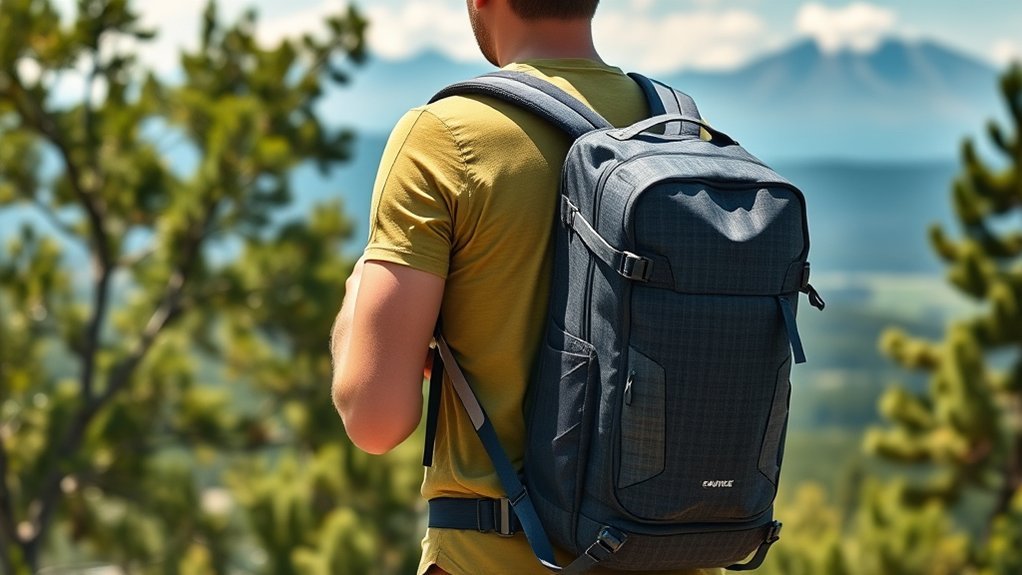
Finding the right backpack size is essential for tall individuals. Start by measuring your torso length from the C7 vertebra to the iliac crest for a proper fit. Look for backpacks like the Tortuga Outbreaker or Osprey Farpoint, designed to accommodate taller frames. Always consider adjustable features for added comfort. Pay attention to backpack sizes in liters to match your packing needs. For more tips on ensuring a comfortable fit and smart packing strategies, keep exploring.
Importance of Torso Length Measurement

When it comes to finding the right backpack, measuring your torso length is vital for guaranteeing a proper fit. You’ll want to start by locating your C7 vertebra, the prominent bone at the base of your neck, and measure down to the top of your iliac crest, the top of your hip bone. Don’t just rely on your height; fit varies widely among individuals. Use a flexible tape measure for accuracy, taking three measurements and averaging them for the best result.
Many backpack brands list specific torso length ranges, making it easier to choose a pack that provides ideal comfort and support. Proper torso measurement is important because it guarantees the weight distributes evenly, reducing discomfort and enhancing your overall travel experience. By prioritizing this measurement, you empower yourself to enjoy your adventures without the burden of an ill-fitting backpack.
Recommended Backpacks for Tall Individuals
When choosing a backpack as a tall individual, consider options that specifically cater to your torso length for comfort and fit. Models like the Tortuga Outbreaker 35 and Osprey Farpoint 40 offer adjustable features that accommodate longer bodies. Let’s explore the best backpacks available and their key sizing features to help you find the right match.
Best Backpack Options
Finding the right backpack can make all the difference for taller individuals, as comfort and fit are essential for an enjoyable travel experience. The Tortuga Outbreaker 35 excels with adjustable straps, accommodating torso lengths up to 20 inches. If you need more room, the Osprey Farpoint 40 fits torso lengths from 19-22 inches and features adjustable lifters and sternum straps for added support. The GoRuck GR2 is another solid option, designed for torso lengths up to 22 inches with durable materials. While the Peak Design Travel Backpack offers a good fit, its adjustability is limited. For versatility, consider the Minaal 2.0, which enhances comfort with its unique adjustable features. Choose wisely, and enjoy your adventures!
Key Sizing Features
Choosing the right backpack involves understanding key sizing features that suit taller individuals. Look for backpacks with adjustable shoulder straps, sternum straps, and hip belts for ideal comfort. Here are some recommended options:
| Backpack Model | Maximum Torso Length |
|---|---|
| Tortuga Outbreaker 35 | 20 inches |
| Osprey Farpoint 40 | 22 inches |
| GoRuck GR2 | 22 inches |
The Minaal 2.0 also caters to taller users, providing ample space and adjustability. Always check the torso length range, as fit can vary between brands. While the Peak Design Travel Backpack suits tall individuals, its limited adjustability makes it essential to evaluate your personal torso measurements before buying. Prioritize comfort and fit for a liberating travel experience.
Understanding Backpack Sizes and Capacity
Backpack sizes can feel overwhelming, but understanding their capacity is key to making the right choice. Backpack volumes are typically expressed in liters, ranging from 0-10 liters for essentials, 10-30 liters for transient travelers, 30-50 liters for expedition editions, and over 50 liters for specialized packs. Visualize a standard Nalgene bottle, which holds 1 liter, to better grasp what each size means. While different brands may use various measurement units, thinking in liters simplifies your selection process. If you’re more comfortable with cubic inches, remember that 61 cubic inches equals about 1 liter. Assess your packing needs based on your intended activities—daypacks suit short trips while expedition packs cater to longer adventures. By understanding these capacities, you can confidently choose a backpack that empowers your journey without being burdened by excess.
Choosing the Right Fit for Comfort
To guarantee your backpack fits comfortably, start by measuring your torso length from the iliac crest to the C7 vertebra. Look for adjustable features like shoulder straps and hip belts, which are essential for tailoring the fit to your body. Finally, always try on the pack with some weight to gauge how it feels during use, as comfort is key for long trips.
Torso Length Measurement
Accurate torso length measurement is essential for finding a comfortable backpack fit. To measure, stand tall and use a flexible tape measure from the top of your iliac crest to the C7 vertebra. It’s smart to take three measurements and average them for reliability. This guarantees you select a backpack that fits properly, as an ill-fitting pack can lead to discomfort and fatigue while traveling. Many backpack brands specify torso length ranges for their models, so always check these details before purchasing. A proper fit empowers your adventures, allowing you to move freely and confidently. Remember, a well-fitted backpack isn’t just about size; it’s about enhancing your experience and liberation on the trail.
Adjustable Features Importance
When seeking the right fit for comfort, adjustable features like shoulder straps, sternum straps, and hip belts play an essential role, especially for tall individuals. These elements guarantee your backpack fits snugly, accommodating your unique torso length and enhancing weight distribution during your adventures.
Consider these key points:
- Customized Fit: Adjustable straps help align the pack with your center of gravity.
- Reduced Strain: Proper adjustments minimize stress on your back and shoulders, allowing for longer treks.
- Versatile Options: Many backpacks, such as the Osprey Farpoint 40 and Tortuga Outbreaker 35, cater to torso lengths up to 22 inches.
Choosing a pack with adjustable features will elevate your travel experience, granting you freedom and comfort on every journey.
Testing for Comfort
Finding the right backpack fit hinges on thorough testing for comfort. Start by measuring your torso length from the C7 vertebra to the iliac crest. Choose a backpack that matches this measurement. When you try on packs, load them with weight to mimic real usage; this helps assess comfort during movement. Look for adjustable features like shoulder straps, sternum straps, and hip belts for a personalized fit that reduces discomfort. Be certain to test the pack while standing, walking, and bending to identify any pressure points and guarantee even load distribution. Remember, an ill-fitting pack can cause discomfort and injury, so always prioritize fit and comfort over style or brand. Your body deserves the best.
Daypacks vs. Travel Backpacks
Choosing between daypacks and travel backpacks can greatly impact your outdoor experience. Daypacks, ranging from 0 to 30 liters, are perfect for short hikes or daily errands, while travel backpacks, typically 30 to 50 liters, cater to longer trips. Here’s what to keep in mind:
- Lightweight vs. Structured: Daypacks are flexible and lightweight; travel backpacks are designed to support heavier loads.
- Capacity Needs: Daypacks suit single-day outings; travel backpacks accommodate multi-day adventures.
- Comfort Features: Travel backpacks often include adjustable sternum straps and hip belts for extra comfort, while daypacks usually lack these features.
Deciding between the two depends on your activity type and duration. If you’re planning a quick hike, a daypack will serve you well. For international travel or extended trips, opt for a travel backpack to guarantee you have the space and comfort you need.
Packing Strategies for Tall Travelers
For tall travelers, packing strategies play a significant role in guaranteeing comfort and efficiency on the road. Focus on adjustable backpacks that accommodate your torso length. Measure from your iliac crest to the C7 vertebra to find the right fit. A 40-45 liter backpack is ideal for international trips, striking the balance between capacity and weight.
| Packing Element | Importance | Tip |
|---|---|---|
| Adjustable Features | Comfort during travel | Look for straps that fit well |
| Weight Testing | Evaluating fit and comfort | Try on with added weight |
| Packing Cubes | Space maximization | Organize essentials efficiently |
| Light Packing | Avoiding overload | Limit to essentials |
| Torso Measurement | Best backpack selection | Confirm proper fit |
Utilizing these strategies will help you travel light, stay organized, and enjoy every moment on your journey!
Tips for Selecting the Perfect Backpack
How can you secure you’re selecting the right backpack? Start by measuring your torso length from the C7 vertebra to the iliac crest, as this is essential for finding a proper fit. Don’t just rely on height alone!
Measuring your torso length is crucial for finding the perfect backpack fit—don’t depend solely on your height!
- Look for adjustable features like shoulder straps, sternum straps, and hip belts to enhance comfort.
- Consider backpacks designed specifically for tall users, such as the Osprey Farpoint 40 or Tortuga Outbreaker 35.
- Always check the manufacturer’s size chart to match your torso length with their recommended sizes.
Before finalizing your choice, test the backpack with weight to confirm comfort and fit. A well-fitting pack can make all the difference in your travel experience, giving you the freedom to explore without discomfort. Take your time, and choose wisely—you deserve a backpack that fits your adventures!
Frequently Asked Questions
What Materials Are Best for Tall Backpacks?
For tall backpacks, look for durable materials like ripstop nylon or canvas, which offer strength and water resistance. Lightweight options like polyester also work well, ensuring comfort and performance during your adventures without weighing you down.
How Do I Maintain My Backpack for Longevity?
To maintain your backpack’s longevity, regularly clean it, avoid overloading, and store it in a cool, dry place. Inspect for wear and tear, and repair any damage promptly to keep it in top shape.
Can I Customize My Backpack’s Fit?
Yes, you can customize your backpack’s fit! Adjust the straps, load lifters, and hip belt to suit your body. Adding extra padding or using aftermarket accessories can enhance comfort and support for your unique shape.
What Accessories Should I Consider for Tall Backpacks?
You should consider adjustable straps, hip belts, and load lifters for tall backpacks. These accessories enhance comfort and support, ensuring your gear fits well and distributes weight evenly, allowing you to move freely and confidently.
Are There Eco-Friendly Backpack Options for Tall People?
Sure, you can find eco-friendly backpacks for tall folks! Look for brands using recycled materials or sustainable practices. Just don’t expect them to come with a built-in height extender—nature’s not that generous!
Conclusion
Choosing the right backpack is like finding the perfect pair of shoes; it needs to fit just right for your adventures. By measuring your torso length and understanding the various sizes, you’ll guarantee comfort and support on your journeys. Whether you’re heading out for a day hike or a week-long trip, remember to pack smart and select a backpack that complements your height and needs. With the right pack, you’ll be ready to conquer any trail that lies ahead!