
Last Updated on September 10, 2026 by Daniel Globe
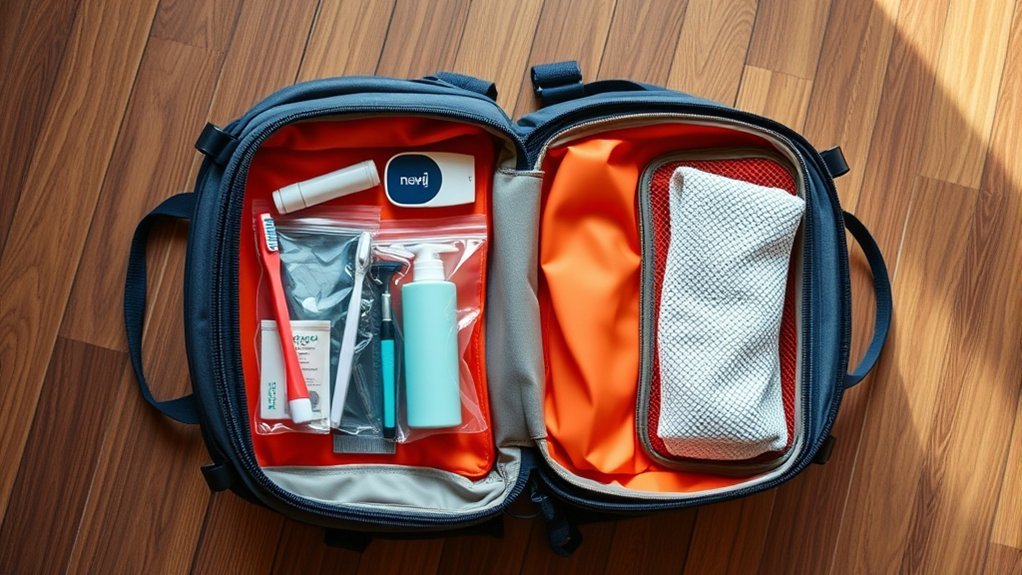
Packing toiletries in a travel backpack is easiest when you separate what you truly need from what can stay home. Use small, clearly labeled containers, replace suitable liquids with solid products, protect every cap against leaks, and keep your carry-on liquids easy to reach. A simple system saves space without leaving you short on hygiene essentials.
Quick Answer
Pack only the toiletries you will use, place carry-on liquids, gels, creams, pastes, and aerosols in containers of 3.4 ounces (100 milliliters) or less, and fit them in one clear quart-size resealable bag. Store solids separately, seal every container, and keep the liquids bag accessible for airport screening.
Key Takeaways
- Start with your normal routine, then remove duplicates and “just in case” products.
- For U.S. carry-on travel, follow the TSA 3-1-1 rule unless an exemption applies.
- Use solid shampoo, bar soap, toothpaste tablets, and stick products when they work for you.
- Prevent leaks with tight caps, upright packing, secondary bags, and a test before departure.
- Check the rules for every departure, connection, and return airport on an international trip.
At a Glance
| Time Required | 15–30 minutes |
| Difficulty | Easy |
| Tools Needed | Toiletry bag, clear quart-size resealable bag, travel containers, labels, and optional secondary leak bags |
| Cost | $0 when reusing supplies; commonly $5–$25 for containers or a toiletry bag |
Disclosure: As an Amazon Associate I earn from qualifying purchases. Some links on this page are affiliate links, at no extra cost to you.
Assess Your Toiletry Needs
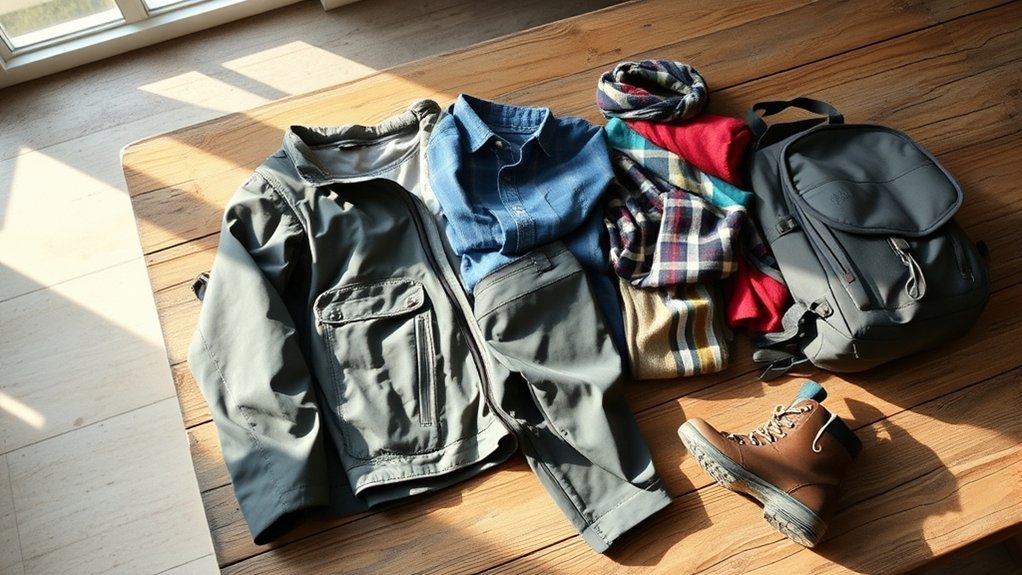
Begin with the products you use during a normal morning and evening. Write down each item, then mark it as essential, optional, or available at your destination. This keeps the list tied to your real routine instead of packing for every possible situation.
Consider your trip length, climate, planned activities, lodging, and access to stores. A beach trip may require more sunscreen, while a hotel stay may let you skip shampoo, conditioner, or soap. Camping, hostels, and remote travel usually require a more complete kit.
Check prescriptions, contact lens supplies, skin-care products, dental items, and menstrual products first. These can be harder to replace than ordinary soap or shampoo. Pack enough for the trip plus a small delay buffer when the item is medically important.
Pro Tip: Test-drive your packed toiletry kit at home for one full day. Anything you need but did not pack becomes obvious before you leave.
Build a Complete Toiletry Checklist
A checklist prevents forgotten essentials and helps you spot duplicates. Choose only the items that match your routine and destination.
Basic Hygiene
- Toothbrush, toothpaste or toothpaste tablets, and floss
- Deodorant
- Soap or body wash
- Shampoo and conditioner
- Comb, brush, hair ties, and styling products
- Razor or electric shaver, packed according to security rules
Skin and Sun Care
- Facial cleanser and moisturizer
- Broad-spectrum sunscreen suitable for your planned exposure
- Lip balm
- Insect repellent when needed
- Small amount of after-sun or skin treatment you already use
Health and Personal Items
- Prescription and over-the-counter medicines
- Contact lenses, case, and solution
- Menstrual products
- Hand sanitizer or cleansing wipes
- Nail clippers, tweezers, and a small first-aid supply
Note: Do not try a new skin-care, dental, or hygiene product for the first time on departure day. Test solid alternatives at home to make sure they work for you.
Minimize Liquid Products
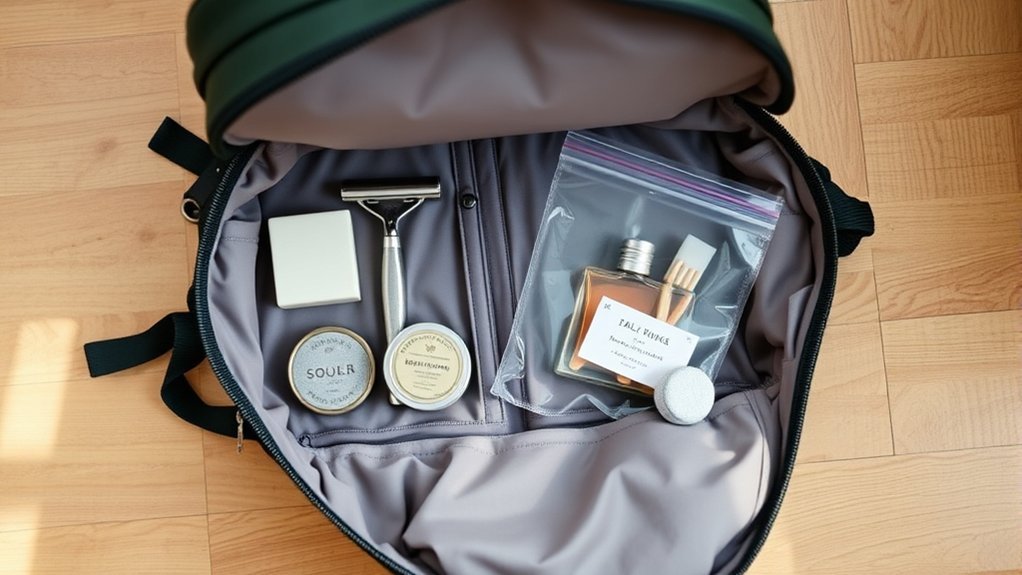
Liquids take space, can leak, and must follow security limits in carry-on baggage. For travel through U.S. checkpoints, the TSA liquids, aerosols, and gels rule allows one quart-size bag of containers holding 3.4 ounces (100 milliliters) or less per item.
The rule covers more than obvious liquids. Gels, creams, pastes, and aerosols count too, including toothpaste, liquid foundation, mascara, lotion, shaving cream, and many spray products. A larger container does not become compliant simply because it is almost empty; the container capacity is what matters.
Reduce your liquid load by choosing compact alternatives such as:
- Toothpaste tablets or tooth powder
- Shampoo and conditioner bars
- Solid deodorant
- Bar soap
- Cleansing wipes
- Solid perfume
- Sunscreen sticks, while still applying enough for the product to be effective
For U.S. carry-on travel, remember “3-1-1”: containers of 3.4 ounces or less, one quart-size bag, and one bag per passenger.
Choose Solid Alternatives
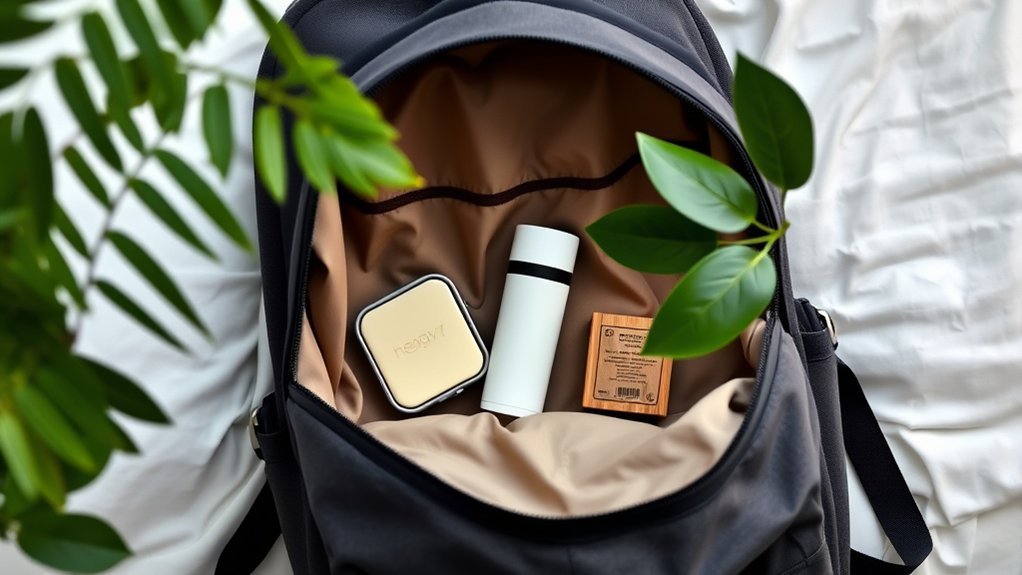
Solid products free space in your liquids bag and are less likely to spill. Shampoo bars, bar soap, toothpaste tablets, solid deodorant, and cleansing wipes can work well for short or long trips.
Keep bars dry between uses. Pack them in a draining soap case, breathable pouch, or small container after they have dried. A wet bar sealed in an airtight container can become soft and messy.
Solid does not automatically mean better. A product still needs to suit your hair, skin, allergies, and destination. Try it before traveling, and keep important treatment products in the form recommended by your clinician or manufacturer.
Products Worth Considering
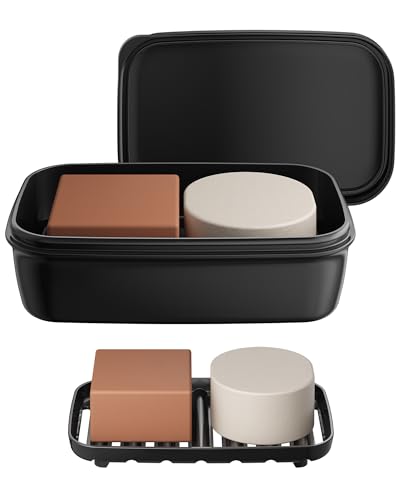
Large Capacity Shampoo and Conditioner Bars: The size of this travel soap box is 5.91*3.94*1.97 inch. Our soap case can accommodate up to two bar soaps, suitable for shampoo bars, conditioners, and more. Suitable for travel, gym, camping, bathroom and dormitory use
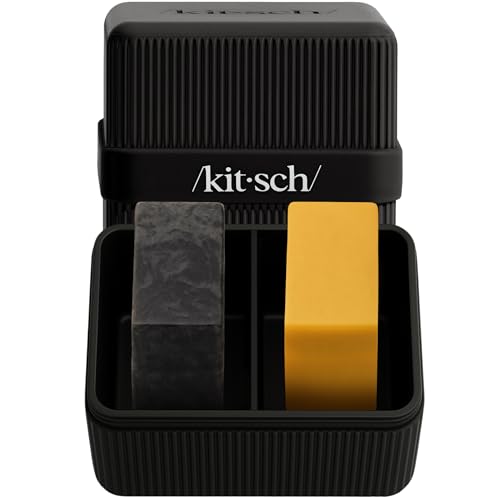
ORGANIZED TRAVEL MADE EASY – Keep your bars neat and mess-free with this 2-compartment soap travel case. Designed to store shampoo, conditioner, and body bars, this compact bar soap case doubles as a sleek soap container for stress-free packing.

Excellent Drainage & Quick Drying : The soap case features a removable drainage tray that elevates your soap or shampoo bar, allowing water to drain away quickly. This helps your bar dry faster, extends its lifespan, and prevents it from becoming mushy.
Select the Right Toiletry Bag
Choose a bag that fits your backpack rather than buying the largest organizer available. A slim rectangular bag usually packs more efficiently than a bulky rounded case.
Useful features include:
- Water-resistant or wipe-clean lining: Makes small spills easier to contain.
- Sealed or reinforced seams: Adds protection, although no soft bag should be treated as completely spill-proof.
- Multiple compartments: Separates dental, grooming, skin-care, and medical items.
- Mesh pockets: Keep small tools visible and easy to reach.
- A hanging hook: Helps in hostels, shared bathrooms, and rooms with little counter space.
- A removable clear pouch: Lets you pull out carry-on liquids without unpacking everything.
The empty bag should be light. If the organizer weighs almost as much as its contents, a simpler pouch may be the better choice.
Products Worth Considering

Large room & organized compartments: Size 10 x 5 x 5.5 inches. 1 Main compartment which is roomy to fit facial cleanser, electric shaver, travel shampoo, and other toiletries. It has 3 small mesh pockets and 1 long mesh zipper pocket inside to store all of your little toiletries without getting disorganized. 1 front zipper pocket that provides extra storage with ease
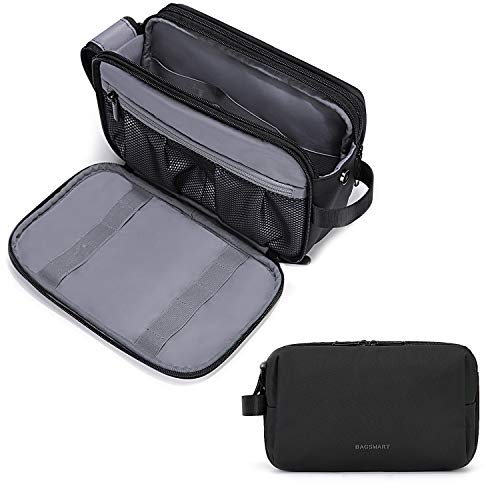
𝐋𝐚𝐫𝐠𝐞 𝐜𝐚𝐩𝐚𝐜𝐢𝐭𝐲: Mens toiletry bag medium size: 10.6''L*3.9''W*6.7''H, large size: 12.2''L*5.5''W*7.5''H. Different sizes meet the needs of various buyers, with the large size capable of holding all the toiletries for a family

EXTRA LARGE CAPACIT: 10.2 x 5.3 x 6.1 inches. Meet all the storage needs of full-size toiletries or shaving supplies, and the bottles can stand upright in it. Multiple pockets inside keep all personal items beautifully organized
Organize With Compartments
Use compartments by function, not at random. Keep dental items together, place shower products in one section, and group skin-care products in another. Put medicines and contact lens supplies in a clearly identified pocket.
Separate liquids from solids even when you are not flying. This limits the damage if a cap loosens. Store sharp grooming tools where they cannot cut the bag or your hands.
Use the smallest number of pouches that still keeps the kit clear. Too many tiny bags add weight and make items harder to find. One main toiletry bag plus one liquids bag is enough for most travelers.
Use a Quart-Sized Ziploc Bag
For a standard U.S. carry-on, place liquids, gels, creams, pastes, and aerosols in one clear quart-size resealable bag. Every container must hold 3.4 ounces (100 milliliters) or less unless it qualifies for an exemption.
Do not force the bag shut. Products should fit comfortably so the seal stays closed. A sturdy reusable clear bag may last longer than a disposable food-storage bag, but it still needs to stay within the quart-size limit.
Keep the bag near the top or front of your backpack before security. You may be asked to remove it, although procedures vary by lane, screening equipment, and traveler program. Follow the officer’s instructions rather than assuming the bag must always come out.
Pack Liquids Efficiently
Decant only as much product as you expect to use. A rough daily estimate from a trial run at home is more reliable than guessing. Leave a little air space in refillable containers so pressure and temperature changes do not force product through the cap.
Label every refillable container with the product name. Use containers made for toiletries, and avoid flimsy food pouches for products that are difficult to identify or screen. The TSA notes that some liquids in plastic bags or pouches may need alternate screening.
Place dense items, such as small jars, low in the toiletry bag. Keep pump bottles locked or capped. Do not transfer products into drink bottles or other containers that could cause confusion.
Pro Tip: Photograph the labels of products you decant. The photo helps you remember ingredients, directions, and the exact product if you need a replacement.
Implement Leak-Proof Solutions
No travel container is guaranteed never to leak, so use layers of protection:
- Tighten screw caps and close flip tops fully.
- Lock pumps or cover the nozzle with its cap.
- Wipe container threads before closing them.
- Place likely leakers in a small secondary resealable bag.
- Keep containers upright when your backpack design allows it.
- Pack the toiletry bag away from electronics, documents, and clean clothing.
Before departure, fill reusable containers and leave them upside down on a paper towel for several hours. Replace any container that seeps. Plastic wrap under a cap can help in a pinch, but a sound container and secondary bag are more dependable.
Warning: Never pack bleach, strong solvents, fuel, or other hazardous chemicals as ordinary toiletries. Some aerosols and flammable products are forbidden in both carry-on and checked baggage. Check the FAA PackSafe chart when a product has a hazard symbol or unusual propellant.
Products Worth Considering

𝟏𝟖𝟎° 𝐎𝐩𝐞𝐧𝐧𝐢𝐧𝐠 𝐃𝐞𝐬𝐢𝐠𝐧: TSA approved toiletry bag can open up to 180°, enabling the clear bag to be easily flipped open horizontally, providing convenient access to travel essentials. The durable handle design allows for easy lifting and hanging of this clear bag.

【TSA APPROVED】Set of 4 in two sizes. The 2pcs small clear travel toiletry bag strictly follows TSA 3-1-1 liquids rule for the carry-on bag of all airlines, so you can easily and quickly pass through security screening in the airport. The 2pcs large luggage bags are the perfect size to fit your carry-on luggage for travel or vacations.

Carry-on Size: The travel toiletries bags two pack, with dimensions of 8.2 x 2 x 6 inches, strictly follow the TSA 3-1-1 liquids rule; With a TSA quart-size travel bag, you can easily and quickly pass through security screening at the airport, saving your time and reducing stress
Streamline Security Checks
Pack your backpack in layers and keep the liquids bag accessible. Remove it only when instructed. Avoid burying it under clothing, electronics, or shoes before reaching the checkpoint.
Check unusual items in the TSA What Can I Bring? database before leaving home. The final decision rests with the security officer, and an otherwise permitted item may receive extra screening.
After security, move the liquids bag into the protected center of your backpack if you no longer need quick access. Keep a toothbrush, medication, or other in-transit essentials in an easy-to-reach pocket.
Pack Medications and Special-Use Items
Medically necessary liquids, gels, and aerosols may exceed the standard 3.4-ounce limit in reasonable quantities for the trip. Under TSA medical screening guidance, declare these items to the officer and present them separately for inspection.
Keep medicine in clearly labeled packaging when practical. Carry essential medication in your personal item or carry-on rather than checked baggage, where delays or loss could leave you without it. For international travel, check destination rules and bring supporting prescription information when required.
Contact lens solution normally counts as a liquid, but medically necessary quantities may receive special handling. Cooling packs, syringes, and related supplies can also require separate screening. Allow extra time at the checkpoint.
Adapt Packing for Trip Duration
One to Three Days
Pack the smallest usable amount of each essential. Toothpaste tablets, a small deodorant, a shampoo bar, and sample-size skin care may cover the trip. Hotel-provided products can reduce the list further.
Four to Seven Days
Use measured refillable containers instead of several samples. Add enough sunscreen, contact lens solution, medication, and personal-care supplies for the full week. Plan one refill or purchase only when you know the product is readily available.
More Than One Week
Do not automatically carry a full-size version of every product. Pack one to two weeks of routine toiletries, then plan to refill or buy ordinary products at the destination. Carry the full required supply of hard-to-replace prescriptions or specialty products.
Climate matters as much as duration. Hot, humid, cold, dry, high-altitude, and insect-prone destinations may change your skin care, sun protection, and repellent needs.
Pack Toiletries in Your Backpack Step by Step
- List your routine: Write down the products you use in a normal day.
- Remove extras: Skip duplicates, bulky backups, and items supplied by your lodging.
- Check travel rules: Review carry-on, checked-bag, airline, and airport restrictions.
- Measure or decant: Put only the needed amount into sturdy, labeled containers.
- Separate liquids and solids: Use the clear quart-size bag for regulated carry-on items.
- Seal against leaks: Tighten caps, lock pumps, and add secondary bags where needed.
- Organize by use: Group dental, shower, skin-care, medical, and grooming items.
- Place the kit correctly: Keep liquids accessible before security and protected from electronics afterward.
- Run a final check: Confirm medicines, toothbrush, sunscreen, and other trip-specific essentials.
Carry-On vs. Checked Toiletries
Carry-on toiletries must meet checkpoint rules. Checked baggage allows many larger toiletry containers, but hazardous-material and aerosol limits still apply. The FAA medicinal and toiletry guidance explains quantity limits and cap requirements for permitted aerosols and similar products.
Keep valuables, medicines, contact lens supplies, and enough hygiene items for the first day in your carry-on. Full-size, replaceable products can go in checked baggage when permitted and securely sealed.
For international travel, do not assume every airport uses identical rules. For example, current UK hand-luggage guidance says rules depend on the airport: most still limit containers to 100 milliliters, while some permit larger containers. Check every airport on the route, including connections and the return trip.
Frequently Asked Questions
Can I bring a razor in my carry-on bag?
Disposable razors, cartridge razors, and electric shavers are generally allowed in U.S. carry-on bags. A safety razor may pass without its blade, but loose safety-razor blades and other razor-type blades must go in checked baggage. Secure all sharp items to prevent injury.
What are the TSA rules for toiletries?
Liquids, aerosols, gels, creams, and pastes in a standard carry-on must be in containers of 3.4 ounces (100 milliliters) or less and fit in one quart-size bag per passenger. Medically necessary liquids and certain other exempt items may exceed that limit when declared for screening.
How do I prevent spills in my bag?
Use sturdy travel containers, clean the threads, tighten caps, lock pumps, and place likely leakers in a secondary resealable bag. Test refillable containers upside down before the trip and keep toiletries away from electronics and documents.
Are travel-sized toiletries available for purchase?
Yes. Pharmacies, supermarkets, outdoor stores, airport shops, and many brands sell travel sizes. Refillable containers can cost less over time, but label them clearly and use only containers designed for the type of product you are carrying.
How do I pack toiletries for international travel?
Check the security rules for the departure, connection, destination, and return airports. Keep products in clearly labeled containers, carry prescription documentation when required, and plan where you can replace ordinary toiletries. Airport and country rules may differ from TSA requirements.
Does toothpaste count as a liquid?
Yes. TSA treats toothpaste as a paste, so it must follow the 3-1-1 rule in a standard carry-on. Toothpaste tablets or tooth powder can free space in the liquids bag.
Can I put full-size toiletries in checked baggage?
Many full-size toiletries are allowed in checked baggage, but aerosol quantity limits and hazardous-material restrictions still apply. Seal products carefully, protect spray nozzles from accidental release, and check FAA, airline, and destination rules.
Where should toiletries go inside a backpack?
Before airport security, keep the liquids bag near the top or front. After screening, place the sealed toiletry kit near the center of the backpack, away from electronics, documents, and items that could puncture it.
Conclusion
A well-packed toiletry kit is small, easy to inspect, and protected against leaks. Start with your real routine, use solids where they make sense, follow the rules for each airport, and place essential medicines and first-day supplies in your carry-on. With a clear system, your backpack stays organized and your toiletries remain easy to reach throughout the trip.
Sources
- Transportation Security Administration: Liquids, Aerosols, and Gels Rule — U.S. carry-on container and quart-size bag limits.
- Transportation Security Administration: Medical Items — screening of medically necessary liquids and supplies.
- Transportation Security Administration: Disposable Razors — carry-on and checked-bag status.
- Transportation Security Administration: Safety Razors With Blades — blade-removal requirement for carry-on screening.
- Federal Aviation Administration: Medicinal and Toiletry Articles — hazardous-material and aerosol quantity guidance.
- GOV.UK: Hand-Luggage Liquid Restrictions — airport-specific liquid rules for UK travel.
