

Last Updated on September 27, 2026 by Caleb Warren
Does Medicare cover an electric scooter? It can, but coverage depends on why you need the device and how it helps you move around your home. Medicare has specific rules for medical necessity, documentation, and suppliers. Understanding these requirements before choosing a scooter can help you avoid unexpected costs and coverage problems.
Quick Answer
Yes. Medicare Part B covers medically necessary electric mobility scooters for eligible people who need help moving around inside their homes. You need a face-to-face mobility evaluation, a written order from your treating provider, and a Medicare-enrolled supplier. After meeting the Part B deductible, you generally pay 20% of the Medicare-approved amount.
Last checked: September 28, 2026. Dates and figures were verified against official sources.
Disclosure: As an Amazon Associate I earn from qualifying purchases. Some links on this page are affiliate links, at no extra cost to you.
Does Medicare Cover a Scooter?
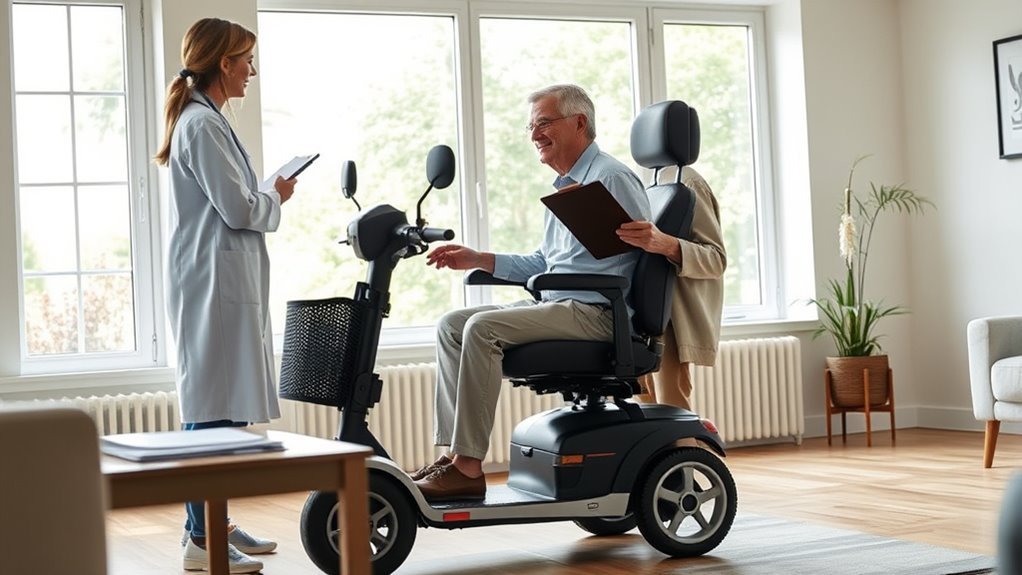
Medicare Part B covers qualifying electric scooters as durable medical equipment (DME). These devices are also called power-operated vehicles, or POVs.
Coverage depends on your medical need for the scooter inside your home, not simply your diagnosis, age, or preference for powered transportation.
According to Medicare’s wheelchair and scooter coverage rules, you must have a face-to-face examination and a written prescription from your treating provider.
The scooter must help you perform essential daily activities that your mobility limitations would otherwise prevent or make unsafe.
These activities may include:
- Getting to and using the bathroom.
- Moving between your bedroom and living areas.
- Getting to a place where you can eat.
- Reaching areas needed for dressing, grooming, or bathing.
Medicare considers these mobility-related activities of daily living when evaluating your need for powered equipment.
A scooter needed only for shopping, outdoor recreation, or travel does not meet Original Medicare’s home-use requirement. However, qualifying for a scooter based on your needs at home does not mean you are prohibited from using it outside.
The key question is whether you medically need the equipment to move around your residence safely.
Medicare Scooter Eligibility Requirements
To qualify for Medicare scooter coverage, your medical records must show that limited mobility significantly affects your daily activities at home. Your treating provider must also establish that simpler mobility devices cannot adequately meet your needs.
Medicare evaluates your functional abilities, home environment, and ability to operate the scooter safely.
1. You Have a Significant Mobility Limitation
Your condition must make it difficult or unsafe to perform one or more essential daily activities inside your home.
A diagnosis alone is not enough. Your medical record should explain how the condition affects your movement and daily function.
For example, your provider may document how far you can walk, whether you lose balance, and whether you need help standing or moving between rooms.
2. A Cane, Walker, or Manual Wheelchair Is Not Enough
Medicare considers whether a cane, crutch, or walker can safely resolve your mobility problem.
Your provider must also assess whether you can use a properly configured manual wheelchair.
Problems with arm strength, endurance, coordination, range of motion, or pain may make a manual wheelchair unsuitable.
You do not need to purchase every simpler device before qualifying. What matters is that your medical evaluation explains why those alternatives cannot meet your needs.
3. You Can Safely Operate the Scooter
A scooter has different functional requirements from a power wheelchair. To qualify, you must be able to operate its controls safely and maintain an appropriate seated position.
The CMS power mobility device requirements include the following abilities:
- Getting on and off the scooter safely.
- Operating the tiller steering system.
- Maintaining a stable seated position while moving.
- Using the scooter safely within your home.
- Using the equipment to improve your ability to perform daily activities.
If you cannot safely operate a scooter, your provider may assess whether a power wheelchair is more appropriate.
4. Your Home Can Accommodate the Scooter
Medicare also requires a suitable home environment. Your home must provide enough access and maneuvering space for the prescribed equipment.
A home assessment considers doorway widths, thresholds, floor surfaces, and the physical layout.
A scooter that cannot pass through necessary doorways or reach important living areas may not meet your home mobility needs.
Note: Your treating provider should assess your medical condition and mobility needs before prescribing powered equipment. A physical or occupational therapist may also help evaluate safe transfers, seating, and home access when appropriate.
How to Get a Medicare Scooter
Start by discussing your mobility problems with your treating provider. The application process involves a documented examination, a written order, an eligible equipment supplier, and any required authorization.
Following these steps in order helps ensure that Medicare receives the information needed to evaluate your claim.
Step 1: Schedule a Face-to-Face Mobility Evaluation
Arrange an appointment with the provider treating the condition that limits your mobility.
Bring notes describing your usual difficulties at home. Explain where you struggle to move, which activities you cannot complete safely, and which mobility aids you currently use.
Your provider should assess your medical condition, physical abilities, and functional limitations.
A qualifying face-to-face encounter may be conducted in person or through telehealth when applicable Medicare telehealth requirements are met.
Step 2: Obtain a Standard Written Order
If your provider determines that a scooter is medically necessary, they must prepare a standard written order, or SWO.
The order identifies the prescribed equipment and includes the required provider and patient information.
The face-to-face evaluation must occur within the six months before the order is written. The provider must send the order to the equipment supplier within six months of that encounter.
The former 45-day requirement is no longer the applicable general timeframe.
CMS also discontinued Certificates of Medical Necessity for claims with dates of service on or after January 1, 2023.
Your standard written order and supporting clinical documentation remain necessary.
Step 3: Choose a Medicare-Enrolled DME Supplier
Contact a durable medical equipment supplier that is enrolled in Medicare and provides power-operated scooters.
Ask whether the supplier accepts assignment. This means it agrees to accept the Medicare-approved amount as full payment for covered equipment.
Also confirm that the supplier can provide the prescribed scooter, complete the necessary paperwork, and arrange a home assessment.
A supplier that accepts assignment can charge you only the applicable Medicare deductible and coinsurance for the covered item.
Step 4: Complete Any Required Prior Authorization
Many power mobility devices require prior authorization before Medicare will pay for them.
Your supplier should determine whether the prescribed scooter’s billing code is on the required authorization list and coordinate the request with your treating provider.
The CMS prior authorization program includes several power mobility device codes.
For equipment subject to this requirement, Medicare reviews the submitted documentation before delivery.
Warning: Do not assume Medicare will reimburse you for a scooter purchased independently. Confirm the supplier’s Medicare enrollment, the prescribed equipment, and any required authorization before accepting delivery or paying for the device.
Step 5: Complete the Home Assessment and Delivery
Your provider or supplier must document that the scooter can be used safely in your home.
The assessment may occur before or during delivery.
Before accepting the equipment, confirm that you can transfer safely, reach the controls, steer through required living areas, and understand the charging instructions.
Keep copies of your written order, medical documentation, supplier paperwork, and billing records.
Medicare-Covered Scooter Models
Medicare does not guarantee coverage simply because a scooter belongs to a particular brand or appears on a seller’s Medicare eligibility list. The specific equipment must match your documented medical needs and meet applicable coverage and billing requirements.
Several mobility scooter models are marketed for use by people seeking Medicare coverage.
Pride Mobility’s Medicare scooter information identifies examples including the following models.
Go-Go Elite Traveller
The Go-Go Elite Traveller is a compact mobility scooter designed for maneuverability and transport.
Its feather-touch disassembly allows the scooter to separate into smaller pieces, making storage and transportation easier.
Its compact design may be helpful in homes with limited maneuvering space, provided the specific model fits your home and meets your medical needs.
Maxima Power Scooter
The Maxima is designed for users who need a higher weight-capacity scooter.
The Maxima 4-Wheel has a maximum weight capacity of 500 pounds and features a larger seat and heavy-duty construction.
Medicare approval for a heavy-duty scooter depends on documented need, including whether the prescribed equipment’s weight-capacity category is appropriate for the user.
Victory 9.2 Power Scooter
The Victory 9.2 offers feather-touch disassembly, LED headlights, and a built-in USB charging port.
Its adjustable tiller and swivel seat may also support easier positioning and transfers.
These convenience features do not independently establish Medicare coverage. The scooter must still satisfy the same medical necessity and documentation requirements.
Before selecting any model, ask your DME supplier to confirm its billing classification, availability, suitability for your home, and coverage requirements.
Medicare Scooter Costs, Authorization, and Appeals
With Original Medicare, you generally pay 20% of the Medicare-approved amount for a covered scooter after meeting your annual Part B deductible. Medicare pays the remaining 80% when the supplier accepts assignment.
Your actual cost depends on the approved equipment amount, whether you have met your deductible, and whether you have additional insurance.
How Much Does Medicare Pay in 2026?
The 2026 Medicare Part B deductible is $283.
Once you meet that deductible, standard Original Medicare cost-sharing generally applies to covered scooter equipment.
| Cost Component | Original Medicare |
|---|---|
| 2026 Part B deductible | $283 annually |
| Medicare’s standard payment | 80% of the approved amount after the deductible |
| Your standard coinsurance | 20% of the approved amount after the deductible |
| Additional insurance | May reduce your out-of-pocket costs, depending on coverage |
The Medicare-approved amount is not necessarily the scooter’s advertised retail price.
If your supplier does not accept assignment, you may owe more or have to pay the full amount upfront before Medicare processes the claim.
Does Medicare Rent or Buy Your Scooter?
Medicare covers different types of durable medical equipment through rental, purchase, or arrangements that allow either option.
The payment method depends on the equipment and applicable Medicare rules.
If you need a scooter for a limited period, discuss rental options with your supplier. Ask whether assignment applies throughout the rental period and whether the equipment may eventually become your property.
What Happens if Prior Authorization Is Not Approved?
If Medicare issues a non-affirmative prior authorization decision, your provider or supplier may submit additional documentation and request another review.
The response may identify missing records or explain why the submitted information does not establish coverage.
Your supplier should review the decision before arranging delivery.
A prior authorization decision is not the same as a final claim payment decision. The procedures for addressing each situation differ.
How to Appeal a Denied Scooter Claim
If Original Medicare denies payment for your scooter, you can request a review of the claim decision.
The first appeal level is called a redetermination.
Under the CMS redetermination procedure, you generally have 120 days from receiving the initial claim determination to file your request.
Use the deadline and filing instructions on your Medicare Summary Notice.
To prepare your appeal:
- Read the denial reason on your Medicare Summary Notice.
- Ask your supplier whether any required information was missing or submitted incorrectly.
- Request supporting medical records from your treating provider.
- Include evidence showing how your mobility limitations affect daily activities inside your home.
- Submit your written appeal to the Medicare contractor identified in your notice.
Relevant medical records are more useful than general testimonials that do not establish your specific medical need.
If you miss the normal deadline, Medicare may consider a late appeal when you can show good cause.
What if You Have Medicare Advantage?
Medicare Advantage plans must cover medically necessary services and equipment covered by Original Medicare, but they may use different suppliers and cost-sharing arrangements.
According to Medicare’s coverage comparison, Medicare Advantage plans may require prior authorization and the use of network providers.
Contact your plan before ordering a scooter to confirm its supplier requirements, authorization process, and your expected costs.
If your plan denies coverage, follow the appeal instructions in its written determination rather than assuming Original Medicare’s claim appeal procedure applies.
Will Medicare Cover Scooter Maintenance and Repairs?
Medicare may cover reasonable and medically necessary repairs to qualifying patient-owned power mobility equipment.
Coverage depends on the equipment, repair need, applicable Medicare requirements, and any manufacturer or supplier warranty.
Routine care remains important for safe operation. Follow the manufacturer’s instructions for charging, cleaning, battery care, and inspection.
Keep repair records and contact your DME supplier if the scooter develops a problem that affects safe use.
Frequently Asked Questions
How to Get a Free Scooter From Medicare?
Original Medicare does not usually provide a scooter at no cost. If you qualify, it generally pays 80% of the Medicare-approved amount after the Part B deductible. Additional coverage, such as qualifying Medicaid or supplemental insurance, may reduce your remaining costs.
Who Is Entitled to a Free Mobility Scooter?
No one automatically receives a free mobility scooter simply because they have Medicare. Coverage depends on documented medical need, safe operation, and qualifying home mobility requirements. Your final payment depends on your Medicare coverage, supplier arrangements, and any additional insurance.
How Much Will Medicare Pay for an Electric Scooter?
Original Medicare generally pays 80% of the Medicare-approved amount for a covered scooter after you meet the Part B deductible. You usually pay the remaining 20% when your supplier accepts assignment. The annual Part B deductible is $283 in 2026.
Is Medicare Giving Away Free Scooters?
No. Medicare provides coverage for qualifying mobility equipment rather than giving away scooters to everyone who requests one. Be cautious of advertisements promising a free Medicare scooter without a medical evaluation. Confirm your eligibility and costs through your treating provider and Medicare-enrolled supplier.
Will Medicare Cover a Scooter for Outdoor Use Only?
No. Original Medicare evaluates your medical need for mobility equipment inside your home. A scooter needed only for shopping, outdoor recreation, or travel does not meet that requirement. However, you may use qualifying covered equipment outside your home when appropriate.
Does Medicare Advantage Cover Electric Scooters?
Yes. Medicare Advantage plans must cover medically necessary equipment covered by Original Medicare. However, your plan may have different supplier networks, prior authorization requirements, and out-of-pocket costs. Contact your plan before ordering a scooter to confirm its specific coverage process.
Conclusion
Medicare can help pay for an electric scooter when it is medically necessary for mobility inside your home. The most important requirements are a documented mobility evaluation, a standard written order, suitable equipment, and a Medicare-enrolled supplier.
Start with your treating provider, describe your everyday mobility limitations clearly, and confirm coverage requirements before ordering. This helps you choose appropriate equipment while reducing the risk of denied claims and unexpected expenses.
Sources
- Medicare.gov — Wheelchairs and Scooters: Official coverage requirements, medical necessity, supplier participation, and cost-sharing.
- CMS — Power Mobility Devices: Eligibility criteria, face-to-face evaluations, written orders, home assessments, and equipment requirements.
- CMS — Discontinuation of Certificates of Medical Necessity: Documentation changes effective January 1, 2023.
- CMS — DMEPOS Prior Authorization Process: Required authorization procedures and applicable power mobility device codes.
- Pride Mobility — Medicare Power Scooters: Manufacturer information about the Go-Go Elite Traveller, Maxima, and Victory 9.2.
- Medicare.gov — Medicare Costs: The 2026 Part B deductible and standard coinsurance.
- CMS — First Level of Appeal: Redetermination requirements, supporting documents, and filing deadlines.
- Medicare.gov — Original Medicare and Medicare Advantage Comparison: Differences in provider networks, authorization, and out-of-pocket costs.
