
Last Updated on September 27, 2026 by Logan Reeves
The best chainsaw chaps protect your legs while letting you move, bend, and work comfortably. A secure fit, certified protective material, and enough coverage are essential when using a chainsaw.
For technical wrap coverage, the YARDMARIS Technical Wrap Chaps combine an eight-layer protective system with a durable outer shell. The Oregon 563979 offers a breathable apron design with adjustable sizing.
We compared manufacturer specifications, protective construction, fit, care requirements, and published safety guidance to help you choose the right pair.
Best Chainsaw Chaps Compared
| Product | Best for | Protection | Outer shell | Score |
|---|---|---|---|---|
|
Mid-range
|
Technical wrap coverage | 6 cut-resistant layers + 2 cushioning layers | 1050D coated polyester | 88/100 |
|
Mid-range
|
Adjustable work fit | 4-ply construction | Oil- and water-resistant Oxford polyester | 92/100 |
|
Mid-range
|
Logging and calf coverage | 8 protective layers | 1000D Oxford polyester | 84/100 |
|
Premium
|
Rugged technical construction | 5 TEK WARP layers | 1000D PVC-coated polyester | 95/100 |
|
Budget
|
Breathable apron coverage | 8 warp-knit layers | 600D Oxford | 86/100 |
Best Chainsaw Chaps: Our Top Picks
1. YARDMARIS Technical Wrap Chaps
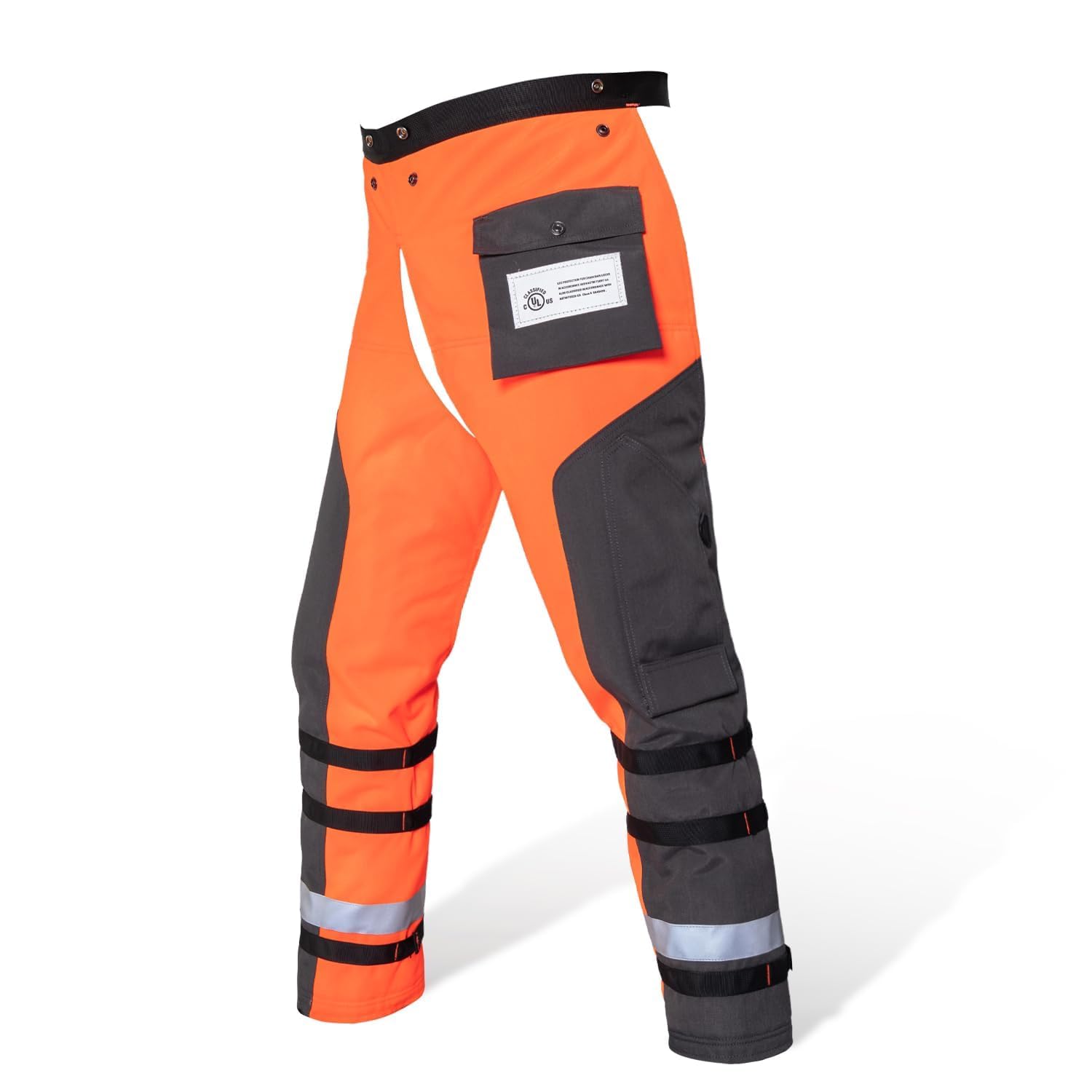
Bottom line: The YARDMARIS Technical Wrap Chaps suit users who want substantial protective construction and a wrap design for regular outdoor cutting.
Key Specs
- Protection: Six cut-resistant layers plus two cushioning layers for multi-layer coverage.
- Outer shell: 1050-denier coated polyester for abrasion resistance.
- Design: Class A technical wrap for close-fitting leg coverage.
- Fit: Medium and large length options for different users.
- Care: Hand wash according to the product instructions.
The technical wrap stays closer to your legs than a loose apron. That can help manage excess fabric while moving through brush or changing positions during cutting.
The coated outer fabric, adjustable buckles, reflective detailing, and utility pockets add practical features for field work. The protective system combines six cut-resistant layers with two cushioning layers rather than eight identical cutting-resistant layers.
The trade-off is a substantial build and less flexibility than lighter protective clothing. Measure carefully, fasten every buckle, and confirm that the selected length reaches your boot tops.
- Eight-layer protective system
- 1050-denier coated outer fabric
- Secure wrap design
- Reflective detailing and utility pockets
- Heavier construction than some apron alternatives
- Hand-wash care requires extra attention
- Non-stretch fabric limits flexibility
2. FORESTER Apron-Style Chaps
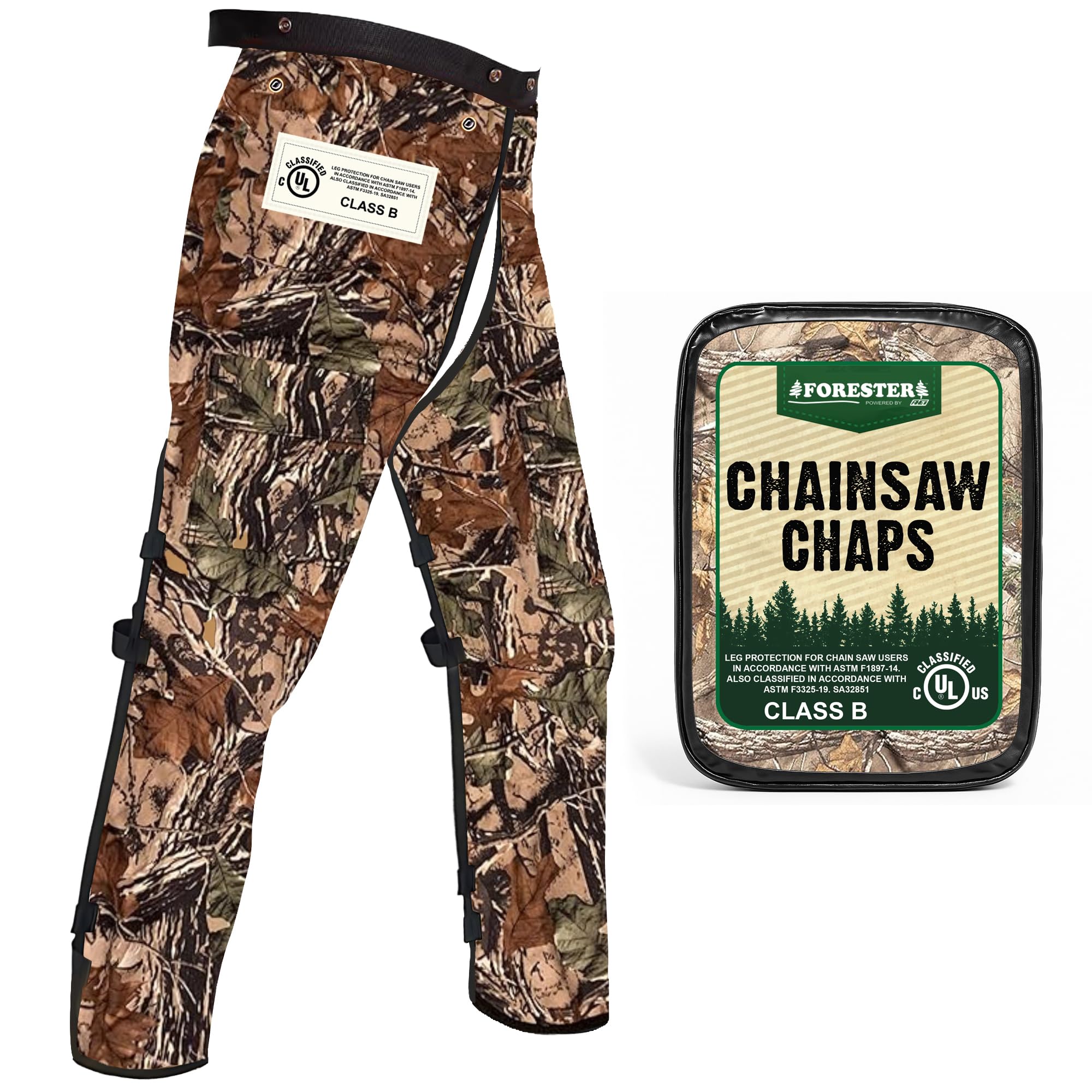
Bottom line: The FORESTER Apron-Style Chaps offer adjustable coverage, an oil- and water-resistant shell, and a practical utility pocket.
Key Specs
- Protection: Four-ply protective construction for chainsaw leg protection.
- Outer shell: Oxford polyester with oil- and water-resistant properties.
- Design: Open-back apron for easy on-and-off use.
- Fit: Adjustable waist and multiple overall-length options.
- Care: Follow the care label for the selected variant.
These chaps work well for property maintenance, forestry tasks, and other outdoor cutting where you need protective leg coverage without changing into dedicated protective trousers.
The adjustable waist and leg straps help you secure the garment. A folding waistband provides additional length adjustment, while the pocket offers space for small work essentials.
The linked listing describes four-ply construction. Do not confuse it with other FORESTER models that use different protective systems. The open-back design may also be more comfortable in warm conditions than a fully enclosed garment.
- Adjustable waist and leg straps
- Multiple length options
- Oil- and water-resistant shell
- Useful storage pocket
- Open-back construction does not provide full rear-leg coverage
- Different variants have different protective specifications
- Manufacturer warns against use with electric chainsaws
3. ZELARMAN Apron Wrap Chaps

Bottom line: The ZELARMAN Apron Wrap Chaps offer an eight-layer system, a durable outer shell, and additional calf coverage for logging and property work.
Key Specs
- Protection: Eight protective layers for chainsaw leg protection.
- Outer shell: 1000-denier Oxford polyester for abrasion resistance.
- Design: Apron wrap with additional calf coverage.
- Fit: Adjustable waistband and medium or large sizing.
- Care: Machine wash according to the garment label.
The apron-wrap layout protects the front of your legs and adds coverage around the calves. This makes it different from a basic open-back apron.
The adjustable waist and buckle straps let you secure the garment before cutting. A folding waistband can shorten the overall length, helping you adapt the fit without leaving loose material near your boots.
The substantial polyester construction suits outdoor work, but the extra material can feel bulky compared with a lighter apron. Check the length and fastening points before choosing a size.
- Eight-layer protective system
- 1000-denier Oxford shell
- Additional calf-wrap coverage
- Adjustable waistband and straps
- Substantial construction adds bulk
- Requires careful sizing and strap adjustment
- Not a substitute for protective boots or other safety equipment
4. Husqvarna Technical Apron Wrap Chaps

Bottom line: The Husqvarna Technical Apron Wrap Chaps offer rugged construction, five TEK WARP protective layers, and practical storage for regular chainsaw work.
Key Specs
- Protection: Five TEK WARP layers for chainsaw leg protection.
- Outer shell: 1000-denier PVC-coated polyester for abrasion resistance.
- Design: Technical apron wrap with adjustable closures.
- Fit: 36–38-inch variant with an adjustable waist.
- Care: Cold wash with mild detergent; hang to dry.
The coated outer fabric is designed for demanding field conditions. Five layers of TEK WARP material provide the protective system, while the apron-wrap design covers the front of your legs.
These chaps include a felling-wedge and gear pocket, along with adjustable buckles. They suit regular property work and forestry tasks where gear storage and substantial outer fabric are useful.
The main trade-off is weight and bulk. Choose the correct overall length rather than relying on your usual pants size. Husqvarna specifies cold washing with mild detergent and hang drying; avoid chlorine bleach.
- Five TEK WARP protective layers
- 1000-denier coated outer shell
- Felling-wedge and gear pocket
- Adjustable technical wrap design
- Heavier construction than lightweight apron options
- Limited length adjustment within each size
- Requires specific washing and drying care
5. Oregon 563979

Bottom line: The Oregon 563979 combines eight breathable warp-knit protective layers with adjustable sizing and machine-washable construction.
Key Specs
- Protection: Eight warp-knit layers for chainsaw leg protection.
- Outer shell: 600-denier Oxford fabric for everyday abrasion resistance.
- Design: Open-back apron for front-leg coverage.
- Fit: 36-inch length, adjustable waist up to 46 inches.
- Care: Machine washable according to Oregon’s instructions.
The breathable warp-knit protective system and apron layout make this model practical for routine cutting and property maintenance. It covers the vulnerable front of the leg without enclosing the entire rear.
The waist adjusts to fit different users, while top snaps let you change the effective length. This is useful when you need the protective material to reach your boot tops without dragging.
The 600-denier shell is lighter-duty than the heavier outer fabrics used by some other picks. That makes fabric durability and working conditions important considerations when choosing between models.
- Eight breathable warp-knit layers
- Adjustable waist and length
- UL-classified construction
- Machine washable
- 600-denier shell is lighter-duty than heavier alternatives
- Open-back design does not cover the full rear leg
- One-size design still requires a careful fit check
YARDMARIS Technical Wrap Chaps vs Oregon 563979: Is the Upgrade Worth It?
Both use eight-layer protective systems, but they differ in outer-shell construction and fit. YARDMARIS focuses on a heavier technical wrap, while Oregon offers a breathable apron with broad adjustment.
- Outer shell: YARDMARIS uses 1050-denier coated polyester; Oregon uses 600-denier Oxford.
- Coverage: YARDMARIS provides a technical wrap design; Oregon uses an open-back apron.
- Fit: Oregon provides a waist adjustment up to 46 inches and adjustable length snaps.
- Care: YARDMARIS specifies hand washing; Oregon is machine washable.
Which Chainsaw Chaps Should You Buy?
- Technical wrap: Get the YARDMARIS Technical Wrap Chaps.
- Adjustable work fit: Consider the FORESTER Apron-Style Chaps.
- Additional calf coverage: Get the ZELARMAN Apron Wrap Chaps.
- Rugged technical construction: Choose the Husqvarna Technical Apron Wrap Chaps.
- Breathability and easy care: Choose the Oregon 563979.
How We Chose
We compared published specifications and product documentation rather than claiming controlled cutting tests. The main criteria were:
- Protective construction: Documented protective layers, garment coverage, and published safety standards.
- Fit: Overall length, waist adjustment, and secure leg closures.
- Durability: Outer-shell material, fabric denier, coating, and care requirements.
- Comfort: Apron versus wrap construction, breathability, and bulk.
- Safety: Manufacturer instructions and applicable occupational safety guidance.
We checked the linked product listings, available manufacturer specifications, and safety guidance. Protective layer counts alone do not establish that one garment provides greater certified protection than another.
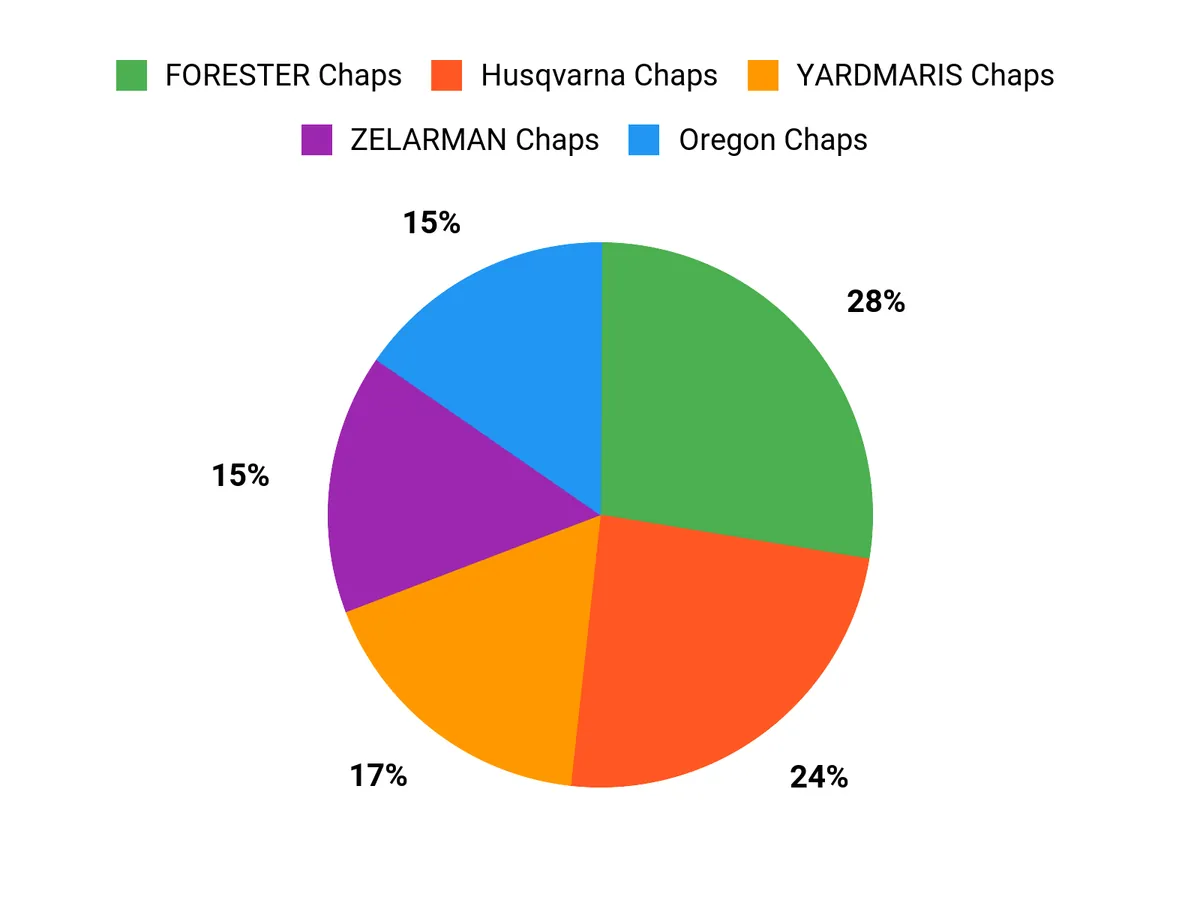
Customer Preferences
Choosing between these models comes down to protection style, fit, and maintenance. Technical wraps offer additional enclosure, while open-back aprons can provide a less restrictive feel.
Outer-shell durability, adjustable length, and clear manufacturer instructions also matter. The most useful garment is one that fits correctly, covers the required areas, and is worn consistently during chainsaw work.
Chainsaw Chaps Buying Guide
Choose Certified Protective Construction
Look for a clear manufacturer label identifying the applicable chainsaw leg-protection standard. In the United States, ASTM F1897 and UL classification are relevant references for protective chaps.
OSHA’s logging regulation requires suitable cut-resistant leg protection for covered chainsaw operations. A product’s material alone does not establish compliance.
Never treat protective layers as a guarantee that every chainsaw contact will be stopped.
Understand Apron and Wrap Designs
Apron-style chaps protect the front of your legs while leaving much of the back open. They can be easier to put on and may feel less restrictive in warm conditions.
Wrap designs provide additional enclosure around parts of the leg. If you want that style, consider the YARDMARIS Technical Wrap Chaps.
Check the manufacturer’s coverage diagram because the terms apron, wrap, and full wrap do not always describe identical coverage.
Measure Overall Length, Not Just Pants Size
Chainsaw chap sizing generally refers to overall length from the waist, not your regular pants inseam.
The protective material should cover the full thigh and reach the top of your boots. Material that ends too high leaves skin exposed, while excess length can interfere with movement.
The Oregon 563979 provides adjustable top snaps to help manage its effective length.
Compare Outer-Shell Materials
Denier describes yarn thickness. A higher number generally indicates heavier yarn, but it does not directly measure chainsaw cut resistance.
A coated 1000-denier shell can be useful where abrasion and wet conditions are concerns. A 600-denier shell may suit users who prefer less substantial outer fabric.
Base your safety decision on the complete protective garment and its certification, not the outer-shell denier alone.
Consider Climate and Working Conditions
Protective chaps add layers over your regular clothing. This can become uncomfortable during long periods of work in warm weather.
An apron design allows more airflow around the back of your legs. The Oregon 563979 uses breathable warp-knit protective material.
Take breaks as needed and never loosen protective straps while operating a saw.
Check Electric Chainsaw Compatibility
Do not assume chaps designed for gasoline-powered chainsaws provide the same protection against every electric or battery-powered saw.
Electric motor behavior and protective-fiber performance can differ from the conditions covered by a garment’s certification. Some manufacturers specifically warn against electric chainsaw use.
Check written approval for your saw type before relying on any pair.
Mistakes to Avoid When Buying Chainsaw Chaps
- Buying by pants size: Measure overall length from your waist to your boot tops.
- Ignoring certification: Check the actual garment label and applicable standard.
- Choosing by layer count alone: Compare the complete protective system and certified performance.
- Assuming electric saw compatibility: Follow the manufacturer’s written guidance.
- Ignoring care instructions: Incorrect washing or drying can damage protective materials.
Chainsaw Chaps FAQs
How Do I Choose the Right Chainsaw Chaps?
Choose chainsaw chaps by protection certification, coverage, overall length, and fit. Decide whether you need an apron or wrap design, then check that the protective material reaches your boot tops. Compare outer-shell durability and washing instructions. Finally, confirm that the manufacturer approves the garment for your chainsaw type and intended work.
Are Chainsaw Chaps Safe for Electric Saws?
Not all chainsaw chaps are approved for electric chainsaws. Some protective systems are intended for gasoline-powered saws, and electric motors may behave differently during chain contact. Check the garment’s certification and manufacturer instructions for your exact saw type. Do not rely on a general claim of cut resistance as proof of compatibility.
How Should Chainsaw Chaps Fit?
Chainsaw chaps should fit securely around your waist and legs without restricting normal movement. Their protective material should cover the full thigh and reach the top of your boots. Measure the overall length from your waist rather than using your usual inseam. Fasten every strap and check that loose fabric cannot catch on obstacles.
How Do I Care for and Inspect Chainsaw Chaps?
Follow the specific manufacturer’s washing and drying instructions. Inspect the outer shell, protective lining, seams, straps, and buckles before use. Keep the garment away from fuel, harsh chemicals, and unnecessary abrasion. If the protective fibers have been damaged, stop using the garment and follow the manufacturer’s replacement guidance.
When Should Chainsaw Chaps Be Replaced?
Replace chainsaw chaps after chain contact damages the protective material. Also replace them when the lining, stitching, or closures are no longer serviceable. Do not attempt to restore protective performance by sewing through damaged protective fibers. Follow the manufacturer’s inspection and replacement instructions, even when the outer fabric appears to have only a small cut.
Are Apron or Wrap Chainsaw Chaps Better?
Neither design is automatically safer in every situation. Apron chaps cover the front of the legs and leave much of the rear open. Wrap designs add coverage around parts of the leg. Choose based on the manufacturer’s coverage diagram, certification, fit, and your working conditions. A properly fitted garment must also allow safe movement.
Final Verdict: Best Chainsaw Chaps
The right chainsaw chaps combine suitable certified protection with a secure fit and practical care requirements. Technical wraps, adjustable aprons, and breathable designs serve different needs.
For breathable apron protection, consider the Oregon 563979. For heavier technical construction and gear storage, consider the Husqvarna Technical Apron Wrap Chaps.
Product Image Reference
Use these product images to compare the original designs. Confirm the selected color and size on the linked product page.
