
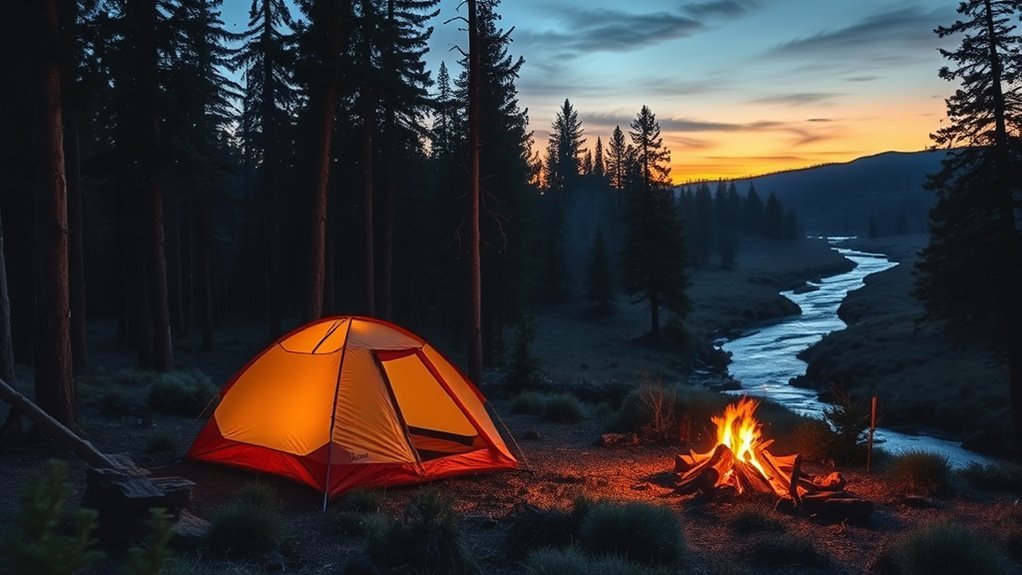
Dispersed camping lets you escape the crowds and immerse yourself in nature, camping on public lands away from designated campgrounds. You’ll enjoy privacy and stunning views, but be prepared for fewer amenities and potential accessibility challenges. Essential rules include respecting wildlife, packing out trash, and maintaining distance from water sources. With the right preparation and gear, you can have a memorable adventure. Discover more about the pros, cons, and essential tips to enhance your experience.
Understanding Dispersed Camping

Dispersed camping opens the door to a world of adventure and solitude, inviting you to experience nature beyond the confines of established campgrounds. This unique style of camping has roots in the tradition of enjoying public lands, where you can set up your tent in remote areas, away from the crowds. Unlike designated campgrounds, dispersed camping requires you to be self-sufficient, bringing along everything you need, from water to waste disposal solutions.
Before you commence your journey, familiarize yourself with local regulations and obtain necessary permits, especially near developed recreation areas. Adhering to camping etiquette is essential; follow Leave No Trace principles to minimize your impact on the environment. By respecting nature and fellow campers, you contribute to the preservation of these beautiful spaces. Embrace the freedom that comes with dispersed camping, and immerse yourself in the serene beauty of the great outdoors.
Pros of Dispersed Camping
When you choose dispersed camping, you’re stepping into a world of privacy and solitude, far away from the hustle of crowded campgrounds. It’s a cost-effective way to experience the great outdoors, letting you save money while exploring stunning landscapes that often go unnoticed. Plus, you’ll find yourself fully immersed in nature, connecting with its beauty and diverse wildlife like never before.
Privacy and Solitude Benefits
Finding a secluded spot in nature can be a transformative experience, as it grants you the privacy and solitude that crowded campgrounds simply can’t offer. Dispersed camping opens the door to hidden retreats where you can immerse yourself in tranquil escapes away from the noise of modern life. With no designated campsites, you can select your own picturesque views, enhancing your connection to the environment. Fewer people around means you’re more likely to encounter wildlife in their natural habitats, enriching your adventure. This solitude not only allows for peaceful reflection but also considerably reduces stress, promoting mental well-being. Embrace the freedom that comes with dispersed camping and discover the serenity that nature has to offer.
Cost-Effective Camping Experience
Exploring remote areas offers not only solitude but also a remarkable way to save money while enjoying the great outdoors. Dispersed camping is typically free, making it a fantastic choice for budget-friendly options. You’ll find many sites on public lands, allowing you to explore without nightly fees. With longer stay limits of up to 14 days, you can truly immerse yourself in nature without incurring extra costs. The flexibility of choosing your location adds spontaneity to your adventures, fostering a sense of liberation. Here’s a quick overview of your outdoor savings:
| Feature | Dispersed Camping | Established Campgrounds |
|---|---|---|
| Cost | Free | $20-$50 per night |
| Stay Duration | Up to 14 days | Usually 1-7 days |
| Reservation Requirement | No | Yes |
Immersion in Nature
Immersing yourself in the great outdoors through dispersed camping offers an unparalleled sense of tranquility, as you escape the hustle and bustle of everyday life. Here’s why you’ll love it:
- Solitude and Serenity: Experience the calmness of nature without the crowds, enhancing your nature connection.
- Wildlife Observation: Get up close to wildlife in their natural habitats, enriching your adventure with unforgettable encounters.
- Breathtaking Views: Choose your perfect spot for stunning scenery and stargazing under a pollution-free sky.
Dispersed camping allows you to explore diverse landscapes while engaging in physical activities like hiking and fishing. This deep immersion fosters not just mental clarity but also a profound connection with the natural world that invigorates your spirit.
Cons of Dispersed Camping
While the allure of pristine landscapes and solitude draws many to dispersed camping, it’s essential to recognize the significant challenges that come with this experience. You’ll find yourself without amenities like restrooms and water sources, pushing you to be entirely self-sufficient. Guiding yourself to remote sites can be tricky, especially if you’re driving a vehicle with low clearance.
| Challenge | Description |
|---|---|
| Lack of Amenities | No restrooms or water sources, requiring planning. |
| Accessibility Issues | Remote locations may be hard to reach. |
| Environmental Impact | Potential damage to fragile ecosystems. |
| Safety Concerns | Limited cell service and emergency access. |
| Skill Requirements | Essential outdoor skills are a must. |
You must also consider the environmental impact of your choices. If you’re not familiar with outdoor skills, the experience can be intimidating.
Essential Rules for Dispersed Camping
Dispersed camping offers a unique opportunity to connect with nature, but it’s crucial to follow essential rules to guarantee a safe and enjoyable experience. Here’s what you need to keep in mind:
- Respect Campfire Regulations: Always check local rules regarding campfires. Make sure to minimize your impact and only use existing fire rings if allowed.
- Wildlife Protection: Stay at least 150–200 feet away from water sources to protect natural habitats. Never feed wildlife; it disrupts their natural behavior and can be dangerous.
- Leave No Trace: Pack out all trash, and avoid damaging vegetation. Use existing roads and campsites to reduce your environmental footprint.
Products Worth Considering
Portable Campfire Ring for Camping & Outdoors – Helps safely contain wood-burning campfires at campsites, RV parks, and backyard gatherings.
Exceptional Durability & High Heat Resistance for Large Wood Burning Fires:Experience the ultimate bonfire with our extra-large 60-inch fire pit ring, holding more wood for longer, hotter burns. Constructed from heavy-duty commercial-grade galvanized steel, this 5FT 60-inch fire pit ring is built to last. Its extra-thick material ensures superior heat resistance, allowing it to withstand extreme temperatures from wood burning without warping, cracking, or peeling like painted steel fire rings.
Superior Rust Resistance & Durable Construction: Crafted from 0.7mm zinc-plated steel with an additional black high-temperature anti-rust powder coating, this fire pit ring achieves a total thickness of 0.8mm. It offers exceptional corrosion resistance against moisture and rain, significantly outperforming ordinary cold-rolled steel and ensuring long-lasting outdoor use.
Finding Suitable Dispersed Camping Locations
Where can you find the best spots for dispersed camping? Start by exploring public lands like national forests and Bureau of Land Management (BLM) areas, where dispersed camping is often permitted. Utilize mapping resources, such as Google Maps satellite view, to scout potential sites near natural features like lakes or mountains. When you arrive, prioritize campsite selection by looking for established sites marked by fire rings to reduce your environmental footprint and stick to Leave No Trace principles. Remember to maintain a safe distance from water sources—typically 150 to 200 feet—to protect water quality. Before you head out, check in with local ranger stations or visitor centers for insights on seasonal conditions, permits, and specific regulations. With a little research and preparation, you’ll find the perfect hidden gem to embrace your wild spirit while enjoying the freedom of the great outdoors.
Products Worth Considering
UPGRADED NO-FADE INK: Tired of your us map for travel fading after a couple of months? Our upgraded UV proof ink solves the problem and will give years of exciting use for your us travel map stickers.
Preparing for Your Dispersed Camping Trip
Before you venture into the great outdoors, it’s vital to prepare thoroughly for your dispersed camping trip. Proper preparation sets the stage for an unforgettable experience, so let’s make certain you’re ready. Here are three important points to keep in mind:
- Research regulations: Learn about the specific rules for the area you’ll be camping in, including stay limits and fire restrictions.
- Create a supply checklist: Pack enough food and water—aim for about one gallon per person per day—since amenities are scarce at dispersed sites.
- Familiarize yourself with navigation tools: Equip yourself with offline maps and a compass to make sure you can locate your campsite and find your way back.
Products Worth Considering
BUILT IN GPS ALTAMETER BAROMETER COMPASS: The smartwatch features built-in GPS (compatible with GPS, BeiDou, Galileo, GLONASS) for reliable positioning, taking 8-40 seconds to lock. The tracker watch also includes an internal compass, altitude pressurization, and altimeter sensors that show your current position, altitude, and air pressure. It helps you navigate challenging terrains-Perfect for Outdoor Exploration.
【Easy to Handle & Read】- With its liquid-filled compass, this compass delivers reliable and accurate readings. The luminous dial enhances visibility in low-light conditions, while the adjustable luminous marching line allows for easy navigation. The thumb hold and magnifying viewer further contribute to a fast and easy read, ensuring convenience during your outdoor explorations.
PROFESSIONAL GRADE: Trcosenp professional compass will always lead you in the right direction. The compass hiking survival are ideal for camping, military usage, emergencies, navigation and anywhere the beaten track takes you. It's also a good choice as the gifts for kids.
Essential Gear for Dispersed Camping
Starting on a dispersed camping adventure requires the right gear to guarantee your comfort and safety in the wilderness. First on your packing checklist is a quality tent suited to the season, alongside a sleeping bag rated for the temperatures you’ll encounter. Don’t forget a sleeping pad or cot for added comfort and insulation.
Next, consider your hydration needs; bring 1-2 gallons of drinking water per person per day, plus a reliable water filtration system. For meal prep, a portable stove, fuel, and cooking utensils are vital, as is a cooler or 12V fridge for food storage.
Navigation tools are essential, so pack offline maps, a compass or GPS unit, and a charged phone. Finally, make sure you’ve got safety equipment, including a first-aid kit and a personal locating beacon. These gear considerations will set you up for a liberating wilderness experience!
Products Worth Considering
[Preparedness for the Unknown]: While no one can predict when or how severe a disaster or accident will be, our 262pcs survival kit ensures your family’s safety during the critical first 72 hours. Designed for family use, it was developed in collaboration with first responders, doctors, special forces operators, mountain guides. Whether you're preparing for earthquakes, tornadoes, wildfires, or hurricanes, our survival kit provides peace of mind
INNOVATIVE OUTDOOR HARNESS FOR CAMPING GEAR STORAGE: Don’t let ants raid your snack bag! Move it from the ground to a hanging hook! Hang wet bathing suits and towels from the handy clothes pins! And, store camping essentials so they’re accessible but out of the way!
[250 in 1 Survival Kit]: Having an emergency kit is an important step to prepare and protect your and household for some unforeseen events. This emergency survival kit is specifically designed and curated by 3 survival experts, includes total 250pcs multipurpose survival tools. It contains the most popular survival gear and tools, also a first aid kit that enough to treat a family or a group of friends under emergency circumstances.
Safety Tips for Dispersed Camping
Packing the right gear sets the stage for an enjoyable dispersed camping trip, but ensuring your safety in the wild is just as important. Follow these essential safety tips:
Packing the right gear is crucial for a successful dispersed camping trip, but prioritizing safety is equally essential.
- Choose Your Campsite Wisely: Set up at least 150-200 feet away from water sources to minimize contamination and adhere to environmental guidelines.
- Embrace Wildlife Awareness: Familiarize yourself with local wildlife, especially bears. Hang your food at least 10 feet off the ground and 5 feet away from tree branches to deter unwanted visitors.
- Emergency Preparedness: Always inform someone about your camping plans, including your location and expected return. Carry a personal locating device or satellite communicator, as cell service might be spotty in remote areas.
Stay vigilant and make noise while moving around to avoid surprising wildlife. With these precautions, you’ll enjoy the freedom of dispersed camping while staying safe in the wilderness!
Products Worth Considering
DESIGNED BY A GRIZZLY BEAR ATTACK SURVIVOR – Created by Mark Matheny, who survived a grizzly bear attack and made it his mission to help protect people in bear country. Real experience, real safety.
Medium Size BV450 Jaunt: ideal bear canister for a weekend trip for 2, or a solo trip for a few days. Compact for smaller packs, yet roomy inside, the BV450 stores 3-4 days of camping food.
【Complete Bear Food Bag Hanging System】 Includes orange and green bear food bags, 4 sturdy nylon ropes in black and army green, 4 black clips,2 small warning bells and 2 black rock pouches. Everything you need for a convenient and efficient bear bag setup.
Frequently Asked Questions
Can I Bring My Pet While Dispersed Camping?
Yes, you can bring your pet while dispersed camping! Just guarantee their safety by keeping them leashed and respecting camping etiquette. Clean up after them, and be mindful of wildlife to enhance your adventure.
Are Campfires Allowed in Dispersed Camping Areas?
Campfires can light up your night, but they come with fire safety rules. Always check campsite regulations first; some areas allow them while others don’t. Your adventure depends on staying informed and responsible.
How Do I Dispose of Waste While Camping?
To manage waste responsibly, pack out all trash, use biodegradable products, and bury human waste in a deep hole at least 200 feet from water sources. Embrace eco-friendly practices to protect nature while enjoying freedom.
What Is the Best Time of Year for Dispersed Camping?
The best seasons for dispersed camping are spring and fall, when 70% of campers enjoy mild weather conditions. You’ll relish the vibrant landscapes and fewer crowds, allowing for a truly liberating outdoor experience.
Can I Camp Near Water Sources While Dispersed Camping?
Yes, you can camp near water sources, but make certain you follow water safety guidelines and local fishing regulations. Enjoy the tranquility, but respect the environment to maintain its beauty for future adventurers like you.
Conclusion
As you embrace the wild embrace of dispersed camping, remember the beauty of solitude beneath a star-studded sky. It’s a chance to unplug from the chaos of everyday life and reconnect with nature’s soothing whispers. While challenges may arise, the rewards of adventure and tranquility are worth it. So, pack your gear, tread lightly, and let the serene landscape be your guide. Your journey into the wild invites you to discover the simple joys that await.