
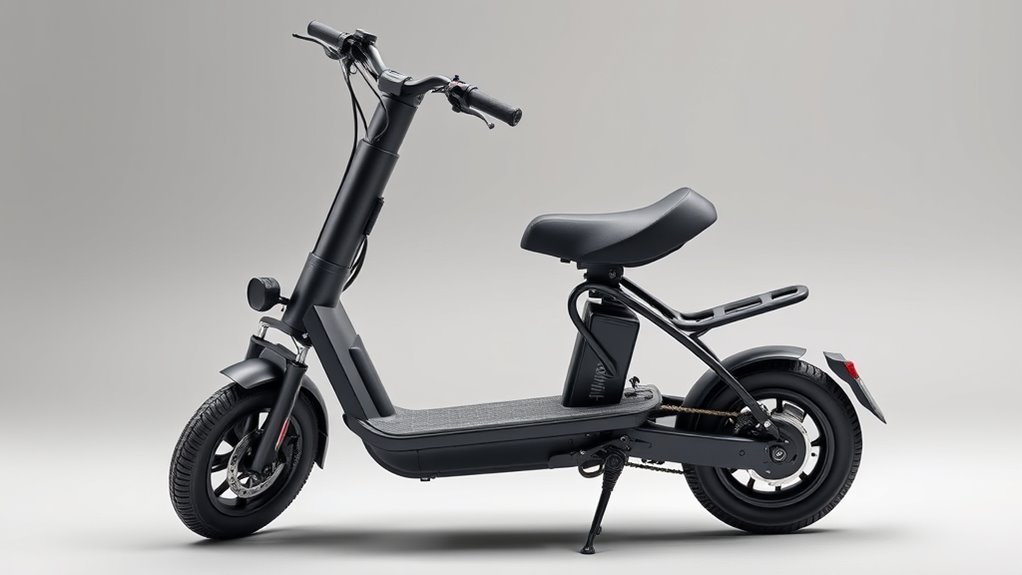
Last Updated on July 24, 2026 by Caleb Warren
An electric scooter combines a battery-powered drivetrain with a compact frame, steering system, brakes, wheels, controls, and safety equipment. Learning what each part does can help you compare scooters, notice problems early, explain faults to a repair technician, and avoid unsafe replacement parts. Specifications vary by model, so always use your scooter’s manual as the final authority.
Quick Answer
The main electric scooter parts are the motor, battery, battery-management system, controller, throttle, display, brakes, wheels, tires, suspension, frame, deck, stem, handlebars, lights, wiring, charger, and folding mechanism. Together, these parts control power, speed, range, steering, comfort, visibility, and stopping.
Key Takeaways
- Motor wattage alone does not determine speed or hill performance. Voltage, controller current, torque, rider weight, and wheel size also matter.
- Battery capacity is measured in watt-hours, but real range changes with speed, hills, temperature, tire pressure, load, and riding mode.
- Mechanical brakes provide friction-based stopping, while electronic or regenerative braking usually adds support.
- Tires, brakes, fasteners, bearings, cables, and grip surfaces need more routine attention than sealed electronic parts.
- Batteries, controllers, chargers, and motors must match the scooter’s approved voltage, connectors, firmware, and electrical limits.
Disclosure: As an Amazon Associate I earn from qualifying purchases. Some links on this page are affiliate links, at no extra cost to you.
Electric Scooter Parts Explained
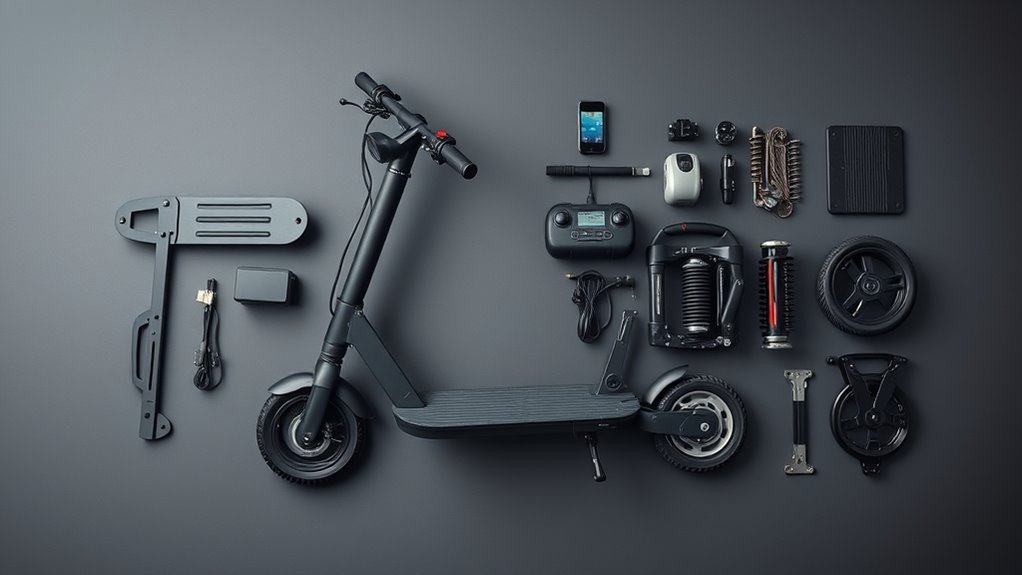
An electric scooter works as a connected system. The battery stores electrical energy, the controller regulates that energy, and the motor changes it into wheel movement. The frame supports the rider, while the steering, braking, tire, and suspension systems keep the scooter controllable. Lights, reflectors, a bell or horn, and brake sensors add visibility and safety.
| Part | What It Does | Possible Trouble Signs |
|---|---|---|
| Motor | Turns electrical energy into wheel movement. | Grinding, overheating, weak acceleration, or no drive. |
| Battery pack | Stores energy for the motor, controller, display, and lights. | Reduced range, charging failure, swelling, unusual heat, odor, or shutdowns. |
| Battery-management system | Monitors cells and may protect against overcurrent, short circuits, temperature problems, overcharge, and over-discharge. | Unexpected cutoffs, error codes, or a battery that will not charge or discharge. |
| Controller | Regulates current between the battery and motor based on throttle, brake, sensor, and firmware inputs. | Jerky starts, intermittent power, error codes, or sudden loss of acceleration. |
| Throttle and display | Send speed commands and show speed, battery level, mode, warnings, and trip information. | No response, stuck input, blank screen, incorrect readings, or error messages. |
| Brakes | Slow and stop the scooter through disc, drum, hydraulic, electronic, regenerative, or foot-brake systems. | Long lever travel, weak stopping, rubbing, grinding, pulsing, or fluid leakage on hydraulic systems. |
| Wheels and tires | Support the scooter, provide traction, and transfer steering and braking forces to the road. | Low pressure, cracks, punctures, flat spots, vibration, worn tread, or loose bearings. |
| Suspension | Absorbs impacts and helps the tires stay in contact with uneven surfaces. | Clunks, leaking dampers, sagging, binding, or excessive bouncing. |
| Frame, deck, stem, and fork | Support the rider and connect the steering, drivetrain, battery, and wheels. | Cracks, bending, corrosion, loose steering, or unusual movement. |
| Folding mechanism | Locks the stem in the riding position and allows the scooter to fold for storage. | Play, clicking, incomplete engagement, a loose latch, or visible damage. |
| Lights and warning devices | Help you see and help other road users notice your position and intentions. | Dim, flickering, delayed, or nonworking lights, indicators, bell, or horn. |
| Wiring, charger, and charging port | Carry power and control signals and safely recharge the battery when all parts are compatible. | Damaged insulation, loose plugs, corrosion, heat, arcing, charging errors, or burnt smells. |
How the Motor and Battery Work
The motor and battery form the scooter’s core power system. Most modern stand-up electric scooters use one or two brushless hub motors built into the wheel. The battery sends direct-current power to the controller, and the controller switches that power in a controlled pattern so the motor can turn.
The battery stores energy, the controller meters it, and the motor converts it into movement.
Motor Types and Power Ratings
A scooter may use a front motor, rear motor, or dual motors. Front-drive scooters can feel as though the scooter is being pulled. Rear-drive models push from behind and may provide more predictable traction during acceleration. Dual-motor scooters can provide stronger acceleration and climbing performance, but they normally add weight, cost, electrical demand, and tire wear.
Do not compare scooters by one wattage number alone. Manufacturers may publish both nominal power, which describes a continuous operating level, and peak or maximum power, which may be available only for short periods. For example, the Segway F2 support specifications list a 350W nominal motor and 700W maximum power.
Actual acceleration and hill performance also depend on:
- Motor torque and efficiency
- Battery voltage and charge level
- Controller current limits
- Single- or dual-motor design
- Rider and cargo weight
- Wheel and tire diameter
- Road slope and surface
- Wind and temperature
- Firmware and selected riding mode
Battery Capacity, Voltage, and BMS
Most modern electric scooters use a rechargeable lithium-ion battery pack. Three common battery terms are:
- Voltage (V): The electrical pressure of the pack. Battery, controller, motor, and charger voltage must be compatible.
- Amp-hours (Ah): A measure of electrical charge capacity.
- Watt-hours (Wh): A practical measure of stored energy. It is calculated approximately by multiplying voltage by amp-hours.
A 36V, 10.2Ah pack contains about 367Wh of nominal energy. A higher watt-hour rating can support a longer range when the scooters and test conditions are otherwise similar. It does not guarantee a specific distance.
Real range changes with riding speed, acceleration, hills, rider weight, wind, temperature, tire pressure, stops, surface condition, battery age, and riding mode. Manufacturer range claims are often produced under controlled test conditions, so your daily result may be lower.
The battery pack normally contains a battery-management system, or BMS. Depending on the model, it may monitor cell voltage, current, temperature, overcharge, over-discharge, and short-circuit conditions. A BMS adds protection, but it cannot make an incompatible charger, damaged battery, or unsafe modification acceptable.
Battery cycle life is also model-specific. For example, NIU states that its kick-scooter batteries are tested for 500 charging and discharging cycles under specified operating temperatures. Other packs may use different cells, protection settings, and capacity-retention standards.
Warning: Stop using a battery that is swollen, cracked, leaking, unusually hot, hissing, smoking, or producing a strong chemical or burnt odor. Move away from the device if it can be done safely and contact emergency services if there is smoke or fire. Do not open, puncture, crush, rebuild, or bypass the battery pack or BMS.
Safe Battery Charging
The U.S. Consumer Product Safety Commission advises owners to use the charger supplied or recommended by the manufacturer, remain present while charging, unplug the device when charging is complete, and avoid modified or repurposed battery packs.
- Check the charging port and plug for dirt, damage, moisture, or bent contacts.
- Let a very hot or cold scooter return to the charging temperature stated in its manual.
- Charge on a stable surface away from exits and easily burned materials.
- Do not charge while sleeping or when no one is home.
- Do not use a “universal” charger merely because its plug fits.
- Use only a manufacturer-approved replacement battery and charger.
What the Controller Does
The controller is the central electrical control unit. It receives information from the throttle, brake sensors, display, battery, motor sensors, and sometimes temperature or wheel-speed sensors. It then regulates the current sent to the motor.
Power Flow Control
When you press the throttle, the controller reads the signal and changes motor output. Many brushless motor controllers use pulse-width modulation to control average power efficiently. Controller programming may also set acceleration strength, speed limits, riding modes, current limits, and thermal protection.
- Voltage must match the battery and motor system.
- Current limits affect acceleration, heat, and component stress.
- Firmware may control speed modes and energy recovery.
- Protection circuits may reduce or stop power during unsafe conditions.
Jerky acceleration does not automatically prove that the controller has failed. A damaged throttle, loose connector, brake-cutoff sensor, low battery, motor cable, firmware problem, or water-damaged wiring can create similar symptoms.
Throttle Signal Processing
Most scooters use a thumb or twist throttle with a position sensor. The controller checks that signal and sends the requested power to the motor. Some scooters require a manual push before the throttle becomes active. This feature helps reduce accidental acceleration from a standstill.
| Stage | Controller Action |
|---|---|
| Input reading | Measures the throttle or control signal. |
| Safety check | Checks brake, speed, battery, temperature, and fault information when supported. |
| Processing | Calculates permitted motor output based on the riding mode and system limits. |
| Power switching | Meters current to the motor phases. |
| Protection response | Limits or stops output when the system detects certain faults. |
Display, Buttons, and Sensors
The dashboard may show speed, battery level, riding mode, trip distance, lights, turn signals, cruise control, temperature warnings, and error codes. Buttons may control power, lights, mode selection, indicators, or a horn.
Common sensors include motor Hall sensors, wheel-speed sensors, throttle-position sensors, brake-cutoff switches, battery-temperature sensors, and tilt or motion sensors. Not every scooter uses every sensor.
Braking and Safety
When a brake lever is pulled, a brake sensor may tell the controller to reduce or stop motor power. On scooters with electronic or regenerative braking, the controller may also use motor resistance to help slow the wheel and return some energy to the battery.
Note: Regenerative or electronic braking does not provide a universal percentage of recovered energy. Its effect changes with speed, battery charge, controller settings, terrain, and model design. Treat it as part of the approved braking system, not as a guaranteed range booster.
Electric Scooter Braking Systems
Electric scooters may use one or more mechanical and electronic braking systems. A dual-system arrangement can provide useful redundancy, but the exact layout varies by model. Some scooters use a front drum brake and rear electronic brake, while others use disc brakes, hydraulic brakes, foot brakes, or different combinations.
| Brake Type | How It Works | Maintenance Points |
|---|---|---|
| Mechanical disc | A cable-operated caliper squeezes pads against a rotor. | Pad wear, cable tension, rotor alignment, contamination, and loose fasteners. |
| Hydraulic disc | Hydraulic pressure moves the brake pistons and pads. | Pad wear, leaks, hose damage, rotor condition, and manufacturer-specified fluid service. |
| Drum | Brake shoes press against the inside of an enclosed drum. | Cable adjustment, shoe wear, contamination, and return action. |
| Electronic or regenerative | The controller uses motor resistance to slow the driven wheel. | Brake sensors, controller settings, wiring, firmware, and error codes. |
| E-ABS assistance | Electronic control attempts to reduce wheel lock during braking. | Model-specific sensors, firmware, controller operation, and approved brake setup. |
| Rear foot brake | The rider presses a rear fender or brake plate against the tire. | Fender strength, pivot movement, tire contact, and wear. |
Disc brakes often provide a direct response and are easy to inspect visually. Drum brakes are more enclosed and may need less frequent external cleaning. Hydraulic systems can provide strong modulation, but only hydraulic brakes contain brake fluid. Electronic braking can reduce some mechanical wear, but it depends on the electrical system and may feel weaker at low speed or when the battery or controller limits regeneration.
Warning: Do not ride if either required brake is weak, damaged, leaking, disconnected, or unable to stop the scooter predictably. After adjustment or service, test braking at walking speed in a traffic-free area before normal riding.
How Wheels, Tires, and Suspension Affect Ride Quality
The three main factors that shape scooter ride quality are wheel diameter, tire construction, and suspension design. Larger-diameter wheels generally roll over small gaps and bumps more easily than smaller wheels, but wheel size alone does not guarantee stability or grip.
Wheel size, tire construction, pressure, tread, and suspension work together to determine comfort and control.
Electric Scooter Tire Types
- Pneumatic tires: Use air for cushioning. They can provide a smoother ride but require pressure checks and can puncture.
- Tubeless pneumatic tires: Hold air without a separate inner tube. Some include sealant or a self-sealing layer.
- Tube-type tires: Use a replaceable inner tube inside the tire.
- Solid tires: Cannot lose air from a puncture, but normally transmit more vibration.
- Honeycomb tires: Use openings or internal structures to add some flexibility without air.
Tire pressure is model-specific. For example, Segway lists 42 to 48 psi for the F2 series, while NIU publishes 45 to 50 psi for certain KQi scooters. Use the pressure printed in your manual or on the tire rather than copying another scooter’s number.
Under-inflated tires can increase rolling resistance, heat, rim-strike risk, and unstable handling. Excessive pressure can reduce cushioning and may exceed the tire or rim limit. Tread, rubber compound, road contamination, temperature, and wear also affect grip.
Suspension Types
Some scooters have no mechanical suspension and depend on their tires for cushioning. Others use:
- Front spring suspension
- Rear spring suspension
- Front and rear suspension
- Hydraulic or elastomer dampers
- Swingarms or linkage systems
Suspension can reduce harsh impacts and help the wheels follow uneven ground, but it adds weight and moving parts. Inspect suspension pivots, springs, bushings, dampers, and mounting bolts for play, damage, leaks, binding, or unusual noise.
Pro Tip: Check pneumatic-tire pressure when the tires are cool. A slow leak may first appear as reduced range, vague steering, frequent rim impacts, or one tire losing pressure faster than the other.
Frame, Deck, Stem, and Folding Parts
Frame, Deck, and Fork
The frame carries the scooter’s structural load. The deck supports your feet and often contains the battery, controller, wiring, and seals. The fork connects the front wheel to the steering system. The stem connects the handlebars to the deck and may contain cables or wiring.
Common frame materials include aluminum alloys and steel. Material names alone do not prove strength. Tube shape, welds, fasteners, load rating, corrosion protection, and manufacturing quality also matter.
Inspect these areas for:
- Cracks near welds, pivots, and bolt holes
- Bending or impact damage
- Loose steering or wheel alignment
- Corrosion around fasteners and damaged coatings
- Deck-cover damage that may expose internal parts
- A lifting or worn grip surface
Folding Mechanism
The folding mechanism normally includes a hinge, latch, locking pin, hook, clamp, shaft, and safety catch. These parts must hold the stem firmly in its riding position. A small amount of model-approved adjustment may be normal, but visible cracks, incomplete engagement, unexpected opening, or growing movement can create a fall hazard.
Warning: Stop riding if the stem, fork, handlebar, deck, wheel mount, or folding latch is cracked, bent, loose, or unable to lock fully. Structural failures can happen suddenly and should be assessed using the manufacturer’s repair procedure.
Handlebars, Bearings, Fenders, and Kickstand
The handlebars support the grips, throttle, brake levers, display, buttons, bell, horn, and sometimes turn-signal controls. Steering bearings allow the fork and handlebar assembly to turn smoothly. Worn or loose bearings may cause knocking, rough steering, or play when you move the handlebars forward and backward.
Fenders help block water and debris. A rear fender may also hold a brake light or act as a foot brake on certain scooters. The kickstand supports the parked scooter but is not designed to hold a rider’s weight.
Wiring, Lights, Charger, and Other Electrical Parts
Wiring Harness and Connectors
The main wiring harness carries battery power and low-voltage control signals between the battery, controller, motor, throttle, display, brakes, lights, and charging port. Connectors may be located inside the deck, stem, handlebars, or near the wheel motors.
Look for pinched cables, damaged insulation, loose connectors, corrosion, overheated plugs, missing seals, or wires rubbing against sharp edges. Do not probe high-current battery connectors with improvised tools.
Charger and Charging Port
A safe charger must match more than the plug shape. Its output voltage, charging method, polarity, connector, current, and communication requirements must suit the exact battery and BMS. An incompatible charger can overheat the charger, connector, wiring, or battery.
Keep the charging-port cover closed when the scooter is not charging. Do not connect a charger when the port is wet, corroded, damaged, or contaminated with metal debris.
Lighting and Visibility
Electric scooter visibility equipment can include:
- Headlight
- Tail and brake lights
- Side reflectors
- Front and rear reflectors
- Turn signals
- Deck or side lighting
- Bell or electronic horn
A headlight helps you see the surface ahead, while tail, brake, side, and indicator lights help other road users notice you. Built-in lights may not provide enough illumination for every road or speed, so follow local lighting requirements and the scooter manufacturer’s accessory guidance.
Water Resistance and IP Ratings
An IP rating describes tested resistance to certain levels of dust or water exposure. It does not mean that the scooter is completely waterproof. Different parts of one scooter may have different ratings, and seals can deteriorate after impact, repair, aging, or incorrect assembly.
Avoid deep water, pressure washing, flooding, and charging a wet scooter. Follow the manual’s rain, cleaning, drying, and storage instructions.
How Electric Scooter Parts Affect Performance
| Ride Characteristic | Parts With the Greatest Influence |
|---|---|
| Acceleration | Motor torque, controller current, battery voltage, traction, rider weight, and firmware. |
| Top speed | Motor design, voltage, controller and firmware limits, wheel size, load, and local configuration. |
| Range | Battery watt-hours, speed, controller efficiency, tire pressure, terrain, temperature, load, and riding style. |
| Hill climbing | Motor torque, controller current, voltage, cooling, traction, total load, and slope. |
| Ride comfort | Tire type, pressure, wheel diameter, suspension, deck space, grips, and frame stiffness. |
| Stopping control | Brake type, adjustment, tire grip, weight distribution, surface condition, and electronic assistance. |
| Portability | Frame material, battery size, motor count, suspension, handle design, and folding mechanism. |
Safety Features on Electric Scooters
Brake System Reliability
Reliable stopping depends on the complete braking system, not only the brake type. The brake lever, cable or hydraulic line, caliper or drum, pads or shoes, rotor, brake sensor, controller, tires, and fasteners must all work correctly.
- Mechanical brakes provide friction-based stopping.
- Electronic braking can support deceleration and may reduce some mechanical wear.
- Some models include E-ABS or another electronic wheel-lock mitigation feature.
- Tire grip and correct pressure strongly affect braking control.
- Faster speeds and wet, loose, or contaminated surfaces require more stopping space.
Tire Grip and Stability
Good tire grip depends on tread, rubber compound, pressure, temperature, wear, road condition, and braking input. Pneumatic tires often provide more cushioning on rough surfaces, while solid tires remove puncture-related air loss but normally transmit more vibration.
- Replace tires with exposed cords, deep cracks, severe flat spots, or inadequate tread.
- Use the manufacturer’s tire size and load rating.
- Keep both hands on the handlebars while riding.
- Slow down before potholes, curbs, loose gravel, wet markings, and metal covers.
- Do not carry a second rider unless the scooter is specifically designed and approved for one.
Electrical Certification and Battery Safety
When buying a scooter or replacement battery, look for independent certification to the applicable safety standard. UL Solutions explains that ANSI/CAN/UL 2272 covers electrical systems in personal e-mobility devices. UL 2271 applies to batteries used in light electric-vehicle applications.
Certification addresses electrical and fire-safety testing. It does not prove that a rider can maintain control, replace the need for a helmet, or guarantee that every component will remain safe after damage, modification, misuse, or poor repair.
Pre-Ride Safety Check
CPSC recommends checking the handlebars, brakes, throttle, bell, lights, tires, cables, and frame before riding. A practical check should include:
- Confirm that the folding latch is fully locked.
- Squeeze each brake and confirm a firm, predictable response.
- Check tire pressure, tread, damage, and wheel security.
- Turn the handlebars and check for roughness or looseness.
- Test the throttle only after confirming the path is clear.
- Test the headlight, brake light, tail light, signals, bell, or horn.
- Look for loose fasteners, damaged wiring, battery warnings, or unusual smells.
- Wear a properly fitted bicycle helmet and follow local traffic rules.
Electric Scooter Maintenance Schedule
Your owner’s manual takes priority over any general schedule. Riding frequency, weather, road quality, rider weight, and scooter design may require more frequent checks.
| When | What to Check |
|---|---|
| Before every ride | Brakes, tires, folding lock, steering, lights, throttle, visible cables, battery warnings, and loose or damaged parts. |
| About monthly or as the manual states | Tire pressure, tread, brake wear and adjustment, fastener security, wheel bearings, steering play, suspension, charging port, and cable routing. |
| After a crash or hard impact | Frame, stem, fork, wheels, folding latch, brakes, battery enclosure, wiring, display, and alignment. |
| After water exposure | Follow the manual. Do not charge until the scooter and charging port are dry and no damage or warning is present. |
| Before long-term storage | Clean and dry the scooter, follow the specified storage charge, switch-off procedure, temperature range, and periodic charging instructions. |
Common Electric Scooter Problems and Likely Parts
| Symptom | Possible Area | Safe First Check |
|---|---|---|
| Scooter will not turn on | Battery charge, power button, display, BMS, connector, fuse, or controller. | Check the approved charger, display warnings, external connectors, and manual reset procedure. |
| Jerky acceleration | Throttle sensor, brake-cutoff switch, controller, motor sensor, cable, or low battery. | Stop riding, note any error code, inspect exposed wiring, and contact approved service support. |
| Sudden power loss | Low voltage, overheated controller or motor, battery protection, loose connector, or damaged wiring. | Let the scooter cool safely, check the battery indicator and error code, and do not bypass protection. |
| Range has dropped | Low tire pressure, cold weather, higher speed, hills, brake drag, added load, or battery aging. | Check pressure, brake drag, riding conditions, charge completion, and battery diagnostics. |
| Brake rubbing or squealing | Rotor alignment, pads, caliper, cable, drum, contamination, or wheel alignment. | Inspect without touching a hot rotor and follow the model’s adjustment procedure. |
| Stem wobble or clunk | Folding latch, steering bearing, stem clamp, fork, or loose fastener. | Stop riding and inspect for play, cracks, incomplete latch engagement, or missing hardware. |
| Strong vibration | Tire damage, low pressure, bent rim, loose wheel, bearing, suspension, or motor problem. | Check both wheels and tires before riding again. |
| Display or lights flicker | Loose connector, damaged harness, moisture, low voltage, display, or controller fault. | Turn the scooter off, inspect accessible connectors, and avoid charging if moisture or heat is present. |
Warning: Do not continue riding through sudden power loss, steering play, structural cracks, severe vibration, battery heat, smoke, burnt odors, or unreliable brakes. These symptoms can indicate a fault that requires professional inspection.
Choosing Replacement Electric Scooter Parts
Use the scooter’s exact model, serial number, manual, part number, and manufacturer support information when ordering a replacement. Similar-looking parts may use different dimensions, voltage, polarity, connectors, sensors, firmware, or mounting points.
- Battery: Match the approved voltage, capacity range, enclosure, connector, BMS communication, mounting system, and charger.
- Controller: Match battery voltage, motor type, current limits, phase and sensor wiring, display protocol, brakes, lights, and firmware.
- Charger: Match the manufacturer-approved output voltage, polarity, connector, charging current, and communication method.
- Motor: Match voltage, wheel size, axle dimensions, connector, Hall sensors, brake layout, and controller.
- Tires and tubes: Match the tire and rim size, valve type, load rating, and manufacturer guidance.
- Brake parts: Match the rotor diameter, thickness, pad shape, caliper, cable, hose, and approved brake fluid where applicable.
- Folding and structural parts: Use approved parts and torque procedures. A nearly matching latch or fastener can still be unsafe.
A higher-voltage battery, unrestricted controller, or more powerful motor can exceed the original wiring, connector, brake, frame, tire, and thermal limits. It may also disable protective communication or create a battery-fire risk. Do not perform electrical performance upgrades unless the scooter manufacturer has approved the complete configuration.
Frequently Asked Questions
What are the main parts of an electric scooter?
The main parts are the motor, battery, BMS, controller, throttle, display, brakes, wheels, tires, suspension, frame, deck, stem, handlebars, lights, wiring, charger, and folding mechanism. Each part contributes to power, steering, stopping, comfort, visibility, or structural support.
What are all the smaller parts on a scooter?
Smaller parts can include brake levers, cables, hoses, pads, rotors, bearings, fasteners, grips, buttons, sensors, reflectors, fenders, a bell or horn, turn signals, seals, charging-port covers, connectors, a kickstand, grip tape, and folding-latch hardware. The exact list depends on the model.
What are the common problems in electric scooters?
Common problems include low tire pressure, punctures, brake wear or rubbing, loose folding hardware, damaged cables, throttle faults, charging problems, reduced battery range, controller errors, worn bearings, broken lights, and water-related connector damage. Stop riding when a fault affects braking, steering, structure, or battery safety.
What electric scooter parts are replaced most often?
Routine replacement parts often include tires, inner tubes, brake pads or shoes, cables, grips, bearings, lights, fenders, and grip tape. Battery replacement may eventually be needed as capacity declines. Motors and controllers can fail, but they are not necessarily the most frequent wear items.
Do all electric scooters have suspension?
No. Some scooters have no mechanical suspension and rely on pneumatic or flexible tires for cushioning. Others have front, rear, or dual suspension. Suspension can improve comfort on rough surfaces, but it adds weight, cost, and additional parts that require inspection.
Can I install a larger battery or more powerful controller?
Only when the manufacturer approves the complete configuration. Voltage, current, wiring, connectors, BMS communication, motor, brakes, frame, tires, firmware, and charger must remain compatible. An unsupported upgrade can damage components, defeat safety protections, increase fire risk, and void the warranty.
Conclusion
Every electric scooter part has a specific job. The battery stores energy, the controller manages it, and the motor moves the scooter. Brakes, tires, suspension, steering, and the frame keep the ride controllable, while lights and warning devices improve visibility. Understanding the complete system helps you compare models, maintain wear parts, spot unsafe symptoms, and choose compatible replacements.
Follow the manufacturer’s manual for tire pressure, fastener torque, charging, storage, brake service, and replacement parts. Do not ride through battery warnings, structural movement, unreliable brakes, or steering problems.
Sources
- U.S. Consumer Product Safety Commission Micromobility Information Center — pre-ride inspections, helmets, visibility, charger compatibility, supervised charging, and battery safety.
- UL Solutions Personal E-Mobility Testing and Certification — UL 2272 electrical-system coverage and UL 2271 battery certification context.
- Segway F2 Series Support Specifications — model-specific examples of nominal and maximum motor power, battery watt-hours, BMS protections, and tire pressure.
- NIU Kick Scooter FAQ — manufacturer guidance on battery-cycle testing, charging, tire pressure, and troubleshooting.
- NIU KQi3 Product Information — examples of regenerative braking, mechanical brakes, pneumatic tires, lighting, and warning equipment.
- U.S. Environmental Protection Agency: Used Lithium-Ion Batteries — safe battery handling, separate recycling, and disposal guidance.
