
Last Updated on July 25, 2026 by Daniel Globe
Canada gives you an unusual range of road trips in one country, from Pacific rainforest and Atlantic cliffs to Rocky Mountain glaciers and northern highways. The best route depends on your time, season, vehicle, and comfort with remote driving. Plan fewer kilometres per day than you would on an ordinary highway trip, because viewpoints, hikes, ferries, wildlife, and changing weather can slow you down.
Quick Answer
The best Canada road trips include the Icefields Parkway for glaciers, the Cabot Trail for Atlantic cliffs, Highway 4 to Tofino for rainforest and beaches, Route 132 around Gaspésie, the Viking Trail for history, and the Lake Superior shore for long wilderness views. Summer is easiest, while early fall often brings lighter crowds and strong scenery.
Key Takeaways
- Choose a route by trip length first. Some drives fit into one day, while Gaspésie and the Alaska Highway deserve a week or more.
- Check provincial or territorial road reports before each driving day. Mountain, coastal, and northern routes can change quickly.
- Reserve popular campgrounds, ferries, and national park stays early for summer and fall weekends.
- Carry food, water, warm layers, an emergency kit, and offline maps on remote routes with limited fuel or cell service.
- Never combine wine tasting with driving. Use a designated driver, shuttle, or guided tour in Niagara.
Disclosure: As an Amazon Associate I earn from qualifying purchases. Some links on this page are affiliate links, at no extra cost to you.
Best Canada Road Trip Routes
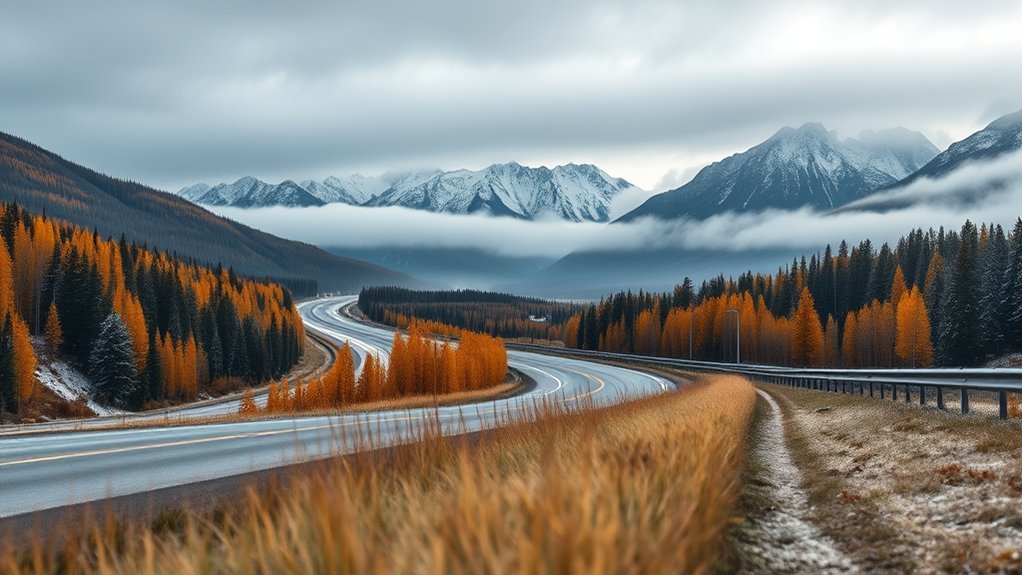
Canada’s scenic drives range from short mountain corridors to multi-province journeys. The table below compares the most useful choices for a first plan. Distances are approximate and may change with your starting point, side trips, construction, or detours.
| Route | Approximate distance | Good trip length | Best for |
|---|---|---|---|
| Sea-to-Sky Highway, British Columbia | 163 km, Vancouver to Pemberton | 1 to 3 days | Coast, mountains, Squamish, and Whistler |
| Icefields Parkway, Alberta | 232 km, Lake Louise to Jasper | 1 full day or 2 relaxed days | Glaciers, waterfalls, lakes, and wildlife |
| Pacific Rim route, British Columbia | About 200 km, Nanaimo to Tofino | 2 to 4 days | Rainforest, surfing, beaches, and storm watching |
| Cabot Trail, Nova Scotia | 298 km loop | 1 to 3 days | Atlantic cliffs, hiking, and Cape Breton culture |
| Gaspésie Tour, Québec | 885 km loop | 5 to 10 days | Coastal villages, seafood, parks, and Percé |
| Viking Trail, Newfoundland | About 687 km from Deer Lake | 5 to 7 days | Gros Morne, coastal history, and Norse archaeology |
| Alaska Highway, B.C., Yukon, and Alaska | 2,232 km | 7 to 14 days | Northern wilderness, history, and long-distance travel |
| Lake Superior north shore, Ontario | 700 km, Sault Ste. Marie to Thunder Bay | 4 to 7 days | Waterfalls, beaches, parks, and big-lake views |
For a first mountain trip, the Icefields Parkway is the easiest route to understand and one of the most rewarding. For a coastal loop, choose the Cabot Trail or Gaspésie. For a long northern expedition, the Alaska Highway needs the most preparation. If you want a short trip near a major city, the Sea-to-Sky Highway or Niagara Wine Country is easier to fit into a weekend.
How to Choose the Right Route
Start with the number of full driving days you have, then match the route to your interests. A one-day schedule works for the Icefields Parkway only if you begin early and avoid long hikes. Two or three days give you time for Sea-to-Sky, the Cabot Trail, Niagara, or a focused Pacific Rim trip. Five to ten days suit Gaspésie, the Viking Trail, and Lake Superior. The Alaska Highway is better when you can allow at least a week and keep extra time for weather, road work, wildlife, and rest.
- Best for mountains: Icefields Parkway and the Canadian Rockies.
- Best for ocean scenery: Cabot Trail, Pacific Rim, and Gaspésie.
- Best for history: Viking Trail, Klondike Highway, and Alaska Highway.
- Best for a first short trip: Sea-to-Sky Highway or Niagara Wine Country.
- Best for remote adventure: Alaska Highway and northern Yukon routes.
Pro Tip: Build your plan around two or three priority stops per day. Canada’s scenic routes often take much longer than the distance suggests because of pullouts, wildlife, ferries, construction, and short hikes.
When to Take a Canada Road Trip
For most routes, late June through September gives you the easiest combination of open attractions, longer daylight, and more predictable services. July and August are the busiest and usually the most expensive. September often brings cooler air, fall color in some regions, and fewer families on the road. Spring can work well in southern areas, but mountain routes may still have snow and seasonal services may remain closed.
Best Seasons by Region
The best month changes by province and by the experience you want. Newfoundland’s iceberg season usually reaches into spring and early summer, while Atlantic fall color is strongest later in the year. The Pacific coast can be visited year-round, but winter is better for storm watching than for an easy general road trip.
| Region | Easiest road-trip season | Why go then |
|---|---|---|
| Canadian Rockies | Late June to September | More services, longer daylight, and easier hiking access |
| British Columbia coast | May to September | Drier conditions and easier beach, hiking, and ferry plans |
| Atlantic Canada | June to October | Coastal attractions, whales, seafood, and fall color |
| Québec’s Gaspé Peninsula | June to early October | Open seasonal businesses, parks, and coastal stops |
| Northern Ontario | June to early October | Comfortable park access, long daylight, and fall color |
| Yukon and Alaska Highway | June to September | Long daylight and the widest range of open services |
Weather and Road Conditions
Weather can change quickly in mountain passes, coastal areas, and the north. Check the forecast and the official provincial or territorial road report before you leave each morning. Slow down for rain, fog, snow, smoke, or loose gravel, and stop safely if visibility becomes poor. Keep your fuel level above half on remote roads and do not depend on continuous cell service.
Warning: The Icefields Parkway is a remote road with limited services and no continuous cell coverage. Parks Canada advises travellers to bring food and water, fuel up before leaving Lake Louise or Jasper, and check current conditions before departure.
Festivals and Peak Times
Summer festivals can add energy to a road trip, but they also increase room rates, traffic, and campground demand. Major events such as the Calgary Stampede, Montréal’s jazz festival, and Toronto’s film festival can affect nearby travel plans. Check the current event calendar before booking, because dates change each year. Fall harvest events and Cape Breton’s Celtic celebrations can be excellent reasons to travel in September or October.
Sea-to-Sky, Icefields, and Rocky Mountain Routes
Western Canada gives you two very different mountain drives. British Columbia’s Sea-to-Sky Highway follows Highway 99 from the Vancouver area through Squamish and Whistler toward Pemberton. Alberta’s Icefields Parkway follows Highway 93 North between Lake Louise and Jasper through Banff and Jasper national parks.
Sea-to-Sky Views
The official Sea-to-Sky road-trip route covers about 163 km from Vancouver to Pemberton. Give yourself at least a full day, even if Whistler is your final stop. Horseshoe Bay, Porteau Cove, Britannia Beach, Squamish, Brackendale, Whistler, and Pemberton all offer reasons to stop. Highway 99 has mountain curves and can face congestion, snow, rockfall, or closures, so check DriveBC before leaving.
Icefields Parkway Highlights
The Icefields Parkway runs 232 km between Lake Louise and Jasper. A full day lets you stop at Bow Lake, Peyto Lake, the Columbia Icefield area, Athabasca Glacier viewpoints, Sunwapta Falls, and Athabasca Falls. A valid national park pass is required, and summer parking can fill early.
- Start with a full tank in Lake Louise or Jasper.
- Download maps and stop information before losing service.
- Use signed pullouts instead of stopping on the roadway.
- Keep a safe distance from wildlife and never feed animals.
- Check 511 Alberta and Parks Canada closure notices before departure.
The Icefields Parkway is only 232 km long, but Parks Canada recommends treating it as a full-day journey because services are limited and the route has many major stops.
Pacific Rim Highway to Tofino and Ucluelet
Highway 4 crosses Vancouver Island from the east side toward Port Alberni, Tofino, Ucluelet, and Pacific Rim National Park Reserve. Many travellers begin in Nanaimo or Parksville, then stop at Little Qualicum Falls, Cathedral Grove, Port Alberni, and Kennedy Lake before reaching the coast. The drive from Nanaimo to Tofino takes about three hours without long stops, but a relaxed road trip deserves two to four days.
The route is narrow and winding in places. Heavy rain, wildfire damage, construction, and slope work can cause delays or closures. Check DriveBC shortly before travel. On the coast, follow beach-safety signs, keep well back from large waves, and never stand on driftwood near rough surf.
Cabot Trail, Gaspésie, and Viking Trail Drives
These three eastern routes combine coastal scenery with living culture and history, but they need different amounts of time. The Cabot Trail can fit into a long day, Gaspésie is a major loop, and the Viking Trail is a multi-day journey up Newfoundland’s Great Northern Peninsula.
Cabot Trail
Nova Scotia’s Cabot Trail is a 298 km loop through Cape Breton Island and Cape Breton Highlands National Park. Ingonish, Chéticamp, Pleasant Bay, Cape Smokey, and the Skyline Trail are popular stops. The road includes steep grades and sharp curves, so large RVs and trailers should use lower gears and allow extra braking distance. One day is possible, but two or three days give you time for hiking, beaches, whale tours, and local music.
Gaspésie Tour
The official Gaspésie Grand Tour follows Route 132 for an 885 km loop around the peninsula. The route begins near Sainte-Flavie and can be driven clockwise or counterclockwise. Plan at least five days, though seven to ten days is more comfortable. Highlights include the St. Lawrence coast, Forillon National Park, Percé, Chaleur Bay, the Matapédia Valley, seafood towns, and mountain parks.
Viking Trail
Newfoundland and Labrador’s official Viking Trail itinerary begins at Deer Lake and covers about 687 km. It connects Gros Morne National Park, Port au Choix, St. Anthony, and L’Anse aux Meadows. Parks Canada describes L’Anse aux Meadows as the only authenticated Norse archaeological site in the Americas. It is better to call it a Norse site rather than treating every person there as a Viking.
Allow five to seven days for the full route. Fog, wind, moose, and long distances can slow travel. Fuel up when you have the chance, avoid driving at dusk when wildlife is harder to see, and confirm seasonal opening dates before building your day around a visitor centre or tour.
Klondike, Alaska, and Lake Superior Routes
These inland routes cover some of the longest and most remote drives in the article. They reward careful planning with gold-rush history, hot springs, wildlife, waterfalls, and huge northern landscapes.
Klondike Highway
The Klondike Highway is split into southern and northern sections. The South Klondike Highway connects Skagway with Carcross and Whitehorse, while the North Klondike Highway connects Whitehorse with Dawson City. Together, they follow part of the story of the Klondike Gold Rush, but they are not one simple 708 km tourist route. Plan separate driving days for Skagway to Whitehorse and Whitehorse to Dawson City.
- Stop in Carcross for Southern Lakes scenery and local culture.
- Visit Five Finger Rapids on the way north to Dawson City.
- Leave time for Dawson’s historic district and nearby gold-rush sites.
- Carry food, water, and warm clothing between communities.
Alaska Highway
The modern Alaska Highway runs 2,232 km from Dawson Creek, British Columbia, through Yukon to Delta Junction, Alaska. It was longer when first built, but rerouting and straightening reduced the current distance. Liard River Hot Springs, Watson Lake, Whitehorse, Kluane Lake, and the approaches to Alaska are major highlights.
This route crosses an international border, so confirm passport, entry, insurance, and rental-car requirements before departure. Carry a full-size spare tire if possible, know how to change it, and do not assume every fuel stop or repair shop will be open late.
Lake Superior North Shore
Ontario’s Lake Superior road trip follows about 700 km of Highway 17 between Sault Ste. Marie and Thunder Bay. You can technically drive it in one long day, but four to seven days is better. Lake Superior Provincial Park, Wawa, Pukaskwa National Park, Neys Provincial Park, Nipigon, and Sleeping Giant Provincial Park offer hikes, beaches, waterfalls, and viewpoints.
Respect Indigenous cultural sites and follow all local rules around pictographs and sacred places. Lake Superior weather can shift fast, and wildlife is common near the road at dawn and dusk. Keep your fuel level healthy and avoid rushing after dark.
Niagara Wine Country Road Trip
Niagara combines the Niagara River, Niagara Falls, vineyard roads, historic towns, and Lake Ontario scenery in a compact trip. Start at the falls, then continue toward Niagara-on-the-Lake for wineries, local food, shops, and historic streets. One day covers the basics, while two or three days let you add walks, cycling, theatre, and a slower tasting schedule.
Icewine is one of the region’s best-known styles, but tasting stops should never control your driving plan. Choose one sober driver for the full day, use a shuttle, or book a guided tour. Do not rely on coffee, food, or a short break to make an impaired driver safe.
Warning: Never drive after drinking alcohol or using an impairing substance. Arrange a designated driver or commercial transportation before the first tasting.
Planning, Reservations, and Budget
Bookings, Passes, and Ferries
Reserve early when your route includes popular national parks, summer campgrounds, or island ferries. The Icefields Parkway requires a national park pass. Cabot Trail and Viking Trail plans may include national park admission, tours, or seasonal sites. A Newfoundland trip can require a ferry reservation, while Vancouver Island plans may depend on B.C. Ferries. Always confirm the latest schedule and arrival rules with the operator.
Fuel, Cell Service, and EV Charging
Remote routes need a different fuel strategy from city driving. Fill up before long stretches, keep the tank above half when services are sparse, and note backup stations. Download offline maps and save accommodation addresses before leaving coverage. Electric-vehicle drivers should confirm charger locations, connector types, operating status, and winter range. A charger shown on a map may be busy, damaged, or unavailable after hours.
Rental-Car and Border Rules
Before accepting a rental vehicle, check mileage limits, one-way fees, tire condition, roadside coverage, and restrictions on gravel or northern roads. Ask whether the vehicle may cross into the United States if your route includes Alaska or Skagway. Carry the correct travel documents and proof of insurance for every driver.
Note: Route costs vary too much for one reliable national estimate. Fuel price, rental class, ferry use, park fees, lodging, and one-way charges can change the total by hundreds or thousands of dollars.
Road Safety for Canada Road Trips
Check Official Road Reports
Use the provincial or territorial 511 service, DriveBC, Parks Canada notices, and local emergency alerts rather than depending only on a navigation app. Transport Canada’s winter trip-planning guidance recommends checking weather, carrying winter supplies, and allowing extra travel time. Wildfire, smoke, flooding, avalanche control, rockfall, and construction can all affect scenic routes.
Winter Tires and Seasonal Laws
Winter-tire rules differ by province, route, vehicle, and date. For example, British Columbia requires winter tires or chains on most designated routes from October 1 to April 30, with some routes ending the requirement on March 31. The Icefields Parkway requires snow tires or chains from November 1 to April 1. Check the rule for the exact highway you plan to drive and obey posted signs.
Wildlife, Speed, and Fatigue
Wildlife collisions are more likely when animals are active and visibility is low. Slow down at dawn and dusk, scan both shoulders, and avoid swerving sharply if an animal appears. Never stop in a travel lane for a photo. Share the driving on long days, take breaks before you feel exhausted, and stop for the night if you cannot stay alert.
What to Pack for a Canada Road Trip
Pack for changing weather and the possibility of an unexpected delay. Lightweight clothing, a warm mid-layer, waterproof outerwear, sturdy shoes, sunscreen, insect repellent, and extra socks cover most summer routes. Northern, mountain, spring, and fall trips need warmer layers than the forecast may suggest.
- Emergency car kit: first-aid supplies, flashlight, blanket, whistle, jumper cables, warning light, basic tools, and a small shovel in winter.
- Navigation: offline maps, a paper map for remote travel, charging cables, and a power bank.
- Food and water: non-perishable snacks and enough drinking water for every person.
- Vehicle supplies: spare tire, jack, tire-pressure gauge, washer fluid, and traction equipment where required.
- Documents: driver’s licence, registration, insurance, reservations, park passes, and border documents when needed.
- Camping gear: tent, sleeping bag, stove, food-storage equipment, and any required permits.
The Government of Canada’s emergency car kit checklist is a useful starting point. Add medicine, infant supplies, pet supplies, or accessibility equipment for your own group.
Sources
- Parks Canada: Travelling the Icefields Parkway – route length, services, cell coverage, park-pass, and safety guidance.
- Destination British Columbia: Sea-to-Sky Highway Route – official route distance, stops, and trip length.
- Tourism Nova Scotia: Explore the Cabot Trail – official loop distance and route highlights.
- Tourisme Gaspésie: Grand Tour – official Route 132 loop distance and suggested duration.
- Newfoundland and Labrador Tourism: Viking Trail – official itinerary distance and route stops.
- Travel Yukon: Alaska Highway Road Trip – current highway length, history, and northern itinerary guidance.
Frequently Asked Questions
What is the best road trip in Canada?
The Icefields Parkway is one of the best choices for a first scenic road trip because its 232 km route connects Lake Louise and Jasper with glaciers, lakes, waterfalls, and signed viewpoints. The Cabot Trail is a stronger choice for Atlantic coastal scenery, while Gaspésie is better for a longer loop.
Is Highway 16 the deadliest highway in Canada?
No reliable national source identifies Highway 16 as Canada’s deadliest highway. The name Highway of Tears refers to the disappearances and murders of Indigenous women and girls along the corridor between Prince George and Prince Rupert. It should not be used as a road-collision ranking.
Which Canadian highway has the highest death rate?
There is no stable, authoritative national ranking that names one highway with the highest death rate. Results change by year and by the measure used, such as total deaths, deaths per kilometre, traffic volume, or vehicle-kilometres travelled. Use current provincial collision data for a specific route.
What is the best route to drive across Canada?
The Trans-Canada Highway network is the main choice for a cross-country drive. Your exact route depends on your starting point, time, and preferred provinces. Allow at least two weeks for a fast trip and three to six weeks for sightseeing, rest days, and regional detours.
Is the Sea-to-Sky Highway part of Highway 1?
No. The Sea-to-Sky Highway is part of British Columbia Highway 99. Highway 1 connects with it near Horseshoe Bay, which is one reason the routes are sometimes confused.
What is the most beautiful part of Highway 1 in Canada?
Beauty is subjective, but the Trans-Canada Highway through the Canadian Rockies is a common favourite, especially around Yoho National Park, Lake Louise, and the mountain passes toward Golden and Revelstoke. The Sea-to-Sky drive is also beautiful, but it is Highway 99 rather than Highway 1.
When is the best time for a Canada road trip?
Late June through September is easiest for most mountain, coastal, and northern routes. July and August have the longest days and the most open services, while September may offer cooler weather, fall color, and fewer crowds. Always check seasonal closures for the exact route.
Conclusion
Canada’s best road trip is the one that matches your time and comfort level. Choose the Icefields Parkway for a focused mountain day, the Cabot Trail or Pacific Rim for a coastal escape, Gaspésie or the Viking Trail for a longer eastern journey, and the Alaska Highway for a major northern adventure. Check current conditions, reserve key stops, carry emergency supplies, and leave room for the road to surprise you.
