

Last Updated on July 24, 2026 by Daniel Globe
Glass pebble beaches form where discarded or lost glass spends years being moved against sand, gravel, and rock until many pieces become rounded and frosted. Famous examples appear in California, England, Hawaii, Okinawa, and Russia, but the amount of visible glass changes constantly. Access and collection rules also vary, so a successful visit starts with checking the beach, tide, surf, and local regulations.
Quick Answer
The best-known glass pebble beaches include Glass Beach in Fort Bragg, Seaham Hall Beach in England, Davenport Beach in California, Glass Beach near Port Allen on Kauai, Okinawa’s Wanjita Beach, and Ussuri Bay near Vladivostok. Visit near low tide, but check access, surf warnings, and collecting rules before touching or removing anything.
Key Takeaways
- Fort Bragg, Seaham, Davenport, Kauai, Okinawa, and Ussuri Bay are among the best-known sea-glass destinations.
- A famous beach name does not guarantee that large amounts of glass will be visible during your visit.
- Collection rules are site-specific. Glass at protected parks, including California State Park property, should generally be left in place.
- A falling tide can expose more shoreline, but low tide does not remove the risk of sneaker waves, unstable cliffs, or slippery rocks.
- Only handle fully rounded pieces. Leave sharp or newly broken glass alone unless you can remove it safely as litter under local rules.
Disclosure: As an Amazon Associate I earn from qualifying purchases. Some links on this page are affiliate links, at no extra cost to you.
Why Glass Pebble Beaches Are So Unique
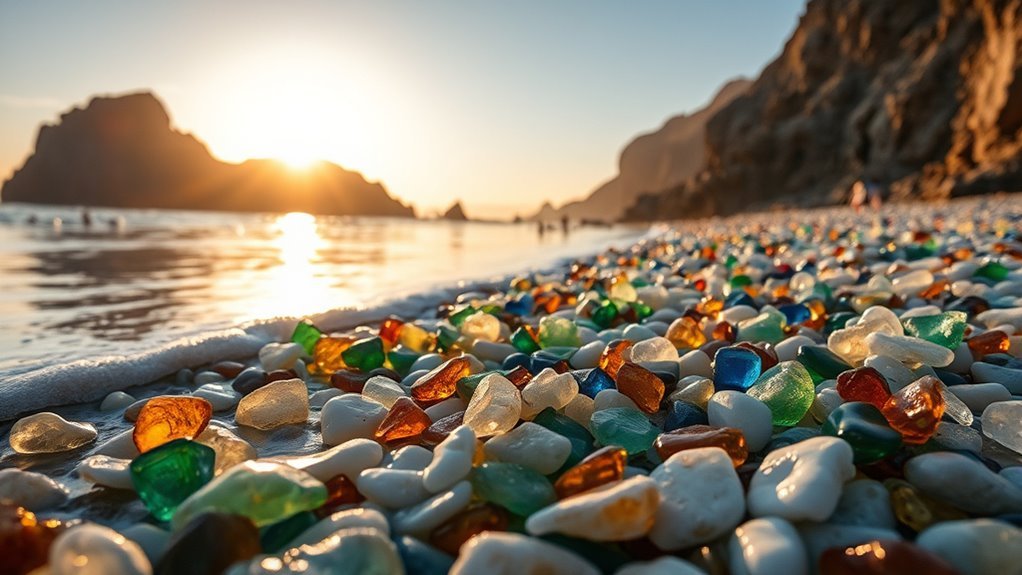
Glass pebble beaches are unusual because they combine natural shoreline processes with a human history of manufacturing, shipping, settlement, and waste disposal. Waves move old glass against sand and stone, gradually softening many sharp edges and producing the frosted surface associated with mature sea glass.
The glass itself is not a natural mineral deposit. It is human-made material that has been weathered by the shoreline. Its color may provide clues about its original use. Green and brown pieces often come from bottles, while less common colors may come from decorative glass, tableware, industrial products, or art-glass remnants.
A pebble beach is not automatically a sea-glass beach, and a piece of broken glass is not sea glass merely because it has reached the shore.
Properly weathered sea glass normally has rounded edges and a matte or frosted surface. Newly broken glass may remain clear, glossy, thin, or sharp. Never assume a piece is safe to handle based only on its color.
Note: Nature does not make discarded glass environmentally beneficial. These beaches remain reminders of past pollution, even when the weathered pieces look attractive. Never break bottles or place glass on a shoreline to create future sea glass.
Top Glass Pebble Beaches in the U.S.
The United States has several well-known sea-glass and freshwater beach-glass locations. They offer very different experiences, from protected viewing areas to informal beaches where conditions and access may change.
| Beach | Location | What to Expect | Collection Note |
|---|---|---|---|
| Glass Beach | Fort Bragg, California | A famous former dump-site shoreline with polished glass, cliffs, trails, and high visitor interest. | Treat it as a viewing and photography destination. California State Parks generally prohibit removing park resources. |
| Davenport Beach | North of Santa Cruz, California | Known among collectors for occasional multicolored art-glass pieces and powerful surf. | Check ownership and current rules. Do not enter during dangerous surf or dig into cliffs and banks. |
| Grant Park Beach and the Milwaukee shoreline | South Milwaukee, Wisconsin | Lake Michigan beachcombing with occasional freshwater beach glass, stones, and pottery fragments reported by collectors. | Follow Milwaukee County park notices and leave historical or restricted objects where found. |
| Glass Beach near Port Allen | Eleʻele, Kauai, Hawaii | An informal industrial-area beach near Hanapepe Bay where glass may be visible among dark basalt stones. | Access, parking, glass abundance, and local restrictions may change. Do not expect the dense deposits shown in older photographs. |
Glass Beach in Fort Bragg
Fort Bragg’s Glass Beach is the most famous U.S. example. It lies within the broader MacKerricher State Park area, where visitors can explore coastal trails and learn about the beach’s history. Check the current MacKerricher State Park information before visiting.
California State Parks explains that removing rocks, geological features, and other protected resources is generally prohibited. Photograph the glass, observe it where it lies, and leave it for future visitors.
Davenport Beach
Davenport is associated with unusual multicolored pieces linked to nearby Lundberg art-glass production. A widely repeated story says flooding carried containers of discarded glass into San Vicente Creek and the ocean during the 1970s. Other accounts suggest that glass entered the creek through more than one disposal event, so the single-flood story should be treated as local history rather than a fully documented fact.
The shoreline can have heavy surf, narrow escape routes, steep slopes, and unstable areas. It is not a good place to search during high surf, rising water, or storm conditions.
Grant Park Beach and Milwaukee
Grant Park Beach provides public access to Lake Michigan in South Milwaukee. Beachcombers sometimes report frosted freshwater glass and pottery along Lake Michigan shorelines, although no specific quantity is guaranteed. Review current access and facility information through Milwaukee County Parks.
Glass Beach on Kauai
Kauai’s Glass Beach is near Port Allen and Hanapepe Bay in an industrial part of Eleʻele. Pale green, brown, clear, and occasional blue fragments may appear among basalt stones, but the deposit has been heavily visited and may look sparse.
This is an informal shoreline rather than a fully developed tourist beach. Check access before traveling, respect nearby businesses and private property, and do not enter rough water.
Best Glass Pebble Beaches in Europe
Europe has several beaches associated with historical glassmaking, settlements, ports, and dumping. Seaham has the strongest documented industrial-glass history, while some other destinations are known mainly through beachcomber reports.
- Seaham Hall Beach, England: The best-documented European sea-glass destination. Local history links its multicolored glass to the Londonderry Bottle Works, which operated from 1853 to 1921. The Visit Seaham sea-glass guide provides local history and tide-planning information.
- Bovisand Beach, Devon, England: A sheltered beach with cliffs, sand, and rocky sections. Beachcombers may find occasional glass or small artifacts, but official visitor information does not guarantee a sea-glass deposit. Review current Bovisand Beach information before visiting.
- Lisfannon Beach, County Donegal, Ireland: A broad, less-developed shoreline where beachcombers report occasional larger weathered pieces. Availability varies with weather, tides, and recent searching.
- Conwy Morfa Beach, Wales: A sand-and-shingle shoreline where collectors sometimes report older glass and pottery connected with historical settlement and disposal.
- East Neuk, Fife, Scotland: Coastal villages and rocky shores may produce occasional sea glass and pottery, especially along shingle and strandlines.
Pro Tip: At Seaham and other tidal beaches, arrive while the tide is falling rather than at the exact low-tide time. This gives you more time to search before the water returns.
Seaham is heavily searched, and its historic glass supply is finite. Rare colors and multicolored “end-of-day” pieces are possible, but they should never be treated as guaranteed finds.
Best Glass Pebble Beaches in Asia and the Pacific
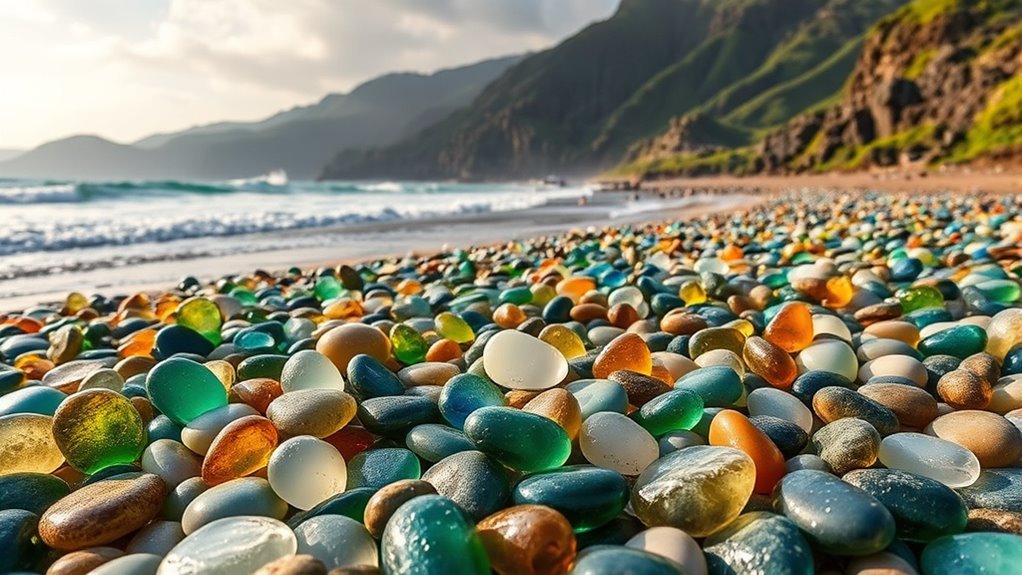
Asia and the Pacific include a smaller number of widely publicized glass-pebble shores. Two of the best-known examples are in Okinawa and Russia’s Far East. Kauai is also part of the Pacific region geographically, but it is covered above with the other U.S. destinations.
Wanjita Glass Beach in Okinawa
Toyohara no Hama, also called Wanjita Beach, is identified as a glass-beach location by the Okinawa Film Office. Visitors may see rounded glass in several colors along parts of the shoreline.
Okinawa beaches may also contain coral, shells, wildlife, and culturally or environmentally protected material. Check local signs and rules before removing anything, and do not confuse a glass-bottom boat attraction with a sea-glass beach.
Steklyashka Beach at Ussuri Bay
Steklyashka Beach near Vladivostok is known for multicolored glass and ceramic pieces rounded by wave action. Its appearance is connected to historical waste, not a natural geological deposit.
Current access conditions and collection rules can be difficult to verify from abroad. Travelers should confirm local restrictions, transportation, and regional travel guidance before planning a visit. Even when larger pieces look rounded, test them visually before handling because sharp fragments can remain mixed into the shore.
Atlantic and Caribbean Glass-Pebble Locations
Fuerteventura and Curaçao were previously grouped with Asia-Pacific destinations, but they belong in separate geographic regions. Neither should be treated as a guaranteed, densely covered glass beach based solely on collector photographs.
Fuerteventura, Canary Islands
Fuerteventura is one of Spain’s Canary Islands in the Atlantic. Collectors sometimes report weathered aquamarine, green, clear, and amber glass on rocky or mixed beaches, but official tourism information does not designate one primary glass beach. Use the official Fuerteventura tourism site to confirm travel and destination information.
Search only where public access is allowed. Do not remove material from protected landscapes, archaeological areas, or beaches with posted collection restrictions.
Curaçao
Curaçao is a Caribbean island with rocky coves, clear water, and a long maritime history. Occasional sea glass may appear on some shorelines, but descriptions of a single hidden, glass-covered field are not reliably supported by official destination information.
Treat sea glass as a possible incidental find rather than the main reason for visiting. Check access and beach information through the official Curaçao tourism site.
How to Find Glass Pebbles on the Beach
Your chances improve when you choose an appropriate shoreline, arrive during a safe tidal window, and search the areas where small stones and debris naturally settle. However, no technique can guarantee a find.
At a Glance
| Time Required | About 30 to 90 minutes for a casual search |
| Difficulty | Easy to moderate, depending on rocks, cliffs, surf, and access |
| Tools Needed | Sturdy shoes, gloves, small container, phone, tide information, and optional small scoop where permitted |
| Cost | Usually free, although parking or park-entry fees may apply |
1. Check Ownership and Collection Rules
Determine who manages the beach before you collect anything. It may be controlled by a state park, national park, municipality, conservation authority, private owner, port, or other agency.
Read posted signs and the land manager’s current website. If the rule is unclear, leave the glass in place. Historical objects, archaeological material, and park resources may be protected even when ordinary litter removal is allowed.
2. Check Tides, Surf, and Weather
Use an official tide source and local marine forecast. In the United States, NOAA Tides and Currents provides tide information for many coastal stations.
A falling tide usually gives you the longest safe search window. Do not rely on the phrase “low tide” alone. Waves, swell direction, wind, narrow coves, and cliff shape can make a beach dangerous at any tide.
3. Search the Right Shoreline Zones
Glass often settles where material of a similar size and weight gathers. Scan:
- Mixed shingle and pebble bands
- The strandline or wrack line left by the previous high tide
- Gravel pockets between larger stones
- The lower edge of a receding tide, while maintaining a safe distance
- Areas near historical settlements, harbors, glassworks, or former disposal sites where public access is legal
Move slowly and look from different angles. Frosted glass may be easier to see in flat, overcast light than under harsh reflections.
4. Identify Safe, Mature Sea Glass
A mature piece normally has:
- Rounded rather than knife-like edges
- A frosted, matte, or lightly pitted surface
- No fresh fracture line or razor-thin point
- Enough thickness to handle without breaking easily
Do not squeeze or rub an uncertain piece with bare fingers. Use gloves or a scoop to inspect it without reaching into hidden crevices.
5. Photograph or Collect Responsibly
If collection is prohibited, photograph the piece where it lies. When collection is permitted, take only a small number of pieces you will actually keep or use. Leave distinctive displays and concentrated deposits intact for other visitors.
Note: Scoops and mesh bags can reduce direct contact with sharp material, but they do not give permission to dig, move rocks, disturb wildlife, or remove protected objects.
Beachcombing Safety and Etiquette
Sea-glass searching keeps your attention focused on the ground, which makes it easy to miss changing waves, unstable cliffs, incoming tides, and people around you. Safety must come before finding or photographing a piece.
Warning: Sneaker waves can travel much farther up a beach than expected, even after a quiet period. Check the forecast, keep an open escape route, stay away from surf-line logs, and never turn your back on the ocean.
Safe Shoreline Search
- Wear sturdy, slip-resistant shoes that protect your feet from glass, rocks, and shells.
- Use gloves or a small scoop instead of reaching blindly between rocks.
- Check current tide, marine-weather, and high-surf information before leaving home.
- Visit after a storm only when the storm has passed and official high-surf or coastal-hazard warnings have ended.
- Stay clear of unstable cliffs, rockfall zones, sea walls, and narrow coves without a clear exit.
- Keep children and pets away from sharp fragments and fast-changing water.
- Avoid secluded industrial shorelines alone, especially where access is informal or emergency help is distant.
The National Weather Service advises beach visitors to watch the water, study changing wave patterns, remain farther back than expected, and never turn their backs on the ocean. Review its sneaker-wave safety guidance before searching exposed coastlines.
Respectful Collecting Practices
Responsible beachcombing begins with local permission. Some beaches allow limited collection, while others protect every natural, geological, cultural, or historical feature.
| Action | Benefit | Important Limit |
|---|---|---|
| Wear gloves | Reduces direct contact with sharp fragments | Gloves do not make every piece safe to keep |
| Leave most glass in place | Preserves the experience and finite deposit | Take nothing where removal is prohibited |
| Pack out ordinary trash | Reduces modern pollution and injury hazards | Do not remove possible artifacts without guidance |
| Avoid moving rocks or seaweed | Protects small shoreline habitats | Never dig into banks, dunes, or archaeological layers |
Do not leave litter, break glass, seed the beach with decorative pieces, or disturb wildlife. Take only what is clearly legal, safe, and reasonable.
Local Rules and Access
Before entering a beach, confirm public access, operating hours, parking restrictions, seasonal closures, and any private-property boundaries. Posted notices take priority over old blog posts, maps, videos, or collector advice.
- Check the official land manager’s website.
- Read signs at the entrance and along the shore.
- Ask park staff when collection rules are unclear.
- Use a scoop only where shoreline disturbance is permitted.
- Take only a small amount when collection is expressly allowed.
- Leave immediately if the tide, weather, footing, or surf becomes unsafe.
California State Parks states that visitors generally may not remove rocks, plants, geological features, or historical objects from state park property. Review the California State Parks rules and FAQs before visiting Fort Bragg or another California park beach.
Frequently Asked Questions
Where is the best place in the world to find sea glass?
There is no single objective best beach. Seaham is known for its documented glassmaking history and varied colors. Davenport is associated with unusual art glass but can have dangerous surf. Fort Bragg is famous for viewing glass, although park resources should be left in place. The best lawful collecting destination depends on current access, rules, shoreline conditions, and recent glass availability.
Why is collecting sea glass illegal in some parts of the U.S.?
Sea-glass collection is not illegal throughout the United States. Removal may be prohibited within state parks, national parks, protected shorelines, archaeological sites, and other managed areas. At California State Parks, rules generally protect geological, natural, cultural, and historical resources. Always check the specific beach rather than relying on a nationwide assumption.
What countries have pebble beaches?
Pebble beaches occur in many countries, including Greece, Croatia, Italy, Turkey, Montenegro, the United Kingdom, Ireland, Japan, Russia, and the United States. However, a pebble beach does not automatically contain sea glass. Glass is more likely where historical human activity supplied material that waves could weather over time.
When is the best time to search for glass pebbles?
A falling tide often exposes the widest safe search area. Early morning may mean fewer visitors, while winter wave action can move more shoreline material. Visit after stormy weather only after dangerous surf and coastal warnings have ended. Always check local tide and marine forecasts.
How can you tell sea glass from broken glass?
Mature sea glass usually has rounded edges and a frosted, pitted, or matte surface. Fresh broken glass is more likely to be glossy, transparent, thin, or sharply pointed. Do not test an uncertain edge with bare skin. Use gloves or a scoop and leave hazardous pieces alone unless local rules allow safe litter removal.
Conclusion
Glass pebble beaches combine shoreline beauty with the complicated history of human waste and coastal industry. Fort Bragg, Seaham, Davenport, Kauai, Okinawa, and Ussuri Bay are among the most recognized examples, while occasional finds are also reported on other European, Atlantic, Caribbean, and Great Lakes shores.
Plan each visit around current access, a falling tide, safe surf conditions, and the rules of the land manager. Photograph protected deposits, collect only where removal is clearly permitted, and never disturb wildlife or deliberately add glass to a beach. A careful approach keeps you safe and helps preserve these unusual shorelines for future visitors.
Sources
- California State Parks FAQs — general rules governing removal of park resources.
- MacKerricher State Park — current information for the Fort Bragg park area.
- National Weather Service: Sneaker Waves — shoreline wave and beach-safety guidance.
- NOAA Tides and Currents — official U.S. tide stations and predictions.
- Visit Seaham Sea Glass Guide — Seaham glass history, search areas, and tide planning.
- Milwaukee County Lake Michigan Beaches — official Grant Park Beach access and visitor information.
