
Last Updated on September 11, 2026 by Daniel Globe
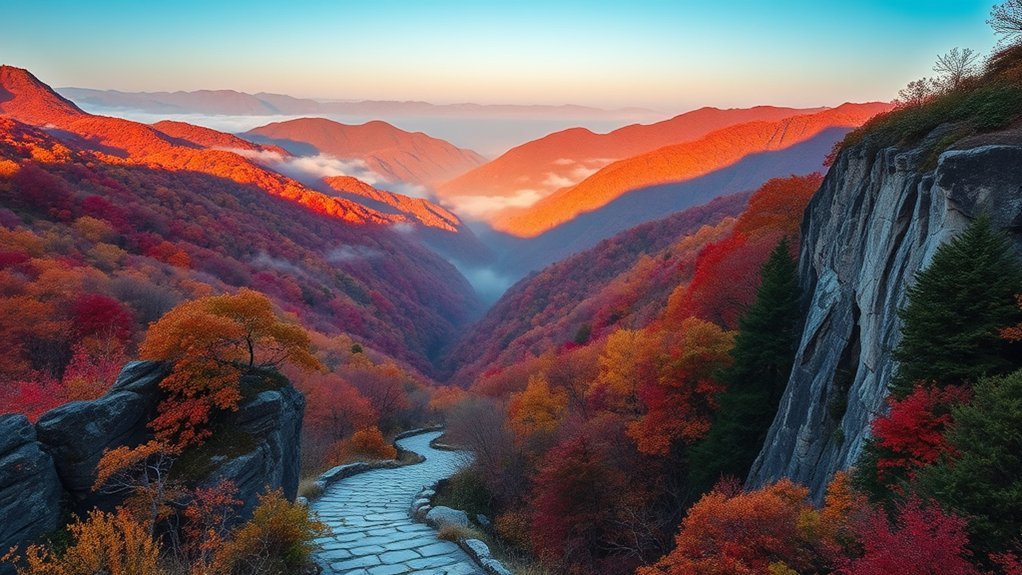
Mount Hiei rises between Kyoto and Shiga, combining forested mountain scenery, wide views, and the historic temple complex of Enryaku-ji. In autumn, maples and other deciduous trees add red, orange, and yellow to the mountain’s cedar-covered slopes. The main color season normally arrives well after the September equinox, so choosing the right dates and route is essential.
Quick Answer
Mount Hiei’s autumn foliage usually looks best from late October through mid-November, not at the September equinox. Visit Enryaku-ji’s Tōdō, Saitō, and Yokawa areas, use the Kyoto-side cable and ropeway or the Sakamoto Cable, and check live foliage and transport updates because timing and seasonal services change each year.
Key Takeaways
- Late October through mid-November normally gives you the best chance of seeing strong autumn color on Mount Hiei.
- The Kyoto-side cable and ropeway offer summit access, while the Sakamoto Cable approaches Enryaku-ji from the Lake Biwa side.
- Tōdō is the easiest Enryaku-ji area to visit. Saitō requires more walking, while Yokawa is farther away and is usually easier to reach by shuttle bus.
- Cable cars, ropeways, mountain buses, and attractions may follow seasonal schedules, so confirm the final return service before going.
- For a true hike, use the official Kyoto Trail map and check current weather, wildlife, and route notices.
At a Glance
| Time Required | About 4 to 5 hours for Tōdō and the summit area; 6 to 8 hours for a fuller cross-mountain or multi-area visit |
| Difficulty | Easy to moderate when using cable cars and buses; moderate to strenuous on mountain hiking routes |
| Tools Needed | Grippy shoes, layered clothing, water, snacks, charged phone, and an official route map for hiking |
| Cost | Enryaku-ji adult admission is ¥1,000. The Sakamoto Cable is ¥870 one way or ¥1,660 round trip for adults as of July 2026. Other transportation and attraction fees are extra. |
Disclosure: As an Amazon Associate I earn from qualifying purchases. Some links on this page are affiliate links, at no extra cost to you.
What Makes Mount Hiei Special in Fall?
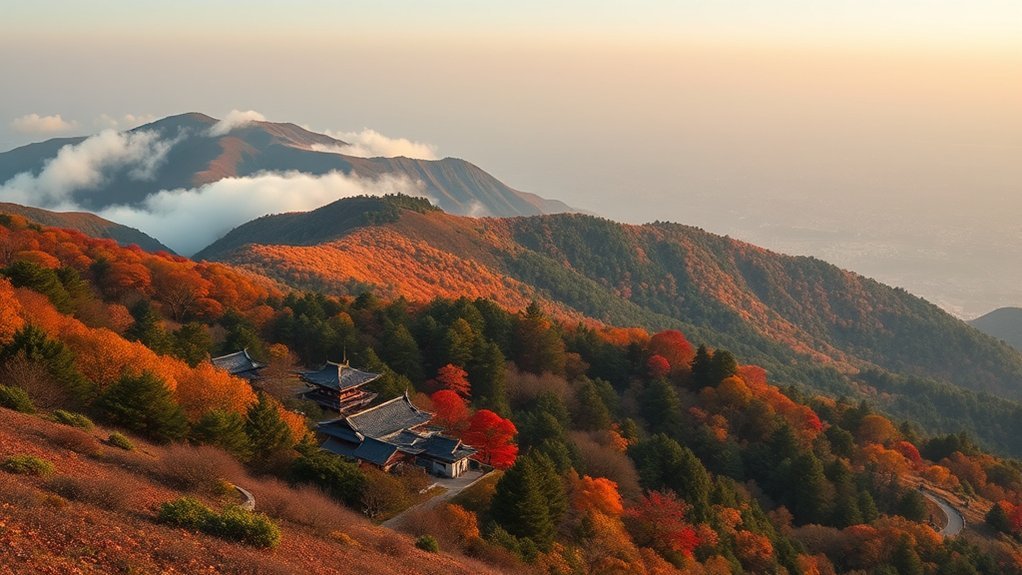
Mount Hiei is not simply a foliage viewpoint. It is a large cultural and natural area that spans the border between Kyoto Prefecture and Shiga Prefecture. Its highest point, Ōhieizan, reaches 848.3 meters, so the upper slopes are normally cooler than central Kyoto.
The mountain is best known for Enryaku-ji, the head temple of Japan’s Tendai school of Buddhism. Enryaku-ji is one component of UNESCO’s Historic Monuments of Ancient Kyoto.
Instead of one compact temple courtyard, Enryaku-ji covers a broad mountain area divided into three principal sections:
- Tōdō, or East Pagoda: The central and most accessible area, containing the main halls, visitor facilities, and the Enryaku-ji bus center.
- Saitō, or West Pagoda: A quieter wooded area about one kilometer from Tōdō, reached by shuttle bus or a roughly 20-minute walk over slopes, steps, and unpaved ground.
- Yokawa: A more remote northern area known for Yokawa Chūdō and denser forest scenery. It is about four kilometers beyond Saitō and is normally more practical to reach by mountain shuttle bus.
The mix of historic halls, cedar forest, deciduous trees, mountain mist, and views toward Kyoto or Lake Biwa gives Mount Hiei a character that is different from a landscaped city temple.
Mount Hiei’s appeal comes from the combination of autumn forest, mountain views, and one of Japan’s most important Buddhist temple complexes.
Why Do the Autumn Colors Change at Mount Hiei?
Autumn color is driven mainly by shorter days and the seasonal breakdown of chlorophyll, the pigment that makes leaves appear green. As chlorophyll fades, yellow and orange pigments become easier to see. Some trees also produce red pigments called anthocyanins.
Temperature and moisture influence how vivid the display becomes and how long it lasts. Cool nights, sunny days, sufficient moisture, strong wind, storms, and sudden cold can all affect the final result. This is why peak dates cannot be guaranteed months in advance.
Mount Hiei’s elevation also creates a staggered season. Higher and more exposed areas may begin changing before central Kyoto and the lower Sakamoto side. The colors then move downslope as autumn progresses.
Note: The autumn equinox falls in September, but Mount Hiei is usually still largely green at that time. Do not use the equinox itself as your peak-foliage date.
Where Are the Best Mount Hiei Viewpoints?
Mount Hiei has views in both directions. The Kyoto side looks over the city and surrounding hills, while the Shiga side opens toward Lake Biwa. Visibility depends heavily on cloud, haze, rain, and mountain fog.
Summit and Garden Museum Views
The summit transportation area offers some of the mountain’s widest scenery. When Garden Museum Hiei is open, its elevated grounds provide views toward Lake Biwa and the Kyoto countryside. Because the museum operates seasonally and has scheduled closing days, check its calendar before building your trip around it.
Views are often clearest in the morning after a cold front or a period of dry weather. Late-afternoon light can improve the color of the leaves, but you must leave enough time to reach your return cable car, ropeway, bus, or trail before dark.
Temple and Sakamoto-Side Views
The Sakamoto Cable is one of the easiest ways to combine Lake Biwa scenery with a visit to Enryaku-ji. The railway covers 2,025 meters in about 11 minutes, and its large windows provide changing views as the car climbs or descends.
Inside Enryaku-ji, the strongest scenes are usually not formal observation decks. They are combinations of forest, temple roofs, stone steps, gates, and colored leaves in the Tōdō, Saitō, and Yokawa areas.
| Location | What You Can See | Best Use |
|---|---|---|
| Summit area | Kyoto, Lake Biwa, surrounding ridges, and high-elevation foliage | Wide landscape photography on a clear day |
| Garden Museum Hiei | Garden scenery with views toward Kyoto and Lake Biwa | Visitors who want a maintained viewpoint when the museum is open |
| Sakamoto Cable | Lake Biwa, forested slopes, and changing elevation | A low-effort scenic ascent or descent |
| Tōdō and Saitō | Temple halls, forest paths, stonework, and mixed autumn color | Temple and detail photography |
| Yokawa | Quieter woodland and the red Yokawa Chūdō building | A longer visit with fewer rushed sightseeing stops |
Which Routes Show the Best Foliage?
The best route depends on whether you want an easy sightseeing day, a temple walk, or a true mountain hike. Do not treat all three as the same experience.
Easy Cross-Mountain Sightseeing Route
A practical low-effort option is to enter from Kyoto and leave through Shiga, or complete the journey in reverse.
- Travel from Demachiyanagi to Yase-Hieizanguchi on the Eizan Railway.
- Transfer to the Eizan Cable and Eizan Ropeway for the upper mountain.
- Use the mountain shuttle bus to reach Enryaku-ji’s Tōdō area.
- Visit the main halls and nearby forest paths.
- Walk or transfer toward Cable Enryakuji Station.
- Descend to Sakamoto on the Sakamoto Cable.
- Continue to Keihan Sakamoto-hieizanguchi or JR Hieizan-Sakamoto Station.
This route lets you see both sides of the mountain without repeating the same journey. It still requires several transfers, walking between stops, and careful attention to the last service of the day.
Tōdō to Saitō Temple Walk
The official Enryaku-ji guide estimates about 20 minutes on foot between Tōdō and Saitō. The route includes unpaved surfaces, slopes, and stairs, so it is more demanding than the distance suggests.
This is a good choice when you want a moderate forest walk without completing a full mountain ascent. Saitō is usually quieter than Tōdō and offers a stronger sense of walking through the temple’s wooded landscape.
Yokawa is much farther north. The official temple information places it more than 100 minutes on foot from Tōdō by the Tōkai Nature Trail. Most casual visitors should use the mountain shuttle bus instead.
Official Kyoto Trail Route
Mount Hiei connects sections of the official Kyoto Trail. The Higashiyama Course approaches Mount Hiei from Kyoto, while the Kitayama Eastern Course continues across Mount Hiei toward Ōhara, Kurama, and Ninose.
These are genuine hiking routes, not short temple strolls. Use an official guide map, check route notices, start early, and choose a section that matches your fitness. Do not attempt a long trail section based only on a general online map or sightseeing brochure.
Pro Tip: For the widest variety with the least repeated travel, ascend from Kyoto, visit the summit and Tōdō area, then descend to Sakamoto. Confirm that every cable, ropeway, and bus connection is operating on your date.
What Temples and Shrines Can You Visit?
The main religious destination on Mount Hiei is Enryaku-ji itself. Its halls are spread through Tōdō, Saitō, and Yokawa rather than gathered in a single enclosure.
- Tōdō: The birthplace and central area of Enryaku-ji, with the temple’s principal halls and the easiest transportation access.
- Saitō: A wooded section centered on Shaka-dō and connected halls, with a quieter atmosphere and more walking.
- Yokawa: A remote northern section centered on Yokawa Chūdō, reached most easily by seasonal mountain shuttle bus.
At the Shiga foot of the mountain, Sakamoto temple town adds several worthwhile stops. Hiyoshi Taisha is particularly known for autumn foliage, while Sakamoto’s historic streets and former monastic residences provide a natural continuation after descending by cable car.
Kifune Shrine, Kurama, Sanzen-in in Ōhara, Tofuku-ji, Nanzen-ji, and Arashiyama are separate Kyoto destinations. They can be included in a longer Kyoto trip, but they are not nearby stops on a normal Mount Hiei walking route.
When Is the Best Time to See Fall Colors?
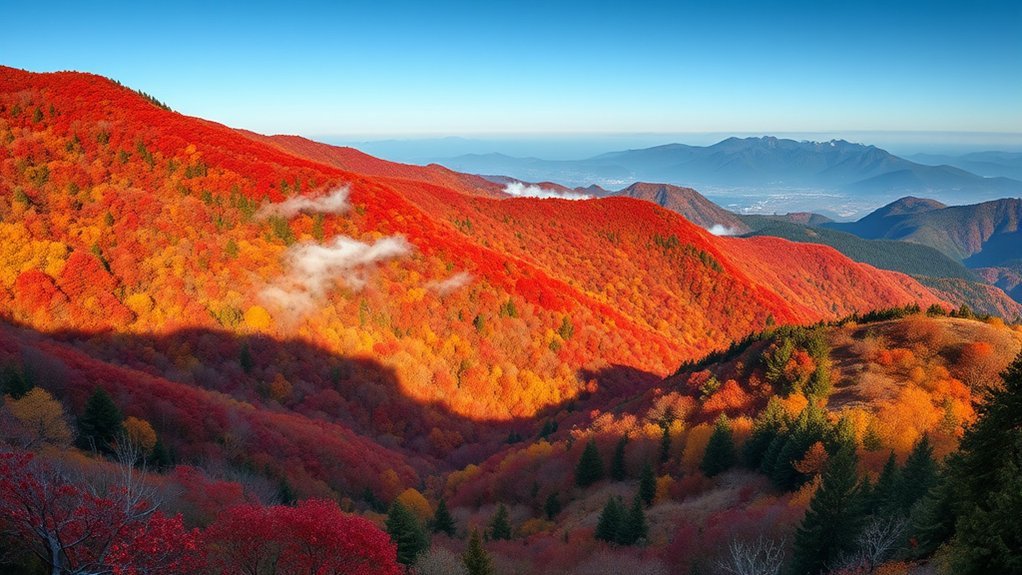
The best planning window for Mount Hiei autumn foliage is normally late October through mid-November. Higher locations may change first, while the lower Sakamoto side can retain color later.
The exact peak can move from year to year. Warm autumn weather may delay the change, while wind, heavy rain, or an early cold spell may shorten the display.
| Period | Likely Conditions |
|---|---|
| September equinox | Normally too early for the main display; much of the mountain is still green |
| Late October | Early strong color may appear in higher and cooler areas |
| Early to mid-November | Usually the best overall chance of vivid color across the temple and mountain areas |
| Late November | Upper leaves may be falling, but color can remain on lower slopes and around Sakamoto |
For 2026, the official Shiga tourism calendar lists the “Hiei no Momiji” event in the Yokawa area from October 31 through November 23, from 10:00 a.m. to 4:00 p.m. Event dates do not guarantee exact peak color, but they provide a useful current planning range.
Pro Tip: Check the Kyoto Autumn Leaves Calendar and official Mount Hiei updates within a few days of your visit. Live reports are more reliable than a fixed annual date.
How Do You Get to Mount Hiei?
From Kyoto by Eizan Railway, Cable, and Ropeway
From central Kyoto, travel to Demachiyanagi Station and take the Eizan Railway to Yase-Hieizanguchi. From there, transfer to the Eizan Cable and then the Eizan Ropeway for the upper mountain. A seasonal shuttle bus connects the summit area with Enryaku-ji.
The Eizan Railway alone does not take you to Enryaku-ji. You must allow time for the cable, ropeway, shuttle, and walking transfers.
From Shiga by Sakamoto Cable
From JR Hieizan-Sakamoto Station, continue by local bus or walk toward Cable Sakamoto Station. From Keihan Sakamoto-hieizanguchi Station, the cable station is about a 10-minute walk.
The Sakamoto Cable travels 2,025 meters to Cable Enryakuji Station in about 11 minutes. From the upper station, follow the signs toward Enryaku-ji’s Tōdō area.
By Bus or Car
Seasonal direct buses can operate between Kyoto and the Enryaku-ji bus center. Drivers can approach by the Hieizan Driveway or Okuhieizan Driveway. Road tolls, opening times, and winter conditions should be checked before departure.
Use the temple’s official access page for current route diagrams, bus information, and seasonal service notices.
Note: Mountain shuttle buses, direct sightseeing buses, the Eizan Ropeway, and some related services may stop during winter or operate on reduced seasonal timetables.
Enryaku-ji Hours and Admission
As of July 2026, Enryaku-ji lists the following standard visiting hours:
- Tōdō: 9:00 a.m. to 4:00 p.m. throughout the year
- Saitō and Yokawa, March through November: 9:00 a.m. to 4:00 p.m.
- Saitō and Yokawa, December through February: 9:30 a.m. to 4:00 p.m.
- Final general reception: 3:45 p.m.
The common admission ticket for Tōdō, Saitō, and Yokawa is ¥1,000 for adults, ¥600 for junior-high and high-school students, and ¥300 for elementary-school children. Special buildings, exhibitions, or the treasure hall may require additional payment.
Hours can change because of ceremonies, storms, snow, or other conditions. Confirm the latest information on the official Enryaku-ji hours and admission page.
How Do You Visit Mount Hiei Safely and Comfortably?
Warning: Mountain routes can become muddy, slippery, foggy, or difficult after rain. Check current Kyoto Trail and transportation notices before leaving. Plan around daylight and the final return service rather than assuming you can find another way down after operations end.
- Wear shoes with grip. Temple paths can include wet leaves, stone steps, roots, slopes, and unpaved ground.
- Carry a warm layer. The summit can feel much colder and windier than central Kyoto.
- Bring water and a snack. Food and drink options are not available on every route or in every temple area.
- Download or carry a route map. This is especially important if you leave the main temple and transportation areas.
- Check wildlife notices. Official trail pages sometimes report bears, wild boar, hornets, and other hazards.
- Avoid long trails near sunset. Forest light fades early, particularly in late autumn.
- Respect the temple setting. Keep noise low and follow signs concerning photography, entry, food, and worship areas.
As of July 2026, the official Kyoto Trail pages carry active notices involving bear sightings and weather-related route concerns. Conditions can change quickly, so check again on the morning of your hike.
How Do You Avoid Crowds and Take Better Photos?
Peak-foliage weekends can be busy, especially around the cable cars, Tōdō, and popular transportation connections. A weekday visit is normally easier than a Saturday, Sunday, or public holiday.
- Use one of the earliest practical morning connections.
- Visit Tōdō first, then continue to quieter Saitō or Yokawa areas.
- Allow extra transfer time instead of planning each connection to the minute.
- Photograph wide views in the morning when haze may be lighter.
- Use late-afternoon light for leaves and temple details only when you have a secure return plan.
- After rain, watch for reflections and saturated leaf color, but expect slippery paths.
- Avoid blocking gates, worship areas, stairs, and narrow trails while taking photographs.
Frequently Asked Questions
Are there night illuminations during autumn at Mount Hiei?
Mount Hiei does not have a guaranteed mountain-wide nightly illumination. Limited events may be announced in some seasons, but the official 2026 “Hiei no Momiji” event is listed during daytime hours. Check the current event calendar and final return transportation before planning an evening visit.
Can I see Mount Hiei’s fall colors from Lake Biwa?
Yes. From parts of Otsu and the Lake Biwa shoreline, you can see Mount Hiei’s forested shape and broad areas of seasonal color on a clear day. The leaves will appear distant, so use the Sakamoto Cable or a mountain viewpoint for closer scenery.
Is Mount Hiei crowded during peak autumn foliage?
It can be busy on weekends and public holidays from late October through November. The September equinox is not normally the main peak. Arrive early, visit on a weekday, and consider Saitō or Yokawa after seeing the busier Tōdō area.
Are there family-friendly activities near the foliage routes?
Yes. Families can ride the cable cars, visit Tōdō, take short forest walks, and enjoy the summit area when facilities are open. Some temple paths have stairs, slopes, and rough ground, so strollers and wheelchairs cannot reach every section easily.
What local foods should I try near Mount Hiei?
Sakamoto is known for soba noodles, while Hiei yuba, a food made from the surface of heated soy milk, is another local specialty. Enryaku-ji also has a tradition of shojin Buddhist cuisine, although its full meal service is currently aimed mainly at reserved groups. Check availability before visiting.
How long should I spend on Mount Hiei?
Allow about four to five hours for transportation, Tōdō, and the summit area. A cross-mountain trip or a visit including Saitō or Yokawa can take six to eight hours. A full hiking route may require most of the day.
Can I visit Mount Hiei without hiking?
Yes. Cable cars, the ropeway, seasonal buses, and road access allow you to reach the summit and main temple areas without climbing the mountain on foot. You will still need to walk within the temple grounds, often over slopes and steps.
Conclusion
Mount Hiei is one of the best places near Kyoto to combine autumn foliage, mountain scenery, and cultural history. Plan for late October through mid-November rather than the September equinox, and choose your route based on how much walking you want to do.
For an easier day, use the cable cars and mountain shuttle to visit the summit and Tōdō. Add Saitō or Yokawa when you have more time, or follow the official Kyoto Trail when you are prepared for a genuine mountain hike. Check live foliage, weather, trail, and transportation information shortly before your visit, since those details determine whether the day feels relaxed or rushed.
Sources
- Hieizan Enryaku-ji: Official Access Guide — Kyoto-side, Shiga-side, bus, road, and seasonal transportation information
- Hieizan Enryaku-ji: Visiting Hours and Admission — current temple hours, reception times, and admission fees
- Kyoto City Official Travel Guide: Autumn Leaves Calendar — live seasonal foliage updates
- Kyoto City Official Travel Guide: Higashiyama Course — official Kyoto Trail information approaching Mount Hiei
- Explore Shiga: Hieizan Sakamoto Cable Railway — cable-car length, journey time, and Lake Biwa access
- UNESCO: Historic Monuments of Ancient Kyoto — Enryaku-ji’s World Heritage status
