
Last Updated on July 27, 2026 by Daniel Globe
Athens combines ancient monuments, lively neighborhoods, museums, hilltop viewpoints, nightlife, and easy access to the Aegean coast. First-time visitors can see many of its essential sights within a compact historic center, then use an extra day for the Athenian Riviera or Cape Sounion. The key is to group nearby attractions and leave enough time to experience the city beyond its archaeological sites.
Quick Answer
The best things to do in Athens include visiting the Acropolis and Acropolis Museum, wandering through Plaka and Monastiraki, exploring the Ancient Agora and National Archaeological Museum, watching sunset from Mount Lycabettus, enjoying Psiri after dark, and taking a coastal trip to Cape Sounion or the Athenian Riviera.
Key Takeaways
- The Acropolis is Athens’ essential archaeological sight and includes the Parthenon, Erechtheion and Temple of Athena Nike.
- Pair the Acropolis with the Acropolis Museum, where five original Caryatids and major finds from the Sacred Rock are displayed.
- Plaka, Monastiraki, the Ancient Agora and Psiri are close enough to combine into a rewarding walking day.
- The National Archaeological Museum holds exceptional Greek antiquities, including the so-called Mask of Agamemnon and Antikythera Mechanism.
- Cape Sounion and the Athenian Riviera provide an easy change of pace from central Athens, while Mount Lycabettus delivers one of the city’s best panoramas.
Disclosure: As an Amazon Associate I earn from qualifying purchases. Some links on this page are affiliate links, at no extra cost to you.
Visit the Acropolis and Parthenon
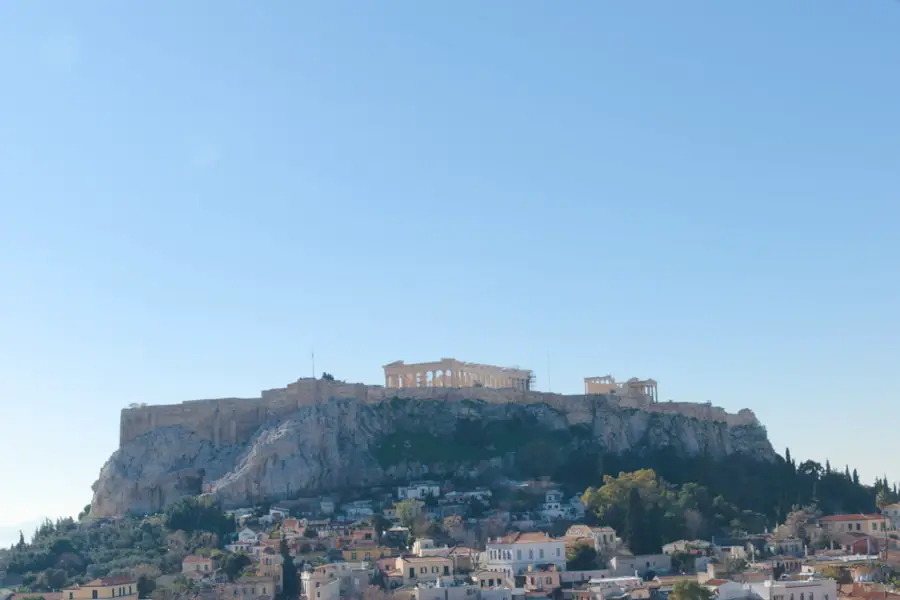
The Acropolis of Athens stands on a rocky hill above the modern city and contains some of the most important surviving monuments of classical Greece. Its best-known structure is the Parthenon, the 5th-century BCE temple dedicated to Athena Parthenos. The major monuments visible today were built primarily during the ambitious building program associated with Perikles. The Hellenic Ministry of Culture provides detailed historical information about the site.
Visitors enter from the western side and pass the monumental Propylaia before reaching the plateau. Nearby stands the small Temple of Athena Nike, built around 426–421 BCE. The Parthenon’s Doric columns, sculptural program and carefully adjusted proportions make it the architectural focus of the hill.
The Erechtheion is equally fascinating for its unusual plan and its south porch. Six sculpted female figures known as Caryatids originally supported the porch roof in place of conventional columns.
Note: The Caryatids now standing on the Erechtheion are copies installed to protect the originals from pollution and weathering. Five surviving originals are displayed in the Acropolis Museum; the sixth is held by the British Museum.
The Acropolis is more than a group of impressive ruins. Its monuments reflect religion, politics, civic identity, craftsmanship and the rise of classical Athens. From the plateau, visitors also gain a useful sense of the city’s geography, with views toward the Ancient Agora, Lycabettus Hill and the surrounding urban basin.
Pro Tip: Buy Acropolis admission through Greece’s official archaeological e-ticketing system, which lets you select a date and time slot. Current prices, opening hours and admission rules can change, so verify them on the official site shortly before your visit. An early visit is usually more comfortable during warm weather.
Warning: Much of the Acropolis is exposed to the sun, and polished stone can be slippery. Wear shoes with reliable grip, carry water, use sun protection, and follow official guidance during periods of extreme heat.
Visit the Acropolis Museum
The Acropolis Museum is the natural companion to the archaeological site. Located near the southern foot of the Acropolis, it displays finds from the hill and its slopes, allowing visitors to see sculptures and objects away from the weathered setting of the ruins.
One highlight is the display of five original Caryatids from the Erechtheion. On the upper level, the Parthenon Gallery presents surviving sculptures from the temple in a space designed to echo its orientation. The museum also incorporates the remains of an ancient Athenian neighborhood beneath the modern building. The official Acropolis Museum website provides current exhibition, admission and visitor information.
Seeing the museum after the Acropolis works especially well because architectural fragments and sculptures that can seem abstract on their own make more sense once you have seen where they originally belonged.
Wander through Plaka
Nestled below the Acropolis, Plaka is one of Athens’ best-known historic neighborhoods. Its narrow lanes, stairways, neoclassical houses, small shops and tavernas provide a sharp contrast with the monumental scale of the archaeological sites above.
As you move through Plaka, you will find shops selling jewelry, ceramics and souvenirs alongside restaurants serving familiar Greek dishes such as souvlaki and meze. It is one of the easiest areas in which to slow down between major sights rather than treating every hour as another museum visit.
Plaka also places you near important archaeological remains. The Roman Agora was constructed during the Roman period as a civic and commercial center. Within the site stands the Tower of the Winds, an octagonal structure dating approximately to 100–50 BCE. It combined sundials, an internal water clock and a wind indicator, making it an unusually sophisticated ancient timekeeping and meteorological monument.
Because Plaka sits between the Acropolis, Roman Agora and Monastiraki, it works particularly well as part of a walking route through central Athens.
Explore Monastiraki and the Historic Center
Monastiraki is where several layers of Athens meet in a compact area. From Monastiraki Square, you can see traces of Byzantine, Ottoman, ancient and modern Athens within a few minutes’ walk of one another. The surrounding lanes contain shops, market stalls, cafes and restaurants, while the Ancient Agora lies just to the west.
The neighborhood also provides an easy link between Plaka and Psiri. During the day, visitors come for shopping, street life and historical sights. In the evening, the surrounding streets become busier with restaurants, rooftop venues and bars.
For an efficient first day, combine the Acropolis and Acropolis Museum in the morning, walk through Plaka and Monastiraki later in the day, and continue toward either the Ancient Agora or Psiri depending on your energy and interests.
Visit the National Archaeological Museum
The National Archaeological Museum in Athens is a treasure trove of artifacts documenting Greek history from prehistory through late antiquity. Its collections include sculpture, metalwork, pottery, jewelry and objects from everyday life. For travelers who want more historical depth than the Acropolis alone can provide, it is one of the city’s most rewarding museums.
Among its best-known pieces is the gold funerary mask traditionally known as the Mask of Agamemnon. It came from the rich 16th-century BCE shaft graves at Mycenae. Heinrich Schliemann famously associated the mask with the legendary king Agamemnon, but that identification is not accepted as proof of the object’s actual owner.
Another major highlight is the Antikythera Mechanism, a complex scientific instrument dating to the 1st century BCE. Its surviving gears were used to model astronomical and calendar cycles, making it one of antiquity’s most remarkable technological objects.
The museum building is neoclassical, with large galleries that allow the collection to be organized by period and material. Rather than rushing through everything, first-time visitors may get more from choosing a few collections—such as Mycenaean antiquities, sculpture and metalwork—and spending more time with them.
Take a Day Trip to Cape Sounion
Cape Sounion at a Glance
| Distance from Athens | Roughly 70 km southeast of central Athens |
| Travel Time | About 1–1.5 hours by car, depending on traffic and starting point |
| Main Attractions | Temple of Poseidon, archaeological site and panoramic Aegean views |
| Popular Time to Visit | Late afternoon and sunset |
| Activities | Photography, coastal sightseeing, temple exploration and seaside stops |
A day trip to Cape Sounion provides a coastal break from central Athens and combines dramatic scenery with one of Attica’s most important ancient sanctuaries. At the southern end of the cape stand the remains of the Temple of Poseidon, overlooking sea routes that were strategically important to ancient Athens.
According to the Hellenic Ministry of Culture, the marble Doric temple visible today was constructed around 444–440 BCE on the foundations of an earlier temple destroyed during the Persian invasion. Sounion’s location also allowed Athens to watch the sea approaches toward Piraeus and the mineral-rich Lavrion region.
The journey can be part of the attraction. The route through the southern suburbs and along the coast passes beaches, marinas and seaside communities, making it easy to combine archaeological sightseeing with lunch or a swim when weather permits.
Sunset is especially popular because the west-facing light changes the appearance of the marble and opens broad views across the Aegean. Arrive with enough time to explore the archaeological site before the light fades rather than treating Sounion only as a sunset photo stop.
Enjoy the Views from Mount Lycabettus
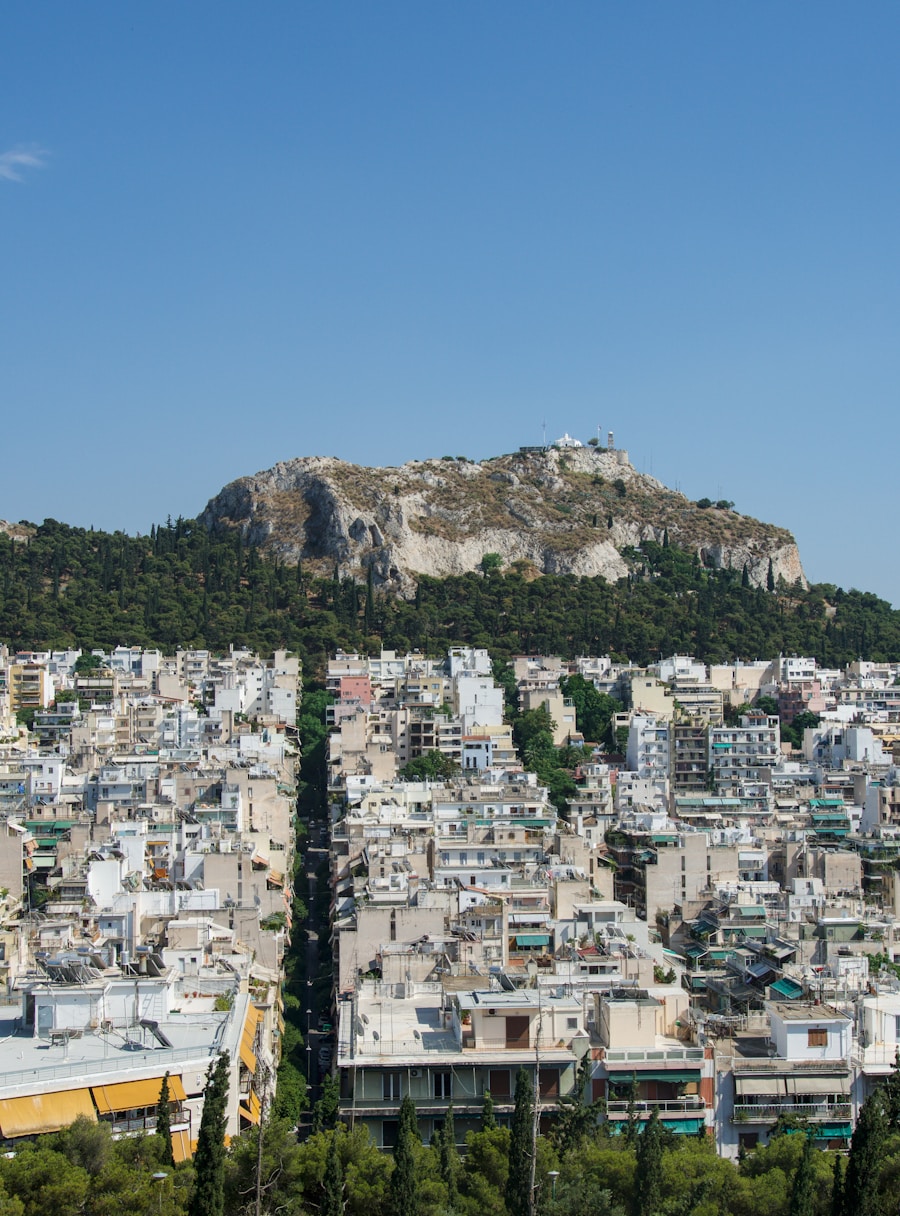
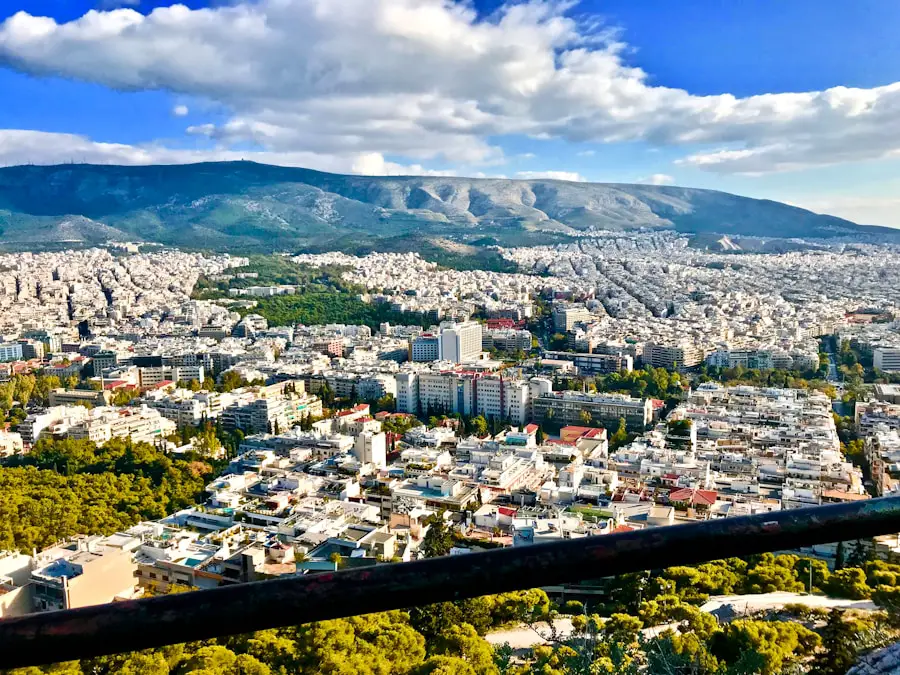
Mount Lycabettus rises to 277 meters and provides one of the most extensive viewpoints over central Athens. From the summit, the Acropolis is clearly visible against the surrounding city, and on clear days the view stretches toward the Saronic Gulf.
You can climb using the hillside paths and stairs or use the cable car/funicular for the steepest section. The Official Athens Guide confirms the hill’s 277-meter elevation and both access options.
At the summit is the small whitewashed Church of St. George. Benches and viewpoints around the top provide places to pause before descending. Sunset is the busiest period, so arriving a little earlier gives you time to find a viewpoint before the sky begins to change.
Lycabettus is particularly worthwhile after several hours among ruins and museums. Its elevated perspective shows just how densely modern Athens surrounds its ancient landmarks.
Discover the Ancient Agora
The Ancient Agora was a center of public life in Athens, used for commerce, civic administration, religious activity and political debate. Walking through the site helps place Athenian democracy in a physical setting rather than treating it only as an abstract historical idea.
The reconstructed Stoa of Attalos now houses the Museum of the Ancient Agora, whose displays include objects connected with Athenian civic life and democratic institutions. The Hellenic Ministry of Culture’s museum guide describes items such as official weights, juror identification tags, ballots, a water clock and pottery fragments used in ostracism.
On the hill at the western side of the Agora stands the Temple of Hephaestus and Athena, dating from the second half of the 5th century BCE. It is among the most intact surviving ancient Greek temples and is an excellent place to examine Doric architecture from much closer range than is possible at the Parthenon.
The Agora also contains traces of roads, fountains, stoas, shrines and public buildings. Because it lies immediately beside Monastiraki and below the Acropolis, it is easy to combine with the surrounding historic neighborhoods.
Experience the Nightlife in Psiri
As evening approaches, Psiri becomes one of the liveliest parts of central Athens. Former workshops and older commercial buildings now sit alongside restaurants, bars, music venues and bold street art. The neighborhood still retains traces of its artisan past even as nightlife has become a major part of its identity.
Visitors can choose between traditional tavernas, casual meze spots, cocktail bars and venues featuring DJs or live music. Bouzouki and other Greek music can still be found, but Psiri is not limited to a single traditional style; its appeal is the mixture of old and contemporary Athens.
Iroon Square and the narrow surrounding streets are useful starting points. Monastiraki metro station is nearby, making Psiri relatively convenient for an evening after sightseeing elsewhere in the center.
The area becomes much busier later at night, so travelers who prefer a quieter meal can arrive earlier, while those looking for a more energetic atmosphere can stay into the evening.
Relax at the Beaches of the Athenian Riviera
The Athenian Riviera stretches south from the city along the coast of Attica and makes it possible to combine a city break with time by the sea. Depending on where you go, you can choose municipal beaches, organized beach clubs, rocky swimming coves and waterfront promenades.
Vouliagmeni is one of the best-known coastal districts. Its beaches provide opportunities for swimming and sunbathing, while some organized facilities offer water sports and food service. Farther along the coastline are quieter coves and beaches that feel increasingly removed from central Athens.
Vouliagmeni Lake offers a different experience from the sea. The sunken lake is fed by mineral-rich water that remains warm throughout the year and is surrounded by limestone cliffs. It operates as a swimming and wellness destination, but visitors should treat claims about medical benefits cautiously rather than viewing a swim as a substitute for healthcare.
The Official Athens Guide provides transport information for several Riviera swimming spots. The coast can also be incorporated into a longer trip toward Cape Sounion.
Plan Your Athens Sightseeing
How many days do you need in Athens?
Two full days are enough to cover the essential historic center at a steady pace. Three days are more comfortable if you want several museums, nightlife and a slower neighborhood experience. Four days allow room for the Riviera, Cape Sounion or another excursion without sacrificing the main city sights.
A practical two-day outline is:
- Day 1: Acropolis, Acropolis Museum, Plaka, Roman Agora and Monastiraki.
- Day 2: Ancient Agora, National Archaeological Museum, central neighborhoods and Mount Lycabettus or Psiri in the evening.
With a third day, choose Cape Sounion or the Athenian Riviera depending on whether archaeology or beach time matters more to you.
Best time to visit Athens
Spring and autumn are especially comfortable for walking and archaeological sightseeing. April, May, late September and October often provide a useful balance of warmer weather and less intense heat than midsummer. June can also be pleasant, but hot spells become more likely as summer develops.
July and August attract many visitors and can be very hot, especially at exposed archaeological sites. During summer, visit outdoor monuments early, schedule museums or a long lunch for the hottest part of the day, and check official announcements if extreme temperatures are forecast.
Getting around Athens
Many central sights are close enough to reach on foot. For longer journeys, Athens has metro, tram, bus and trolleybus services operated within the Transport for Athens network. Official fare and route information is available through OASA.
As of July 2026, OASA lists a standard 90-minute urban ticket at €1.20 and a 24-hour ticket at €4.10. Full-fare travelers can also use supported contactless bank cards or compatible mobile wallets directly on the network. Airport services have separate fares and rules, so check OASA before travel because prices and conditions can change.
Safety while sightseeing
Athens is generally a straightforward destination for visitors. The current U.S. Department of State advisory for Greece is Level 1, meaning travelers should exercise normal precautions. However, the advisory specifically notes pickpocketing and purse-snatching at popular tourist sites and on public transportation, particularly the metro.
Warning: Keep phones, passports and wallets secured in crowded stations, trains and tourist areas. Do not leave bags unattended, and pay particular attention when people crowd around train doors or create distractions.
What to Pack for Exploring Athens
Athens rewards walking, but ancient paving stones, steep streets and long sightseeing days make footwear important. Before your trip, compare the best waterproof sneakers for travel if you need comfortable shoes for ruins and city streets. Travelers packing light may also find the guide to softside carry-on luggage with wheels useful. Families visiting with two young children can review these double travel strollers before navigating Athens’ sidewalks and historic neighborhoods.
In warm weather, also carry water, sunscreen, a hat and lightweight clothing. A small secure crossbody bag or similar close-fitting day bag can make it easier to protect valuables in busy areas.
Frequently Asked Questions
What are the top things to do in Athens?
For a first visit, prioritize the Acropolis and Parthenon, Acropolis Museum, Plaka, Monastiraki, Ancient Agora and National Archaeological Museum. Add Mount Lycabettus for views, Psiri for nightlife, and Cape Sounion or the Athenian Riviera if you have an extra day.
What is the best time to visit Athens?
Spring and autumn are excellent for sightseeing because walking conditions are generally more comfortable than in midsummer. April and May and late September through October are particularly convenient. July and August can be very hot, so plan outdoor archaeological sites early in the day.
What currency is used in Athens?
Athens uses the euro (€), as does the rest of Greece. Cards are widely accepted, but carrying a modest amount of cash can still be convenient for small purchases.
Is Athens safe to visit?
Athens is generally safe for tourists, and Greece is currently listed by the U.S. Department of State at Level 1: Exercise Normal Precautions. Petty theft and pickpocketing do occur at busy tourist attractions and on public transport, so secure valuables and stay alert in crowds.
What traditional Greek food should I try in Athens?
Popular choices include souvlaki, moussaka, tzatziki, spanakopita, grilled seafood, Greek salad and small meze dishes for sharing. For dessert, try baklava or other syrup-soaked pastries. Exploring neighborhood bakeries, markets and tavernas can be just as rewarding as seeking out a single famous dish.
What transportation options are available in Athens?
Central Athens is highly walkable, while metro, buses, trolleybuses and trams cover longer trips. Taxis are also widely available. OASA operates the main urban network and supports ATH.ENA tickets and cards as well as contactless payment for eligible full-fare journeys.
How many days should I spend in Athens?
Plan at least two full days for the essential historic sights. Three days gives you more time for museums, neighborhoods and nightlife, while four days works well if you also want a trip to Cape Sounion or the Athenian Riviera.
Should I book Acropolis tickets in advance?
Advance booking is a sensible choice, especially during busy travel periods. Greece’s official archaeological e-ticketing system lets visitors select the Acropolis, a visit date and an available time slot. Check the official system for current prices, hours and admission conditions before your visit.
Sources
- Hellenic Ministry of Culture — Acropolis of Athens — history and dating of the Acropolis monuments.
- Acropolis Museum — The Erechtheion — Caryatids and the Erechtheion’s history.
- National Archaeological Museum — Collections — museum collections and the Antikythera Mechanism.
- Hellenic Ministry of Culture — Sounion — Temple of Poseidon and Cape Sounion archaeology.
- OASA — Transport for Athens — metro, tram, bus, trolleybus and visitor ticket information.
- U.S. Department of State — Greece Travel Advisory — current general safety and petty-crime guidance.
