
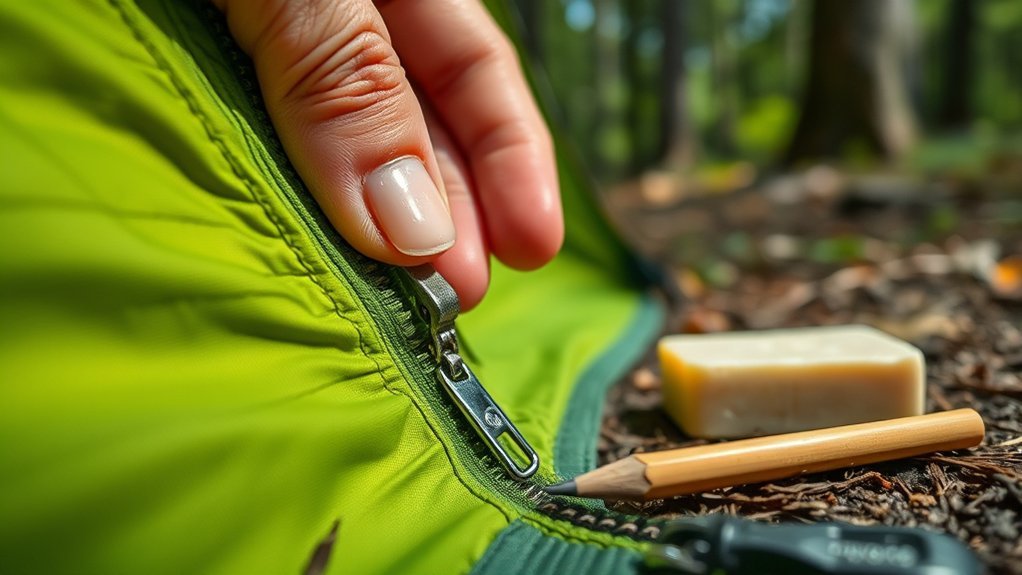
If your tent zipper’s stuck, first inspect it for dirt or debris. Realign any teeth that seem out of place. Gently tug the zipper while adjusting the slider for smoother operation. If it remains stuck, apply a silicone lubricant or rub a graphite pencil along the teeth. If the pull’s broken, you can replace it by cutting above the seam and using repair tape for support. There’s more you can do for maintenance and repairs, so keep going!
Common Causes of Tent Zipper Issues

When you’re out camping, you might not realize that environmental factors can lead to common tent zipper issues. Dusty, muddy, or very dry conditions can cause zippers to jam, making it tough to get in or out of your tent. Sand, snow, and rocks can obstruct the zipper mechanism, causing it to become stuck. Regular use and wear can also result in zipper misalignment causes, especially in older tents. Misaligned zipper teeth happen when you handle them improperly or apply too much force while zipping or unzipping. Neglecting maintenance, like cleaning and lubricating zippers, greatly increases the likelihood of encountering these problems. By understanding these factors and their environmental impact, you can take proactive steps to guarantee your tent’s zippers function smoothly, allowing you to enjoy your outdoor adventures without hassle.
Initial Troubleshooting Steps
How can you quickly troubleshoot a stuck tent zipper? Start by inspecting the zipper for visible dirt, sand, or debris, as these can disrupt smooth operation. You might also check for zipper alignment—misaligned teeth can cause significant issues. Gently tug the zipper pull while attempting to realign the slider.
If it’s still stuck, use pliers to compress the zipper pull connection slightly; this can enhance its grip on the teeth. Finally, try zipping it a few inches back to create material grip, making it easier to maneuver.
Here’s a quick reference table to guide you:
| Step | Action |
|---|---|
| Inspection | Look for dirt or debris |
| Zipper Alignment | Realign misaligned teeth |
| Tugging | Gently pull while adjusting |
| Compression | Use pliers for better grip |
| Material Manipulation | Zip back a few inches for ease |
Products Worth Considering
REPAIR IN 30 SECONDS. NO SEWING, NO WASTE: Avoid replacing the entire zipper or throwing away items just because the slider broke. ZlideOn lets you repair your plastic zipper in under 30 seconds. Open, clip on, and close and the zipper works again instantly. Repairing instead of replacing saves time, money, and avoids unnecessary waste, making this a cost-effective and environmentally friendly solution for everyday use.
Wide Compatibility: Zipper repair kit is suitable for the most common types of zippers, such as broken zipper tracks, damaged sliders, damaged zipper pulls, and missing teeth for bags, tents, luggage, sleeping bags, and jackets
HOW TO CHOOSE SIZE: (See Video) Start by checking the back of your broken zipper slider; most zippers have a size number (1-10) embossed on the back of the slider. Once you know your zipper size, our sizing chart below will determine which WinZip is right for you. If your zipper doesn’t have a number on the back, you can simply measure the width of the zipper teeth in millimetres or inches.
Using Lubricants for Stuck Zippers
If your tent zipper remains stuck after troubleshooting, using lubricants can provide a quick solution. Silicone spray and wax are effective lubricant types that reduce friction, helping your zipper glide smoothly again. Apply a small amount directly to the zipper teeth; this can dislodge dirt and debris causing the stickiness. For a DIY fix, rub a graphite pencil along the zipper teeth—this natural lubricant eases movement without attracting unwanted grime.
Avoid oil-based lubricants, as they can worsen the situation by attracting dirt over time. Regularly lubricating zippers, especially before and after hiking trips, can prevent future sticking issues and extend the life of your zipper. By following these application tips, you can maintain your tent’s functionality and guarantee easy access to your gear when you need it most. So, liberate your zipper and enjoy your outdoor adventures!
Products Worth Considering
FIXES STUCK & STIFF ZIPPERS IN SECONDS — No more tugging, yanking, or forcing stubborn zippers. Simply glide the wax stick along the zipper teeth and experience immediately smoother operation. Works on zippers that are stuck, corroded, or just hard to pull.
SMOOTH & EFFORTLESS GLIDE - Our lubricant ensures zippers and snaps operate seamlessly, preventing damage caused by jams extending their lifespan
Lubricate, clean, and quickly unzip zippers on outdoor gear; features a non-toxic, silicone-free formula that works in all water temperatures
Repairing Zipper Pulls in the Field
While enjoying your outdoor adventure, a broken zipper pull can be a frustrating setback. To make field repairs, start by cutting the old pull off about an inch above the seam, being careful not to damage the adjacent bug net fabric. Align the new zipper pull carefully to guarantee proper zipper alignment; misalignment can cause further issues down the line. Once in place, secure the pull by applying DCF repair tape across the zipper, and consider adding extra tape inside for durability. Use pliers or a multi-tool to compress the pull connections, which helps create a tighter grip for better functionality. For better control, hold the zipper with your dominant hand while zipping up several inches to create a material grip, making alignment easier. With these steps, you’ll get your zipper back in action, letting you focus on your adventure without hassle.
Products Worth Considering
3 Black Nickel zipper combo pack: includes 1 size small, 1 size medium and 1 size large
Versatile Repair Kit : This zipper kit includes zipper pulls , sliders, and installation tools to fix or replace zippers on bags, tents, luggage, sleeping bags, jackets, and other outdoor gear
NOTICE: Please confirm your zipper size and type before purchase. If you don't know how to repair zipper or pulls, please don't buy the kit.
Replacing Zipper Pulls Safely
Replacing a broken zipper pull can be straightforward, provided you follow a few essential steps. Start by carefully cutting the zipper tape about one inch above the seam, ensuring you don’t damage the bug net fabric. Once you’ve prepared the area, align the new zipper pull precisely—this alignment is vital for smooth operation.
Replacing a broken zipper pull is simple; just cut the tape and align the new pull for easy operation.
- Use DCF repair tape to secure the new pull across the zipper.
- Apply extra tape on the inside for added security.
- Always handle the zipper with your dominant hand for better control.
With various tent zipper types available, you can find compatible pulls in zipper repair kits. This way, you can confidently restore functionality to your tent without hassle. Follow these steps, and your tent will be ready for your next adventure in no time!
Products Worth Considering
Durable & Rust-Resistant – Crafted from premium metal with smooth plating, this zipper repair kit is built to last and resists rust—ideal for long-term use on jackets, bags, and more.
Premium Material: This self-adhesive zipper is made of heavy-duty plastic-coated metal, which resists rust and is impervious to water, ensuring long-term use; The fabric around the zipper is made of high-quality Oxford canvas
HOW TO CHOOSE SIZE: (See Video) Start by checking the back of your broken zipper slider; most zippers have a size number (1-10) embossed on the back of the slider. Once you know your zipper size, our sizing chart below will determine which FixnZip is right for you. If your zipper doesn’t have a number on the back, you can simply measure the width of the zipper teeth in millimeters or inches.
Securing the New Zipper for Longevity
To guarantee your new zipper lasts through countless adventures, securing it properly is essential. Start with tape application; using DCF repair tape across the zipper prevents it from coming undone during use. For added durability, place additional tape inside the zipper. This reinforces the connection and protects against wear, especially under various outdoor conditions.
Make certain the tape adheres well to maintain the zipper’s integrity. When replacing a zipper pull, cut about an inch above the seam to avoid damaging the surrounding fabric. This guarantees a secure fit for the new pull, enhancing longevity.
Preventive Measures for Zipper Maintenance
To keep your tent zippers in top shape, make regular cleaning a part of your routine. Wipe down the zipper track and teeth to remove dust and debris, and don’t forget to apply a silicone-based lubricant or zipper wax for smooth operation. These simple steps can prevent future issues and extend the life of your zippers.
Products Worth Considering
Release stuck zippers on wetsuits tents jackets sleeping bags and luggage with this multipurpose 2-in-1 formula
COMPREHENSIVE PROTECTION FOR LONGER LIFESPAN: It offers anti-corrosion, anti-rust, anti-oxidation, sealing and waterproof functions, protecting zippers and snaps from damage. Especially for snaps on travel trailer or ship canvas, this lubricating grease prevents rust, extends service life and facilitates disassembly and assembly
Release stuck zippers on wetsuits tents jackets sleeping bags and luggage with this multipurpose 2-in-1 formula
Regular Cleaning Practices
While zippers are often overlooked, maintaining them through regular cleaning practices is essential for ensuring their longevity and functionality. Establish a cleaning frequency that suits your usage—ideally, clean your zippers after each camping trip. Use these cleaning tools to keep them in top shape:
- A soft brush or cloth to remove dirt and debris
- Mild soap mixed with water for deeper cleaning
- A soft, dry cloth for drying
Regularly inspecting your zippers for wear or damage is vital. Store your tent in a cool, dry place, avoiding folds over zippers to prevent stress. Remember, gentle handling while zipping or unzipping can prevent misalignment and breakage. Keep your zippers clean, and they’ll serve you well!
Lubrication Techniques
Regular cleaning sets the stage for effective zipper maintenance, but lubrication is equally important. For peak performance, regularly apply a silicone-based lubricant or zipper wax to the teeth and slider. This silicone application reduces friction and prevents sticking, ensuring smooth operation. Avoid petroleum-based products, as they attract dirt and grime, worsening zipper issues over time.
Before applying lubricant, clean the zipper with a soft brush or cloth to remove any debris that could interfere with movement. Use a small amount of lubricant; too much can cause residue buildup, complicating zipper function. Finally, perform maintenance in dry, controlled conditions to maximize the effectiveness of your lubricant types. With these techniques, your tent zipper will stay functional and reliable.
Frequently Asked Questions
Can I Use Cooking Oil as a Zipper Lubricant?
You shouldn’t use cooking oil for zipper maintenance. It can attract dirt and grime, worsening the issue. Instead, opt for specialized zipper lubricants to guarantee smooth operation and extend your zipper’s lifespan effectively.
How Often Should I Lubricate My Tent Zippers?
You should lubricate your tent zippers every few months, especially before camping trips. Regular zipper care is essential for smooth operation, so follow these tent maintenance tips to keep your gear in top shape.
Is It Safe to Force a Stuck Zipper?
It’s not safe to force a stuck zipper. Instead, try gentle pressure or lubricant for zipper repair. Regular zipper maintenance keeps them functional, preventing future issues and ensuring your tent’s accessibility when you need it most.
What Materials Should I Avoid Using on Tent Zippers?
Avoid using petroleum-based products or harsh chemicals on your tent zippers; they can damage the fabric. Instead, consider alternative lubricants like silicone spray. Follow these zipper maintenance tips for a smooth, hassle-free experience.
Can Extreme Temperatures Affect Zipper Performance?
Yes, temperature extremes can affect zipper performance. Cold can stiffen zipper materials, while heat may warp them. To guarantee durability, choose high-quality zippers designed to withstand varying temperatures, and avoid cheap materials that can fail.
Conclusion
To sum up, dealing with a stuck tent zipper doesn’t have to ruin your outdoor adventure. Did you know that over 80% of camping enthusiasts have faced zipper issues at some point? By following these quick fixes and preventive measures, you can keep your gear in top shape and focus on enjoying nature. Remember, a little maintenance goes a long way, so take care of your zippers, and they’ll serve you well on your next camping trip!