
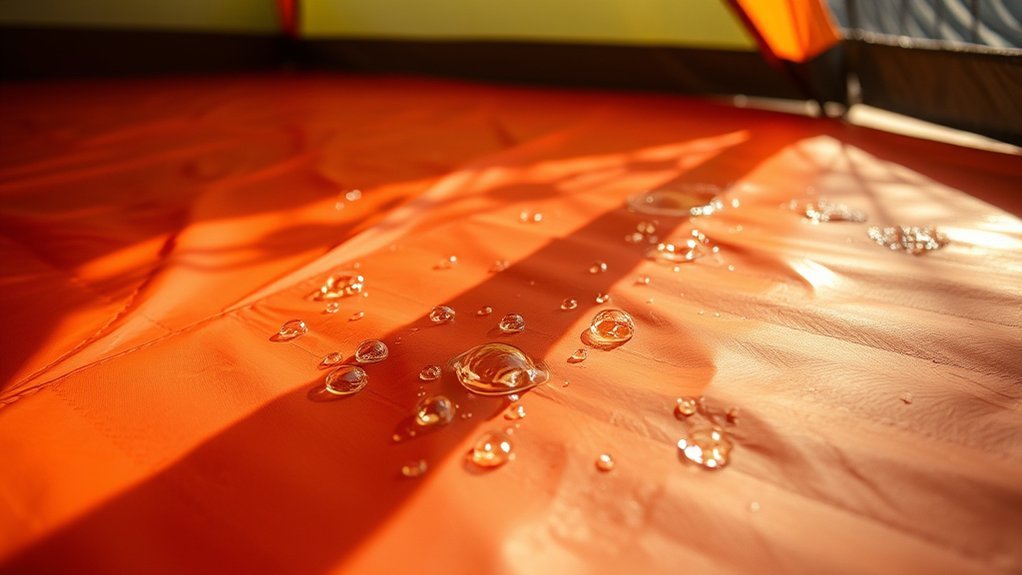
To stop water from coming through the bottom of your tent, inspect for wear on the waterproof coating and seams, ensuring they’re sealed correctly. Set up your tent on flat, elevated ground to prevent pooling. Use a ground tarp or footprint for added protection and insulation. Regularly maintain your tent with Nikwax Tent Wash and Solar Proof to preserve waterproofing. These steps are essential for keeping your gear dry and extending its lifespan—discover more effective strategies to enhance your camping experience.
Understanding the Causes of Tent Floor Leaks

When you set up a tent, understanding the causes of floor leaks is essential for ensuring a dry and comfortable camping experience. Common leak sources include wear and tear on waterproof coatings over time, which can reduce their effectiveness against moisture. If your tent floor isn’t made from durable, waterproof materials or if the ground is uneven, you may face water pooling underneath, leading to infiltration.
Additionally, deteriorated seams can allow water to seep through, even if the fabric is water-resistant. Older tents often require more maintenance to uphold their waterproofing capabilities, so keep an eye on the age and condition of your tent floor. To identify potential issues, test the floor by pouring water on it and checking for leaks. Addressing these problems proactively will enhance your camping experience and keep you liberated from unwanted moisture.
Products Worth Considering
Seal up to 85 sq. ft. of nylon tent floors, rainflies and tarps with this 4 fl oz tent sealer; previously known as Tent Sure
Seal up to 85 sq. ft. of nylon tent floors, rainflies and tarps with this 4 fl oz tent sealer; previously known as Tent Sure
PROFESSIONAL-GRADE STRENGTH: GleamGlee Flexible Repair Glue is a powerful, professional-grade adhesive designed specifically for tent repairs and surface sealing. Unlike regular glues, it’s both highly flexible and waterproof, making it perfect for fixing gaps, tears, and holes in a variety of materials such as nylon, vinyl, and canvas. This glue forms a durable, long-lasting bond, ensuring your gear stays in top condition during camping trips and outdoor adventures.
Preparing Your Campsite for Optimal Setup
To guarantee a dry and comfortable camping experience, it is vital to prepare your campsite properly before setting up your tent. First, choose a flat, elevated site to minimize the risk of water pooling underneath your tent during rain. Avoid pitching your tent near water sources, as this increases humidity and the chances of condensation, leading to leaks. Steer clear of low-lying areas where cool air settles, causing moisture build-up.
Before setting up, clear the ground of sharp objects and debris to protect your tent floor from damage, which can compromise its waterproofing. It’s important to verify that your chosen location provides ideal campsite elevation, reducing the likelihood of moisture issues. By taking these steps, you create a solid foundation for a comfortable camping experience and help prevent potential leaks from ruining your adventure.
Products Worth Considering
4000mm Waterproof Rate PU Coating. Onewind Tent Footprint is constructed with PU 4000mm coating on face side and silicone coating on backside that helps keep moisture from seeping through your tent and protects it from the daily wear and tear.
HEAVY DUTY GALVANIZED STEEL CONSTRUCTION: Made from thick, durable galvanized steel that resists bending and breaking - unlike thin, flimsy stakes. These 7-inch tent stakes provide superior holding power in various soil types and weather conditions, ensuring your tent, canopy, or tarp stays securely anchored.
Superior Protection: Our Tyvek footprint tent ground sheet provides an extra layer of protection for your camping gear and ensures that your tent floor exterior will remain clean and free from dirt, mud, and debris.
The Importance of Using a Ground Tarp or Footprint
Using a ground tarp or footprint is essential for protecting your tent floor from moisture and abrasions, which increases its longevity. It also enhances insulation, keeping you warmer by reducing cold ground temperatures. By investing in a quality tarp, you can avoid costly repairs and guarantee a more comfortable camping experience.
Products Worth Considering
A MUST FOR TENT: An extra tent tarp doesn't just give you extra waterproofing, it is used as ground cloths under tents to prevent wear and tear. There’s no question that an insulated tent footprint is a great idea to help protect your investment, definitely, the choice to extend your tent's life
A MUST FOR TENT: An extra tent tarp doesn't just give you extra waterproofing, it is used as ground cloths under tents to prevent wear and tear. There's no question that an insulated tent footprint is a great idea to help protect your investment, definitely the choice to extend your tent’s life
A MUST FOR TENT: An extra tent tarp doesn't just give you extra waterproofing, it is used as ground cloths under tents to prevent wear and tear. Ther's no question that an insulated tent footprint is a great idea to help protect your investment, definitely the choice to extend your tent’s life
Protect Tent Floor
Protecting your tent floor is essential for ensuring its longevity and functionality, especially in challenging outdoor conditions. Using a ground tarp or footprint can greatly enhance your camping experience by providing multiple benefits.
| Feature | Benefit |
|---|---|
| Tarp Materials | Durable and resistant to abrasions |
| Footprint Benefits | Waterproof barrier against seepage |
| Moisture Barrier | Reduces condensation buildup |
A ground tarp prevents punctures from sharp objects, while a footprint adds a waterproof layer, vital for wet environments. Additionally, these layers act as insulation, improving comfort on uneven or cold ground. Many tents are compatible with specific footprints, ensuring a snug fit that protects without adding excessive weight for backpackers.
Enhance Insulation Benefits
When you set up your tent, the decision to include a ground tarp or footprint can greatly enhance insulation benefits. These additional layers act as barriers against the cold ground, improving temperature regulation and keeping you warmer during chilly nights. Footprints are crafted to fit snugly beneath your tent, preventing water pooling while effectively minimizing dirt and moisture transfer into your living space. This means you can focus on comfort rather than battling the elements. Plus, using a ground tarp helps shield your tent from abrasions and sharp objects, ensuring your insulation materials remain intact. By prioritizing a ground tarp or footprint, you enhance your camping experience and maximize warmth in the great outdoors.
Increase Longevity
A ground tarp or footprint is more than just an accessory for your tent; it plays an essential role in extending the overall life of your camping gear. By placing a ground tarp beneath your tent, you protect the floor from abrasions and punctures caused by sharp objects, guaranteeing its durability. Additionally, ground tarps add a layer of waterproofing, preventing water from seeping through during heavy rain or wet conditions. Choosing a tent footprint specifically designed for your model guarantees a snug fit, avoiding excess material that can catch wind or collect water. Regular use of a ground tarp reduces wear and tear, ultimately saving you money on repairs or replacements while maintaining your tent’s integrity for countless adventures.
Seam Sealing Techniques to Prevent Leaks
To keep your tent dry and comfortable, seam sealing is an essential step in preventing leaks, as worn seams often serve as gateways for water infiltration. Start by selecting high-quality seam sealing products, like silicone or polyurethane-based sealers. Here’s a quick guide on effective seam sealing methods:
| Step | Action |
|---|---|
| 1. Clean | Wipe seams with a damp cloth |
| 2. Apply | Generously use seam sealer on seams |
| 3. Dry | Let it dry for 24 hours |
| 4. Inspect | Regularly check for wear |
| 5. Reapply | Seal again after heavy use or weather |
Following these steps guarantees complete coverage and better adhesion, greatly reducing the risk of leaks. Remember, regular inspection and maintenance of your seams are key to extending your tent’s life and keeping your adventures leak-free.
Products Worth Considering
Seal up to 60 ft of seams on tents, tarps and awnings with this water-based seam sealant; cures in 2 hours at room temperature
Seal up to 24 ft of seams with 1.5 oz of this durable, clear adhesive that bonds permanently to silicone-treated (silynylon) tents
WATER REPELLENT SPRAY: Two Scotchgard Outdoor Water Shield Sprays, 10.5 oz cans, that protects fabrics against the elements
Enhancing Waterproofing With Nikwax Products
To enhance your tent’s waterproofing, start by cleaning it with Nikwax Tent Wash, which guarantees that waterproofing agents adhere properly. Next, apply Nikwax Solar Proof to boost water resistance and protect against UV damage, especially if you notice water no longer beading on the fabric. Regular use of these products not only maintains waterproof integrity but also strengthens the tent against potential leaks.
Products Worth Considering
High performance waterproofer designed to enhance performance and revitalize the breathability of waterproof clothing, keeping you warmer and drier
Tent & Gear SolarWash and Tent & Gear SolarProof packaged together to safely clean & waterproof your tents, packs and outdoor covers.
Footwear Cleaning Gel 125ml and Fabric & Leather Proof 125ml packaged together to safely clean and waterproof footwear
Nikwax Tent Wash Benefits
While maintaining your tent’s waterproofing is crucial for a dry camping experience, using Nikwax Tent Wash offers significant benefits that enhance this protection. Nikwax effectiveness lies in its ability to clean tent fabric, removing dirt and residues that can compromise waterproofing. By using Nikwax Tent Wash before applying waterproofing treatments, you guarantee ideal adhesion, amplifying your tent’s defense against water leakage. This product is safe for all tent types, making it a versatile choice for tent maintenance. Regular use can also extend your tent’s lifespan by preventing mold and mildew growth caused by trapped moisture. Ultimately, a clean tent maximizes the performance of your waterproof treatments, assuring you stay dry in wet conditions.
Applying Nikwax Solar Proof
Applying Nikwax Solar Proof greatly enhances your tent’s waterproofing capabilities. This product creates a protective layer, preventing water from penetrating the fabric. Before you start the Nikwax application, verify your tent is clean using Nikwax Tent Wash. Remember, while it won’t fix existing leaks, it notably reduces the risk of future degradation and leaks.
| Step | Action | Benefit |
|---|---|---|
| 1. Clean | Use Nikwax Tent Wash | Maximizes Solar Proof effectiveness |
| 2. Apply | Evenly coat with Solar Proof | Enhances water resistance |
| 3. Retreat | Regularly treat your tent | Extends lifespan against UV damage |
Incorporating these waterproofing techniques will keep your tent in top condition for many adventures to come.
Seam Sealing Techniques
When it comes to enhancing your tent’s waterproofing, seam sealing is an important step that shouldn’t be overlooked. Deteriorated seams can lead to leaks, so applying effective waterproof techniques is vital. To guarantee the best results, follow these steps:
- Clean your tent with Nikwax Tent Wash for ideal adhesion.
- Apply Nikwax Seam Sealer to both the inside and outside of seams.
- Regularly check seam integrity to prevent unexpected leaks.
- Finish with Nikwax Solar Proof to protect against UV damage.
Regular Maintenance to Extend Tent Lifespan
To guarantee your tent remains in peak condition and lasts for many adventures, regular maintenance is essential. Start by cleaning your tent with Nikwax Tent Wash to preserve the effectiveness of its waterproof coatings and prevent leaks. Every few seasons, apply Nikwax Solar Proof to enhance waterproofing and UV resistance, extending your tent’s lifespan.
Annually inspect seams and seam seal any deteriorating areas, as they’re common leakage points. Don’t overlook signs of mold or mildew; address them promptly, as they can weaken fabric integrity and lead to leaks.
When your tent isn’t in use, store it in a cool, dry place, away from direct sunlight, to minimize UV damage and fabric degradation. By incorporating these tent maintenance practices, you’ll guarantee your tent is always ready for your next adventure, providing you with the freedom to explore without worry.
Best Practices for Tent Storage and Transportation
Proper tent storage and transportation are essential to maintaining your gear’s integrity and preventing leaks. Follow these best practices to guarantee your tent remains in top condition:
- Clean your tent with Nikwax Tent Wash before storage to remove dirt that can degrade waterproof coatings.
- Store your tent in a cool, dry place, away from direct sunlight to prevent UV damage.
- Use a dedicated storage bag for tent organization, keeping all parts like stakes and guylines together.
- Roll your tent loosely instead of folding it along the same lines to minimize creasing and stress on the fabric.
Additionally, regularly check for any damages, such as tears or worn areas, and repair them before packing. Incorporating these packing strategies will not only extend your tent’s lifespan but also enhance your outdoor adventures, guaranteeing you’re ready for your next journey without the worry of leaks.
Frequently Asked Questions
Can I Use a Regular Tarp Instead of a Footprint?
Yes, you can use a regular tarp as a footprint alternative. Tarp benefits include added waterproofing, durability, and protection against ground abrasion. Make sure it’s properly sized to cover your tent’s base for best performance.
How Often Should I Reapply Seam Sealer?
Seam sealer frequency should ideally be every season for maximum tent maintenance. Regularly inspect your seams, and if you spot any signs of wear, reapply immediately. This proactive approach guarantees your tent stays protected and dry.
Is Waterproofing Spray Safe for All Tent Materials?
Waterproofing spray isn’t safe for all tent materials, as some can degrade or discolor. Always check compatibility with your specific tent fabric and explore various waterproofing options to guarantee effective tent maintenance without damaging your gear.
What Should I Do if My Tent Is Already Leaking?
When your tent’s leaking, prioritize emergency repairs. Dry the area, apply waterproof sealant, and reinforce seams. Regular tent maintenance prevents future leaks, ensuring your adventures remain as liberating as the open skies above.
Can I Fix Leaks in My Tent With Duct Tape?
Yes, you can use duct tape for temporary solutions on your tent leaks. Its effectiveness varies, but it’s a quick fix. Make certain the surface is clean, and apply the tape securely for better results.
Conclusion
By addressing tent floor leaks with these practical strategies, you can guarantee your camping experience remains enjoyable, much like a well-crafted story with no unexpected plot twists. Remember, a little preparation goes a long way in keeping the elements at bay. From using ground tarps to seam sealing, you’re equipped to tackle leaks head-on. So gear up, follow these best practices, and let your adventures unfold without the worry of water seeping in, just like in your favorite camping tales.