
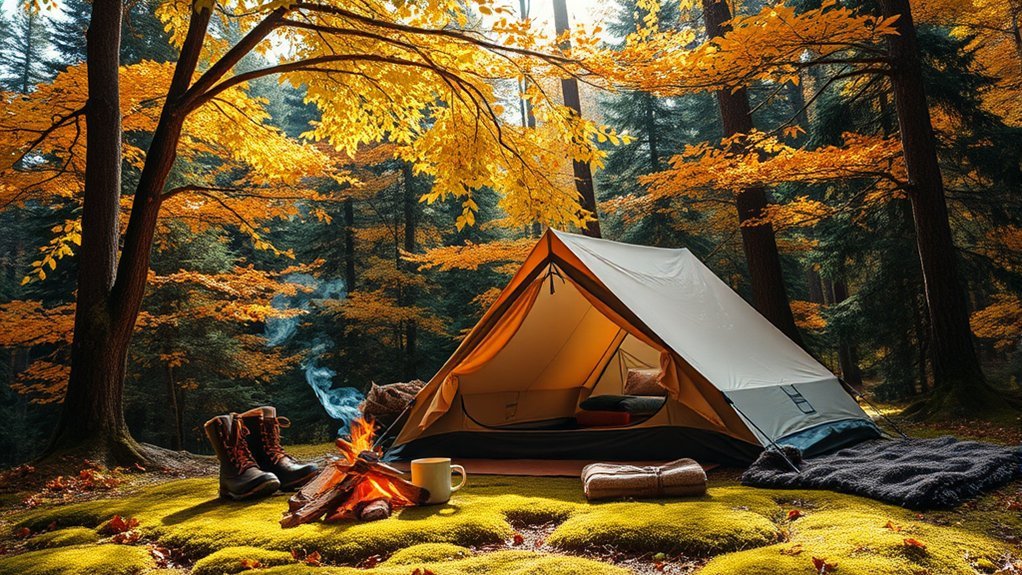
Shoulder season tent camping can be a rewarding adventure, but you need to be prepared for unpredictable weather. Pack layers to stay comfortable, and choose your campsite wisely, ideally in sheltered areas away from cold water. Prepare hearty meals to keep energy up, and remember to check local regulations and conditions before you go. Finally, don’t forget some entertainment for downtime. There’s much more to explore to enhance your camping experience!
Be Prepared for Unpredictable Weather
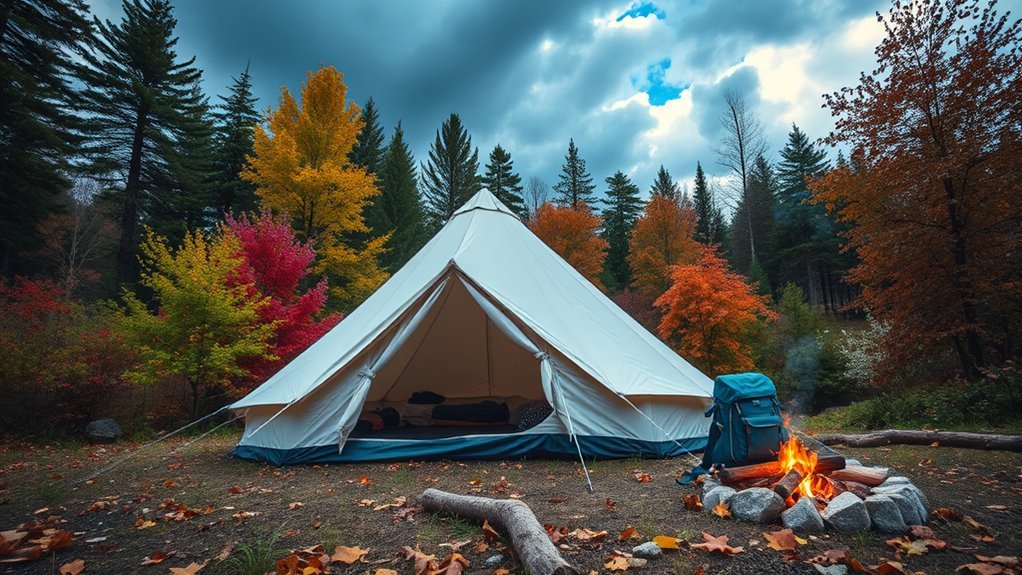
When you’re camping during the shoulder season, being ready for unpredictable weather is crucial, as conditions can change rapidly. Keep a close eye on weather forecasting to stay informed about any shifts. Carry multiple destination options, so you can adapt based on localized conditions. Temperatures can swing dramatically, so pack layers and a reliable, weather-resistant tent to guarantee warmth and comfort.
Prepare for sudden downpours or unexpected snow by bringing essential emergency gear, including a sturdy rainfly and extra tarps for moisture protection. Flexibility is key—plan your activities with the understanding that you might need to adjust based on the weather. This adaptability not only enhances your experience but also allows you to embrace the freedom of the outdoors. Remember, shoulder season often means fewer crowds, so confirm campsite accessibility before you head out to avoid surprises. Happy camping!
Optimize Your Campsite Selection
When selecting your campsite, aim for a south-facing spot to soak up the morning sun, which can warm you up on chilly days. Look for natural wind barriers like trees or hills to keep your setup cozy and stable. Small shifts in your location can make a big difference in your overall comfort during shoulder season camping.
Sun Exposure Benefits
To maximize your comfort during shoulder season camping, it’s essential to reflect on sun exposure when selecting your campsite. Consider how tent orientation and sunlight angles affect your experience. A south-facing spot warms your tent early, while elevated terrain reduces frost and boosts daytime temperatures. Avoid campsites near large bodies of water, which can bring cooler air. Choosing sites with natural barriers like trees can shield you from cold winds while still letting in sunlight.
| Campsite Feature | Benefits |
|---|---|
| South-Facing | Maximum morning warmth |
| Elevated Terrain | Reduced frost, improved temps |
| Natural Barriers | Wind protection, sunlight access |
| Distance from Water | Avoids cooler temperatures |
Natural Wind Barriers
Selecting a campsite with natural wind barriers can greatly enhance your comfort during shoulder season camping. Look for spots surrounded by trees, hills, or rock formations to provide essential wind protection. A south-facing site is ideal, as it catches more sunlight throughout the day, helping to reduce wind chill and keeping your tent cozy. Avoid exposed areas or ridge lines where winds are harsh; these can lead to uncomfortable and even dangerous camping conditions. Prioritize sites with dense vegetation, as these not only shield you from gusts but also help retain warmth during chilly nights. Small adjustments in your campsite orientation can remarkably improve your experience, allowing you to enjoy the great outdoors with greater ease and comfort.
Embrace Layering for Comfort
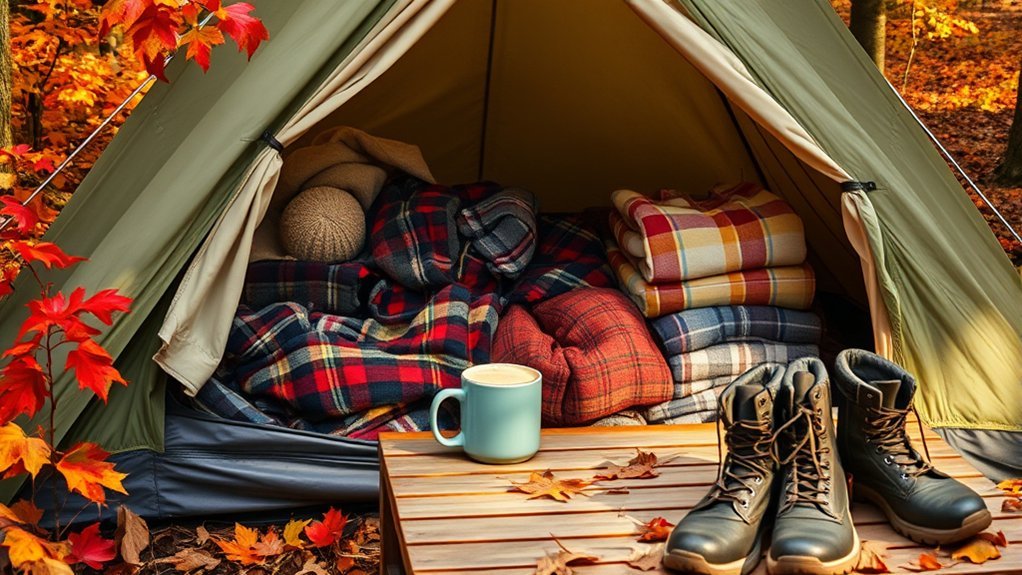
As temperatures can swing dramatically during shoulder season camping, embracing layering is essential for staying comfortable. Start with moisture-wicking base layers to keep sweat at bay, which helps you feel dry and energized. Next, add insulating mid-layers like fleece or down to trap warmth when the chill sets in. A waterproof outer layer is vital for shielding against wind and rain, ensuring you remain cozy despite unpredictable weather.
Focus on key areas—your hands, feet, and head—as these spots are important for thermoregulation. Wearing gloves, warm socks, and a hat can make a world of difference in your comfort level. Avoid cotton fabrics that hold moisture and can leave you feeling cold and clammy. Instead, choose synthetic or wool materials that provide better insulation and moisture management. By mastering the art of layering, you’ll effortlessly adapt to changing conditions, enjoying your camping experience to the fullest.
Plan Hearty Meals for Cold Nights
When the temperatures drop at night, planning hearty meals is essential for keeping you warm and satisfied during shoulder season camping. Focus on calorie-dense, one-pot meals like chili, burritos, or soup to maintain energy levels and body heat. Meal prep at home—chop vegetables or pre-make dishes—to streamline cooking at camp. This way, you’ll have more time to relax around the fire.
Consider packing energy snacks to munch on during the day, such as trail mix or protein bars, to keep your energy up while exploring.
Here’s a simple meal plan to inspire you:
| Meal | Details |
|---|---|
| Breakfast | Oatmeal with nuts and dried fruit |
| Lunch | Wraps with hummus and veggies |
| Dinner | Hearty chili in a thermos |
| Snacks | Trail mix and jerky |
| Beverage | Hot cocoa or herbal tea |
These meals will keep you cozy and satisfied, enhancing your camping experience!
Bring Entertainment for Extended Stays
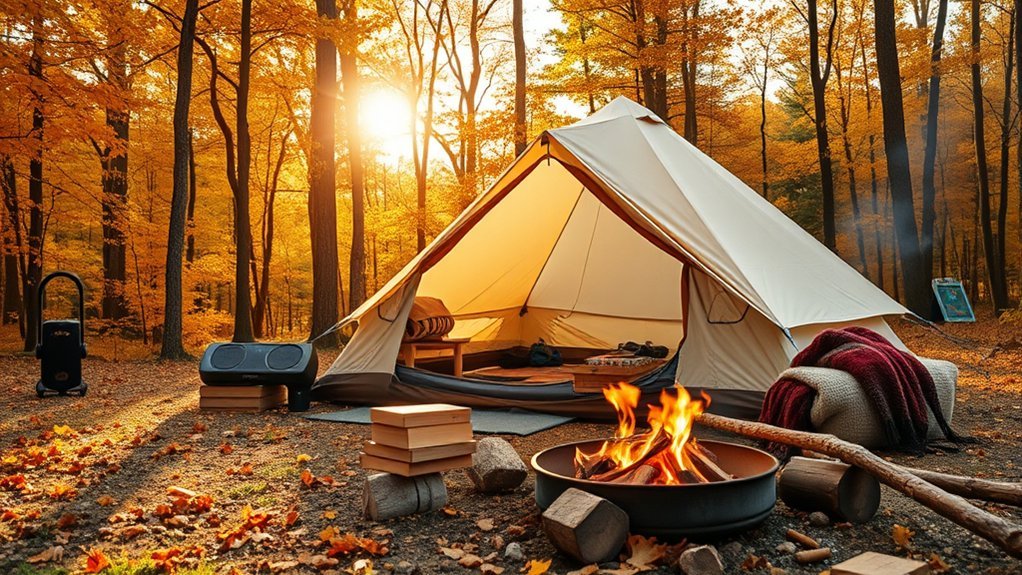
How can you make the most of those chilly evenings while camping during shoulder season? Bring along a solid game selection to fill the longer nights and enhance social bonding with your fellow campers. Pack easy-to-carry games like Bananagrams or Yahtzee, which are perfect for creating fun moments, especially during bad weather days. Don’t forget a portable speaker for music or podcasts to keep the vibe lively while you unwind outdoors.
Headlamps or lanterns are essential too, lighting up your evening activities so you can enjoy games and reading after sunset. These elements not only keep morale high but also foster connections, leading to lasting memories of your adventures together. Embrace the opportunity for deeper conversations and laughter, turning your camping trip into a memorable experience that goes beyond just the great outdoors.
Check Local Regulations and Conditions
Before you head out for shoulder season camping, make sure you research campsite rules and verify current weather conditions. Unpredictable weather can impact your plans, so understanding what to expect is essential. Plus, knowing about local wildlife activity will help you stay safe and prepared during your trip.
Research Campsite Rules
Understanding and adhering to local campsite rules is essential for a successful shoulder season camping trip. Start by checking campsite regulations, especially regarding open fires; many areas impose restrictions to prevent fire hazards during this time. You’ll also want to research the availability of amenities like restrooms and water sources, as these can be limited in the off-peak season. Confirm if permit requirements exist for your chosen camping area, particularly in national parks. Additionally, look into seasonal closures or accessibility issues that might arise in spring and fall. Finally, stay informed about wildlife activity, especially bear activity, which can increase during these seasons, necessitating proper food storage practices to keep your adventure safe.
Verify Weather Conditions
As you’re planning your shoulder season camping trip, checking weather conditions is essential to guarantee a safe and enjoyable experience. Use reliable sources like weather.gov or weather apps to anticipate any changes, as conditions can shift rapidly in spring and fall. Familiarize yourself with local regulations, including any fire bans or restrictions, to confirm compliance and safety. While out in the wild, monitor daily weather updates to stay informed of sudden shifts, such as rain or temperature drops. If you’re in remote areas, consider tools like the Garmin Mini for satellite forecasts. Always be prepared to adjust your itinerary or campsite based on updated weather conditions, confirming your adventure remains comfortable and secure.
Check Wildlife Activity
When planning your shoulder season camping trip, it’s essential to check local wildlife activity. Many animals are more active during spring and fall, offering you exciting opportunities to observe wildlife migration and unique animal behavior. Research specific migration patterns to know what species you might encounter. Stay informed about local regulations regarding wildlife encounters, especially food storage and bear safety protocols, to keep your experience safe and enjoyable. Using binoculars, you can watch these creatures from a distance, enhancing your trip while minimizing disruption to their natural habits. Also, check local wildlife advisories, as conditions can shift quickly, affecting both animal behavior and safety recommendations. Embrace the wild responsibly while enjoying the freedom of nature!
Frequently Asked Questions
What Type of Tent Is Best for Shoulder Season Camping?
For shoulder season camping, you’ll want a three-season tent made from durable, weather-resistant materials. Look for options with good ventilation and insulation to keep you comfortable during varying temperatures and unexpected weather changes.
How Can I Stay Warm While Sleeping in My Tent?
Like a warm hug on a chilly night, you’ll stay cozy by using insulating layers and quality sleeping pads. Layer your clothing, wrap in a sleeping bag, and add a blanket for extra warmth.
What Are Some Essential Items to Pack for Shoulder Season Camping?
For shoulder season camping, pack a thorough checklist including a warm sleeping bag, layered clothing, waterproof gear, and a reliable tent. Stay weather prepared with extra insulation and cooking supplies to guarantee a comfortable adventure.
How Do I Choose the Right Sleeping Bag for Colder Temperatures?
Choose a sleeping bag with insulation suited for colder temperatures and a temperature rating lower than your expected conditions. Look for materials like down or synthetic, ensuring comfort and warmth during your adventures in chilly environments.
Are There Specific Campgrounds Recommended for Spring and Fall Camping?
For spring and fall camping, consider campgrounds that offer seasonal considerations like weather stability and fewer crowds. Research local favorites, check reviews, and prioritize sites with amenities to enhance your experience. Enjoy your adventure!
Conclusion
To sum up, shoulder season camping can be an unforgettable experience if you’re well-prepared. Did you know that nearly 30% of campers prefer spring and fall for fewer crowds and stunning scenery? By embracing the unpredictable weather, optimizing your campsite, layering for comfort, planning hearty meals, and bringing entertainment, you’ll make the most of your trip. So, pack your gear, embrace the adventure, and enjoy the beauty of nature during these quieter seasons!
