
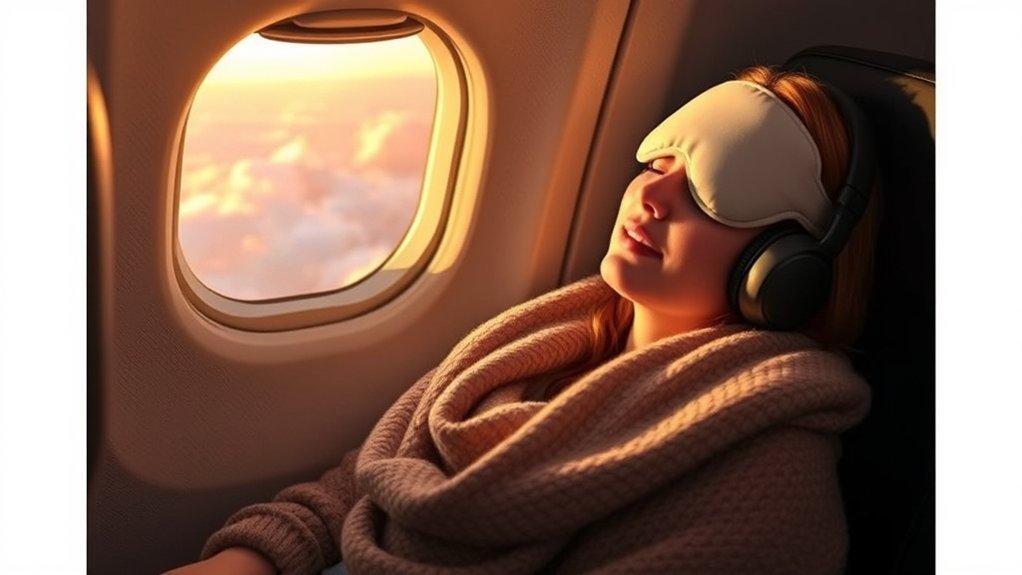
To sleep on planes without neck pain, it’s essential to use a quality travel pillow that supports your neck’s natural curve. Adjust your seat for ideal angle, practice chin tucks, and perform gentle stretches every few hours to boost circulation. Stay hydrated and block out noise with earplugs or headphones. Position your head comfortably and avoid looking down at devices. Keep these tips in mind to enhance your comfort and satisfaction during your journey. There’s more to uncover!
Why Neck Pain Happens During Flights and How to Prevent It
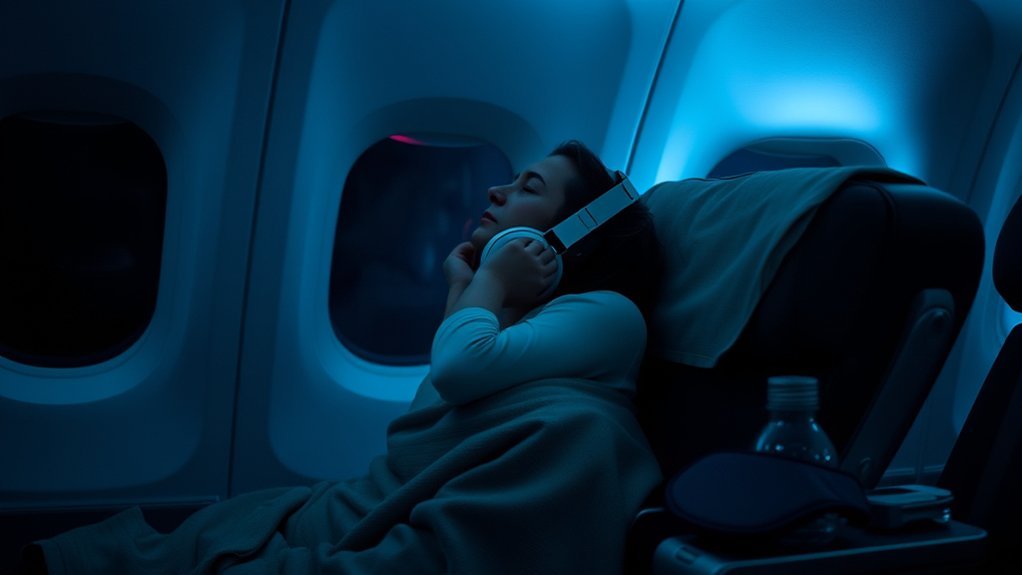
When you’re flying, neck pain often creeps in due to prolonged sitting and awkward head positions. This discomfort results from neck strain and muscle tension, especially when you fall asleep in unsupported positions. Sudden movements or jerks can misalign your neck, leading to soreness. You might also experience “tech neck” from looking down at devices, which exacerbates stiffness. To prevent this, make frequent adjustments to your seating position and incorporate simple movements, like shoulder rolls or seated chin tucks, to improve blood flow. These practices can help combat the negative effects of prolonged sitting. Finally, investing in a well-designed travel pillow that maintains neutral head and spine alignment is essential for comfort and pain prevention during air travel.
Essential Features for Effective Travel Pillows
When choosing a travel pillow, focus on ergonomic designs that offer 360-degree support to keep your neck aligned. Adjustable features are essential, allowing you to customize the fit for maximum comfort regardless of your body type. Additionally, opt for high-quality materials like memory foam that enhance support and keep you comfortable throughout your flight.
Ergonomic Design Considerations
To guarantee a comfortable sleep experience on planes, effective travel pillows must prioritize ergonomic design that aligns with the natural curvature of your neck. By adhering to this principle, you promote a neutral alignment of your head and spine, reducing strain during sleep. Current travel pillow trends showcase ergonomic innovations, such as memory foam, which contours to your neck’s unique shape, alleviating pressure points. A well-designed pillow also limits excessive head movement, minimizing discomfort upon waking. Look for features like adjustable tightness and customizable head-tilt angles to accommodate various sleeping positions and body types. Additionally, incorporating elements like eye masks or noise-canceling technology can enhance your sleep environment, allowing you to travel more liberally and arrive refreshed.
Adjustable Support Features
Travel pillows designed with adjustable support features provide a tailored sleeping experience that enhances comfort and minimizes neck strain. To guarantee you get the most out of your travel pillow, consider these essential features:
- Custom Firmness: Look for pillows that let you adjust the level of support to fit your preference.
- Adjustable Straps: Choose models with straps or wrap-around designs that secure comfortably without being too tight.
- Removable Inserts: Opt for pillows with removable or inflatable components to cater to various neck and shoulder sizes.
- Height Modification: Select pillows that allow you to change the height, accommodating different sleeping positions for maximum travel adaptability.
These features can greatly reduce the risk of long-term postural issues during travel.
Material Quality and Comfort
Choosing the right material for your travel pillow is essential if you want to guarantee comfort and support during your flight. Opt for pillows made with memory foam, as they conform to your neck’s shape, offering ideal support and reducing pain risks. Look for breathable fabrics, which help regulate temperature and wick moisture away, enhancing comfort even on long flights. An ergonomic design that maintains your neck’s natural curvature can prevent strain and align your head and spine correctly. Adjustable features, like removable inserts or customizable firmness levels, allow you to personalize your comfort. Finally, verify your pillow is lightweight and portable, so it doesn’t add bulk to your luggage while providing the support you need.
Best Travel Pillows to Prevent Neck Pain
When choosing the best travel pillow to prevent neck pain, focus on ergonomic designs that support your neck’s natural curve. Materials like memory foam can greatly enhance comfort, while adjustable support options allow you to customize the fit for your unique needs. With the right pillow, you can enjoy a restful flight without the nagging discomfort of a stiff neck.
Ergonomic Design Features
Finding the right ergonomic travel pillow can make all the difference in preventing neck pain during long flights. Here are some key features to look for:
- Pillow Shapes: Opt for designs like the Bcozzy Travel Neck Pillow, which supports cervical lordosis and keeps your spine neutral.
- Support Technologies: Choose pillows using memory foam that conforms to your neck’s shape for enhanced comfort.
- Adjustability: Select adjustable pillows that let you customize firmness and angle for ideal neck alignment.
- Side Supports: Consider wrap-around designs that provide 360-degree stability, preventing head droop for a restful sleep.
With these ergonomic features, you can enjoy a pain-free journey and arrive refreshed at your destination.
Material Comfort Levels
Comfort is key to a restful flight, and the material of your travel pillow plays an essential role in preventing neck pain. Consider pillows made with memory foam, like the Trajectory Travel Neck Pillow, which molds to your neck’s natural curve, providing vital support during long flights. If you prefer customization, inflatable options allow you to adjust firmness and positioning, reducing strain. Look for breathable fabrics in high-quality travel pillows, as they help regulate temperature and prevent overheating. The Structured Wrap Pillow offers 360-degree support, while the Eye Mask System Pillow enhances sleep quality by preventing head droop. Choosing the right materials can transform your flying experience, ensuring you arrive refreshed and pain-free.
Adjustable Support Options
Travelers often face the challenge of finding the right support for their necks during flights, but adjustable travel pillows can make all the difference. Here are four top options to evaluate:
- Structured Wrap Pillow: Offers customizable tightness and head tilt angles, delivering 360-degree support for long flights.
- Eye Mask System Pillow: Combines a sleep mask with a head-anchoring system to prevent head droop, enhancing comfort during overnight travel.
- Inflatable / Forward-Lean Pillow: Designed for forward sleepers, it features arm holes and a face-cutout to maintain a neutral neck position.
- Trajectory Travel Neck Pillow: Ergonomically designed to support neutral neck alignment, reducing discomfort during travel.
With these pillows, you can liberate yourself from neck pain and enjoy your journey.
Essential Exercises to Alleviate Neck Discomfort
To combat neck discomfort during flights, incorporating essential exercises into your routine can make a marked difference. Start with chin tucks; hold for 5 seconds and repeat 10 times to align your head with your spine. Next, perform 5-10 slow neck rolls in each direction to release tension and enhance flexibility. Shoulder shrugs are also effective; aim for 10-15 repetitions to alleviate upper back strain. Additionally, try seated stretches by tilting your ear toward each shoulder, holding for 10-15 seconds on both sides. These neck stretches not only offer exercise benefits but also improve mobility. Regularly practicing these exercises can markedly enhance your travel experience and keep neck discomfort at bay.
Maintain Good Posture While Flying
While flying, maintaining good posture is essential for preventing discomfort and guaranteeing a more pleasant journey. Here are some effective posture tips to keep you aligned and comfortable during your flight:
- Support Your Lower Back: Use a cushion or rolled-up jacket to maintain the natural curve of your spine.
- Feet Position: Keep your feet flat on the floor or use a footrest to align your knees and hips, reducing strain on your lower back.
- Adjust Your Seat: Set your seat to a 135-degree angle to distribute your weight evenly and minimize pressure points.
- Check Alignment: Regularly confirm your ears are in line with your shoulders to avoid forward head posture.
How to Make Your Sleep Environment Comfy
Creating a comfortable sleep environment during a flight can greatly enhance your rest, especially after ensuring good posture. To achieve ideal travel comfort, consider these essential elements:
| Element | Benefit | Recommendation |
|---|---|---|
| Eye Mask | Blocks light, boosts melatonin | Use a light-blocking eye mask |
| Noise-Canceling Headphones | Reduces cabin noise, promotes peace | Invest in quality noise-canceling headphones or earplugs |
| Supportive Travel Pillow | Maintains neck alignment, prevents strain | Try the Bcozzy Travel Neck Pillow |
Additionally, adjust your seat to a 135-degree angle for relief and stay hydrated with at least 8 ounces of water per hour to combat dryness. Prioritizing these factors can greatly transform your sleep environment, paving the way for restful travel.
Additional Tips for Staying Comfortable on Long Flights
When starting a long flight, maintaining comfort is essential for a restful journey. Utilize these flight essentials to enhance your experience:
- Supportive Travel Pillow: Invest in a quality travel pillow that keeps your head aligned to prevent neck strain.
- Stay Hydrated: Drink at least 8 ounces of water hourly to combat the dry cabin air and reduce muscle cramps.
- Incorporate Movement: Perform shoulder rolls and seated chin tucks every few hours to boost circulation and ease tension.
- Noise-Canceling Headphones: Use these or earplugs to block out cabin noise, improving your ability to sleep soundly.
Frequently Asked Questions
Can Sleeping Pills Help Alleviate Neck Pain During Flights?
Sleeping pills can help you relax, improving travel comfort during flights. However, they won’t directly alleviate neck pain. Instead, consider using sleeping aids like neck pillows and proper positioning for better support throughout your journey.
What Are the Best Positions to Sleep in While Flying?
The ideal sleeping positions include leaning against the window for head support or using a travel pillow for neck stability. Avoid slouching; instead, keep your spine aligned to prevent discomfort and enhance your sleep quality.
How Often Should I Move Around During a Long Flight?
During a long flight, you should move around every hour or two. Frequent movement helps improve circulation and reduces discomfort, making your journey more enjoyable. So, get up, stretch, and liberate yourself from stiffness!
Are There Specific Exercises for Neck Pain Relief Before Flying?
Before flying, you can free your neck like a bird in flight. Try neck stretches and focus on posture alignment. Simple exercises can ease tension, ensuring your journey feels smoother and more liberating.
Can Using a Blanket Reduce Neck Discomfort While Sleeping?
Using a blanket can definitely reduce neck discomfort while sleeping. Opt for soft, lightweight blanket types paired with a travel pillow to provide support and maintain proper alignment, ensuring a more restful journey without pain.
Conclusion
By following these tips, you can transform your flying experience from a neck-craning nightmare into a restful journey. Remember, your neck deserves just as much care in the air as it does on the ground. With the right pillow, posture, and a few simple exercises, you’ll arrive at your destination feeling refreshed instead of sore. So, take these strategies to heart, and let your travels be as smooth as a cloud beneath you. Safe travels!
