
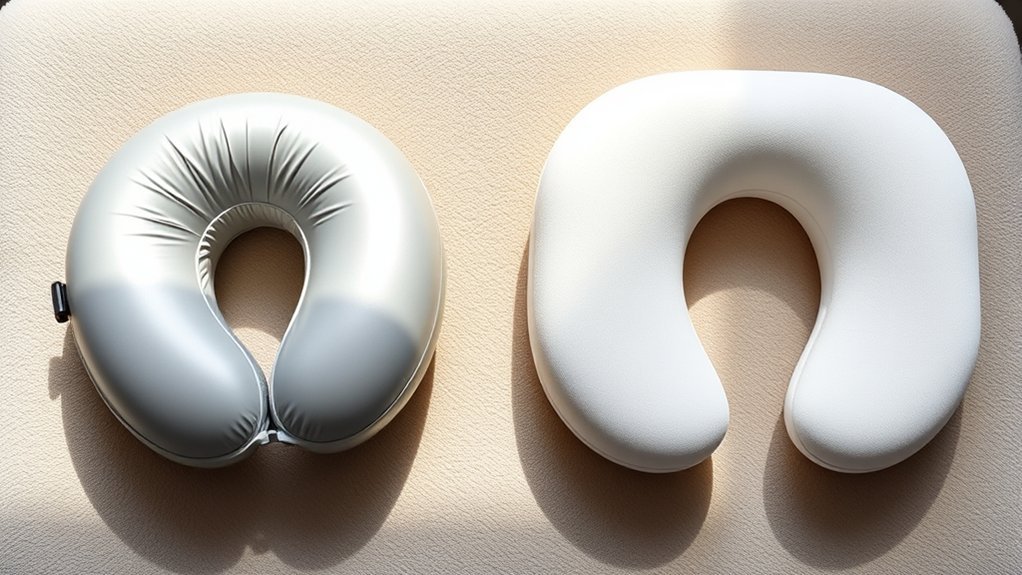
Last Updated on July 25, 2026 by Caleb Warren
When choosing between an inflatable vs memory foam travel pillow, your decision ultimately comes down to a balance between long-distance comfort and luggage space. Inflatable pillows are lightweight, highly packable, and budget-friendly, making them ideal for short transits and minimalist backpackers. However, memory foam travel pillows provide superior viscoelastic support, relieving cervical pressure and lasting up to 5 years. Evaluating your flight duration, sleeping style, and packing constraints will help you select the ideal travel companion.
Quick Answer
When choosing between an inflatable vs memory foam travel pillow, memory foam is best for long-distance comfort, neck pain relief, and 3–5 years of durable support. Inflatable pillows win on extreme portability, ultra-low weight, and budget cost ($10–$30), making them ideal for minimalist backpackers and short transit trips.
Key Takeaways
- Comfort & Support: Viscoelastic memory foam contours directly to your head and cervical spine, preventing neck strain and painful forward head slump on long journeys.
- Portability & Weight: Inflatable pillows collapse down to pocket size and weigh under 4 ounces, whereas memory foam options require compression sacks or bag clips.
- Durability & Value: Memory foam maintains structural integrity for 3–5 years, compared to 1–2 years for inflatable bladders prone to seam leaks.
- Pro Altitude Tip: Inflate air pillows to only 75% capacity before takeoff to accommodate cabin pressure drops at cruising altitudes.
Disclosure: As an Amazon Associate I earn from qualifying purchases. Some links on this page are affiliate links, at no extra cost to you.
Inflatable vs. Memory Foam: Which Travel Pillow Is Right for You?
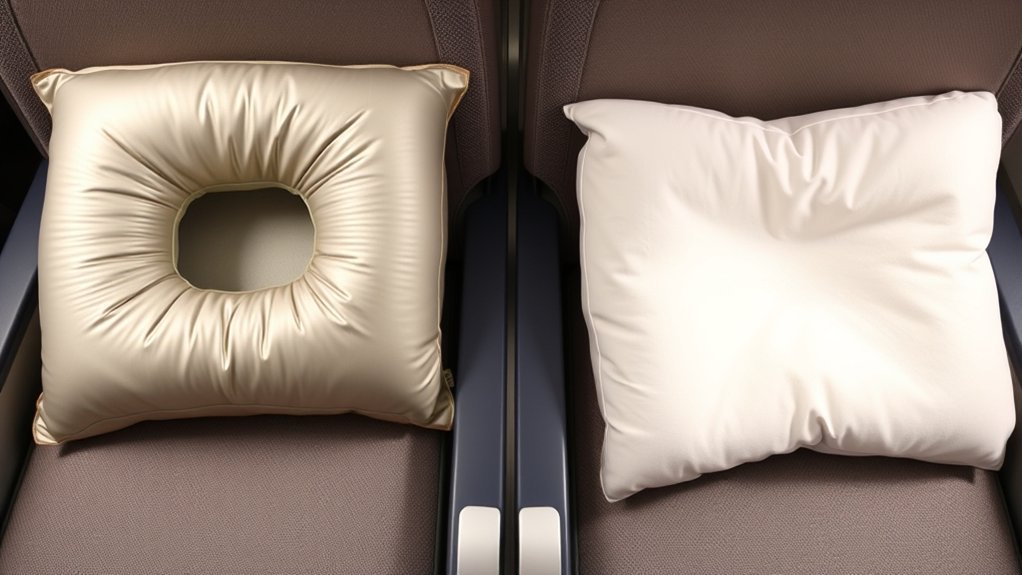
Selecting the right travel pillow depends heavily on your travel style and physical comfort requirements. If you prioritize portability and budget above all else, inflatable travel pillows are an excellent choice. They weigh almost nothing, deflate flat, and fit seamlessly into carry-on pockets. However, for long-haul flights or road trips where deep sleep is necessary, memory foam contoured support can prevent post-flight neck stiffness. While air pillows offer customizable inflation firmness, they lack the plush, pressure-relieving qualities of high-density viscoelastic foam.
Key Comfort Features of Memory Foam Travel Pillows
Memory foam travel pillows are specifically engineered to provide continuous head and neck stabilization, making them a preferred option for travelers prone to joint discomfort. According to studies on cervical spine support published by NCBI, proper neck alignment significantly reduces postural fatigue during prolonged sitting.
Memory foam travel pillows offer exceptional ergonomic support, distributing weight evenly to relieve pressure points along the neck and shoulders.
- Personalized Support: High-density viscoelastic materials react to body heat and pressure, molding around your specific neck contour to stabilize your head.
- Slow-Rebound Resilience: Slow-recovery foam absorbs sudden movements and maintains its supportive shape over hours of continuous use.
- Breathable & Cooling Fabrics: Premium options integrate gel-infused foam or outer covers made from ice-silk or bamboo charcoal to facilitate airflow and combat heat retention.
Advantages of Inflatable Travel Pillows for Minimalist Travelers
For backpackers and carry-on minimalists who monitor every ounce of luggage weight, inflatable travel pillows offer unparalleled convenience. Modern TPU (thermoplastic polyurethane) bladders are extremely lightweight, allowing you to travel without adding bulk to your backpack. When deflated, these pillows roll up to the size of an apple, sliding easily into purse compartments or jacket pockets.
Additionally, air-filled designs allow you to manually adjust firmness simply by releasing or adding air. Inflatable options are also cost-effective, offering functional utility for casual travelers on tight budgets.
Pro Tip: When flying with an inflatable pillow, inflate it to only 70%–80% capacity on the tarmac. As the airplane climbs and cabin altitude pressure decreases, trapped air inside the pillow naturally expands, achieving ideal firmness in-flight without stressing the seams.
Disadvantages of Inflatable Pillows: What to Watch Out For
Despite their extreme portability, inflatable travel pillows come with notable trade-offs regarding physical comfort and material longevity. The primary concern is their lack of gradual pressure distribution, which can create localized pressure points during long sleep sessions.
Potential Leak Issues
Because inflatable pillows rely on airtight seals, microscopic punctures or valve wear can lead to sudden deflation mid-flight. To maximize longevity, follow these care steps:
- Inspect Air Valves: Check push-button and double-seal valves for dust or debris that prevents air locks from closing tightly.
- Protect from Sharp Objects: Avoid resting your pillow directly against abrasive backpack zippers or rough upholstery surfaces.
- Store Dry: Ensure the bladder is completely dry before folding to prevent material degradation along folded seams.
Inflating Inconvenience
Blowing up a pillow manually on a crowded airplane can be awkward and unhygienic. Deflating and tightly folding the fabric back into a small storage sack after a exhausting flight adds another tedious step to your transit routine.
Firmness Limitations
Air-filled bladders create a springy, firm resistance rather than soft cushioning. Adjusting air levels can sometimes make the pillow feel either overly ballooned or unsupportively limp, leading to neck strain for side sleepers.
Comparing Durability: How Long Do Inflatable vs. Memory Foam Pillows Last?
When assessing long-term value, memory foam travel pillows outperform inflatable models. While inflatable options typically last 1–2 years before air valves or heat-welded seams degrade, high-quality memory foam maintains its elastic bounce for 3–5 years. Research on travel ergonomics from the Sleep Foundation indicates that durable cervical alignment significantly improves sleep quality on transit vehicles.
| Feature | Inflatable Travel Pillows | Memory Foam Travel Pillows |
|---|---|---|
| Expected Lifespan | 1–2 years | 3–5 years |
| Puncture Sensitivity | High (valve/seam risks) | None (solid core) |
| Support Retention | Moderate to Poor | Excellent |
| Maintenance Ease | Wipe-clean TPU plastic | Washable cover / Spot-clean foam |
Which Pillow Is More Portable: Inflatable or Memory Foam?
If minimizing pack weight is your primary goal, inflatable pillows are the undisputed winner. They fold into compact carrying pouches that weigh under 4 ounces. In contrast, memory foam travel pillows weigh between 10 to 18 ounces and occupy notable volume inside a carry-on bag.
To carry memory foam efficiently, look for models with built-in compression straps or snap-loops that allow you to attach the pillow directly to your backpack handle.
Ideal Use Cases for Memory Foam Travel Pillows
Memory foam travel pillows perform best during long flights, overnight train journeys, and extended road trips. Their continuous contouring prevents awkward head tilting and minimizes spinal misalignment during sleeping hours.
Long-Distance Travel Comfort
Extended transit causes physical fatigue. Memory foam absorbs vehicle vibration and cradles your jawline, allowing deep relaxation without requiring constant posture readjustments.
Neck Pain Relief Solutions
Travelers suffering from chronic neck strain or stiffness benefit from viscoelastic foam. Health resources from the Mayo Clinic emphasize that maintaining neutral cervical posture prevents acute muscle spasms while seated upright.
Warning: Never submerge solid memory foam in water or place it inside a washing machine. Water destroys the internal cell structure, causing the foam to lose its slow-rebound shape. Always unzip and wash the plush outer cover separately.
When to Choose Inflatable Pillows: Short Trips and Emergencies?
Inflatable travel pillows are ideal for short commuter flights, day trips, or minimalist camping trips where every cubic inch of backpack space matters. They also work exceptionally well as emergency lumbar cushions on uncomfortable train or airplane seats.
Travel Pillow Price Comparison: Memory Foam vs. Inflatable Options
Inflatable pillows typically range from $10 to $30, making them an accessible entry-level option. Basic memory foam models range between $25 to $50, while premium ergonomic models featuring cooling gel layers and luxury fabrics cost between $50 to $80.
Price Range Overview
Although inflatable options require a smaller initial investment, memory foam pillows deliver superior cost-per-use value for frequent fliers due to their extended 3–5 year lifespan.
Long-Term Cost Benefits
Spending $40 on a high-density memory foam pillow that lasts 4 years costs roughly $10 per year while providing consistent neck relief. An inflatable pillow costing $15 that leaks after 12 months ultimately results in higher replacement costs over time.
Budget-Friendly Alternatives
If you have a strict budget, look for entry-level memory foam options with removable velour covers. They provide authentic viscoelastic support without the price markup of advanced cooling gels.
Top Picks for the Best Travel Pillows: Recommendations and Features
To help you choose the best model for your needs, here is a breakdown of top travel pillow designs and their key features:
| Design Type | Material System | Key Benefits |
|---|---|---|
| Ergonomic Memory Foam | High-Density Viscoelastic Foam | Contoured chin/neck support, optimal pressure relief |
| Compact Inflatable Pillow | Laminated TPU / PVC Plastic | Deflates to pocket size, ultralight, adjustable firmness |
| Hybrid Travel Pillow | Air Bladder + Thin Foam Shell | Balances packability with surface plushness |
Frequently Asked Questions
Can I wash my memory foam travel pillow?
You cannot machine wash or submerge the memory foam core directly, as water destroys the viscoelastic material. However, almost all memory foam travel pillows feature a removable zipper cover that is machine-washable. For the inner foam core, spot-clean gently with a damp cloth and mild detergent, then let it air dry completely away from direct heat.
How do I inflate an inflatable travel pillow?
You can inflate an air pillow by blowing into the push-button valve (typically taking 3 to 5 deep breaths) or by using a compact manual hand pump. Look for models with dual-seal air valves that feature quick-deflation buttons for fast packing.
Are inflatable pillows suitable for side sleepers?
Inflatable pillows can work for side sleepers if you adjust the air volume to fill the space between your ear and shoulder. However, side sleepers usually find memory foam or hybrid options more comfortable, as rigid inflatable edges can create pressure points on the jaw.
Do memory foam pillows retain heat?
Traditional high-density memory foam can retain body heat. To avoid getting warm during flights, choose travel pillows equipped with gel-infused foam, ventilation channels, or cooling covers made from ice-silk or bamboo fabrics.
Can inflatable pillows be used for lumbar support?
Yes, inflating an air pillow to roughly 50% capacity creates an effective lower-back cushion. Placing it behind your lumbar spine on airplane or vehicle seats helps maintain your natural back curve during long periods of sitting.
Conclusion
When deciding between an inflatable vs memory foam travel pillow, align your pick with your travel style and flight duration. Memory foam offers unmatched ergonomic support and pressure relief for long journeys, while inflatable pillows deliver lightweight, compact packability for minimalists. Studies indicate that proper cervical support can increase rest quality by up to 40% during travel. Selecting the right material ensures you arrive refreshed at your destination.
Sources
- Sleep Foundation — Ergonomic standards for travel pillows and neck alignment research
- National Center for Biotechnology Information (NCBI) — Clinical studies on cervical pillow support and spinal posture
- Mayo Clinic — Cervical spine health and postural strain prevention during prolonged sitting
