
Last Updated on July 24, 2026 by Daniel Globe
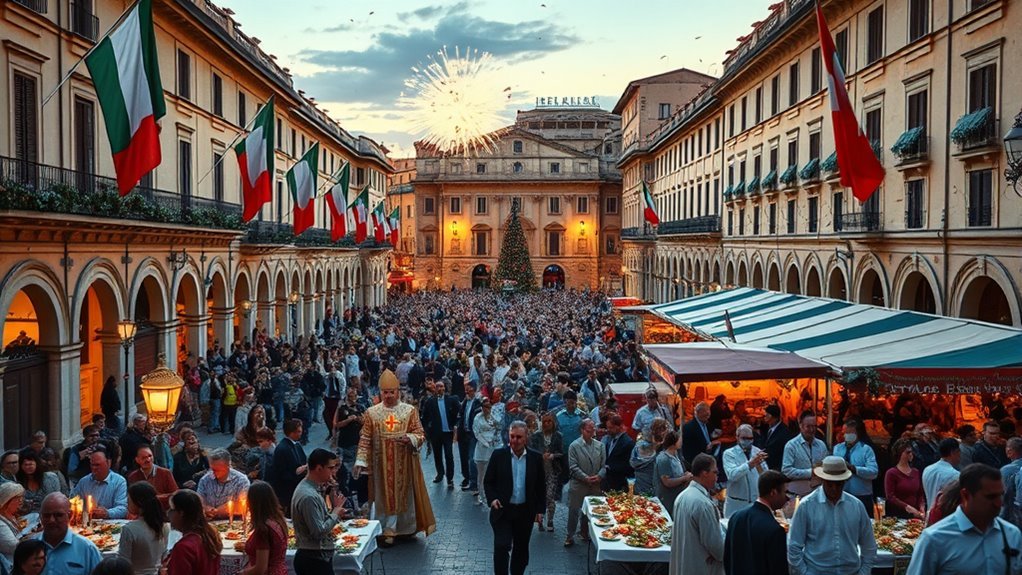
Italy’s holidays and festivals bring together national history, Catholic tradition, seasonal food, and strong local identity. Some dates are nationwide public holidays, while others are city-specific patron saint days or cultural events that do not automatically close businesses. Knowing the difference helps you plan transport, museum visits, meals, and accommodation without missing the celebrations.
Quick Answer
Italy’s 2026 calendar has 13 nationwide holiday dates commonly relevant to travelers, including Easter Sunday and the new October 4 holiday for St. Francis of Assisi. Major celebrations include Easter, Liberation Day, Republic Day, Ferragosto, Christmas, Carnevale, Siena’s Palio, and local patron saint feasts.
Key Takeaways
- Italy added October 4, St. Francis of Assisi Day, as a national holiday from January 1, 2026.
- Nationwide public holidays, local patron saint days, civic memorial days, and festivals have different closure rules.
- Public offices and banks usually close on national holidays, but restaurants, museums, shops, and transport follow local schedules.
- Easter, Ferragosto, Christmas, and New Year can strongly affect opening hours, trains, roads, and hotel demand.
- Confirm event dates and opening hours on official websites because festival programs and venue schedules can change.
Disclosure: As an Amazon Associate I earn from qualifying purchases. Some links on this page are affiliate links, at no extra cost to you.
Public Holidays in Italy
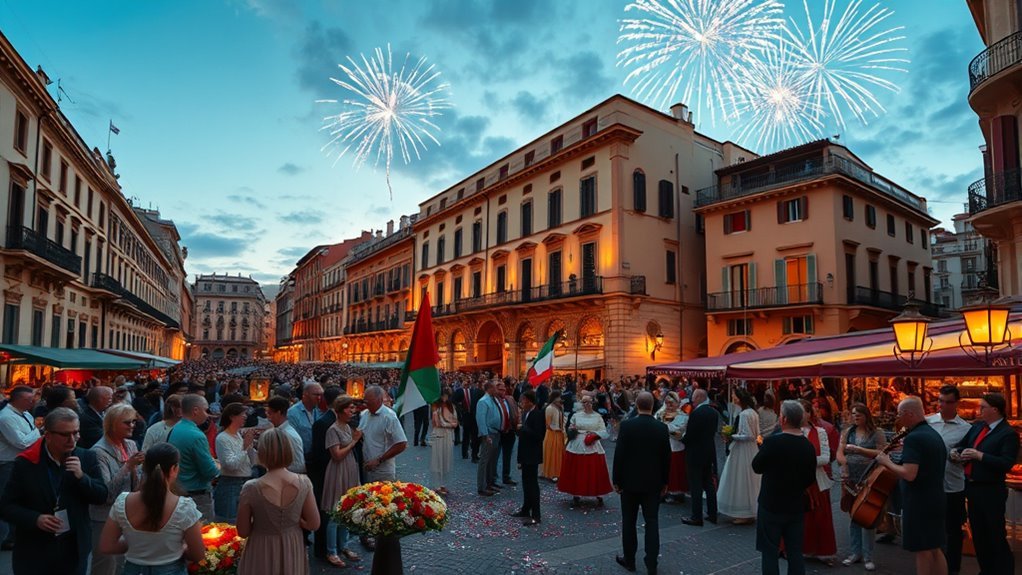
Italy’s public holidays combine civic history and Catholic observance. The official calendar includes fixed dates, Easter Monday, and local patron saint holidays. A major 2026 change is the return of October 4 as a national holiday for St. Francis of Assisi under Law No. 151 of October 8, 2025, effective January 1, 2026.
| Holiday | 2026 Date | What Travelers Can Expect |
|---|---|---|
| New Year’s Day | Thursday, January 1 | Widespread closures and reduced services |
| Epiphany | Tuesday, January 6 | Family events, La Befana traditions, closures |
| Easter Sunday | Sunday, April 5 | Religious services, family meals, busy attractions |
| Easter Monday | Monday, April 6 | Picnics, day trips, holiday transport patterns |
| Liberation Day | Saturday, April 25 | Ceremonies, rallies, concerts, local events |
| Labor Day | Friday, May 1 | Demonstrations, concerts, long-weekend travel |
| Republic Day | Tuesday, June 2 | National ceremonies, parade activity in Rome |
| Ferragosto and the Assumption | Saturday, August 15 | Beach crowds, vacation closures, local festivals |
| St. Francis of Assisi Day | Sunday, October 4 | New national holiday from 2026 |
| All Saints’ Day | Sunday, November 1 | Masses, cemetery visits, family remembrance |
| Immaculate Conception | Tuesday, December 8 | Religious observance and Christmas-season events |
| Christmas Day | Friday, December 25 | Extensive closures and family celebrations |
| St. Stephen’s Day | Saturday, December 26 | Second holiday day with varied opening hours |
Note: A public holiday does not mean every restaurant, museum, supermarket, or transport service closes. Check the official page for each attraction and the local transport operator before traveling.
October 4 became a national holiday for St. Francis of Assisi on January 1, 2026, making older lists of only 12 nationwide holiday dates incomplete for current travel planning.
New Year’s Day in Italy
New Year’s Day, or Capodanno, falls on January 1. The largest public celebrations happen the night before, with concerts, dinners, countdowns, and fireworks in many cities. January 1 itself is quieter. Public offices, banks, and many shops close, while restaurants and tourist services may use special hours.
Traditional foods include lentils, which are linked with prosperity because their shape resembles coins, and pork dishes such as cotechino or zampone. Travelers should reserve New Year’s Eve meals early and confirm check-in, transport, and attraction hours for January 1.
Epiphany and La Befana
Epiphany on January 6 closes the traditional Italian Christmas season. In Christian tradition, the day remembers the visit of the Magi to Jesus. In popular folklore, La Befana is an elderly woman who brings sweets to well-behaved children and coal-shaped candy to those who have misbehaved.
Celebrations vary by city. Florence often stages a historical procession linked with the Magi, while Venice has hosted playful boat events featuring rowers dressed as La Befana. January 6 is a nationwide public holiday, so expect official closures and locally adjusted schedules.
Carnevale Before Lent
Carnevale takes place in the weeks before Lent and ends on Shrove Tuesday, the day before Ash Wednesday. It does not run from Holy Week to Shrove Tuesday. The season features masks, parades, decorated floats, satire, street performances, and fried sweets. Venice is famous for elegant masks and costume events, while Viareggio is known for large satirical floats and Ivrea for its Battle of the Oranges.
The official Venice Carnival 2026 ran from January 31 to February 17. Dates change each year because they depend on Easter. Carnevale is not a nationwide public holiday, so normal business hours may continue even when streets and hotels are extremely busy.
Pro Tip: For Venice Carnevale, book accommodation and timed attraction tickets well ahead. The final weekend and Shrove Tuesday usually draw the heaviest crowds.
Easter Sunday and Easter Monday
Easter, or Pasqua, is one of Italy’s most important religious and family celebrations. Easter Sunday fell on April 5 in 2026, followed by Easter Monday, or Pasquetta, on April 6. Holy Week processions, church services, regional foods, and family lunches shape the period, but exact customs differ across Italy.
Easter Sunday Traditions
Many families attend Mass and gather for a long meal. Lamb, eggs, savory pies, regional breads, chocolate eggs, and dove-shaped colomba cake are common, but there is no single national menu. Rome attracts visitors for Vatican ceremonies, while Florence holds the Scoppio del Carro, when a mechanical dove ignites fireworks on a decorated cart in Piazza del Duomo.
Pasquetta Picnics Outdoors
Easter Monday is widely associated with picnics, countryside visits, park gatherings, and short trips with friends or family. Popular outdoor destinations can become crowded, especially in good weather. Trains and roads may be busy as people return home late in the day.
Liberation Day on April 25
Liberation Day marks Italy’s liberation from Nazi occupation and Fascism in 1945. The Italian Senate’s historical page explains that April 25 became a national holiday in 1946 and commemorates the general uprising and liberation of cities in northern Italy.
Today, ceremonies, wreath-laying events, marches, speeches, concerts, and community gatherings take place across the country. The tone ranges from solemn remembrance to public celebration. Because April 25 is also St. Mark’s Day in Venice, the city combines national commemoration with local traditions.
Labor Day on May 1
May 1 is Festa dei Lavoratori, Italy’s Labor Day. It honors workers, labor rights, and the historic campaign for safer conditions and shorter working hours. Demonstrations, union events, concerts, and family outings are common. Public offices, banks, schools, and many businesses close.
Labor Day Origins
The international workers’ movement selected May 1 after the labor struggles associated with Chicago in the 1880s. Italy held its first large May Day demonstrations in 1890. However, the day was not officially recognized as an Italian public holiday in 1890. It was restored after Fascism in 1945, recognized as a holiday in 1946, and included in the national holiday framework by Law No. 260 of 1949, as documented by the Italian Senate.
| Date | Milestone |
|---|---|
| 1890 | First international May Day celebrations, including demonstrations in Italy |
| 1923 | The Fascist regime replaced May 1 with an April 21 labor celebration |
| 1945 | May 1 celebrations returned after Liberation |
| 1949 | Law No. 260 included May 1 among Italy’s public holidays |
May 1 Traditions
Large cities may host marches, public speeches, cultural programs, and music events. Rome’s May Day concert is one of the best-known modern gatherings. Many Italians also use the day for picnics or a short trip, especially when the date creates a long weekend.
Holiday Closures Across Italy
Expect public offices and banks to close. Independent shops may close, while restaurants, bars, supermarkets, museums, and transport services vary by location. Demonstrations can affect streets and public transport in central Rome, Milan, and other cities, so check local notices.
Republic Day on June 2
Republic Day commemorates the institutional referendum of June 2, 1946, when Italian voters chose a republic over the monarchy. The 2026 celebration marked the Republic’s 80th anniversary. The Presidency of the Italian Republic notes that the referendum also represented a landmark moment for women voting as full citizens.
Rome is the center of the national ceremonies. Traditional events include a wreath laid at the Tomb of the Unknown Soldier, an official parade, flags, military bands, and an appearance by the Frecce Tricolori when conditions and the program allow.
| Symbol or Event | Meaning |
|---|---|
| Italian tricolor | National unity |
| Wreath at the Altare della Patria | Remembrance and public service |
| Official parade | Institutions of the Republic |
| Frecce Tricolori | A visible national celebration |
Ferragosto on August 15
Ferragosto falls on August 15 and coincides with the Catholic Feast of the Assumption of Mary. The name comes from the Latin feriae Augusti, or August holidays. It should not be described simply as a Roman festival for Diana. Over time, the older summer-holiday tradition and the Christian feast became closely associated.
For modern travelers, Ferragosto is one of the most important dates to plan around. Beaches, lakes, mountain resorts, and holiday towns can be crowded. At the same time, family-run shops and businesses in some cities may close for several days or even weeks around mid-August. Many tourist attractions and restaurants remain open, especially in popular destinations, but schedules vary.
Warning: Do not assume an August business is open because Google shows regular hours. Look for current notices such as Chiuso per ferie, check the official website, or contact the business directly.
St. Francis of Assisi Day on October 4
From 2026, October 4 is a national holiday honoring St. Francis of Assisi, one of Italy’s patron saints. Law No. 151 of 2025 states that the holiday promotes peace, fraternity, environmental protection, and solidarity. The law took effect on January 1, 2026.
October 4 fell on a Sunday in 2026, but the change still matters for future calendars, employment rules, public schedules, and travel planning. Assisi is the natural focus for religious observances, while public institutions and schools may also organize educational or cultural activities connected with the day’s themes.
All Saints’ Day in Italy
All Saints’ Day, or Ognissanti, falls on November 1. It honors saints in the Christian tradition and is a nationwide public holiday. Many families attend Mass and visit cemeteries, often bringing flowers and tending family graves.
All Souls’ Day follows on November 2. It is important for remembrance but is not a nationwide public holiday. The two days are closely connected in family and religious practice, so cemeteries, churches, and roads around burial grounds can be busier than usual.
Immaculate Conception on December 8
The Feast of the Immaculate Conception, or l’Immacolata, is a national holiday on December 8. The Catholic feast concerns the belief that Mary was conceived without original sin. It is not a celebration of Jesus’s conception.
Many Italian families use the holiday to decorate the Christmas tree, prepare a nativity scene, visit markets, or attend Mass. In Rome, the Pope traditionally takes part in a Marian observance near the Spanish Steps, although the exact program should be confirmed each year.
Christmas Day in Italy
Christmas Day, or Natale, is a major family and religious holiday on December 25. Public offices, banks, and most ordinary businesses close. Some hotels and restaurants serve special meals, but reservations are essential. Public transport commonly follows a reduced holiday timetable.
Christmas Traditions
Italian Christmas customs differ by region and family. Nativity scenes, called presepi, are especially important. Christmas Eve may include a meat-free or fish-based dinner, while Christmas Day often centers on a long family lunch. Panettone, pandoro, torrone, and many regional sweets appear throughout the season.
| Custom | What It Means | Typical Example |
|---|---|---|
| Presepe | Nativity tradition | Home, church, or public display |
| La Vigilia | Christmas Eve observance | Fish or meat-free family meal |
| Natale | Christmas Day gathering | Long lunch and gift giving |
| La Befana | Epiphany folklore | Sweets for children on January 6 |
Holiday Closures
Christmas Day brings some of the year’s widest closures. Finish essential shopping and ticket collection before December 25. Museums and archaeological sites do not all follow one national rule, so check the official page for each venue. Because December 26 is also a public holiday, limited schedules can continue for a second day.
St. Stephen’s Day on December 26
St. Stephen’s Day, or Santo Stefano, is a public holiday on December 26. Families often visit relatives, take a walk, attend a local event, or continue Christmas meals with leftovers and seasonal sweets.
Many offices and shops stay closed, but it is inaccurate to assume that every museum, restaurant, or attraction closes. Major tourist sites may open with holiday hours, while smaller venues may remain shut. Confirm the schedule directly.
Local Patron Saint Holidays
Italian cities often observe the feast day of a patron saint as a local holiday. These dates can close municipal offices, schools, banks, and some businesses within that city even though the rest of Italy works normally. The national tourism portal lists examples such as St. John the Baptist in Florence on June 24, Saints Peter and Paul in Rome on June 29, St. Mark in Venice on April 25, and St. Ambrose in Milan on December 7.
Patron Saint Celebrations
Celebrations may include Masses, processions, historic costumes, music, markets, sporting events, and fireworks. Florence’s St. John the Baptist festival includes historical ceremonies and the Fochi di San Giovanni fireworks. Rome’s Saints Peter and Paul celebration combines religious rites and cultural events.
City-Specific Feast Days
- Florence, June 24: St. John the Baptist, with historic processions, religious ceremonies, events, and fireworks.
- Rome, June 29: Saints Peter and Paul, with Masses, religious traditions, and cultural programs.
- Venice, April 25: St. Mark’s Day, which overlaps with Liberation Day and includes the tradition of giving a red rosebud, called a bocolo.
- Milan, December 7: St. Ambrose’s Day, followed by the Immaculate Conception holiday on December 8.
- Palermo, July 15: Santa Rosalia, marked by major local religious and civic celebrations.
Local Holiday Closures
Closures are local rather than national. A business in Florence may close for St. John’s Day while the same company’s office in Bologna remains open. City transport can be rerouted for processions, fireworks, or security zones. Check municipal and transport notices a few days before the event.
Italy’s Civic Commemorations
Italy also has civic commemorations and solemn observances that are important but are not automatically public holidays. The Italian Government’s ceremonial calendar distinguishes legal holidays from civil solemnities and national remembrance days.
Public holiday, civil solemnity, and memorial day are not interchangeable terms. Only legally designated public holidays normally create nationwide closure expectations.
- March 17: Day of National Unity, the Constitution, the Anthem, and the Flag.
- November 4: National Unity and Armed Forces Day, observed with ceremonies but not a general nationwide day off.
- January 7: National Flag Day.
- September 28: Remembrance of the Four Days of Naples uprising against Nazi occupation.
Italy’s Memorial Days
National memorial days give public recognition to tragedy, injustice, sacrifice, and collective responsibility. They are generally observance days rather than nationwide holidays.
- January 27: Holocaust Remembrance Day.
- February 10: Day of Remembrance for the Foibe victims and the Istrian, Fiuman, and Dalmatian exodus.
- March 18: National Day in Memory of COVID-19 Victims.
- March 21: National Day of Remembrance and Commitment for Victims of the Mafia.
- November 12: Remembrance of military and civilian personnel who died in international peace missions.
Schools, public bodies, museums, and cultural organizations may hold ceremonies or educational programs on these dates. Normal business schedules usually continue unless a local event changes access or transport.
Regional Festivals in Italy
Italy’s regional festivals can be as memorable as its public holidays. Some are religious, some celebrate seasonal food, and others express neighborhood or city rivalry. They may not create legal closures, but they can have a major effect on crowds, hotel prices, roads, and public spaces.
Local Patron Saints
Patron saint events connect religious devotion with civic identity. Venice celebrates St. Mark on April 25 and keeps the red rosebud tradition. Florence honors St. John the Baptist on June 24. Palermo’s Santa Rosalia celebration reaches its peak around July 14 and 15. Rome honors Saints Peter and Paul on June 29.
Seasonal Regional Festivals
Siena’s Palio is traditionally associated with races on July 2 and August 16 in Piazza del Campo. The program includes trials, ceremonies, a historical procession, and intense competition among the contrade. Use the official City of Siena Palio website for schedules, access rules, and any weather-related changes.
The International Alba White Truffle Fair brings markets, tastings, cooking events, and cultural programs to Piedmont in autumn. The official 2026 edition runs from October 10 to December 6, 2026. Tickets and individual event times vary.
Florence’s Easter Scoppio del Carro, Venice’s Carnevale, Viareggio’s float parades, Ivrea’s historic Carnival, and Matera’s Festa della Bruna show how local traditions can transform an entire city for a day or a season.
City-Specific Celebrations
- Venice: Carnevale, St. Mark’s Day, and major regattas create periods of heavy visitor demand.
- Siena: The Palio fills the historic center and changes access around Piazza del Campo.
- Florence: Easter and St. John’s Day combine religious ritual, historical pageantry, sport, and fireworks.
- Alba: The white truffle fair makes autumn weekends especially busy.
- Matera: The Festa della Bruna combines devotion, procession, public spectacle, and fireworks.
Holiday Closures in Italy
Holiday closures are not uniform across Italy. Public offices, banks, and schools generally close on nationwide public holidays. Independent shops often close, but large stores in tourist areas may open. Restaurants, cafés, pharmacies, museums, and transport services follow local or company-specific schedules.
Christmas Day, New Year’s Day, Easter, and Ferragosto usually require the most careful planning. December 26 extends the Christmas closure period. Local patron saint days can affect one city while nearby towns operate normally. August also brings private vacation closures that are not limited to August 15.
Pro Tip: Check three separate sources before a holiday visit: the attraction’s official website, the local transport operator, and the municipality’s event or traffic notices.
Products Worth Considering


How Italians Celebrate Holidays
Italian celebrations often center on family meals, religious services, public squares, and local food. New Year brings lentils and pork dishes. Carnevale brings masks and fried sweets. Easter brings church services, family lunches, chocolate eggs, and regional breads. Ferragosto sends many people to beaches, lakes, mountains, and countryside gatherings.
Civic holidays use a different language of celebration. Liberation Day includes remembrance, political speeches, marches, and concerts. Republic Day uses flags, official ceremonies, military participation, and national symbols. Patron saint feasts mix sacred observance with city pride, markets, fireworks, and historical pageantry.
In Italy, the same date can be a family meal, a religious observance, a civic ceremony, and a travel event, depending on the holiday and the city.
- Meals give holidays a family and regional identity.
- Churches and processions keep religious traditions visible.
- Squares, parades, concerts, and fireworks turn celebration into public life.
- Local foods and patron saints make the calendar different from city to city.
Products Worth Considering

【Package Includes】You will receive 25 pieces of Italian flag plates of 9'', 25 pieces of Italian plates of 7'', 25 pieces of Italy flag napkins of 6.5'', and 25 plastic green forks for each set that can serve 25 guests.

【Italian Flag Design】Featuring the iconic colors of Italy – red, white, and green – our Italian-themed party decorations tableware set brings a festive and authentic Italian touch to your celebrations

Elegant Design: The 18/10 Artisan 5pc. Hostess Set is meticulously crafted to bring an air of sophistication to your dining experience. Featuring a sleek, modern, and contemporary design, each piece is polished to a shiny, bright finish that radiates elegance. The set includes five essential serving tools—a serving spoon, gravy ladle, serving fork, butter serving knife, and sugar spoon—each carefully designed to offer both functionality and style.
Plan Your Italy Trip Around Holidays
Choose a holiday that matches the experience you want. Visit Venice for Carnevale masks and performances. Travel to Rome for Republic Day ceremonies. Choose Florence for Easter’s Scoppio del Carro or the June 24 patron saint celebration. Go to Siena for the Palio or Alba for the autumn truffle fair.
Then plan around the practical effects. Reserve hotels early for major festivals. Buy long-distance train tickets ahead for Easter, May Day weekends, Ferragosto, and Christmas. Confirm museum and restaurant hours directly. Leave extra travel time around parades, security areas, road closures, and fireworks.
- For religious tradition: Easter, Christmas, Epiphany, Assumption, and patron saint days.
- For national history: Liberation Day and Republic Day.
- For spectacle: Venice Carnevale, Siena’s Palio, and Florence’s Scoppio del Carro.
- For food: Alba’s White Truffle Fair and regional harvest festivals.
- For summer atmosphere: Ferragosto, with careful advance planning for crowds and closures.
Products Worth Considering
Premium Gift Set: The set includes one 8 x 3.5 surprise boarding pass, one elegant envelope, and one silver heart-shaped scratch sticker, all exquisitely packaged for a thoughtful presentation.


Frequently Asked Questions
What are the main public holidays in Italy?
The main dates include New Year’s Day, Epiphany, Easter Sunday, Easter Monday, Liberation Day, Labor Day, Republic Day, Ferragosto, St. Francis of Assisi Day, All Saints’ Day, the Immaculate Conception, Christmas Day, and St. Stephen’s Day.
How many nationwide holiday dates does Italy have in 2026?
For travel planning, the 2026 calendar has 13 nationwide holiday dates when Easter Sunday is included. October 4 was added as St. Francis of Assisi Day from January 1, 2026.
What is the biggest holiday in Italy?
Italy has no official “biggest” holiday. Christmas and Easter are among the most important family and religious celebrations. Ferragosto creates one of the strongest summer travel and closure periods, while Republic Day is the central national civic holiday.
Do shops and museums close on Italian holidays?
Public offices and banks usually close. Shops, museums, restaurants, supermarkets, and attractions follow local schedules. Some tourist businesses remain open, while others use reduced hours. Always check the official website for the exact date.
Which Italian cities are best for festival travel?
Venice is famous for Carnevale, Siena for the Palio, Florence for the Scoppio del Carro and St. John’s Day, Rome for Republic Day and Saints Peter and Paul, and Alba for its White Truffle Fair.
When were Easter and Carnevale in Italy in 2026?
Easter Sunday was April 5, 2026, and Easter Monday was April 6. Venice Carnival ran from January 31 through Shrove Tuesday, February 17, 2026.
Conclusion
Italy’s holiday calendar is more than a list of days off. National holidays tell the story of faith, labor, liberation, and the Republic. Patron saint days reveal the identity of individual cities, while Carnevale, the Palio, food fairs, and seasonal festivals turn streets and squares into public stages. Plan with official schedules, allow for closures and crowds, and you can experience Italy’s traditions without avoidable travel problems.
Sources
- Gazzetta Ufficiale, Law No. 151 of 2025: establishes October 4 as St. Francis of Assisi Day from 2026.
- Italian Government, State Ceremonial Office: distinguishes public holidays, civil solemnities, and national remembrance days.
- Italia.it, Public Holidays and Daily Schedules: supports the core holiday calendar, patron saint examples, and travel-planning guidance.
- Italian Senate, Liberation Day: supports the history and legal background of April 25.
- Italian Senate, Labor Day: supports the history of May 1 in Italy.
- Presidency of the Italian Republic, Republic Day 2026: supports the 1946 referendum and 80th-anniversary context.
