
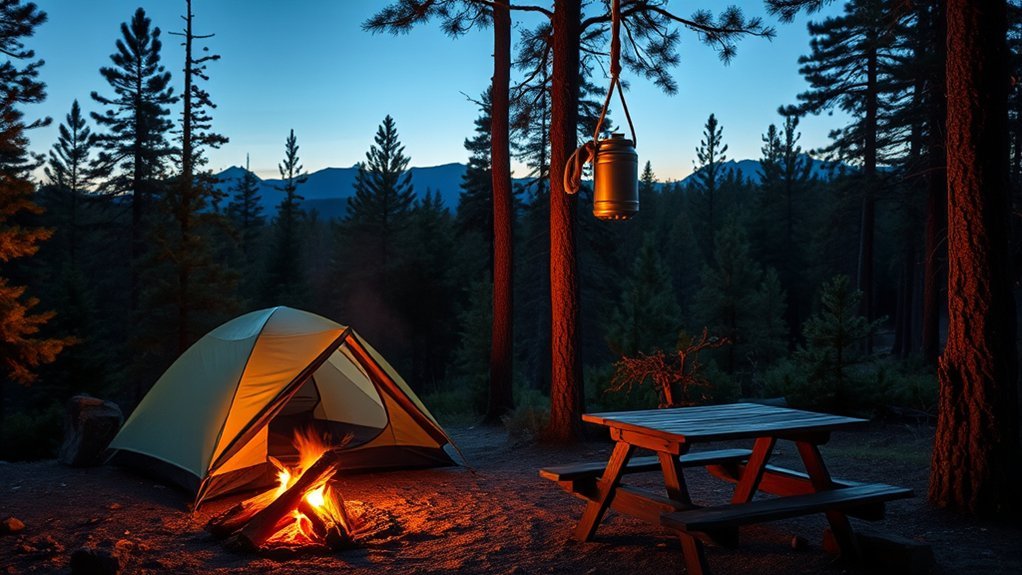
To store food while tent camping and avoid attracting animals, know your local wildlife and their behaviors. Use a bear-resistant canister for backpacking, and for car camping, invest in a bear-proof cooler. Hang your food securely at least 15 feet off the ground, 100 feet from your tent. Combine these precautions with bear spray for added safety. Keeping your campground clean and securing trash is also essential. Learn more about effective techniques to keep your food safe.
Know Which Animals You’ll Encounter and Plan Accordingly

When you’re heading out for a camping trip, it’s essential to know which animals you might encounter and plan accordingly. Start by contacting local Forest Service or BLM stations for insights on the local wildlife specific to your location. Different environments attract different animals, so understanding their behavior can be vital. Research online, but prioritize first-hand knowledge from local experts for accuracy.
Be aware that certain animals may be drawn to your food. For instance, bears frequent mountainous regions, while smaller mammals like mice are common in forests. Tailoring your food storage strategies based on the prevalent wildlife enhances your safety and reduces unwanted encounters. Knowing the local animal population allows you to implement effective food safety measures, giving you peace of mind on your adventure. With the right information, you can enjoy your camping experience while respecting the natural surroundings and its inhabitants.
Tie Up Your Food
Understanding the local wildlife helps you take practical steps to protect your food while camping. Tying up your food is essential for food safety and keeping pesky animals at bay. Here’s how to do it effectively:
- Use a parachute cord of at least 50 feet to hang your food securely.
- Choose a sturdy tree branch about 20 feet off the ground to deter bears and squirrels.
- Confirm the bag is at least 15 feet high and 10 feet from the trunk to minimize access.
Before hoisting your food, place it in a waterproof dry bag to protect it from moisture and spoilage. Secure the loose end of the cord to the tree trunk for extra stability, preventing your bag from sliding down. By understanding animal behavior and taking these steps, you can enjoy your camping adventure without worrying about unwanted visitors.
Bring a Bear Canister When Backpacking
When you’re backpacking in bear country, bringing a bear canister is essential for protecting your food. These sturdy containers not only keep your supplies safe from wildlife but often meet national park regulations. To maximize their effectiveness, store them several hundred feet away from your campsite.
Products Worth Considering
Every ounce matters! The BV500 excels as a high volume, lightweight bear barrel for backpacking. The most spacious choice of bear canister for backpacking ultralight style, pack food for 7 plus days.
DESIGNED BY A GRIZZLY BEAR ATTACK SURVIVOR – Created by Mark Matheny, who survived a grizzly bear attack and made it his mission to help protect people in bear country. Real experience, real safety.
New MidSize Option, BV475 Trek! Shorter than the BV500 bear can for long distance backpackers, yet light and roomy for 5-6 days of camp food or more. Great for small groups and family trips too.
Canister Benefits
Using a bear canister while backpacking isn’t just a smart choice; it’s often a necessity in bear country. These hard-sided, portable food storage units are essential for keeping your food safe from bears and ensuring your adventure remains enjoyable. Many national parks require bear canisters for backcountry access, enhancing both safety and wildlife protection.
Consider these benefits:
- Peace of Mind: Know your food is secure and bears are kept at bay.
- Easy Retrieval: Bright canister colors help you find your food stash quickly.
- Lightweight Options: Choose from various canister types to lighten your load on long hikes.
With a bear canister, you’re not just protecting your food; you’re embracing the freedom of a worry-free wilderness experience.
Proper Usage Guidelines
To guarantee you’re well-prepared for your camping trip, bringing a bear canister is essential, especially in areas known for bear activity. These portable, hard-sided lockers keep your food safe from wildlife. Always store your canister several hundred feet from your campsite to minimize attractants. Brightly colored canisters improve visibility, making them easier to find if disturbed. Remember to prioritize canister maintenance; check that it’s securely closed after each use. While bear canisters are effective, consider their weight and explore lighter alternatives if needed. Stay vigilant and practice wildlife awareness by understanding your surroundings and respecting animal habitats. With proper usage, you’ll enjoy a safer and more liberating outdoor experience.
Buy a Bear-Proof Cooler for Car Camping
If you’re planning to camp in bear country, investing in a bear-proof cooler is essential for keeping your food safe. These coolers, like the Yeti Tundra 45 or Pelican 45 Elite, feature bear-proof designs that withstand attempts by bears to access your food. Unlike bear canisters, they offer more storage space, allowing you to bring along larger quantities of perishables.
Consider the peace of mind that comes from knowing your food is secure:
Experience the reassurance of secure food storage while camping in bear country.
- Approved by the U.S. Forest Service for safety
- Tested against bear attacks for added reliability
- Can be concealed under tarps to further deter wildlife
When making cooler comparisons, prioritize those with proven bear-proof capabilities. Always store your cooler in a vehicle or bear-safe area, ideally several hundred feet from your campsite, to minimize the risk of attracting unwanted visitors. Enjoy your adventure knowing you’ve taken the right precautions!
Products Worth Considering
Chic retro design with a high-capacity, heavy-duty build
1.BEAR PROOF BAGS: This camping storage bag is enough to hold outdoor food for a weekend, and good sealing and deodorization can ensure the safety of your food overnight
【100% Scent Proof Bag & Bear Protection】Specifically designed for camping and hiking, this flat and weighs next to nothing, ultra-light smell proof bags effectively locks in scents to prevent attracting bears and other wildlife. Say goodbye to bulky bear canisters—this is the perfect alternative for odor-free storage.
Also Bring Bear Spray
While enjoying the great outdoors, having bear spray on hand is essential for your safety. This highly effective deterrent boasts a 93% success rate in stopping aggressive bears, making it an important tool for any camper. Research shows that only 2% of bear spray users faced attacks, a stark contrast to the 56% of those relying on firearms. For reliable protection, consider carrying Counter Assault bear spray, known for its effectiveness in bear encounters.
Always keep your bear spray within easy reach while camping, ensuring you can access it quickly in an unexpected situation. Remember, bear spray isn’t just a backup; it’s a proactive safety measure that complements your food storage practices. By combining proper food storage techniques with bear spray, you can maintain a safer camping environment, minimizing wildlife attraction and ensuring a more liberated outdoor experience. Stay prepared and enjoy the wilderness with confidence!
Products Worth Considering
MAXIMUM STOPPING POWER: The ONLY bear spray approved Federally Registered with EPA to deter both Bear & Mountain Lions Made with 2.0% Major Capsaicinoids (the strongest formula allowed by law), it's backed by our industry exclusive in-house HPLC lab, guaranteeing max strength in each canister
MAXIMUM STOPPING POWER: SABRE Frontiersman MAX, the only EPA-registered spray for Bears and Mountain Lions Made with 2.0% Major Capsaicinoids (the strongest formula allowed by law), it's backed by our industry exclusive in-house HPLC lab, guaranteeing max strength in each canister
Specifications and storage:flying distance 2-5 m, maximum spraying time 9 seconds
Don’t Leave Crumbs Lying Around
To keep wildlife at bay, always inspect your tent for any crumbs before settling in for the night. Don’t forget to check your pockets and personal belongings, as small food remnants can attract unwanted critters. A quick clean-up helps guarantee a peaceful camping experience and protects your gear.
Inspect Tent Thoroughly
Before settling in for the night, take a moment to inspect your tent thoroughly for any hidden food items. Even tiny crumbs can draw in curious wildlife, leading to unpleasant encounters. Use a headlamp to check all pockets and belongings, ensuring no leftover food remains. Remember, a thorough tent inspection is key to wildlife avoidance.
- Crumbs can invite mice or marmots into your space.
- Leftover food might damage your tent and sleeping bags.
- Cleanliness enhances your camping experience and reduces animal risks.
Check Personal Belongings
After ensuring your tent is free of food remnants, turn your attention to your personal belongings. Before bedtime, check every pocket and bag for any leftover food items. Even small crumbs can attract wildlife like mice and marmots. Use a headlamp to inspect the interior of your tent, ensuring you don’t overlook hidden food remnants. Maintaining cleanliness by eliminating food scraps greatly reduces the likelihood of unwanted animal encounters. Regularly clean up spills or crumbs from your cooking and eating areas to keep your campsite free of attractants. By paying attention to food cleanliness, you not only protect your gear from animal damage but also enhance your overall camping experience by minimizing wildlife interactions.
Food Storage Methods
When you’re camping, effective food storage methods can make a significant difference in keeping your supplies fresh and safe from wildlife. Using the right cooler types and food containers is essential. Here are some practical tips to keep your food secure:
- Use a locking cooler to prevent animals from getting to your food and trash.
- Store your cooler in the trunk of your car at night, minimizing the risk of attracting wildlife.
- If you’re without a vehicle, pack food in a cloth or nylon sack, weigh it down with rocks, and tie it securely.
Remember to keep your food at least 100 feet away from your tent. In emergencies, you can even use waterproof bags and submerge them in a stream, tying them off to a stake. With these methods, you can enjoy the great outdoors without worrying about unwanted animal visitors!
Products Worth Considering
Smart Ice Pack Divider: The Pinnacle travel cooler includes a detachable ice pack that doubles as a divider to keep food and beverages separate. Whether you're packing lunch or going on a picnic, it helps keep lower temps for longer and allows for versatile positioning according to your storage needs.
Wheeled for easy transport and locking telescoping handle enables cooler to be pushed or pulled
Hanging Food Safely
To hang your food safely, start by selecting a sturdy tree branch at least 100 feet from your tent and 15 feet off the ground. Secure your food properly by using a parachute cord and ensuring it’s a few feet below the branch to deter animals. Remember to keep the food at least 10 feet from the tree trunk to prevent critters from climbing up.
Products Worth Considering
Discover the Selkirk Advantage: Say goodbye to the tedious task of tying ropes and struggling with branches. Our Food Hanging System, featuring an innovative 2-to-1 pulley mechanism, simplifies the process of hanging your food, making it easier and faster than traditional methods.
🎉【Bear-Proof Food Bag Hanging System】You will get an ultralight bear food bag with a detachable shoulder strap and pulley system, package contents: 1×10L waterproof bear bag backpacking, 1×small rock pouch with self-adhesive tape for throwing stones, 2x strong climbing clips with spiral safety locks, 2x10m durable nylon ropes
Food Hanging System - This bear bag features a food hanging system, making it a must-have for bear bags for food backpacking and ensuring your food is safe from wildlife. It's an essential bear bag backpacking item for any outdoor adventure.
Choose Suitable Tree Branch
Choosing the right tree branch for hanging your food is essential for keeping it safe from hungry animals. Focus on branch selection that meets specific criteria to maximize your food’s security:
- Height considerations: Aim for a branch at least 15 feet off the ground.
- Distance from the trunk: Confirm it’s at least 10 feet away to deter bears and smaller critters.
- Health of the branch: Choose a sturdy branch capable of supporting your food bag’s weight without breaking.
After selecting the ideal branch, toss a rope over it and hoist your food bag securely. Hang it at least 10 feet above the ground, leaving a few feet of space below to make it less reachable for smaller animals. Your efforts will pay off with peace of mind during your camping adventure!
Secure Food Properly
Once you’ve found the right branch for hanging your food, it’s time to secure it properly. Choose a sturdy branch at least 15 feet off the ground and 100 feet away from your tent to minimize animal attraction. Use a sock filled with rocks to toss over the branch, guaranteeing your food bag hangs at least 10 feet from the trunk, deterring smaller animals. Tie the loose end of the rope around a lower branch, keeping the bag a few feet below for added safety. Regularly check that your food storage remains secure, as bears can smell food from miles away. Always use a durable parachute cord, ideally 50 feet long, to guarantee your food stays hoisted and out of reach.
Distance From Tent
When camping, keeping your food at a safe distance from your tent is essential for minimizing wildlife encounters. Store your food at least 100 feet away to reduce the likelihood of attracting animals. Follow these guidelines for hanging food safely:
- Hang it at least 15 feet off the ground.
- Keep it 10 feet away from the tree trunk to deter bears and smaller critters.
- Use a sturdy branch that can support your food bag’s weight.
Bear Country Precautions
Storing food safely in bear country is essential for your safety and the bears’ well-being. With a bear’s sense of smell being seven times stronger than a bloodhound’s, you must prioritize proper food storage to avoid food attraction. Always use a bear-resistant canister designed to withstand their attempts to access food. Make sure the canister is securely closed and locked; even a tiny opening can be exploited by curious bears.
Place your bear canister at least 100 feet away from your tent to minimize the risk of encounters while you sleep. Stay informed about local bear activity and regulations, as some national parks require bear canisters for backcountry access. This knowledge fosters bear awareness and helps you coexist safely with these magnificent creatures. By following these precautions, you help protect both yourself and the bears, ensuring a safer camping experience for everyone.
Campground Cleanliness
Maintaining a clean campground is essential for preventing unwanted wildlife encounters and enhancing your overall camping experience. A tidy campsite not only protects nature but also keeps your gear safe from scavengers. Here’s how to guarantee campsite maintenance:
- Regularly check for and pick up food scraps or trash.
- Properly dispose of waste by packing out all trash and food remnants.
- Secure all food and trash to deter wildlife.
Frequently Asked Questions
How Can I Identify Bear Tracks at My Campsite?
To identify bear tracks, look for large, rounded paw prints with five toes and claws. Compare them to your hand size. For camping safety tips, always stay alert and store food securely to minimize encounters.
What Should I Do if I See a Bear Nearby?
If you see a bear nearby, stay calm, back away slowly, and don’t run. Follow your emergency response plans, making noise to alert the bear. Prioritize your safety; bear encounter safety is essential for your well-being.
Can I Store Food in My Tent if It’s Sealed?
You shouldn’t store food in your tent, even sealed. Studies show that 70% of bear encounters occur due to food storage negligence. Prioritize tent safety by using bear-proof containers or hanging your food away from camp.
What Types of Food Attract Animals the Most?
High calorie snacks and aromatic foods, like peanut butter, chocolate, and spices, attract animals the most. Avoid bringing these items to keep wildlife at bay and enjoy a peaceful camping experience without unwanted visitors.
Is It Safe to Use Scented Products While Camping?
It isn’t safe to use scented toiletries while camping; they can attract bears. Instead, opt for unscented products and keep your campsite clean. Always follow bear deterrents to minimize wildlife encounters and guarantee a worry-free experience.
Conclusion
By following these food storage tips, you can minimize your chances of an unwelcome animal encounter while camping. Remember, a single forgotten snack can attract wildlife like a magnet, turning your peaceful trip into a chaotic wildlife show. Keep your campsite clean, use bear canisters or coolers, and hang your food properly. With the right precautions, you’ll enjoy nature without fear of sharing your meals with its wild inhabitants. Stay safe, and happy camping!